
How to Pack a Moving Truck to Prevent Furniture Damage in Transit

Knowing how to pack a moving truck to prevent furniture damage is one of the most practical skills you can develop before moving day. Even a short drive across town can cause unprotected furniture to shift, scratch, crack, or topple if items haven't been wrapped and secured properly. The goal isn't just to fit everything inside the truck — it's to make sure every piece arrives at your new home in exactly the condition it left your old one.
Need a professional crew to handle the heavy lifting and packing? Call 224-404-0069 or get a free labor-only moving quote from Lift & Load today.
Why Furniture Damage During Transit Is More Common Than You'd Think
Many people assume furniture damage happens from mishandling during carry — dropped corners, scraped doorframes, and similar accidents. While those do occur, a surprising amount of damage actually happens inside the truck while it's moving. Road vibrations, sudden braking, and turns all apply continuous force to items that aren't properly padded or anchored. A heavy dresser leaning against an unpadded wall will slowly grind a finish down to bare wood over the course of a 30-minute drive.
Glass tabletops, mirror-backed furniture, and lacquered wood surfaces are especially vulnerable. So are upholstered pieces that can snag on exposed hardware or rough truck walls. The good news is that virtually all transit damage is preventable with the right preparation and packing sequence.
The Right Packing Materials for Protecting Furniture in a Truck
Before a single piece of furniture is loaded, you need to have the correct materials on hand. Improvising with bed sheets and towels is better than nothing, but professional-grade supplies make a measurable difference in outcomes.
Moving Blankets and Furniture Pads
Moving blankets — also called furniture pads — are thick, quilted covers designed to wrap around furniture and absorb impact. They're the single most important supply for preventing surface damage. Wrap every wood, glass, and upholstered surface before it goes into the truck. Most truck rental companies rent them by the dozen, or you can purchase them if you have a large move.
When wrapping a piece, overlap the blanket edges generously and use rubber bands, stretch wrap, or packing tape on the outside of the blanket (never directly on furniture surfaces) to keep the pad from slipping. Pay special attention to corners, which are the most vulnerable points on dressers, desks, and cabinets.
Stretch Wrap (Plastic Film)
Stretch wrap serves a different purpose than moving blankets — it doesn't cushion, but it does bundle. Use stretch wrap to:
- Keep dresser drawers from sliding out during transit
- Hold cabinet doors closed so they don't swing open and crack
- Bundle sets of legs, hardware bags, and small parts together so nothing gets lost
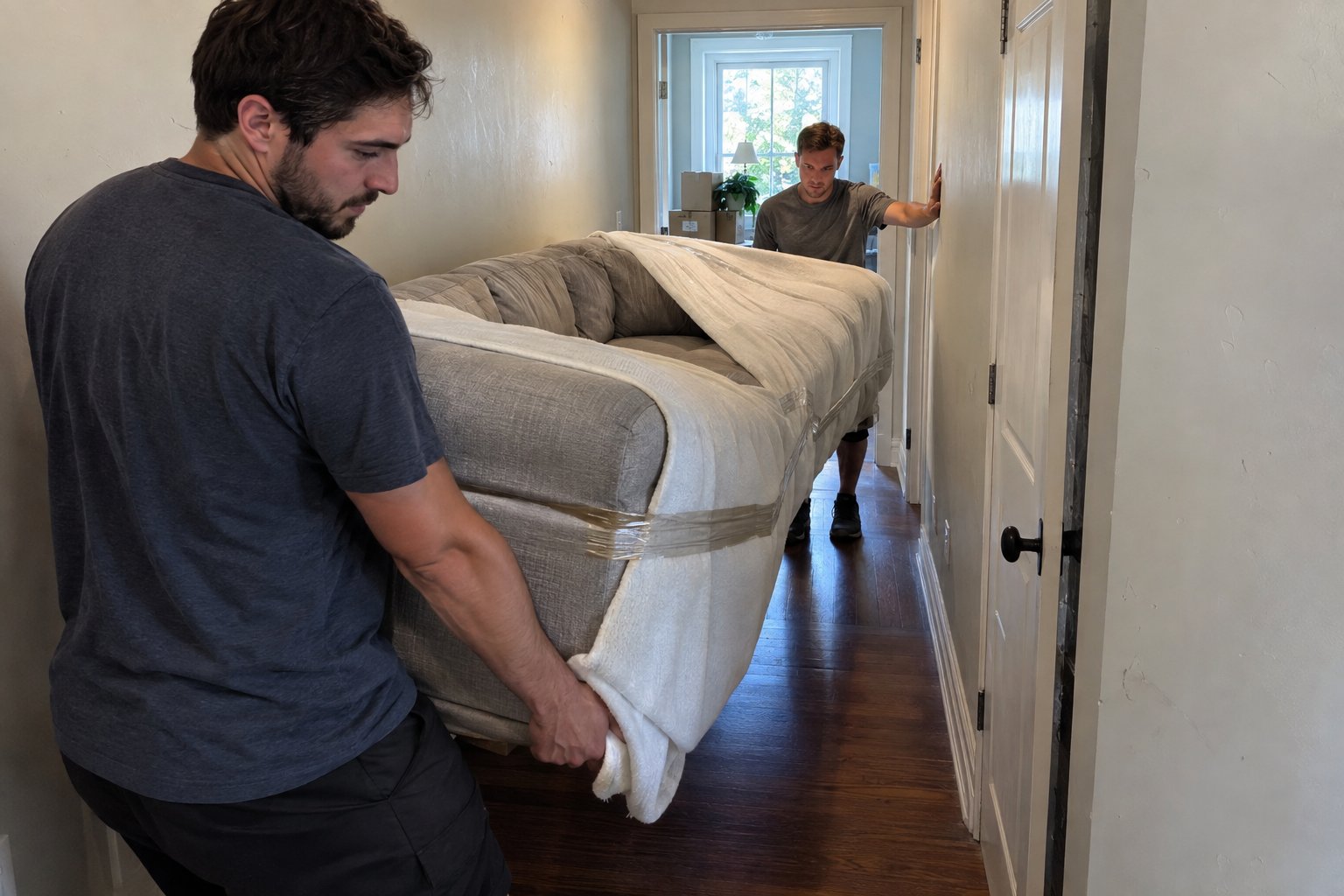
- Wrap upholstered pieces to protect fabric from dirt and snags (apply over a moving blanket, not directly on the fabric)
Cardboard Sheets and Edge Protectors
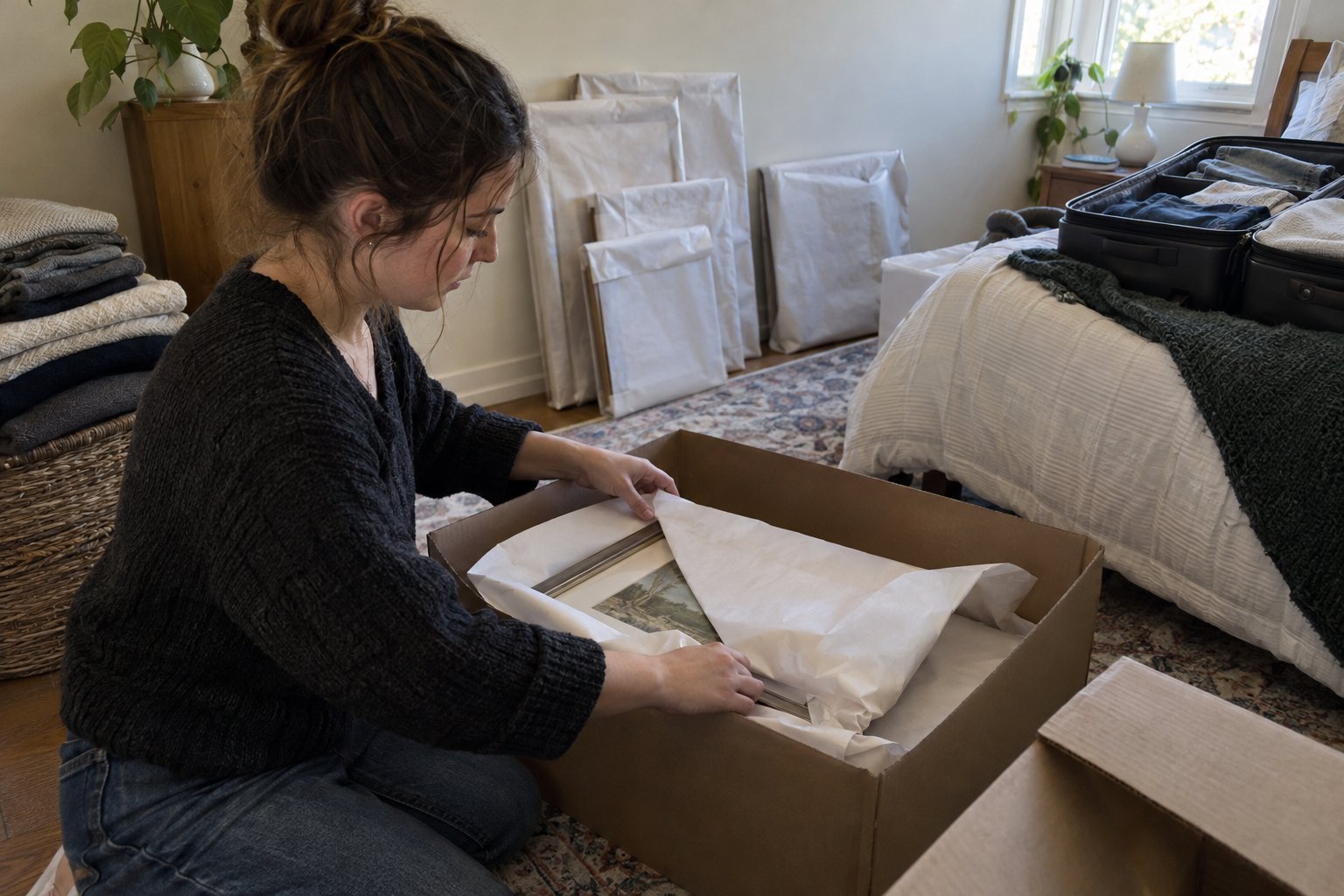
Flat sheets of cardboard are underrated furniture protection tools. Slide them between stacked furniture pieces to prevent surfaces from pressing directly against each other. Cardboard edge protectors — available at moving supply stores — fit over the corners of glass panels, table edges, and picture frames to absorb bumps that would otherwise chip or crack finishes.
Tie-Down and Ratchet Straps
No amount of wrapping fully replaces physical anchoring. Moving trucks have anchor rings along the interior walls specifically for attaching straps. Use ratchet straps to secure tall furniture (wardrobes, bookshelves, refrigerators) vertically against the truck walls, and use flat straps to lash horizontal loads together so they can't slide forward or backward. Keep strap tension firm but not so tight that it crushes padded furniture.
How to Arrange Furniture Inside the Truck to Minimize Damage
Wrapping protects individual pieces — but the arrangement of everything inside the truck determines whether the load stays stable as a whole. Follow this sequence to build a safe, damage-resistant load.
Heavy Furniture Against the Cab Wall First
Always start at the front of the truck (the wall closest to the cab) and work toward the rear doors. The heaviest, most stable items — large dressers, washing machines, sofas, bookshelves, and other major furniture — go here first. Placing weight toward the front keeps the truck's center of gravity stable and prevents rear-heavy handling on hills and curves.
Stand tall furniture pieces vertically when possible rather than laying them flat. A wardrobe laying on its side distributes weight unevenly and is far more likely to crack a panel than the same wardrobe standing upright and strapped to the wall.
Mattresses and Flat Panels Along the Sides
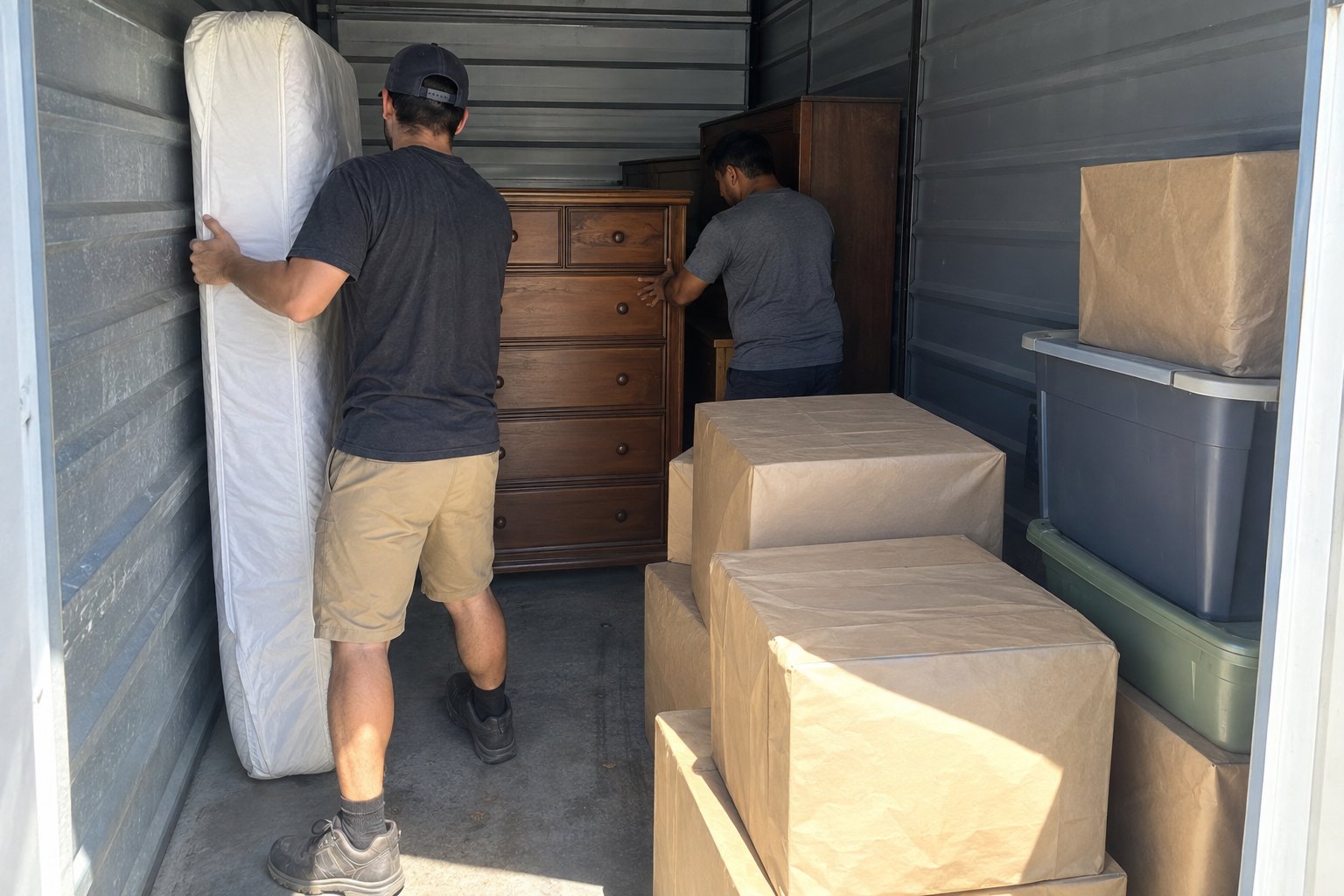
Mattresses and flat items like table tops, mirrors, and headboards should travel on their edges, standing vertically against the interior walls of the truck — never laid flat under other items. A mattress on its side acts as a padded interior wall itself, protecting furniture loaded in front of it. Make sure flat panels are wrapped in moving blankets and have cardboard corners before being positioned.
Sofas and Upholstered Furniture in the Middle
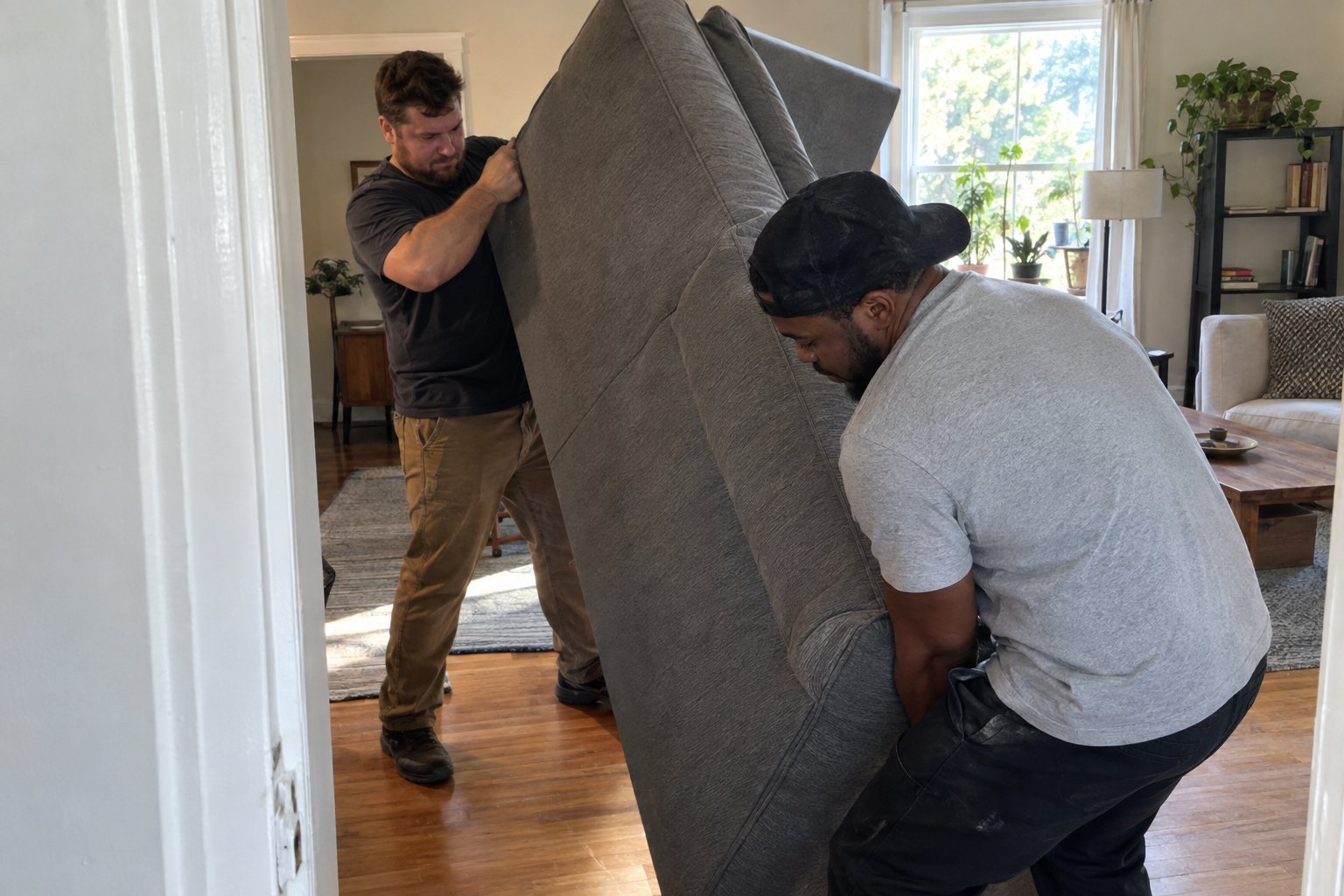
Sofas often take up a lot of floor space, but many can be stood on end to free up room. If you stand a sofa vertically, protect the base and armrests with moving blankets and check that the legs are securely wrapped. Position upholstered pieces away from the truck walls if possible — metal tie-down rings and wall edges can snag and tear fabric even through a short trip.
Boxes on Top, Filling Gaps Last
Once large furniture is in place, fill remaining space with medium and small boxes. Stack boxes from heaviest (bottom) to lightest (top). Never place boxes on top of upholstered furniture without a firm, flat surface between them — a box corner pressing into a cushion over several hours can leave a permanent dent. Use flat boards, dresser drawers, or folded blankets as a base layer before stacking boxes on furniture.
Fill small gaps between pieces with soft items — pillows, folded blankets, stuffed animals — to prevent load shifting. Empty space inside a truck is what allows items to move around, and movement causes damage.
Common Mistakes That Lead to Damage (and How to Avoid Them)
Even careful movers make avoidable mistakes when under the time pressure of moving day. Here are the most common ones and the simple fixes for each.
Skipping the Wrap on "Durable" Items
It's tempting to skip wrapping solid wood pieces, assuming they can handle a little contact. In reality, two unwrapped wood surfaces rubbing together during transit will produce scratches just as readily as more delicate finishes. Wrap everything — even pieces you think are tough enough to go unprotected.
Overpacking Boxes Until They Bulge
A box that is too full will bow on the sides, making it impossible to stack safely. Stacks of improperly shaped boxes topple easily in transit, often taking furniture with them. Pack boxes firmly but so the top closes flat. Use packing paper or crumpled newsprint to fill any remaining air space inside boxes before sealing.
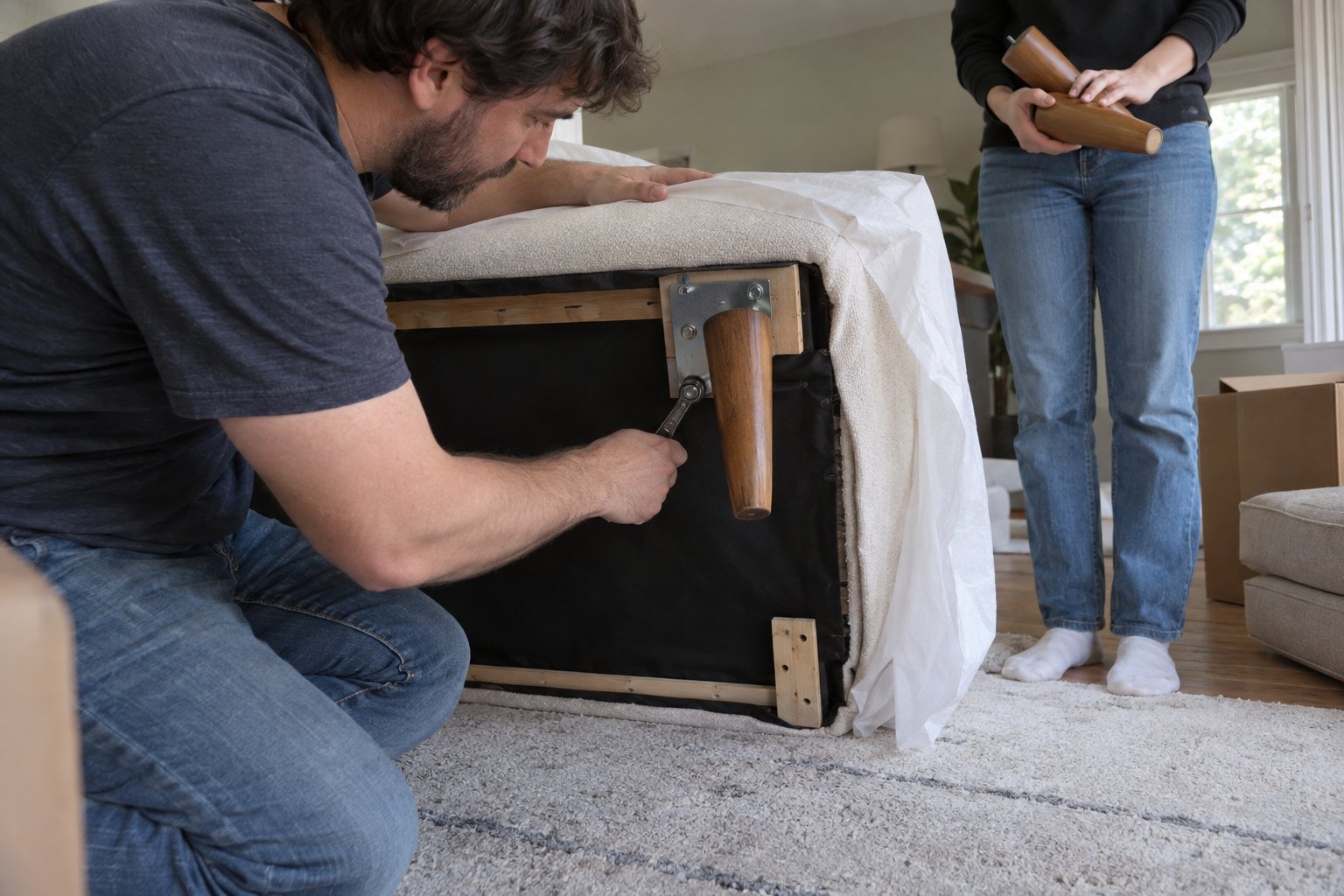
Forgetting to Remove or Secure Furniture Hardware
Drawer pulls, hinges, and exposed bolts are sharp points that can gouge neighboring furniture throughout a trip. Before loading any piece, check for protruding hardware. Either remove it and bag it for the move, or cover it thoroughly with tape and padding so nothing exposed can make contact with adjacent surfaces.
Not Checking the Strap Tension Before Driving
Straps loosen as loads settle. Before closing the truck's rear doors, go back through the load and check every strap. Tighten anything that has lost tension. A strap that was firm when you first loaded may be noticeably slack by the time you're ready to drive away — especially after heavy pieces have settled into position.
When It Makes Sense to Hire Labor-Only Help
Packing a truck correctly takes time, physical effort, and attention to detail — all of which are harder to sustain when you're also coordinating the dozens of other tasks that come with moving day. Hiring a professional labor-only moving crew means you get experienced hands who know exactly how to wrap, arrange, and secure a load for transit — without paying full-service moving prices.
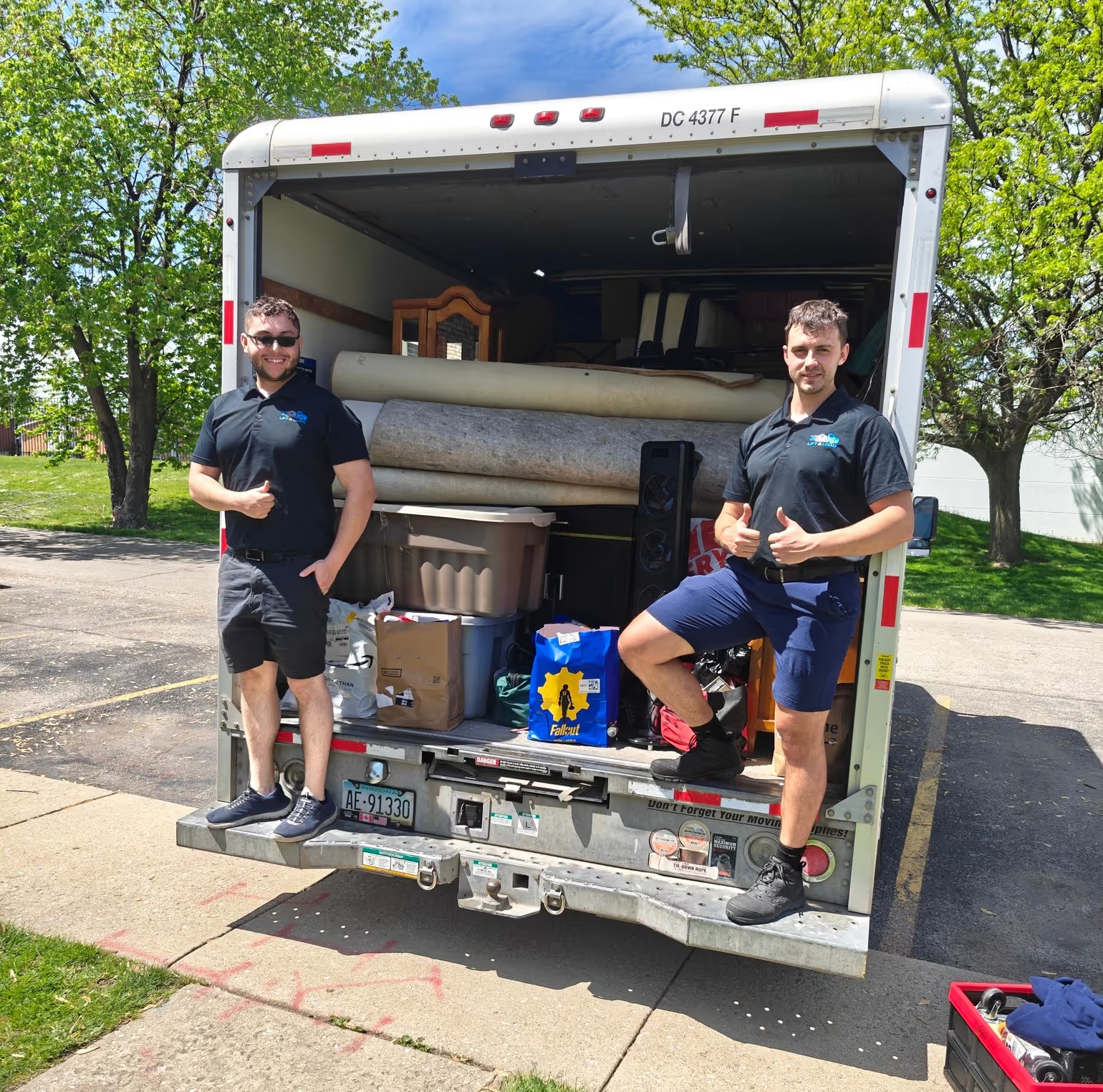
Labor-only services like Lift & Load are especially valuable for the loading phase. A trained crew can pack a truck more efficiently and safely than most individuals working alone, and they bring the professional habits — consistent wrapping, proper strapping, smart load order — that prevent the vast majority of transit damage before it can happen.
Whether you need help loading, unloading, or both, having the right team on moving day is one of the best investments you can make in the safety of your belongings. Call 224-404-0069 or get a free quote to see how Lift & Load can make your move smoother from start to finish.


FAQs
Every piece of furniture benefits from wrapping before going into a moving truck. Even solid wood and metal items can scratch one another when surfaces make direct contact during transit. Moving blankets and stretch wrap are inexpensive compared to the cost of refinishing or replacing damaged furniture, so wrapping everything is strongly recommended regardless of how durable a piece seems.
It's best to stand mattresses on their side along the interior wall of the truck rather than laying them flat. A flat mattress becomes a platform that other items get stacked on, which can compress and permanently deform the mattress over time. Standing it on edge saves floor space and keeps the mattress in better condition for the long term.
Never stack boxes directly on upholstered furniture without a firm, flat barrier between them. Use a piece of plywood, a pulled-out dresser drawer, or several moving blankets layered together to create a stable base before placing any boxes on top of furniture. This spreads the weight evenly and prevents box corners from pressing into cushions or soft surfaces.
Yes — many people hire a labor-only crew specifically for the loading phase because it's the most physically demanding and detail-dependent part of the move. A professional team knows the correct wrapping, stacking, and securing techniques that prevent transit damage. Labor-only services are also significantly more affordable than full-service moving companies, making them a practical option even for budget-conscious moves.
Yes — many people hire a labor-only crew specifically for the loading phase because it's the most physically demanding and detail-dependent part of the move. A professional team knows the correct wrapping, stacking, and securing techniques that prevent transit damage. Labor-only services are also significantly more affordable than full-service moving companies, making them a practical option even for budget-conscious moves.
Still have questions?
How to move with us?
Hit the “Get a Quote” button and tell us what you need.
Choose the service, date, and time that work best for you.
Our friendly team shows up on time and gets everything done safely.
Sit back while we take care of the rest.
.avif)