
How to Move a Outdoor Grill: The Right Way to Clean, Disassemble, and Transport It Safely
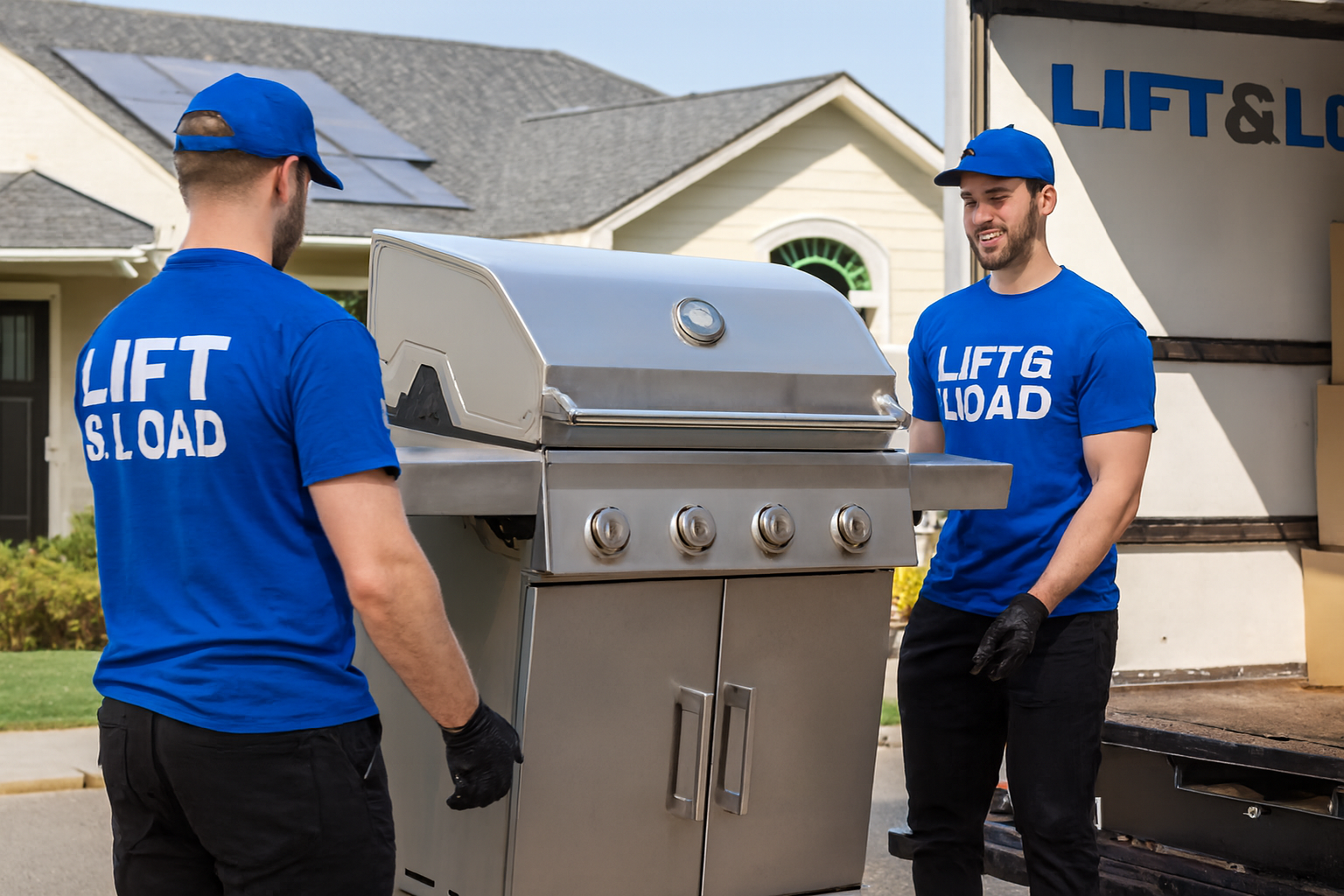
Knowing how to move an outdoor grill correctly is something most homeowners don't consider until they're standing on the back patio staring at a 200-pound stainless steel unit that hasn't rolled more than three feet since it was assembled — and realizing the side tables fold but don't detach, the propane tank is still connected, and the path to the truck involves a two-step drop off the deck, a narrow gate, and a stretch of uneven brick pavers. A grill looks like it should be simple to move. It has wheels. How hard could it be? The answer is: considerably harder than it appears, and the mistakes people make — rolling it while connected to fuel, skipping the grease trap cleaning, failing to secure the lid, or letting it tip on the ramp — routinely result in grease fires in the moving truck, broken side shelves, bent burner grates, and a propane tank rolling loose in a moving vehicle, which is a serious safety violation.
Need a professional labor crew to handle the heavy lifting on move day so your grill and everything else loads safely? Call 224-404-0069 or get a free labor-only moving quote from Lift & Load today.
Why Moving an Outdoor Grill Is More Involved Than It Looks
The first challenge is fuel. A gas grill connected to a propane cylinder cannot be transported in an enclosed moving truck under any circumstances. Propane tanks — even ones that feel nearly empty — contain residual gas and pressure. A tank rolling loose inside a sealed truck creates a genuine hazard. Even if you're only moving a few miles, the tank must be completely disconnected, the valve fully closed, and the tank transported separately in an open, ventilated vehicle or left behind for a dedicated propane exchange trip.
The second challenge is grease. Every grill that has been used accumulates grease in the drip tray, on the burner grates, and along the inside walls of the firebox. A grill moved without cleaning first will leak grease onto the moving truck floor, onto your other belongings, and potentially onto the exterior of the grill itself during transport if the unit shifts or tips. Grease inside a moving truck is also a fire risk if it contacts any heat source — and a liability that most moving crews will flag immediately.
The third challenge is structural fragility in places people don't expect. The lid on most freestanding grills is only held in place by two hinges, and the connection point for those hinges is often a stamped metal bracket that was not designed to absorb lateral force. Tipping a grill onto a dolly without securing the lid first, or allowing it to bounce in a truck without padding, can crack porcelain-coated lids, snap side shelf brackets, and bend the flimsy sheet metal panels that cover the lower cart area. These parts are often expensive or impossible to source as replacements.
What You Need Before the Move Starts
Moving a grill without the right preparation will cost you more in repairs or cleanup than any of these steps take to complete. Getting organized before the crew arrives — or before you start loading — is what separates a clean move from a greasy, damaged mess.
Supplies and equipment required
- Propane wrench or adjustable wrench — to disconnect the regulator hose from the tank valve cleanly without stripping the fitting
- Grill degreaser and paper towels or shop rags — to clean the drip tray, the firebox interior, and the grates before loading
- Moving blankets — to pad the exterior of the grill body and protect adjacent items in the truck from grease contact
- Stretch wrap or rope — to secure the lid shut during transport so it cannot swing open under its own weight
- Appliance dolly or utility dolly — for grills too heavy to roll across uneven ground; a standard two-wheel dolly rated for the unit's weight
- Floor protection — Ram Board or moving blankets laid flat along the truck floor beneath the grill's final position
- A separate vehicle or pickup bed — for transporting the propane tank with proper ventilation
What to do with a charcoal grill
Charcoal grills present a different but equally important set of concerns. Any residual ash must be completely cooled — ash can retain heat for up to 24 hours after a cook — and fully removed before the grill is moved. Dumping ash into the yard the morning of move day is not a solution; ash in a landfill bag that gets tossed in the moving truck is a fire risk. Remove all grates and ash catchers, bag the ash separately, and treat those bags as you would any other combustible material. Do not load them with household goods.
Step-by-Step: How to Move an Outdoor Grill
Follow this sequence in order. Skipping steps — especially the first three — creates real safety hazards that are entirely avoidable.
Step 1: Disconnect and isolate the fuel source
Turn the propane tank valve clockwise until it stops — fully closed. Then turn all burner knobs to high for 30 seconds to bleed residual gas from the supply line. Turn the burners off. Use a wrench to disconnect the regulator fitting from the tank valve, then remove the tank from the grill cart. Cap the tank valve if you have a plastic cap available. Store the disconnected tank upright in an open, ventilated area until it can be transported separately in a pickup bed or the back of an open trailer. Never place a propane tank inside an enclosed moving truck.
Step 2: Clean the grill thoroughly
Remove the cooking grates and the heat deflectors or flavorizer bars. Soak them if needed and scrub off any caked grease. Pull the drip tray — this is the single most important cleaning step, because a full or even half-full drip tray will spill during loading. Wipe down the interior firebox walls and the inside of the lid with a degreaser. Reassemble everything once dry. A grill that's been cleaned to the point where you could rest a moving blanket against it without getting grease on the blanket is ready to move.
Step 3: Fold, secure, and protect the exterior
Fold in any side shelves that collapse. For shelves that don't fold, check whether they remove with a single bolt — many do, and removing them reduces the overall footprint significantly for navigating gates and doorways. Secure the lid with stretch wrap or a bungee cord looped through the handle. Wrap the exterior with a moving blanket, paying extra attention to the corners of the lid and the side shelf mounting points. Use a second blanket to cover the cart base if it has exposed sheet metal panels that can dent.
Step 4: Plan and clear the path
Walk the route from the grill's current location to the truck. Measure any gates — most standard residential side gates are 36 inches wide, and a large grill with side shelves attached can be 50 inches or more across. Identify any steps, deck drops, or uneven surfaces. Lay floor protection across any section of deck, pavement, or garage floor that will be under the grill's wheels or dolly path. A grill that tips on a two-step deck drop and lands on its side may be totaled; a grill on a dolly with a spotter on each side of the descent makes the same move routine. If you're managing multiple heavy items on the same day, reviewing a guide on moving heavy furniture without a full-service company can help you sequence the entire load efficiently.
Step 5: Load and secure in the truck
Position the grill upright — never on its side — against the wall of the truck cab. An upright grill is stable; a grill on its side puts stress on the lid hinges and risks cracking the firebox or interior components. Use moving straps to tie the grill frame to the truck's anchor rail so it cannot roll or rock during transit. Place a moving blanket between the grill and any adjacent furniture to prevent contact scratches. Do not stack boxes on top of the grill, as the lid and burner controls are not designed to bear weight.
Common Mistakes That Cause Damage or Injury
Most grill moves that go wrong follow a predictable pattern. The propane tank gets loaded in the truck because "it's almost empty." The drip tray doesn't get cleaned because "it's just outside." The lid gets left unsecured because the bungee cord is packed already. The grill gets tipped on the ramp because it's heavier than expected and the second person wasn't in position. Each of these is a specific, avoidable failure — and each one is more likely when the move is rushed or when there aren't enough hands available for a piece this size and weight.
A larger grill — a freestanding unit with a full cart, side burner, and double doors on the lower cabinet — can weigh 250 to 400 pounds depending on construction. That's in the same range as a full dresser or a large appliance. Treating it as a casual roll-and-push job is what causes the blown-out gate, the tipped dolly, and the cracked firebox lid. Understanding how to sequence and support oversized items is a skill that applies directly across all the large-item moves in your home. If you're handling multiple rooms on the same day, the approach outlined in a guide on moving an apartment in a single day can help you structure your loading sequence so the grill goes on at the right time without blocking everything else.
When to Call in a Labor Crew
If your grill weighs more than 200 pounds, requires navigating steps or a narrow gate, or is part of a larger move where timing and sequencing matter, a professional labor-only crew is the right call. Labor-only services like Lift & Load provide the muscle and the technique without requiring you to hand off control of your own rental truck or your moving timeline. You bring the truck; they handle the loading, the positioning, and the securing — including items like a heavy outdoor grill that most homeowners would rather not gamble on. The cost of a two-hour labor window is almost always less than a cracked firebox lid or a degreased truck floor that someone else has to clean before the next renter picks it up.
Moving an outdoor grill the right way comes down to three things: eliminating the fuel hazard before anything else touches the grill, cleaning it so it doesn't create a secondary mess in the truck, and protecting the structural weak points — the lid, the side shelves, and the cart panels — so it arrives the same way it left. Do those three things with the right equipment and the right number of people, and a grill move that looks complicated becomes a two-person, 30-minute job done safely from start to finish.


FAQs
No. A propane tank — even one that feels nearly empty — retains residual gas and pressure and must never be placed inside an enclosed moving truck. Disconnect the tank completely, close the valve, and transport it separately in an open pickup bed or ventilated trailer. Many propane retailers will also accept tank exchanges if you don't want to transport it at all.
Yes. The drip tray, firebox interior, and cooking grates should all be cleaned before the grill is loaded. Grease will spill during loading and transit if the unit shifts or tips, creating a mess on the truck floor and potentially on your other belongings. A grill with a full or partially full drip tray is also a fire risk in any enclosed vehicle.
No. A grill should always be transported upright. Laying it on its side puts stress on the lid hinges, can crack porcelain-coated firebox surfaces, and may damage the burner assembly or interior components. Position the grill upright against the cab wall of the truck and strap it securely to the truck's anchor rail.
Wait at least 24 hours after the last use to ensure all ash is fully cooled, then remove all ash completely before moving. Ash that appears cold can still retain heat and poses a fire risk. Remove the cooking grates and ash catcher, bag the ash in a metal or heat-resistant container, and dispose of it separately. Clean any grease from the interior, wrap the exterior with moving blankets, and secure the lid before loading upright into the truck.
Wait at least 24 hours after the last use to ensure all ash is fully cooled, then remove all ash completely before moving. Ash that appears cold can still retain heat and poses a fire risk. Remove the cooking grates and ash catcher, bag the ash in a metal or heat-resistant container, and dispose of it separately. Clean any grease from the interior, wrap the exterior with moving blankets, and secure the lid before loading upright into the truck.
Still have questions?
How to move with us?
Hit the “Get a Quote” button and tell us what you need.
Choose the service, date, and time that work best for you.
Our friendly team shows up on time and gets everything done safely.
Sit back while we take care of the rest.
.avif)