Moving Boxes vs. Plastic Bins: Which One Should You Pack With?
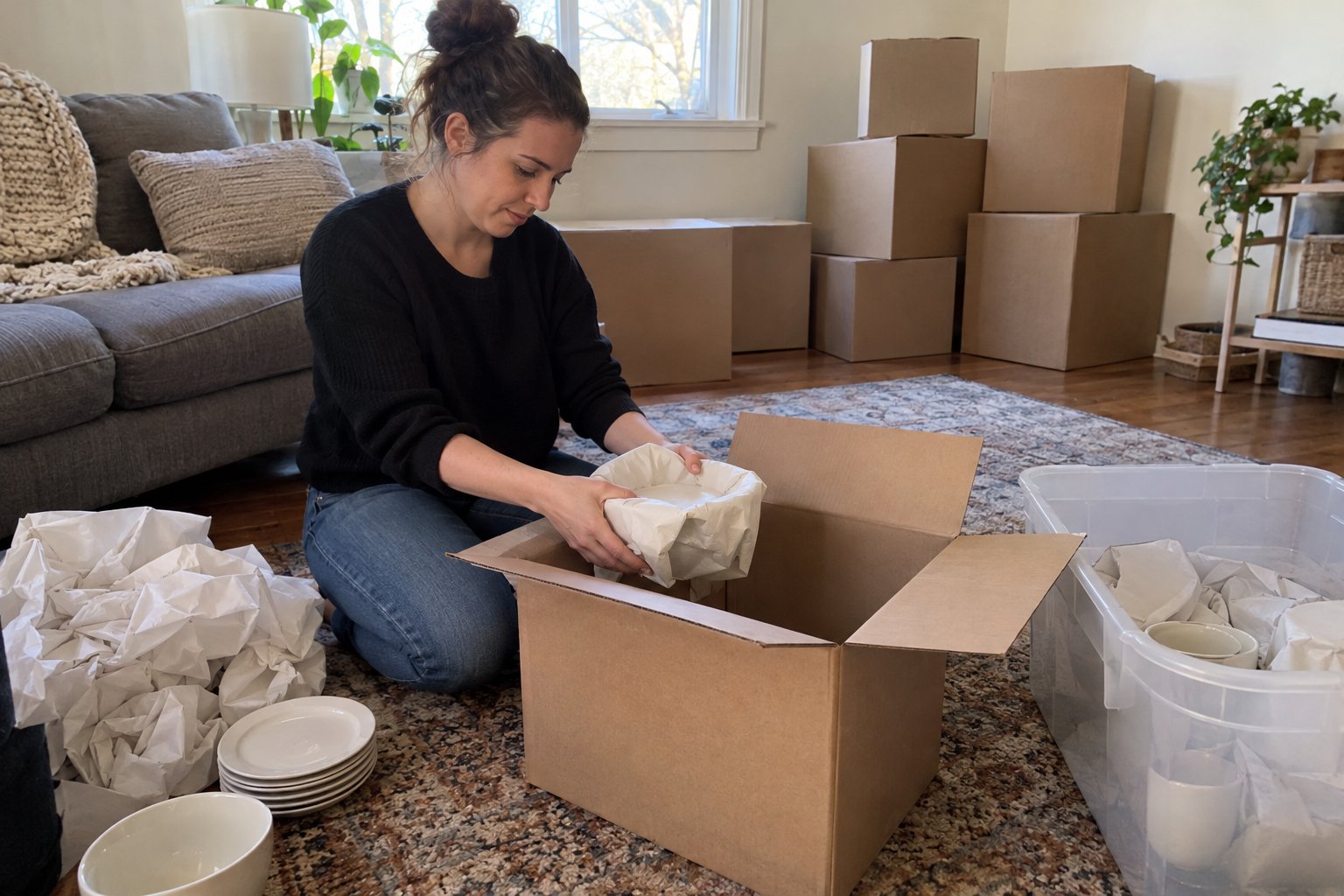
Cardboard boxes and plastic bins both get your belongings from one home to the next, but they are not interchangeable. Cardboard is easier to source in bulk, easier to recycle, and stacks predictably, while plastic bins hold up better against moisture and repeated use but take up storage space between moves. The right choice usually comes down to what you're packing, how far it's traveling, and whether you'll use the containers again.
Here's how the two options compare on the things that actually matter on moving day: time, effort, risk, and fit for your situation, whether you're in Skokie, IL, Evanston, IL, or anywhere nearby.
Moving Boxes vs Plastic Bins: What's the Real Difference?
Cardboard boxes are a one-time packing material you typically break down or recycle after the move, while plastic bins are a reusable container you can pack, unpack, and store again later. That single distinction drives most of the other tradeoffs between them.
Cardboard is lighter when empty, which matters if you're carrying a lot of boxes up and down stairs. It also folds flat for storage before the move and breaks down for recycling after, so it doesn't leave you with a pile of empty bins taking up garage space. Plastic bins, on the other hand, keep their shape through multiple moves and don't weaken if they get damp or sit in a humid storage unit. If you already have a stack of bins from a previous move, reusing them is often the path of least resistance. Getting your packing supplies sorted before moving day, whichever container you choose, is one of the biggest factors in how smoothly the rest of the move goes.
Which Is Faster to Pack and Unpack?
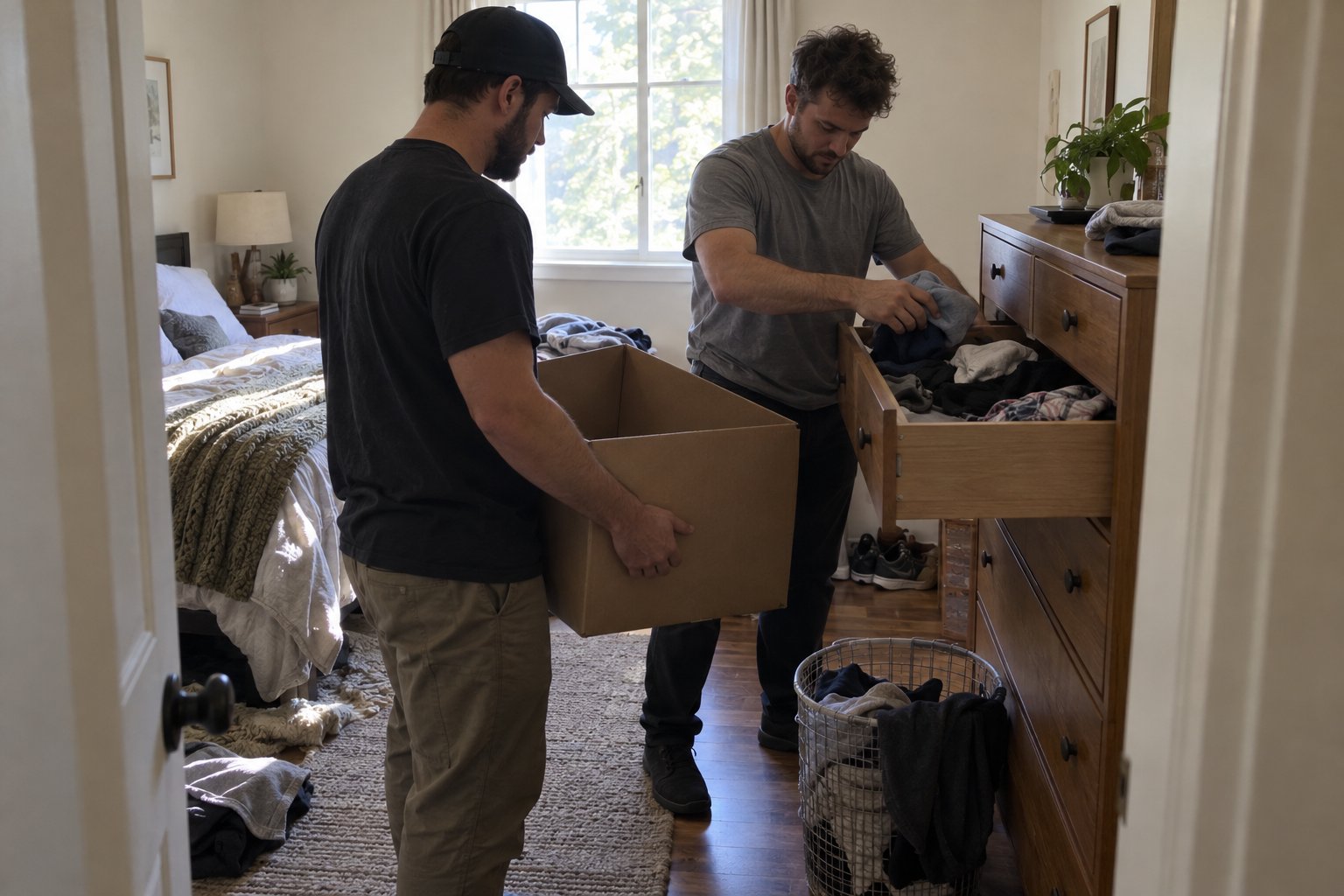
Cardboard boxes are generally faster to source in volume and assemble quickly with tape, while plastic bins skip the assembly step entirely since they arrive ready to fill. For a full household move, that assembly time adds up when you're packing dozens of boxes.
Bins also tend to unpack faster because the lid snaps on and off without tape or a box cutter, which matters most for items you'll need again soon, like kitchen basics or kids' toys you want accessible on day one in the new place. If you're on a tight packing timeline, bins save you the step of building each box by hand, but you'll need to already own or buy enough of them, since most people don't have forty plastic totes sitting around.
Which Holds Up Better Under Weight and Stacking?
Plastic bins generally handle stacking and uneven weight distribution more consistently than cardboard, especially when loaded into a moving truck where boxes get stacked several high and shift slightly in transit. Cardboard can perform just as well, but only when it's packed correctly and not overloaded.
A cardboard box that's overpacked or exposed to any moisture can buckle or tear at the bottom seam, which is the most common way people lose items mid-move. Bins with secure, locking lids resist that kind of failure and also seal out dust and light rain if items need to sit on a porch or in an open truck bed for a stretch. For heavy items like books, a double-walled cardboard box reinforced with packing tape across the bottom can still perform well, but a rigid plastic bin is more forgiving if you tend to overfill containers.
Where Cardboard Still Wins
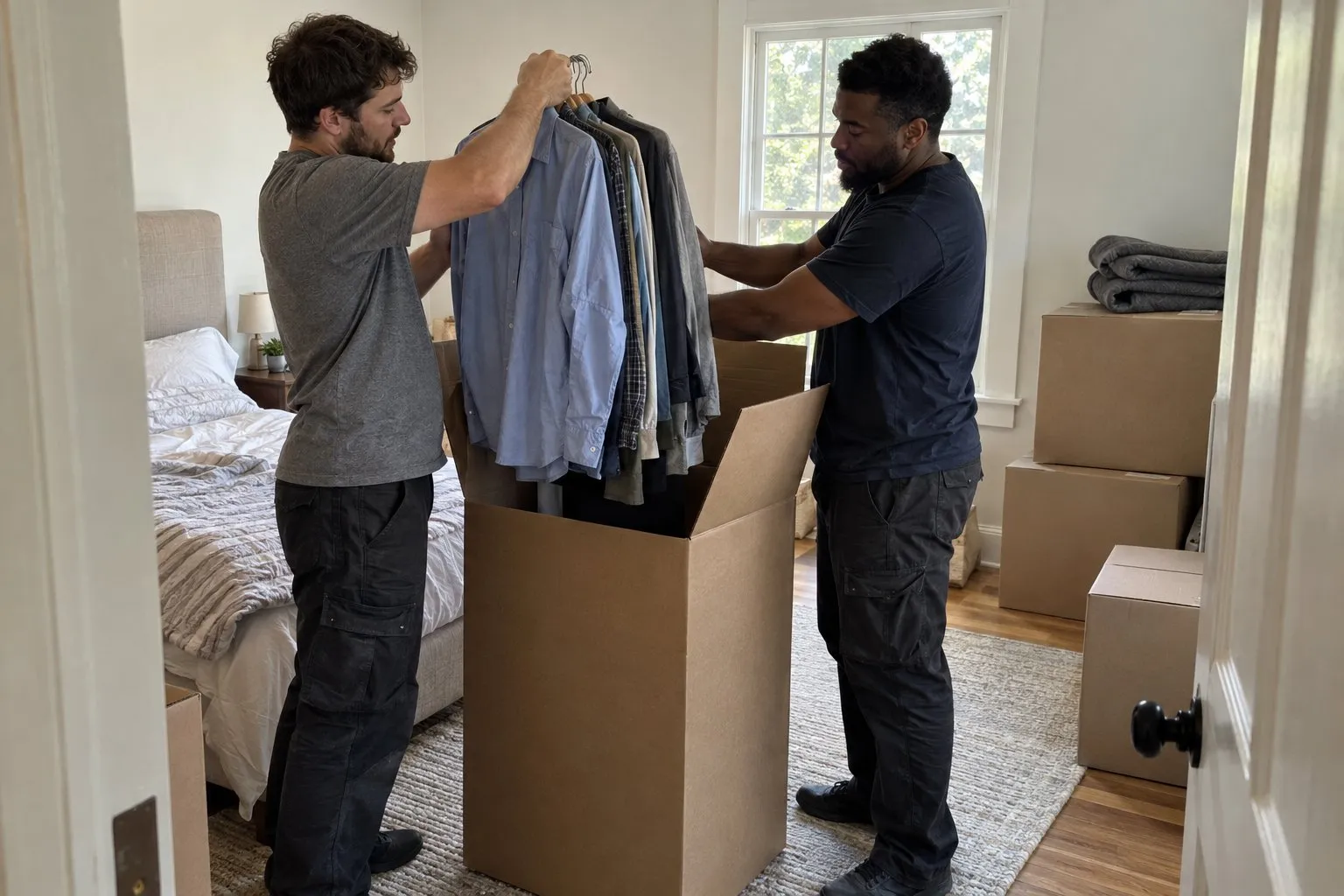
Odd-shaped or bulky items like lampshades, framed art, or small appliances often fit better in a custom-sized cardboard box than a bin's fixed dimensions. Cardboard also comes in far more size options, including wardrobe boxes and dish-pack boxes with built-in dividers that don't have a plastic bin equivalent.
Which One Fits a Long-Distance or Storage Move Better?
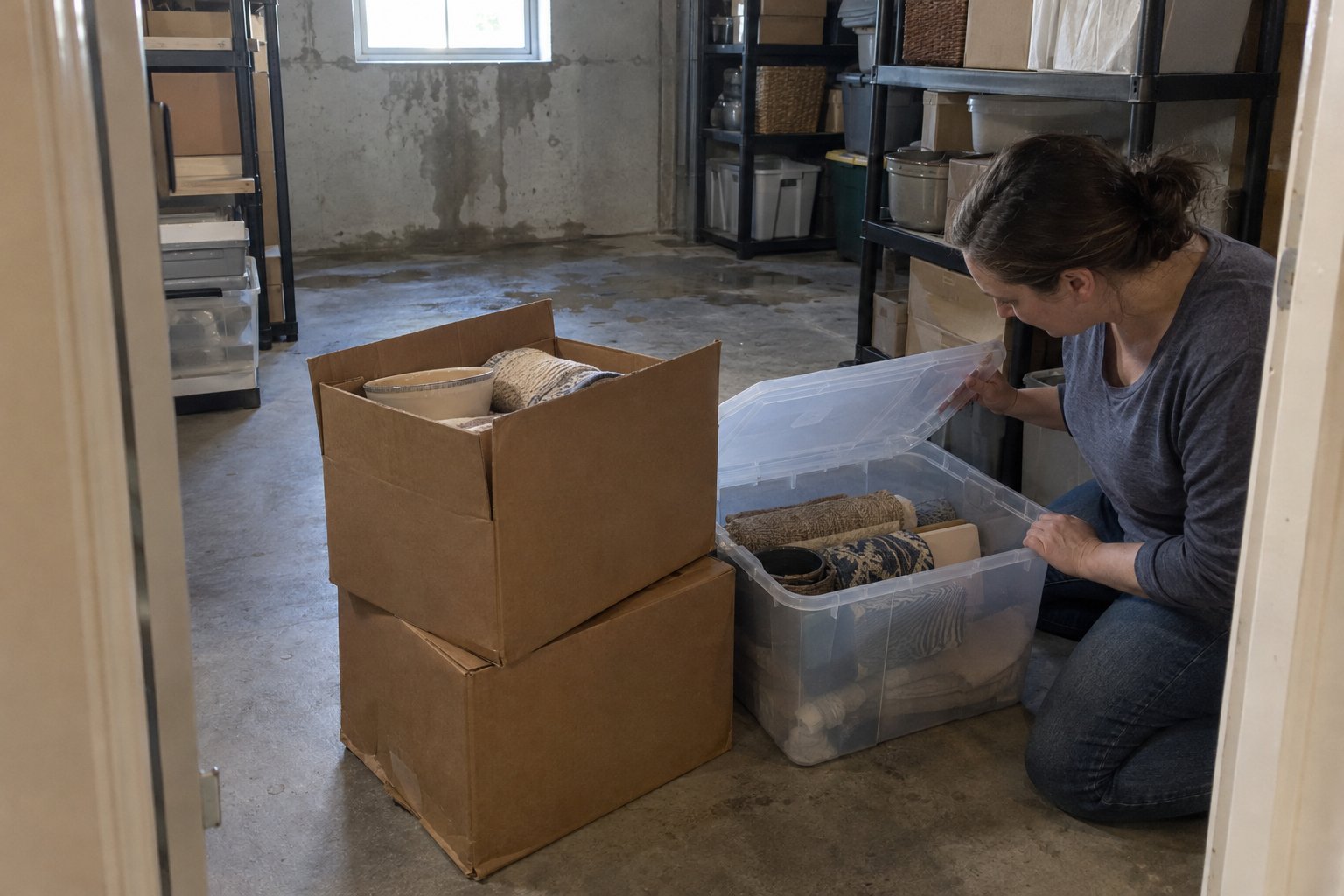
For a long distance move or anything headed into storage for more than a few weeks, plastic bins generally offer more protection against moisture, pests, and the extra handling that comes with longer transit times. For a short local move where everything gets unpacked within a day or two, cardboard usually does the job without needing to buy new bins.
If your plan includes storage before your items reach their final destination, bins are worth the investment for anything sensitive to humidity, like documents, electronics, or seasonal clothing. Everyday items that will be unpacked quickly rarely need that level of protection.
Who Should Use Boxes, and Who Should Use Bins?
Cardboard boxes suit a one-time move on a tighter timeline, where you need a lot of containers fast and don't plan to keep them afterward. Plastic bins suit anyone who moves more than once in a few years, has a garage or closet to store empty bins between moves, or is packing items that need protection from moisture. If you're relocating between towns like Niles, IL and Des Plaines, IL, the distance is short enough that either option works fine logistically, so the decision usually comes down to what you already own and what you're packing.
As a rule of thumb, most households end up using a mix: cardboard for the bulk of general packing, and a smaller set of plastic bins, maybe a dozen to twenty, for the items that need extra protection or quick access. For most single-family moves, that combination covers the full range of what needs to be packed.
Our Recommendation
For a typical local or long-distance move, start with cardboard boxes for the bulk of your packing and reserve plastic bins for anything fragile, moisture-sensitive, or going into storage. This approach keeps the bulk packing simple while still protecting the items that would be a real loss if damaged. Once everything is boxed and ready, our crews handle the loading of the truck regardless of which containers you chose, so pack with whatever setup makes your move easiest.
Whatever you land on, label every container clearly on at least two sides, including which room it belongs to and whether it holds anything fragile. That one habit does more for a smooth unload than the material the container is made from. If you're updating your address as part of the move, don't forget the paperwork that has nothing to do with boxes: setting up USPS mail forwarding a couple of weeks ahead keeps mail from getting lost in the shuffle between addresses.
Planning your move? Request a quote from Lift and Load Moving.

FAQs
Yes, most moves use both. Many people pack the bulk of their belongings in cardboard and reserve plastic bins for fragile, moisture-sensitive, or frequently needed items so they're easy to find first.
Not usually, since most bins have latching or snap-on lids, but a strip of tape across the seam adds a margin of safety if the bin will be stacked or shifted during loading.
A dozen to twenty bins is enough for most households to cover fragile and priority items, with cardboard boxes handling the rest of the packing.
Generally yes. Bins resist moisture and pests better than cardboard, which makes them a better choice for anything sitting in storage for more than a few weeks.
Generally yes. Bins resist moisture and pests better than cardboard, which makes them a better choice for anything sitting in storage for more than a few weeks.
Still have questions?

How to move with us?
Hit the “Get a Quote” button and tell us what you need.
Choose the service, date, and time that work best for you.
Our friendly team shows up on time and gets everything done safely.
Sit back while we take care of the rest.
