
How to Move a Dresser Through a Tight Stairwell Without Scraping the Walls
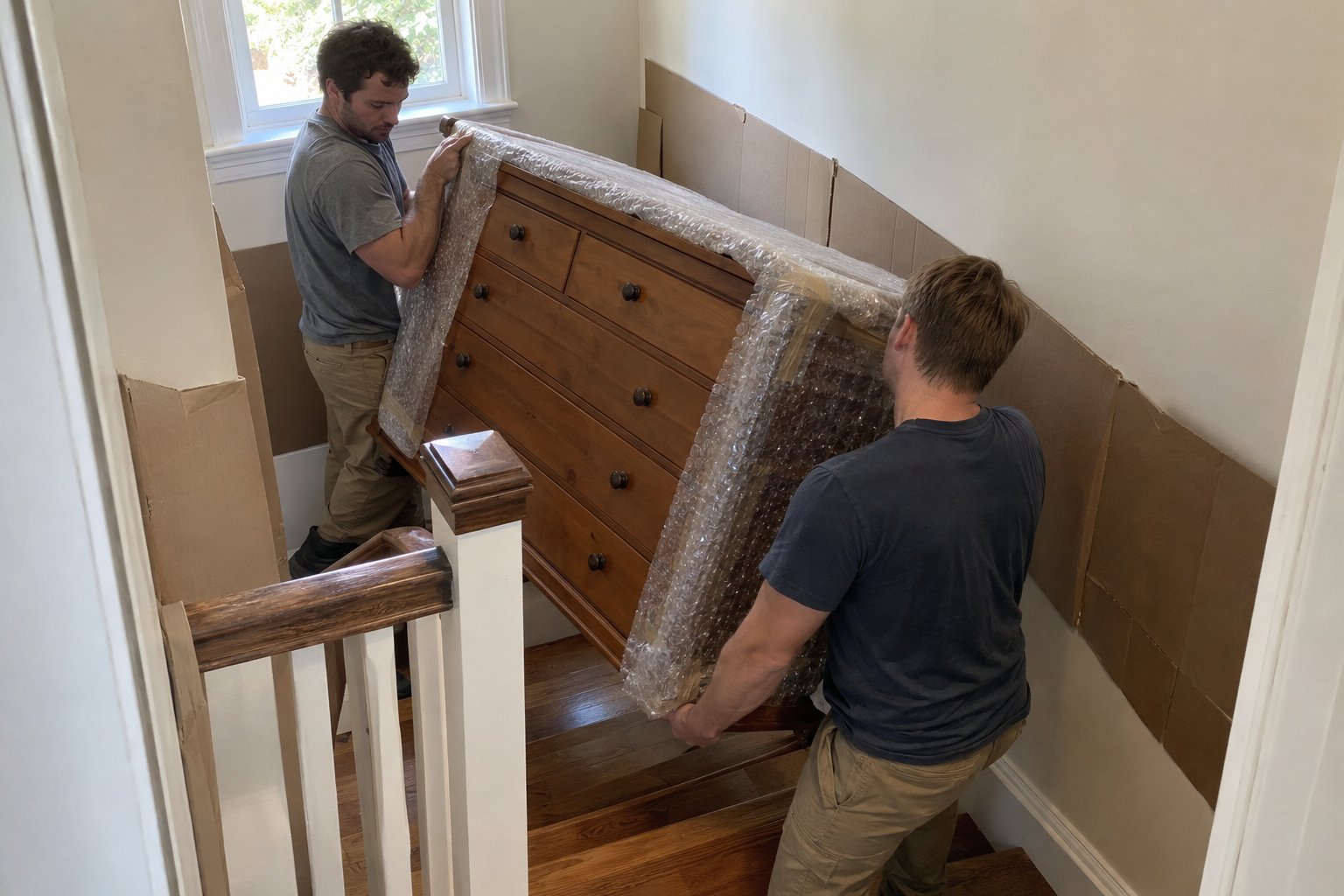
Moving a dresser through a tight stairwell comes down to one thing: finding the right pivot point before you ever lift it off the ground. Most gouged walls and jammed dressers happen because the crew tries to muscle the piece straight through a turn instead of tilting it to follow the stairwell's actual geometry. Get the angle right at the landing, and the rest of the carry is just controlled, steady steps.
This guide walks through the specific mechanics of narrow stairwells: how to read the turn before you commit, which grips give you the most control, and how to keep drywall and banisters unmarked when there is only an inch or two of clearance on either side. If your dresser needs a full prep routine first, our guide on how to move a dresser covers emptying and disassembly in more depth; this piece focuses on the stairwell itself.
Why Do Dressers Get Stuck in Tight Stairwells?
Dressers get stuck because they are carried as a flat rectangle through a space that isn't rectangular. Stairwells with mid-flight landings, 90-degree turns, or low ceilings require the dresser to change its angle relative to the floor several times in a short distance, and a crew that keeps it level the whole way runs out of room fast.
Before you lift anything, walk the stairwell empty and note where it narrows: the newel post at the bottom, the turn at a landing, and any light fixture or ceiling slope near the top. These three spots are where almost every stairwell jam happens, and knowing them in advance lets you plan the tilt before you're holding 150 pounds of furniture on a step.
Measure Before You Lift
Measure the dresser's height, depth, and diagonal (corner to corner), then compare that diagonal to the width of the stairwell at its narrowest turn. If the diagonal is close to or larger than the available width, you will need to remove drawers and possibly the legs or feet before attempting the carry, not after you're already stuck mid-flight.
What's the Best Angle to Carry a Dresser Up or Down Stairs?
The best angle keeps the dresser's long side roughly parallel to the stair stringer, tilted back 10 to 20 degrees so the top leads slightly ahead of the bottom. This lets the piece track the slope of the stairs instead of fighting it, and it keeps the heavier bottom half closer to the carrier who has better footing.
On the way down, the bottom carrier should face up the stairs rather than walking backward blind; this gives a clear sightline to each step. On the way up, the lead carrier goes in front and slightly higher, guiding the top corner through turns while the second carrier supports the weight from below. The same tilt-and-lead principle applies to other case goods, including the carry techniques described in our chest of drawers moving guide, though a chest's narrower footprint usually leaves more clearance to work with.
Handling the Landing Turn
A 90-degree turn on a landing is the single hardest point in most stairwell moves. Stop fully on the landing, square the dresser to the new direction, and pivot it as a controlled rotation rather than trying to walk the turn while still moving forward. Rushing a landing turn is how corners catch drywall and how carriers lose their footing on the direction change.
How Do You Protect Walls and Banisters While Moving a Dresser on Stairs?
Protect walls and banisters by padding the specific contact points before the lift, not after you notice a scuff. Furniture blankets or moving pads taped (not nailed) to corners, newel posts, and any protruding light switches absorb the glancing contact that happens naturally in a tight turn.
- Pad the dresser's leading corners and top edge, since these make first contact in a turn.
- Pad the newel post and any exposed drywall corner at the landing.
- Lay a slip-resistant runner or old blanket on the stairs themselves if they're carpeted or freshly finished, to catch drips or dragged edges.
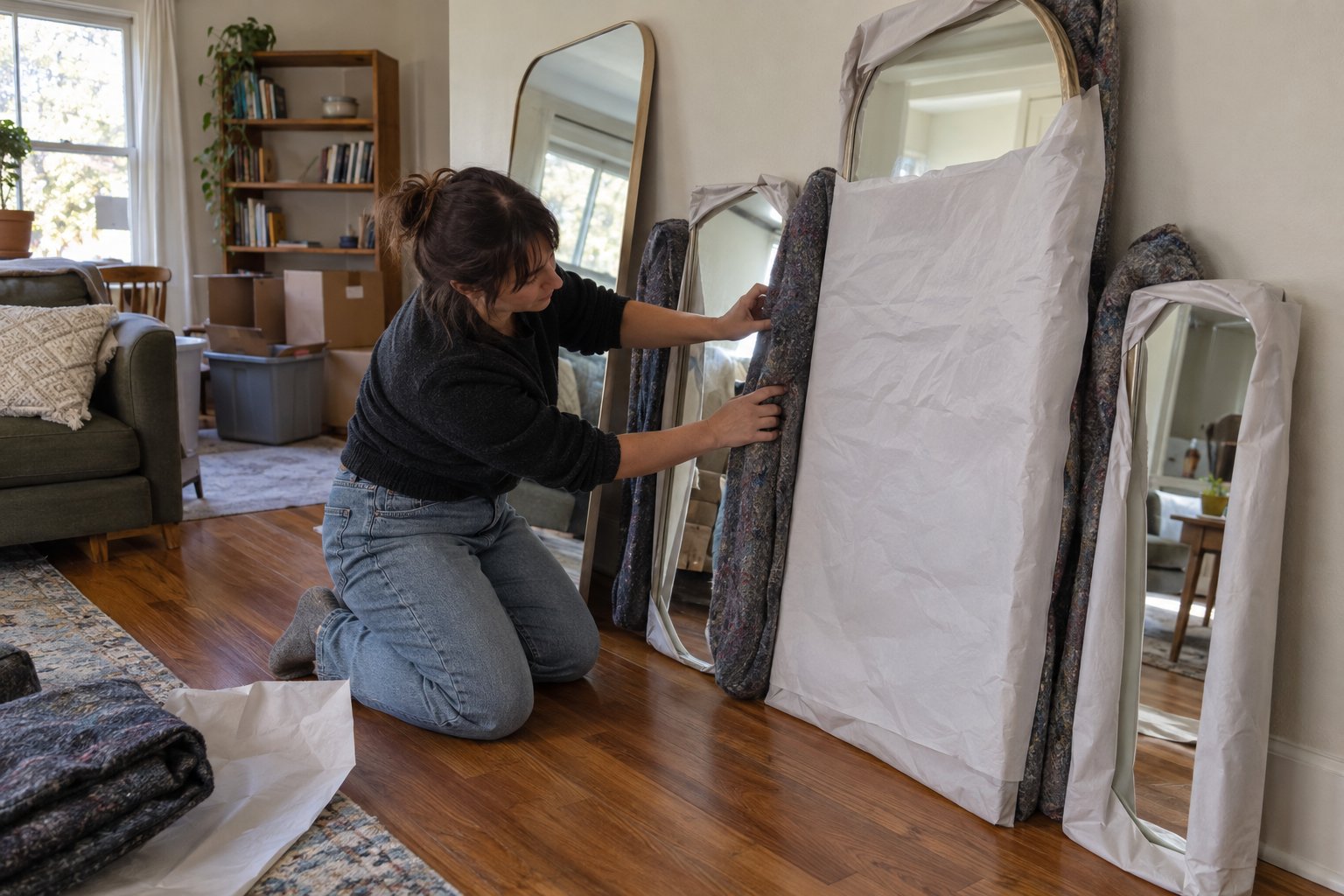
- Remove wall art, mirrors, and light fixtures along the carry path rather than trying to carry around them.
A second set of eyes, someone walking just ahead of the carry team and calling out clearance, catches the near-misses that the carriers themselves can't see from inside the lift. For broader strategies on shielding floors and trim throughout the whole home, see our guide on how to protect floors and walls on moving day.
Should You Empty and Disassemble the Dresser First?
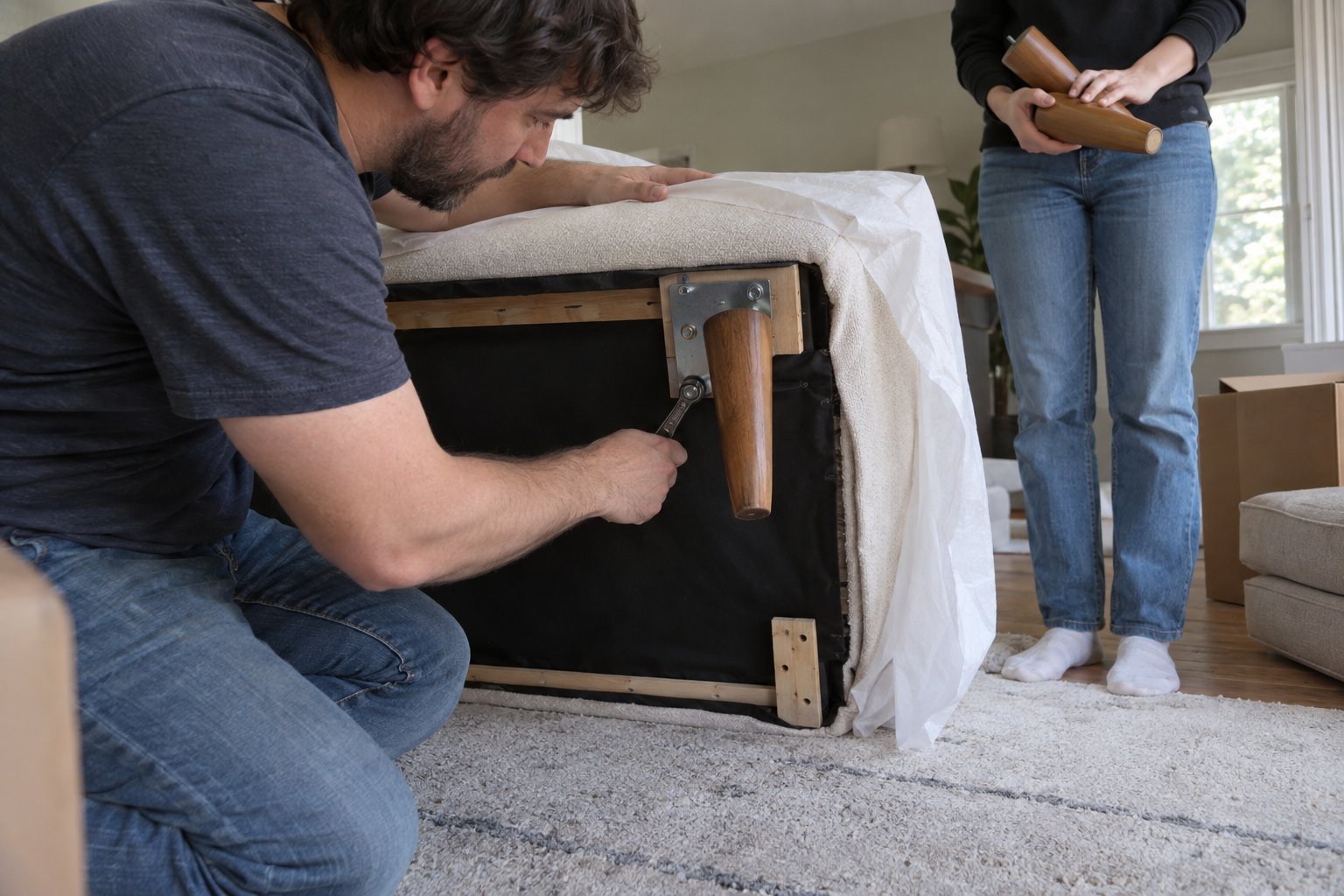
Yes, in almost every tight-stairwell scenario. An emptied dresser is lighter, more predictable in weight distribution, and far less likely to have drawers slide open mid-carry and catch on a wall or railing. Removing the legs, feet, or a detachable mirror (if present) also shaves off the inches that often make the difference between a smooth turn and a wedged dresser.
Secure any drawers that must stay in place with stretch wrap or painter's tape across the front, never standard packing tape directly on finished wood. Tape the drawer pulls down flat so they can't snag on a banister or doorframe as the piece rotates through a turn.
When Is a Tight Stairwell a Job for Extra Hands?
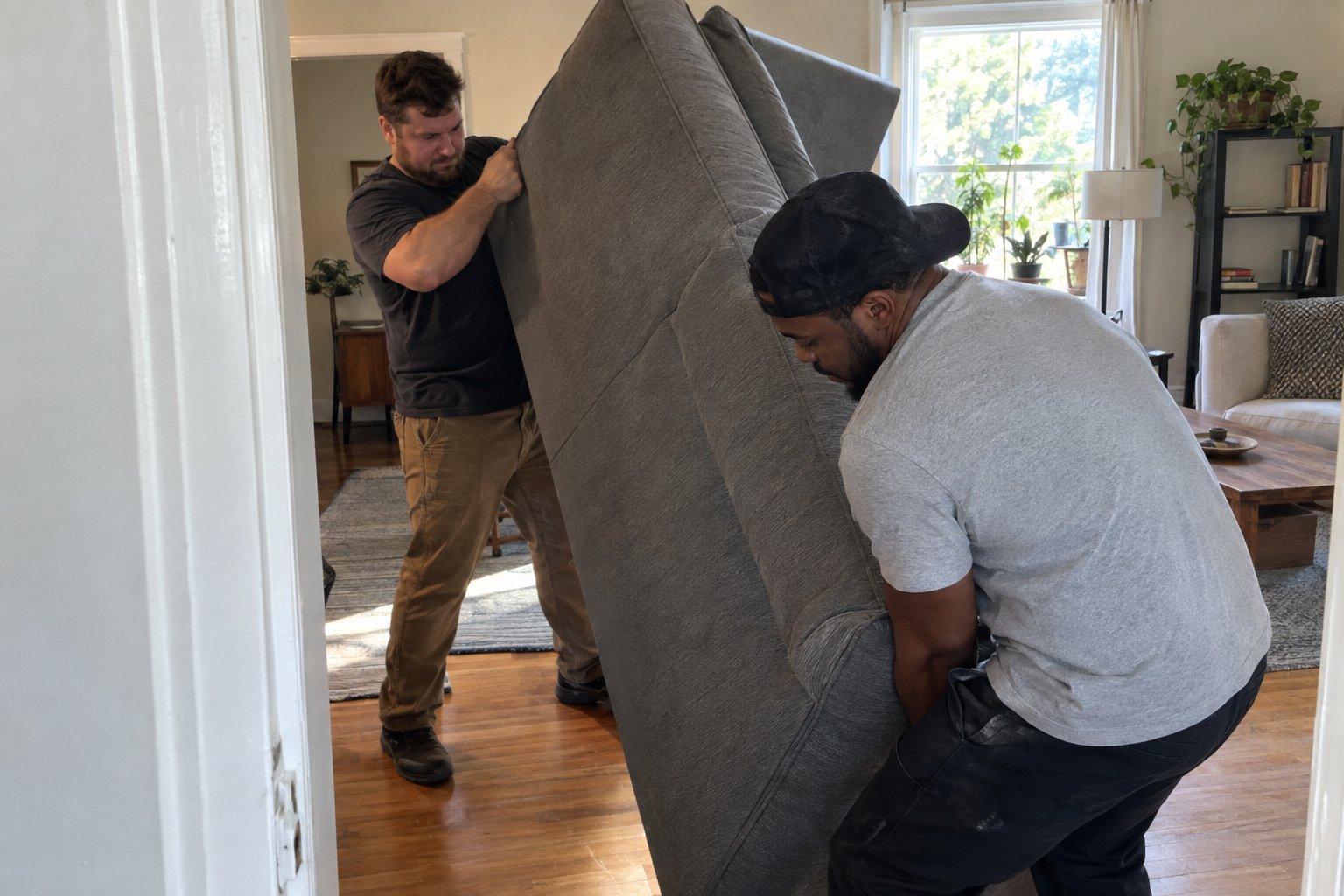
A stairwell is a two-person minimum job, and a third set of hands becomes necessary once the turn is sharper than about 90 degrees, the dresser exceeds roughly 150 pounds, or the ceiling height at the landing is under seven feet. The extra person's job isn't to lift, it's to manage the pivot and call clearance while the two carriers focus purely on controlling the weight. If you're unsure how many people your specific layout needs, our breakdown of how many movers you actually need walks through the variables that change the math.
If the stairwell is narrow enough that even an emptied, disassembled dresser barely clears, that's a sign to stop and reassess rather than force it. A labor-only moving crew that handles stairwells regularly will recognize these limits quickly and know when a piece needs to go up on its side, through a window, or via an alternate route entirely.
Bringing It All Together
A tight stairwell doesn't have to mean a damaged dresser or a damaged wall. Measure the diagonal against the narrowest turn, plan your tilt angle before you lift, pad the contact points in advance, and empty or disassemble the piece whenever the clearance is close. Most stairwell accidents happen from rushing a landing turn, not from the weight of the piece itself.
If you'd rather not gamble on a scraped wall or a strained back, experienced movers can walk the stairwell with you first and plan the carry before anything gets lifted. Get a moving quote and have a trained crew handle the tight turns for you.




FAQs
Stop fully on the landing instead of trying to walk the turn mid-stride. Square the dresser to the new direction, pivot it as a controlled rotation, and keep the bottom carrier facing up the stairs for a clear sightline on footing.
If the dresser's corner-to-corner diagonal is close to or exceeds the stairwell's width at its tightest turn, even an emptied and disassembled dresser may not clear. At that point, consider an alternate route such as a window or exterior access.
In most tight stairwells, yes. Emptying the drawers reduces weight and prevents them from sliding open mid-carry and catching on a wall, railing, or doorframe during a turn.
Pad the dresser's leading corners and top edge along with the newel post and any exposed drywall corner at the landing before you lift. These are the specific contact points where glancing scrapes happen during a turn.
Pad the dresser's leading corners and top edge along with the newel post and any exposed drywall corner at the landing before you lift. These are the specific contact points where glancing scrapes happen during a turn.
Still have questions?
How to move with us?
Hit the “Get a Quote” button and tell us what you need.
Choose the service, date, and time that work best for you.
Our friendly team shows up on time and gets everything done safely.
Sit back while we take care of the rest.
