
How to Move a Dresser: The Right Way to Empty, Disassemble, and Carry It Safely

Knowing how to move a dresser correctly is something most people figure out too late — usually after a drawer has slid open mid-carry, a mirror has cracked against a door frame, or someone's back has given out on the third stair. A dresser looks manageable. It's boxy, it has a flat bottom, and it doesn't flex the way a mattress does. But dressers are deceptively heavy, awkward to grip, and almost always taller and wider than the doorways and hallways they need to pass through. Move one the wrong way and you're dealing with gouged hardwood floors, broken hardware, or an injury that sidelines the entire moving day.
Need a professional crew to handle the heavy lifting so your dresser arrives without damage? Call 224-404-0069 or get a free labor-only moving quote from Lift & Load today.
Why Moving a Dresser Is Harder Than It Looks
A standard six-drawer dresser can weigh anywhere from 80 to well over 200 pounds depending on its construction — solid wood dressers in particular can surprise people who are used to handling flat-pack furniture. The weight alone is only part of the challenge. The real difficulty is geometry: dressers are tall, wide, and have almost no natural grip points. The sides are flat, the bottom is typically flush to the floor, and lifting from the top means you're pulling at an awkward angle that transfers directly to your lower back.
Then there's the mirror. Many dressers come with an attached or bolt-on mirror that adds height, weight, and fragility all at once. A dresser with a mirror attached is no longer a box — it's a top-heavy structure with a glass panel that can shatter against a wall or ceiling if the angle shifts unexpectedly.
The final complication is what's inside the dresser. People routinely try to move dressers with the drawers still full, reasoning that it saves time. It doesn't. Full drawers shift the center of gravity, make the dresser dramatically heavier, and create a real risk of drawers sliding open and spilling their contents — or pinching the person carrying the piece. Understanding these challenges before you start is how you avoid them entirely.
Step 1: Empty the Dresser and Remove the Drawers
This is non-negotiable. Before a dresser moves an inch, every drawer should be fully emptied and removed from the frame. This applies even if the drawers feel snug and you're confident they won't slide. Here's why it matters:
Weight Reduction
A fully loaded six-drawer dresser filled with clothing can weigh two to three times more than the empty piece. Removing the contents and the drawers themselves reduces the weight to the most manageable baseline possible. Each drawer also becomes an independent carry — flat, stackable, and easy to transport without straining.
Stability and Safety
Even drawers that feel secure on flat ground will shift when the dresser tilts, which it will almost certainly need to do to navigate doorways or stairs. A sliding drawer mid-carry can throw off your balance, jam against a wall, or dump its contents at the worst possible moment. Remove them before you start, every time.
How to Handle the Drawers
Pack the drawer contents into boxes or bags and label them with the drawer's position (top left, middle right, etc.) so reassembly is straightforward. Set the empty drawers aside and transport them separately — either stacked flat in the truck or carried by a second person while the first carries the dresser frame.
Step 2: Detach the Mirror Before You Move Anything
If your dresser has an attached mirror, remove it before the dresser leaves its current position. Attempting to move a tall dresser with a mirror attached — even a short distance — is one of the fastest ways to break an otherwise intact piece.
How Mirrors Attach
Most dresser mirrors attach via one of three methods: bolts through a back bracket, wooden pins that slot into the dresser frame, or a keyhole-and-screw system. Check the back of the mirror and the top of the dresser to identify the attachment method before applying any force. In most cases, removing a dresser mirror requires only a screwdriver and takes under five minutes.
Protecting the Mirror During Transport
Once detached, wrap the mirror in moving blankets, bubble wrap, or at minimum several layers of packing paper. Secure the wrapping with stretch wrap or tape — not tape applied directly to the glass or the frame's finish. Transport the mirror upright, not flat, and ensure it's braced against the truck wall so it cannot shift in transit. A mirror lying flat on a truck bed is one hard stop away from a crack.
Step 3: Protect the Dresser Frame for the Move
A bare dresser slid across hardwood, bumped against a door frame, or set down hard on a corner will show the damage immediately. Protection is inexpensive and takes only a few minutes.
Moving Blankets
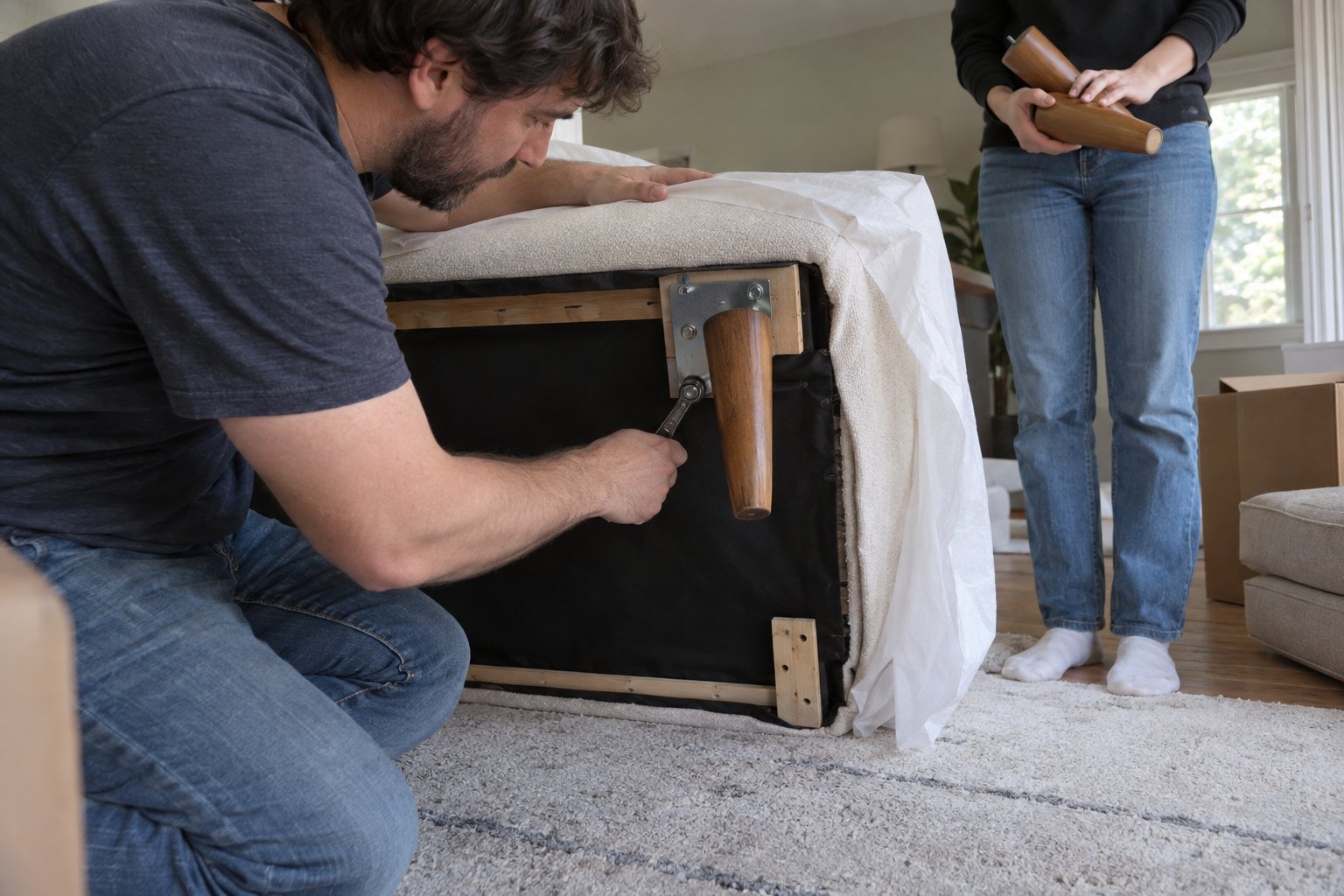
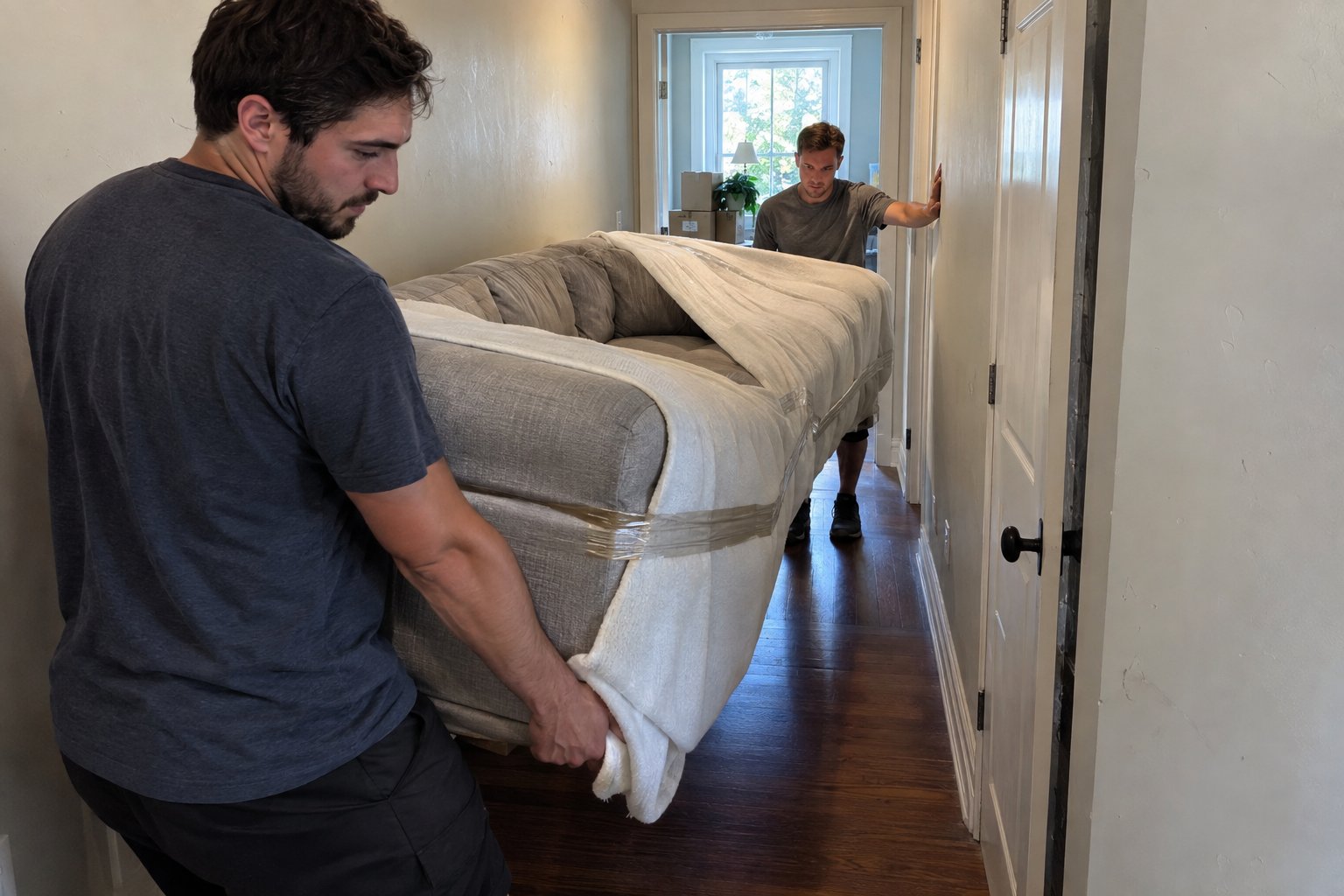
Wrap the dresser frame in at least one moving blanket, secured with stretch wrap. Pay extra attention to the corners, which are the first points of contact with every doorway and wall you pass through. If the dresser has decorative hardware — knobs, pulls, or ornamental trim — consider wrapping those individually or removing them and packing them in a zip-lock bag taped to the back of the piece.
Furniture Sliders for Short Distances
If you need to move the dresser across a hard floor before it reaches the truck, place furniture sliders under each leg or corner. This allows one person to glide the piece to the doorway without lifting — saving your strength for the stairs, the truck ramp, or both. Never drag a dresser on hardwood without sliders; the scratches are immediate and often irreparable.
Step 4: Navigate Doorways and Tight Corners Correctly
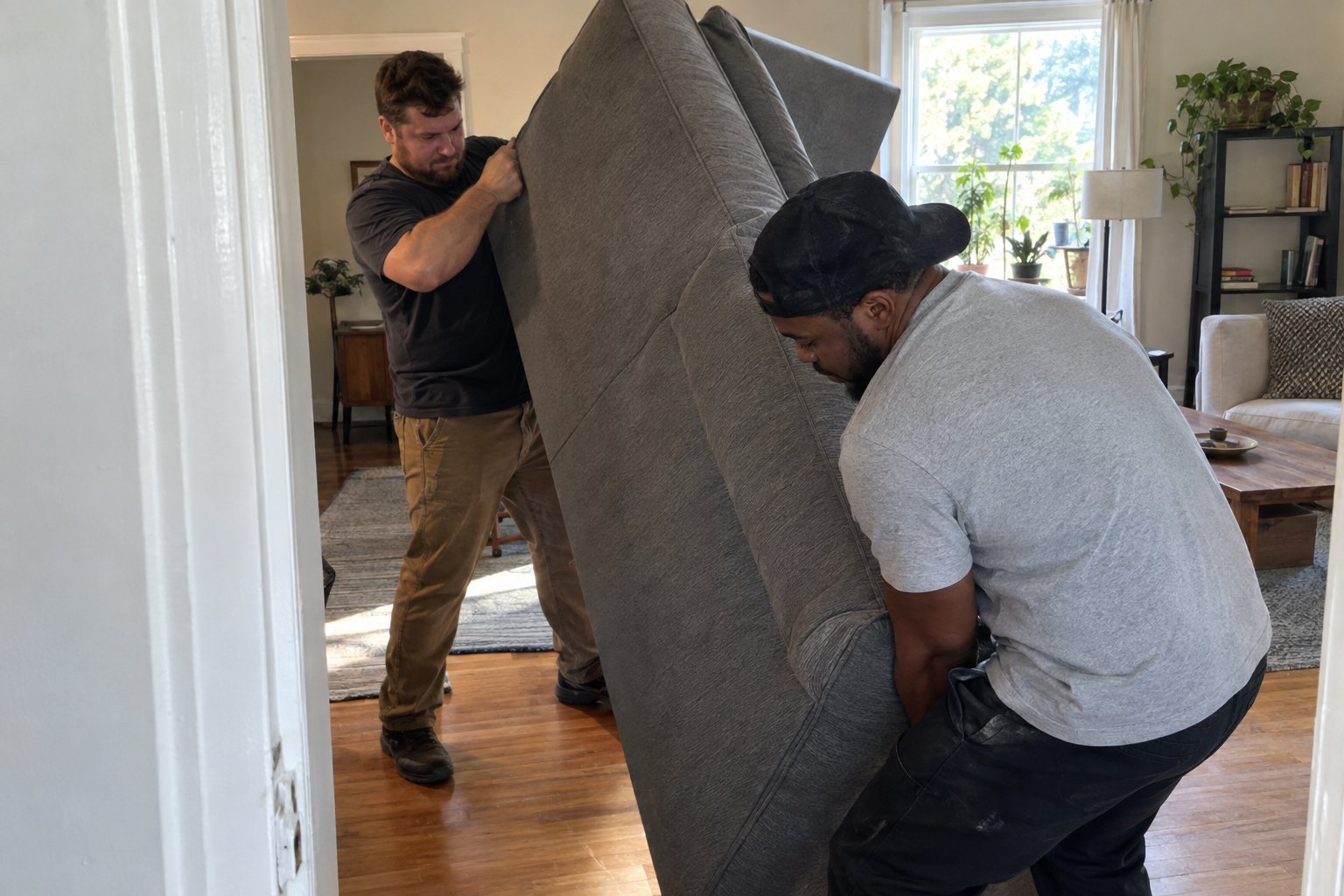
Most dressers will not pass through a standard doorway in their natural orientation. A dresser that is 36 inches wide cannot pass through a 32-inch doorway standing upright facing forward. You have two options: tilt or disassemble.
The Tilt Method
For most dressers, the tilt method is the practical solution. Tip the dresser onto its side so that its width becomes its height. This often allows a dresser that's too wide to pass through a doorway to clear the opening with room to spare. Two people are essential here — one to control the top and one to control the bottom — and the approach should be slow and deliberate, not rushed.
Measuring Before You Attempt It
The five minutes you spend measuring the dresser and the doorway before you start are far more valuable than the time you'll spend re-hanging a door that got knocked off its hinges. Measure the dresser's width, depth, and height. Measure the doorway's clear opening width and height. Compare those numbers and decide on your approach before anything leaves the wall.
Stairways and Landings
On stairs, the heavier end of the dresser should always be on the lower side. The person at the bottom carries more of the weight and sets the pace. The person at the top guides and controls the angle. Move in slow, deliberate steps — not all at once. At landings, stop completely, reassess the angle, and pivot before continuing. Never try to power through a tight stairwell turn with a heavy dresser without stopping to check your path.
Step 5: Load the Dresser into the Truck the Right Way
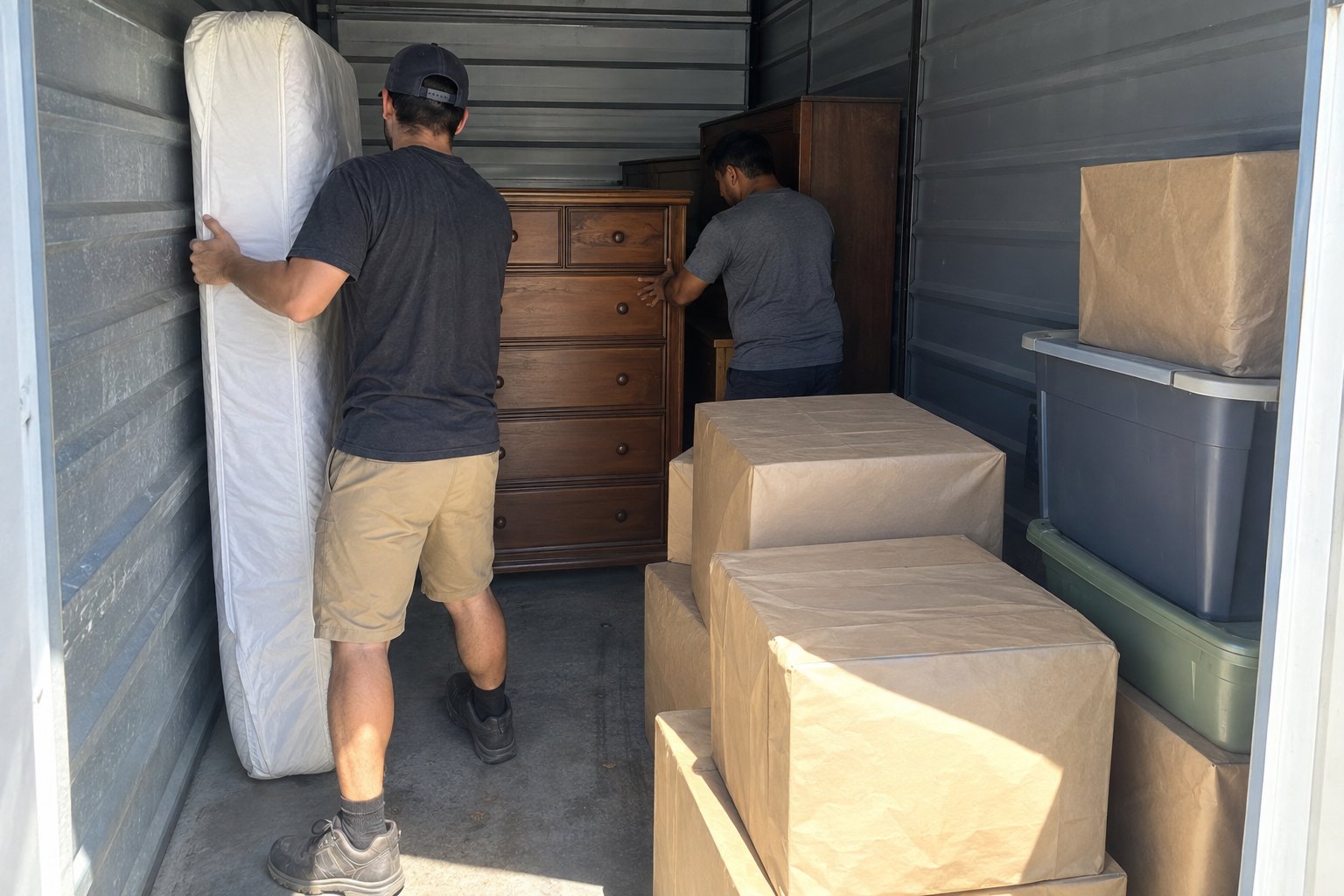
A dresser in a moving truck needs to be secured so it cannot shift, tip, or slide during transport. Even a well-packed truck encounters sudden stops, and a 150-pound dresser in motion is dangerous to everything around it.
Load the dresser against the truck wall, standing upright whenever the truck's interior height allows. Use tie-down straps or a ratchet strap looped around the dresser and anchored to the truck's side rails. If the dresser must go on its side, ensure the heaviest edge (usually the base) is on the bottom and that nothing sharp or heavy is stacked directly against the finished surface.
Reload the drawers inside the truck if you have space — stacking them flat inside or around the dresser frame saves room and keeps them from sliding around. Just confirm the truck's weight distribution is balanced before you close the door.
When to Call a Labor-Only Crew Instead
There are situations where the right answer is simply to have a professional crew handle the dresser — particularly if it's a large solid-wood antique, a piece with an integrated mirror you're not confident disassembling, or if the path to the truck involves multiple flights of stairs and tight turns. A labor-only moving crew brings the tools, the technique, and the manpower to move heavy furniture without floor damage, frame damage, or injury. You supply the truck; they supply everything else.
If you're moving a full bedroom or clearing an entire home, the cost of professional moving labor is almost always justified by the time saved and the damage avoided. Get a free labor-only quote from Lift & Load and see what a crew costs for your specific job.



FAQs
No. Always remove the drawers before moving a dresser. Full drawers dramatically increase the overall weight, shift the center of gravity, and can slide open mid-carry — creating both a safety hazard and a risk of damaging the piece. Empty the drawers, pack the contents separately, and transport the drawers as individual flat pieces.
Yes, always remove an attached mirror before moving the dresser. A dresser with a mirror attached becomes top-heavy and difficult to maneuver through doorways safely. Mirrors can crack or shatter against walls and ceilings when the dresser tilts, which it almost certainly will need to during the move. Removing the mirror typically takes just a few minutes with a screwdriver.
The most common solution is the tilt method — tip the dresser onto its side so its width becomes its height, which often allows it to pass through a doorway it couldn't fit through in its standard orientation. Before attempting this, measure both the dresser (width, height, depth) and the doorway (clear opening width and height) so you know your approach before lifting anything.
Place furniture sliders under each corner or leg before sliding the dresser across hardwood or tile floors. Sliders allow one person to glide the piece smoothly without scratching or gouging the surface. Never drag a dresser without sliders — the damage to hardwood floors happens immediately and is often deep enough to require refinishing. Moving blankets under the piece also help on shorter slides.
Place furniture sliders under each corner or leg before sliding the dresser across hardwood or tile floors. Sliders allow one person to glide the piece smoothly without scratching or gouging the surface. Never drag a dresser without sliders — the damage to hardwood floors happens immediately and is often deep enough to require refinishing. Moving blankets under the piece also help on shorter slides.
Still have questions?

How to move with us?
Hit the “Get a Quote” button and tell us what you need.
Choose the service, date, and time that work best for you.
Our friendly team shows up on time and gets everything done safely.
Sit back while we take care of the rest.
.avif)