
How to Pack Glasses for Moving Without Losing a Single One
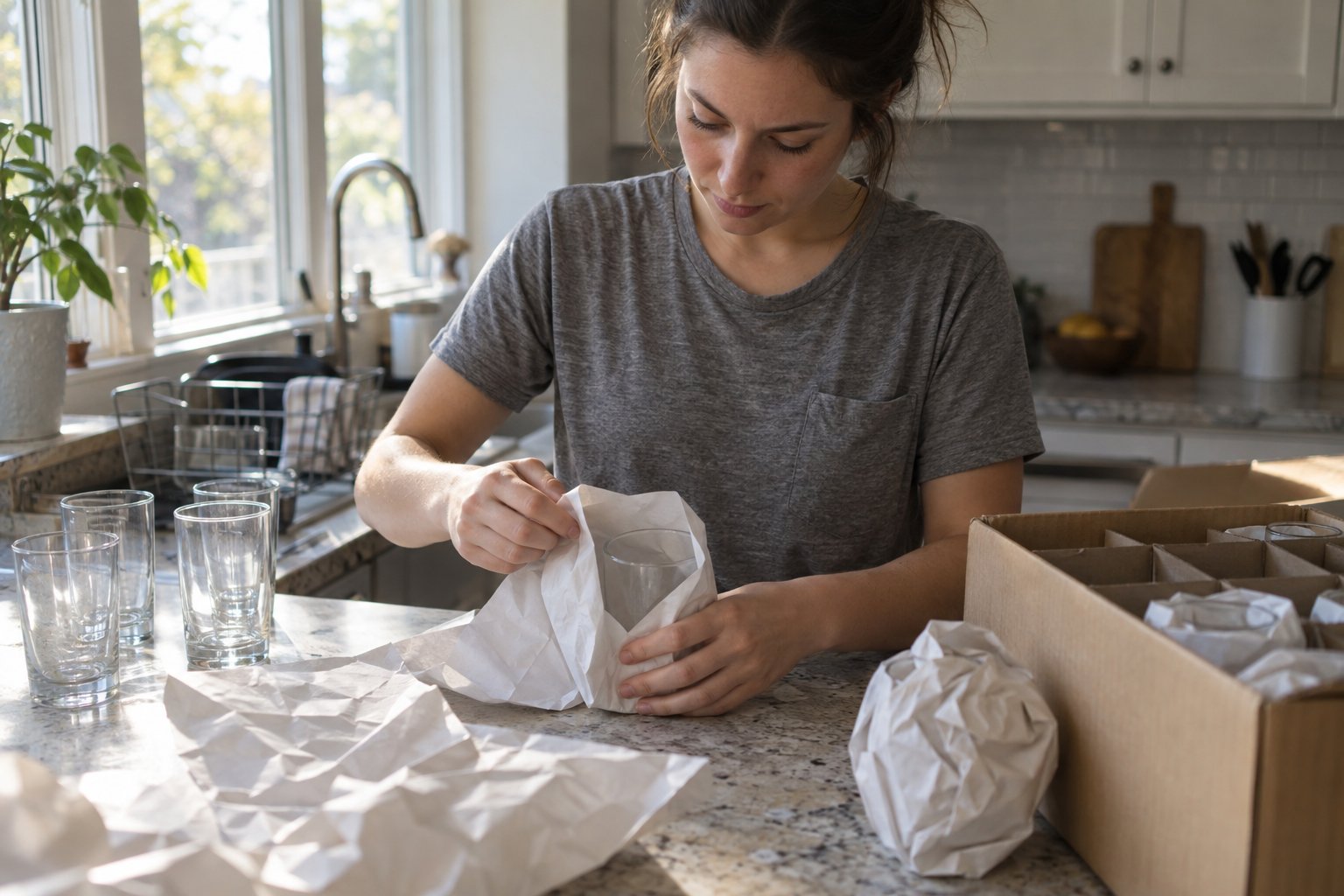
Packing glasses for moving comes down to three things: cushioning every surface that can chip, keeping each piece from knocking into its neighbor, and never stacking weight on top of a box that holds anything fragile. Glasses do not break because movers are careless. They break because the box they were in let them shift, touch, or carry a weight they were never built to support.
This is a narrower problem than packing dishes or packing a kitchen in general. Plates survive flat stacking and a reasonable amount of pressure. Glasses, especially stemware and anything with a thin rim, do not. They need a different box, a different wrap, and a different way of loading the truck. Here is how to do it so your everyday tumblers, your good wine glasses, and everything in between all arrive in one piece.
What Supplies Do You Actually Need to Pack Glasses?
You need a sturdy box no larger than a medium size, packing paper or cell dividers, and something soft for the bottom and top of the box. Bubble wrap helps for stemware and anything with handles, but plain newsprint paper does most of the work for everyday glassware.
Skip oversized boxes. A large box filled with glasses is heavy enough to bow at the bottom and tempting enough that someone stacks something heavier on top of it, which is how whole rows get crushed. A dish-pack or cell-divider box (the kind with cardboard inserts that create individual slots) is worth seeking out if you have a large glassware collection, but a medium box with enough paper cushioning works fine for smaller kitchens. If you are unsure what your move will need overall, a professional packing service can supply the right box sizes and dividers before moving day so you are not improvising with whatever is on hand.
How Do You Wrap Everyday Drinking Glasses?
Wrap each glass individually in a sheet of packing paper, starting at a corner and rolling diagonally so the paper twists closed at the top and bottom. Stuff a little paper inside the glass itself before wrapping, since an empty cavity is a weak point that cracks under pressure.
Lay a two-inch cushion of crumpled paper in the bottom of the box before anything goes in. Pack glasses upright, never on their side, and never upside down resting on the rim, which is the thinnest and most breakable part of most glassware. Fill every gap between glasses with crumpled paper until nothing can shift when you tilt the box. Top it off with another thick layer of paper before closing the lid, and write "FRAGILE, GLASS, THIS SIDE UP" on at least two sides plus the top.
Packing Wine Glasses and Stemware for a Move
Stemware needs more wrap than tumblers because the stem and bowl are both thin and the base is often wider than the bowl, which makes the whole piece top-heavy. Wrap the bowl first with a few sheets of paper, then wrap the entire glass again from base to rim so the stem is fully cushioned on every side.
If you have the original box the stemware came in, with its foam inserts, use it. That packaging was designed specifically for that glass and nothing does the job better. Without it, bubble wrap around the bowl and stem, secured with tape, adds a layer of shock absorption that paper alone does not provide. Pack stemware standing upright in a dish-pack box with dividers whenever possible. If you are using a plain box, stand each wrapped piece on its base and surround it with enough crumpled paper that neighboring glasses cannot touch.
Should Glassware Boxes Go in the Truck a Certain Way?
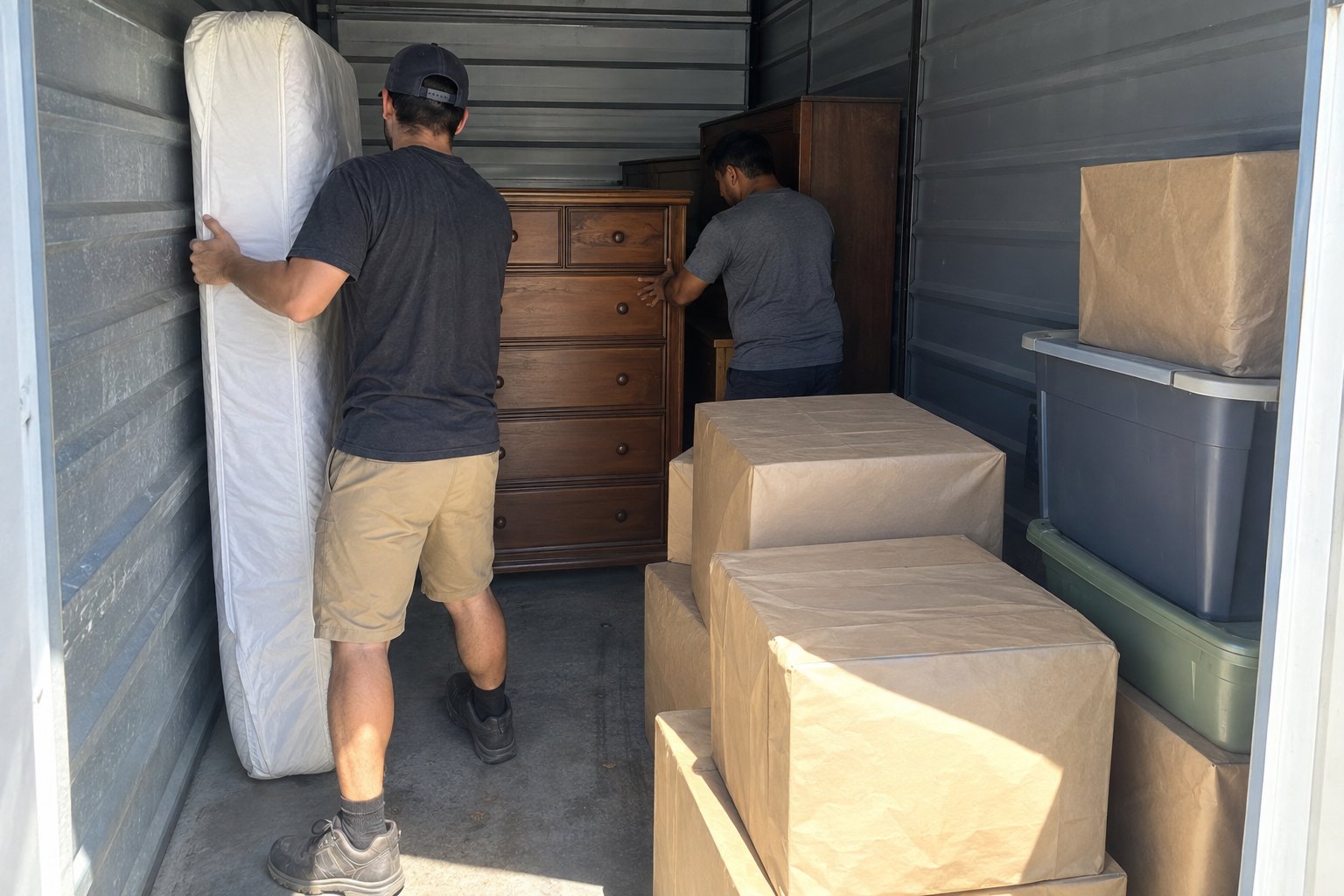
Yes. Glassware boxes should be among the last items loaded and the first unloaded, positioned so nothing heavier sits on top of them and so they are not wedged where shifting furniture can crush them in transit. Treat the "FRAGILE" label as a loading instruction, not a suggestion.
In practice this means glassware boxes travel on top of furniture, in the cab if there is room, or in a dedicated layer with other light, fragile boxes stacked no more than two high. If you are working with a labor-only moving crew to load and unload a rental truck or container, point out which boxes are glassware before they start stacking, so your fragile items get placed with intention rather than wherever there happens to be space.
What About Packing an Entire Kitchen, Not Just the Glasses?
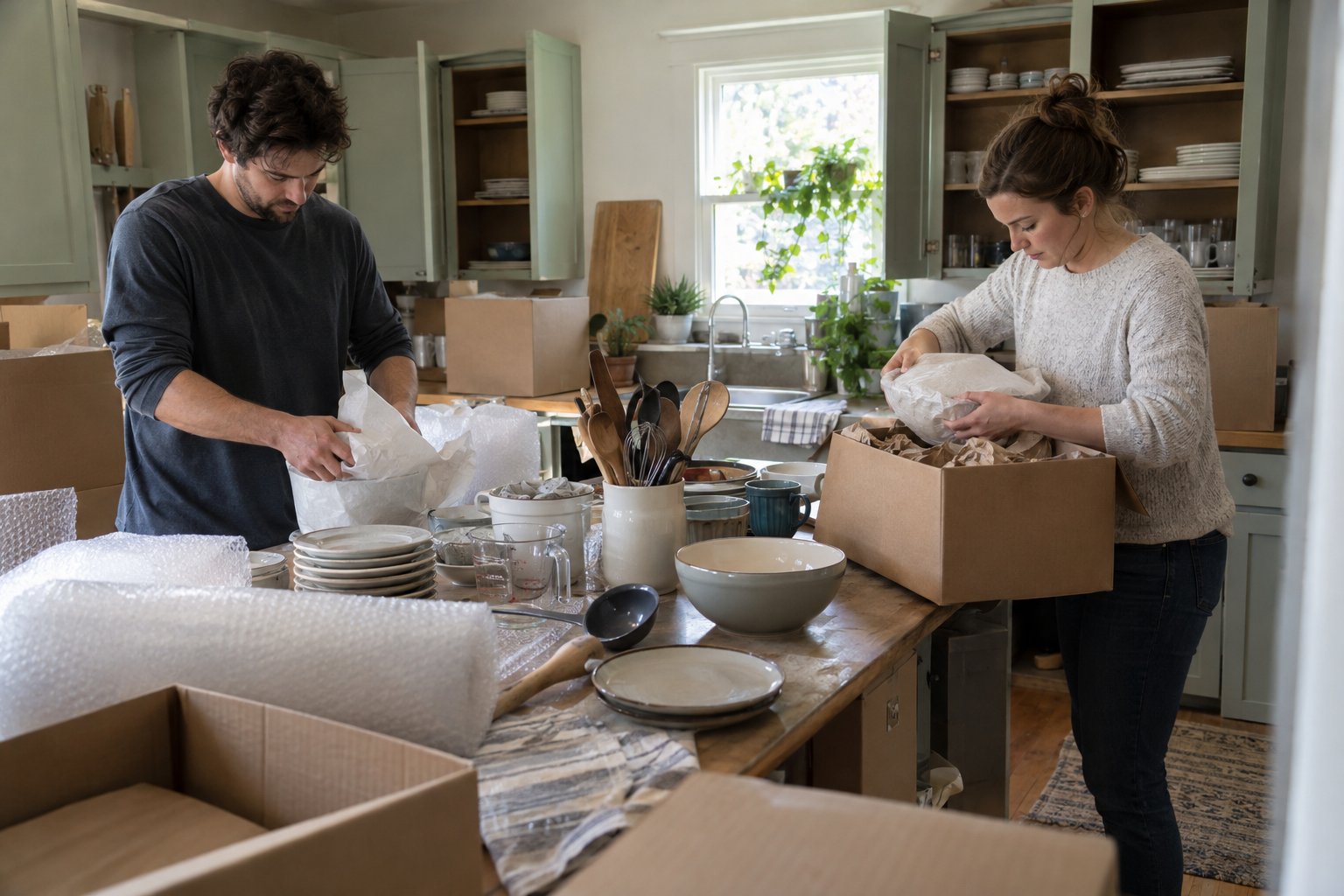
Glasses are usually one box among many when you are clearing out a kitchen, and the same fragile-item logic applies to plates, bowls, and serving pieces, though the wrapping technique differs slightly for flat items. If dishes are next on your list, a dedicated look at how to pack dishes for moving covers the flat-stacking method that keeps plates from chipping in transit.
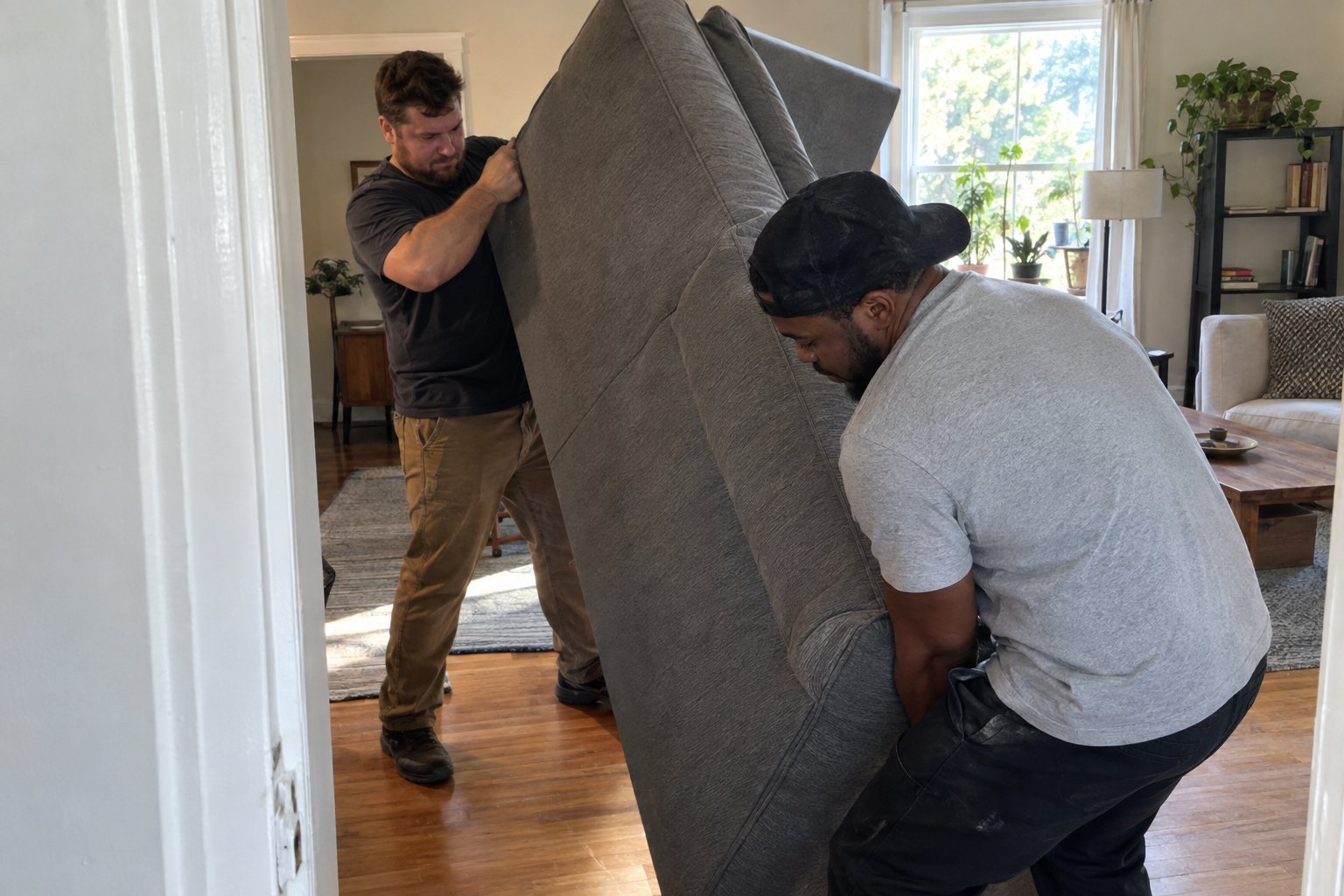
Once the fragile boxes are packed and labeled, the bigger question is usually how they fit into the rest of the load alongside furniture and appliances. A crew that handles glassware carefully should handle the same way for everything else going on the truck, which is where getting a moving quote for labor-only help pays off: you do the packing your way, and the lifting and loading get handled by people who do it daily.
Common Mistakes That Lead to Broken Glasses
Most breakage traces back to one of a few habits: packing glasses loose without individual wrapping, using a box that is too large and ends up overloaded, or stacking something heavy on a box marked fragile because the label got ignored in a rush. Any one of these is enough to crack a rim or shatter a bowl that would have survived with ten extra seconds of care. Lamps break for the same reasons, so our guide on how to pack lamps for moving is worth reading next.
The fix is almost always slowing down at the packing stage rather than at the moving stage. A well-wrapped, well-labeled, moderately filled box of glasses survives rough handling far better than a perfectly handled box that was packed loose. Spend the extra few minutes per glass now, and you will not spend the move-in day picking broken glass out of a box.
FAQs
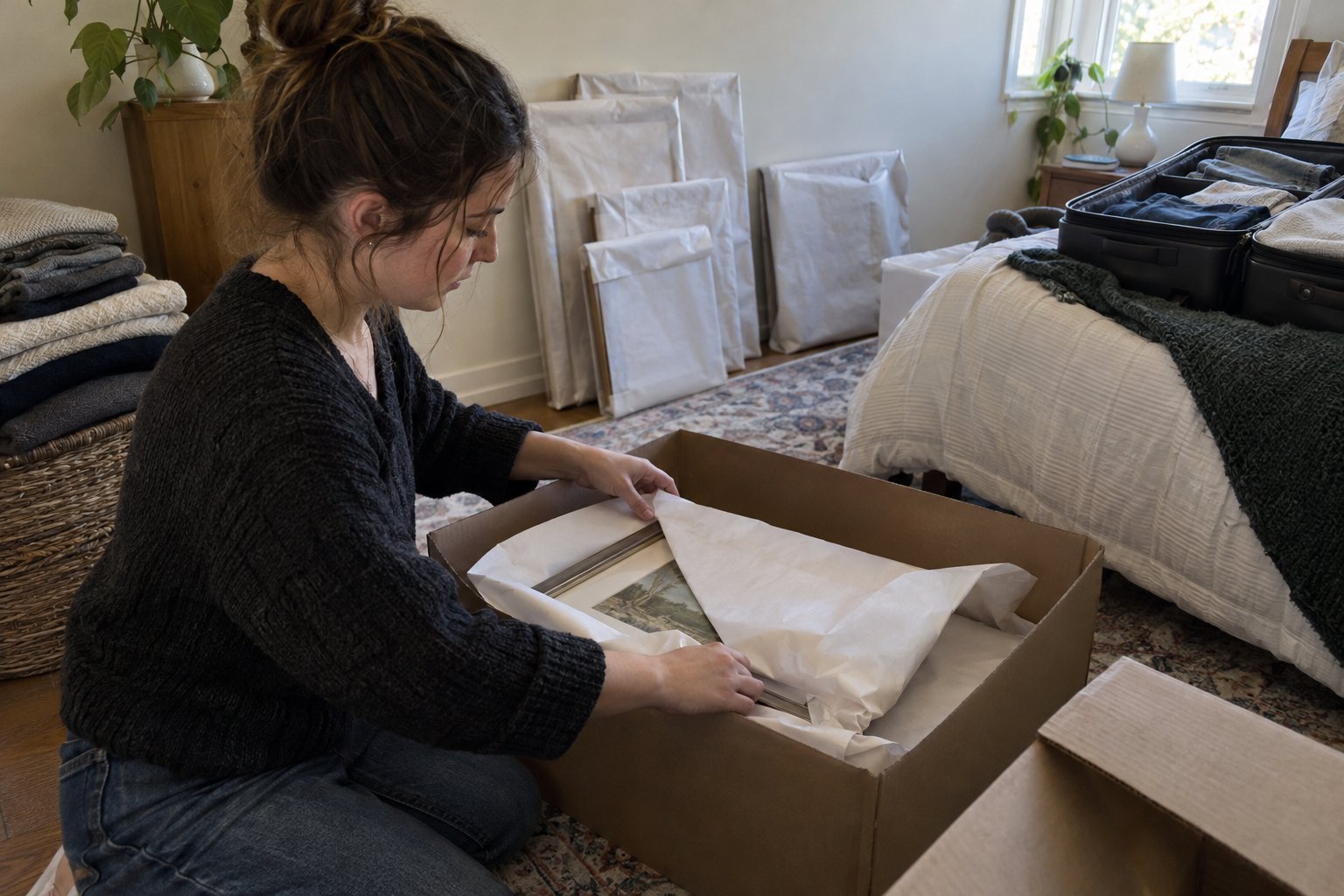
A hard-shell suitcase can work for a small number of glasses if each one is individually wrapped and padded with clothing, but it is not ideal for a full set. Suitcases flex more than cardboard boxes and are more likely to get stacked or tossed, so reserve this method for a handful of pieces rather than your whole glassware collection.
Plain packing paper is enough for everyday tumblers and sturdy drinking glasses. Reserve bubble wrap for stemware, crystal, or anything with a delicate rim or thin stem, where the extra cushioning meaningfully reduces breakage risk.
This depends more on box size and weight than a fixed count. Fill a medium box until it is snug but not so heavy you struggle to lift it, usually somewhere around a dozen wrapped glasses, and stop adding more once the box starts to feel dense.
Wrap them individually in towels or clean clothing as a temporary substitute for packing paper, and place them in the sturdiest small box you have on hand rather than leaving them loose. It is not the ideal method, but individual wrapping matters more than the specific material you use.
Wrap them individually in towels or clean clothing as a temporary substitute for packing paper, and place them in the sturdiest small box you have on hand rather than leaving them loose. It is not the ideal method, but individual wrapping matters more than the specific material you use.
Still have questions?
How to move with us?
Hit the “Get a Quote” button and tell us what you need.
Choose the service, date, and time that work best for you.
Our friendly team shows up on time and gets everything done safely.
Sit back while we take care of the rest.
.avif)