
How to Move to a Different State Without Losing Your Mind

Moving to a different state takes more planning than a local move because you are dealing with distance, timing, and logistics that do not forgive last-minute scrambling. The short version: lock your moving date early, decide how your belongings will travel, handle every piece of paperwork tied to your old and new state, and build in buffer time for the unexpected. Everything else is detail work around that core plan.
This guide walks through the parts of an out-of-state move that trip people up most, in the order you will actually need to think about them, not room by room but task by task.
How Far in Advance Should You Start Planning a State-to-State Move?
Start serious planning eight to twelve weeks out if you can, and no less than four weeks even in a rushed situation. A state-to-state move has more moving parts than a local one, so the planning window needs to be wider to absorb delays in scheduling trucks, transferring records, or closing on a home.
In the first few weeks, nail down your move date, decide whether you are driving a rental truck, using a portable container, or hiring a full-service carrier, and get quotes locked in. Long-distance movers and truck rental companies book up fast during summer and around the first and last weeks of each month, so waiting until the last minute limits your options and can push your costs higher than they need to be.
What's the Smartest Way to Get Your Belongings There?
Your three realistic options are a rental truck you drive yourself, a portable storage container a company drops off and hauls away, or hiring movers to load, drive, and unload for you. Each one trades cost, physical effort, and convenience differently, and the right choice depends on how much you own and how much of the heavy lifting you want to do yourself.
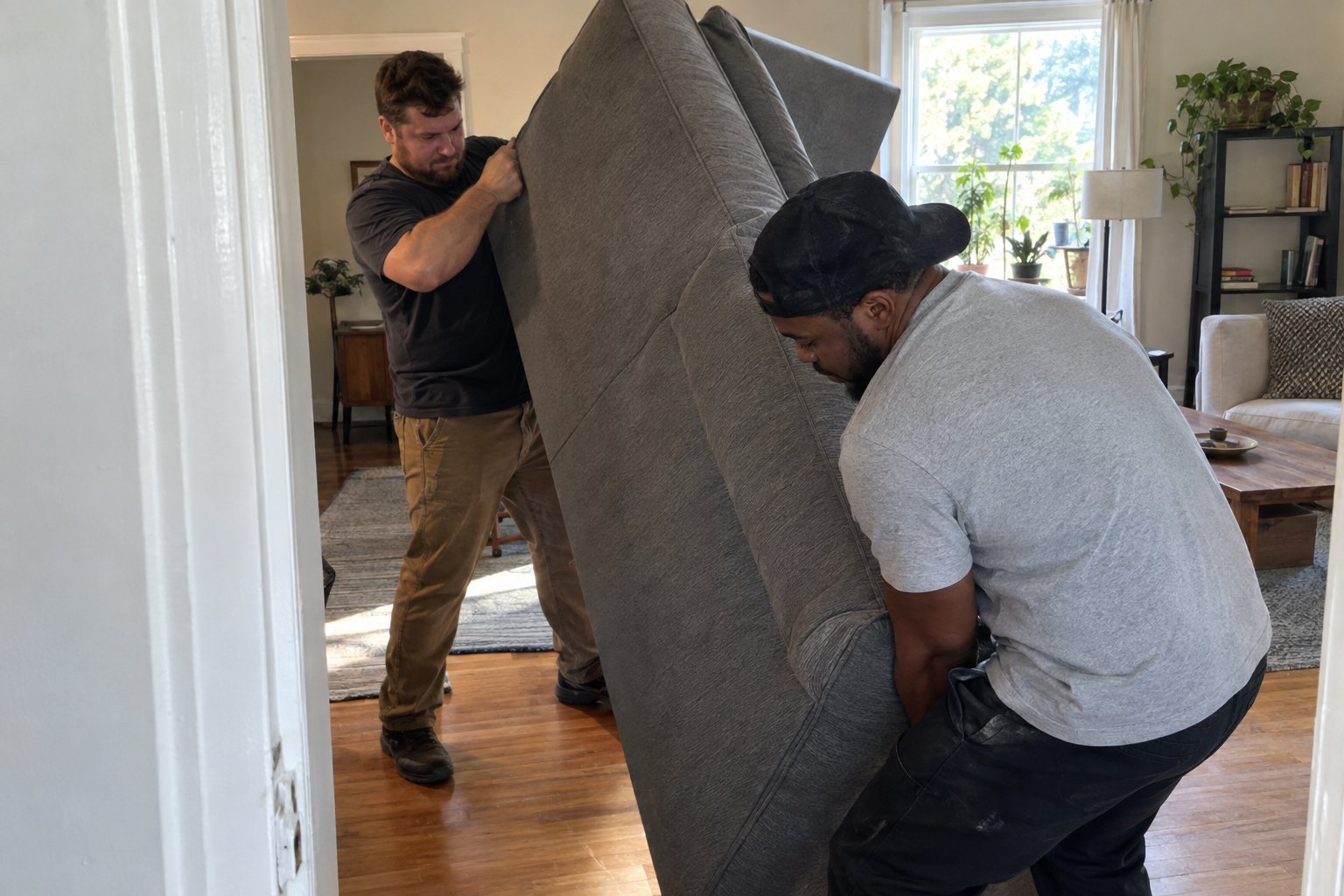
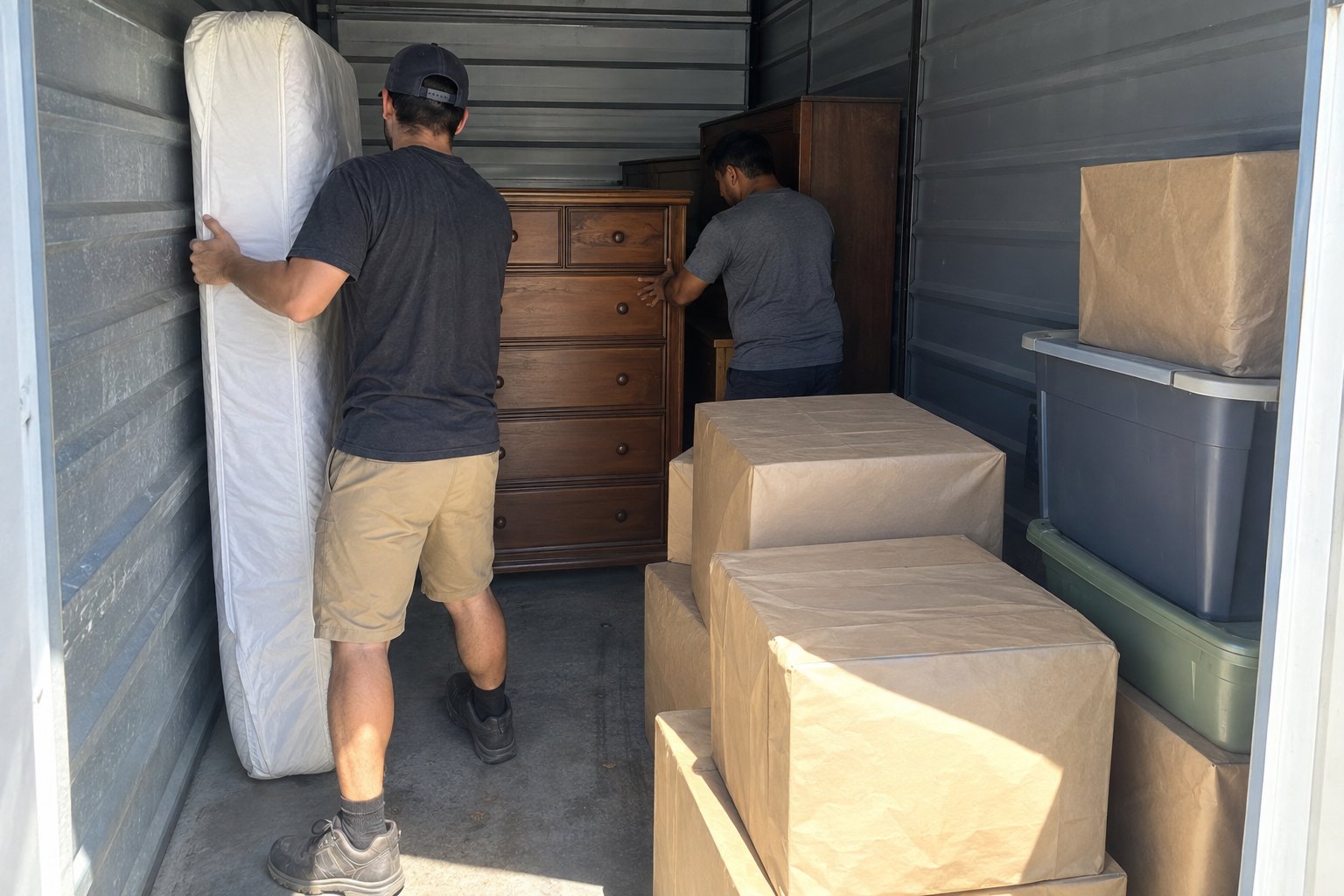
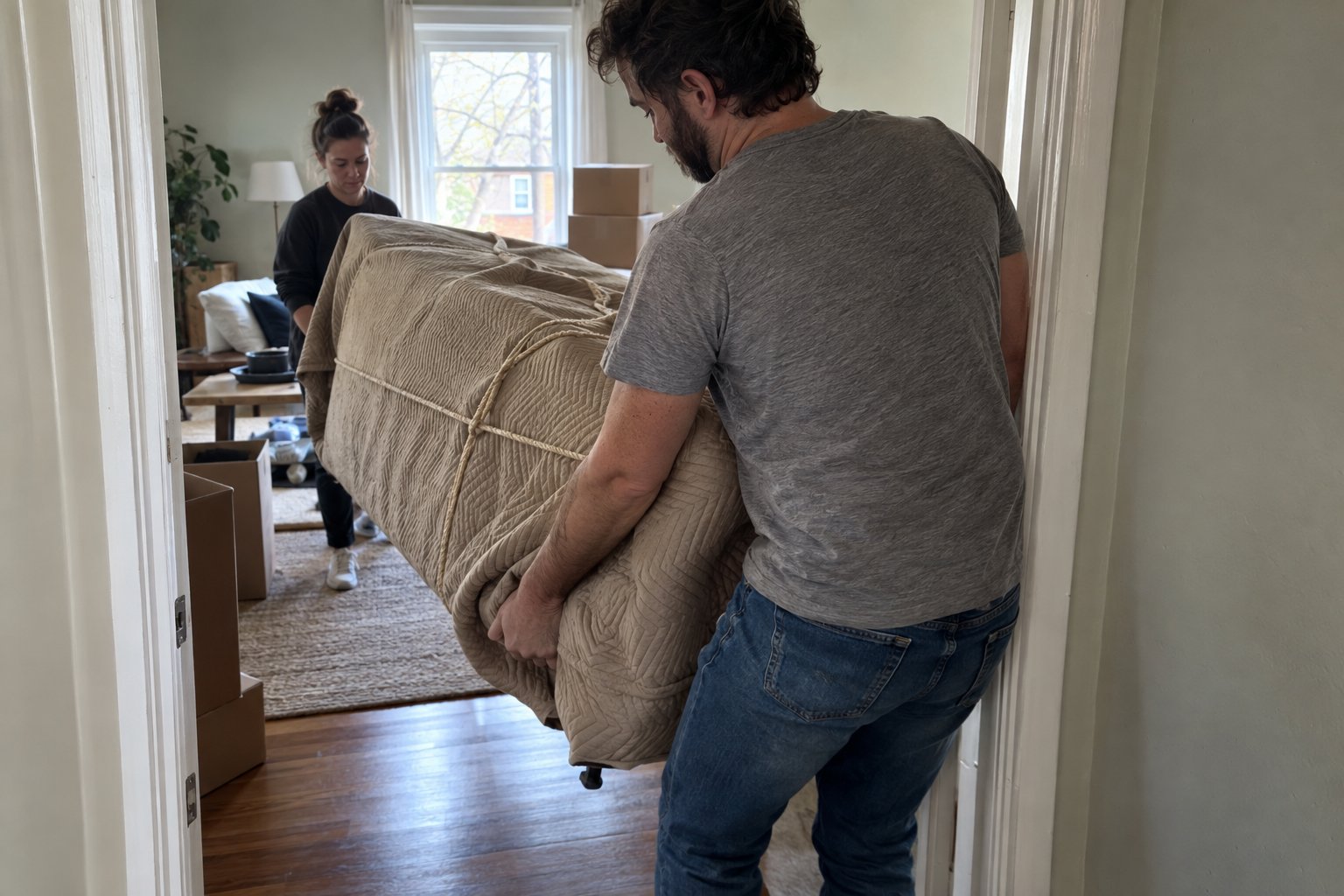
If you are comfortable driving a box truck and want the lowest-cost option, renting and loading it yourself works, but loading it correctly matters more over hundreds of miles than it does across town; a poorly packed truck shifts and settles on the highway in ways it never would on a short local trip. If you would rather handle the driving but skip the loading and unloading, a labor-only moving crew can load a rental truck or container at your old place and unload it at the new one, which keeps costs down while taking the heaviest, most injury-prone work off your plate.
Packing for a Long Ride
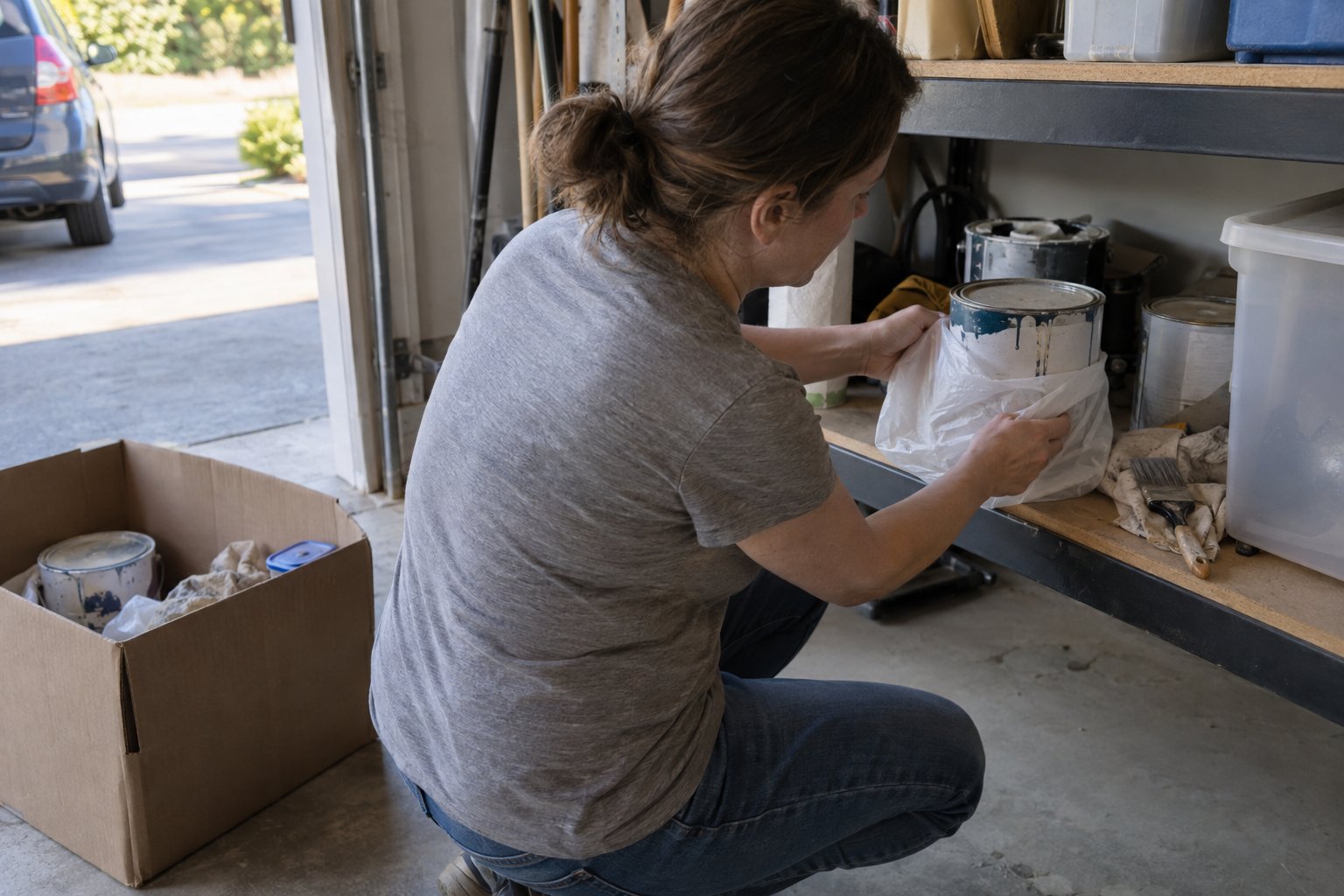
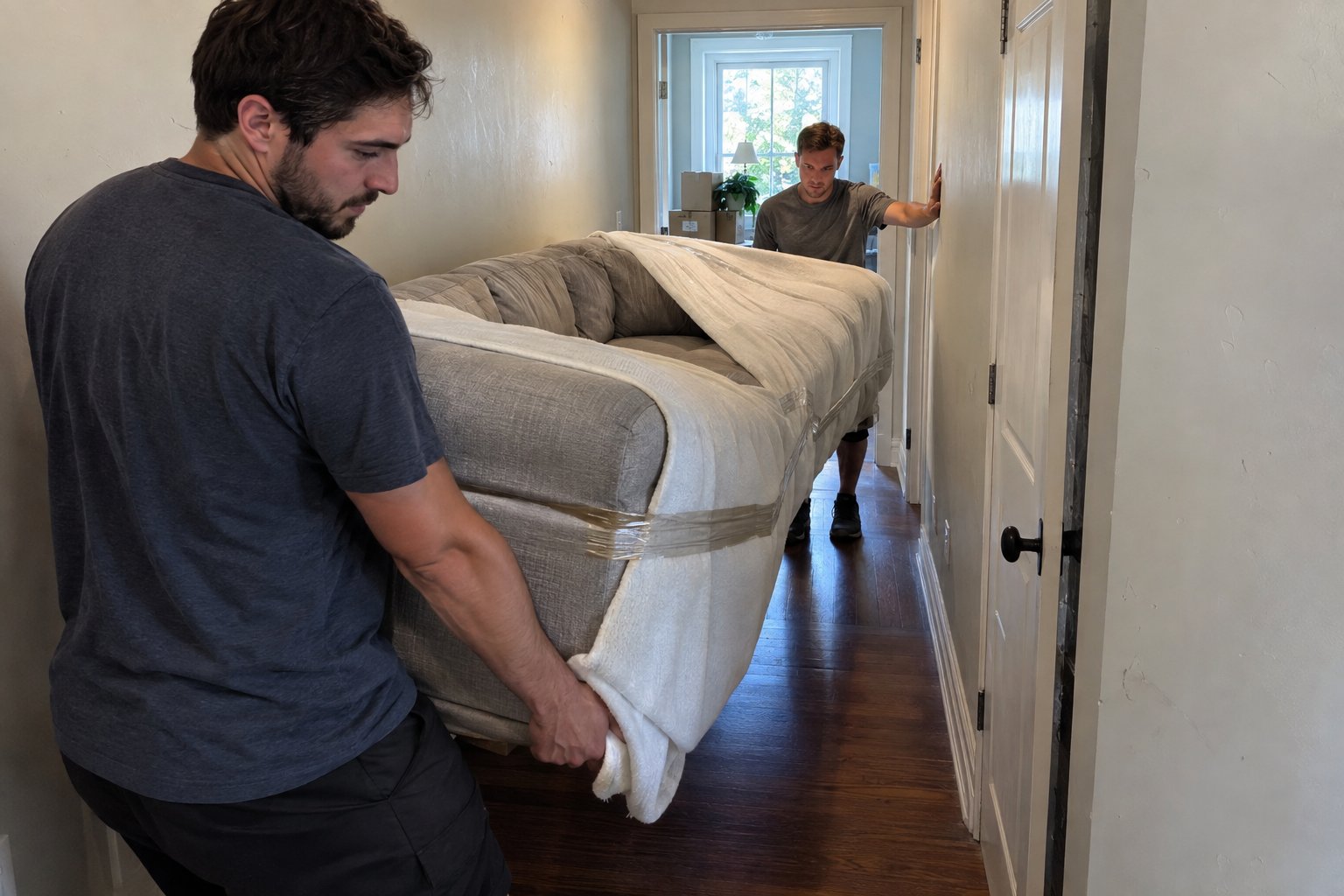
Furniture and boxes that survive a 20-minute local drive can still arrive damaged after eight or ten hours on the interstate. Wrap furniture corners and legs, use extra padding between stacked boxes, and fill empty gaps in the truck so nothing has room to slide. If you are shipping anything through a freight or parcel carrier separately, like a few boxes of valuables, pack it as if it will be handled by strangers more than once, because it will be.
How Do You Handle the Paperwork Side of Moving States?
The paperwork side of a state move includes your driver's license, vehicle registration, voter registration, and any professional licenses tied to your old state. Most states give you a window, often somewhere between 30 and 90 days, to register a vehicle and get a new license after you establish residency, so put a reminder on your calendar the day you arrive rather than trying to remember later.
Beyond the DMV, update your address with your bank, insurance providers, employer, and the post office, and research whether your new state has different rules for things like auto insurance minimums or income tax withholding. If you work remotely or run a small business, check whether your new state requires any additional registration. None of this is moving-company work, but skipping it causes more headaches than almost anything else on this list.
Why Does an Out-of-State Move Feel So Much More Stressful Than a Local One?
An out-of-state move feels heavier because you are managing logistics, finances, and emotional upheaval at the same time, often without the safety net of nearby friends or a familiar system to fall back on. Local moves let you fix mistakes with a quick drive back across town; state-to-state moves do not give you that option once the truck pulls away.
The stress tends to peak in the final week before the move and the first week after, when old and new routines overlap. Building slack into your schedule, confirming your moving help a few days ahead of time, and accepting that one or two things will not go perfectly all reduce how hard that peak hits. Having a realistic sense of how long the move itself will take based on your home's size also helps you set expectations instead of guessing.
What Should Be on Your Moving-Out Checklist?
A solid out-of-state checklist covers four phases: eight weeks out (budget, moving method, date), four weeks out (packing, utility transfers, school or medical records), one week out (confirm help, pack essentials bag, clean out the fridge), and move day itself (final walkthrough, keys, odometer or mileage log if you are driving).
- Eight weeks out: set a budget, choose your moving method, request a written quote
- Four weeks out: start packing non-essentials, transfer or cancel utilities, request school and medical records
- One week out: confirm your moving help, pack a bag of essentials for the first 48 hours, use up perishable food
- Move day: do a final walkthrough, take photos of empty rooms, keep important documents with you instead of on the truck
If you want help with the physical side of the checklist rather than just the planning, a crew that specializes in packing services can wrap and box the items most likely to get damaged over distance, which is often the difference between a smooth unload and a pile of repair jobs.
Should You Hire Help or Do the Whole Move Yourself?
Hire help for the parts of the move that are heavy, awkward, or time-sensitive, and handle the rest yourself if you are trying to keep costs down. Most people moving out of state do not need a full-service mover to pack every box; they need reliable hands for loading and unloading the truck or container, which is the part most likely to cause an injury or a damaged piece of furniture.
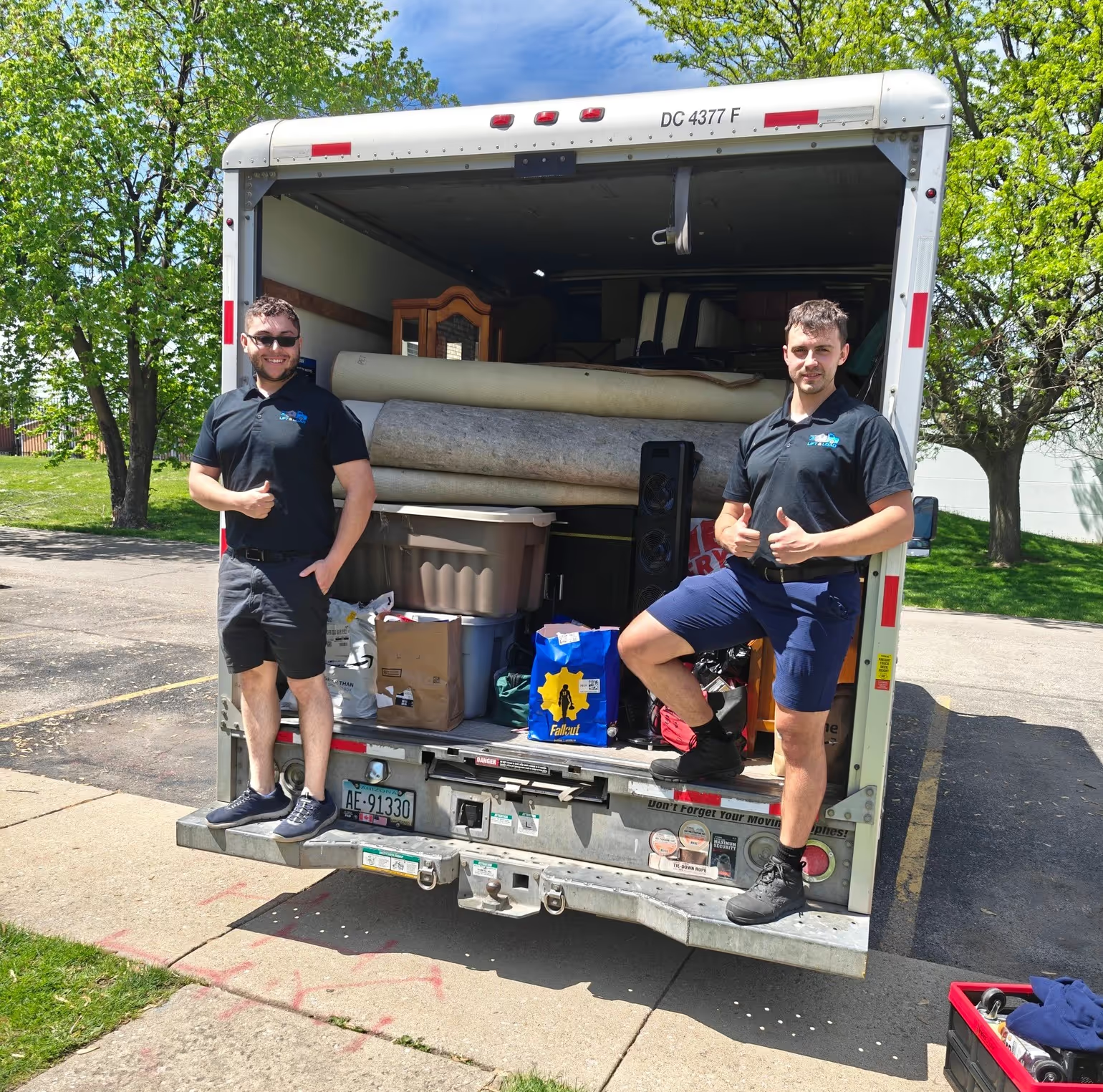
A labor-only crew works well here because you keep control of the truck rental or container booking, and the moving date flexibility that comes with it, while still getting trained help for the heaviest lifting. If you are not sure how much help you will actually need, request a quote and talk through your home's size and your moving method before you commit to anything.



FAQs
Most people need six to twelve weeks to plan a state-to-state move comfortably, though it is possible to do it in four weeks if you move quickly on booking help and transferring records. The biggest time sink is usually paperwork, not packing.
No. Many people moving out of state rent their own truck or portable container and hire a labor-only crew just to load and unload it, which keeps costs down while still getting experienced help with the heaviest items.
Start with your driver's license and vehicle registration, since most states set a deadline of 30 to 90 days after you establish residency. After that, update your address with your bank, employer, and insurance provider.
Driving a rental truck yourself is usually the lowest upfront cost, but it means doing all the loading and unloading on your own. Pairing a rental truck with a labor-only crew for loading and unloading often costs less than full-service movers while still protecting you from the heaviest lifting.
Driving a rental truck yourself is usually the lowest upfront cost, but it means doing all the loading and unloading on your own. Pairing a rental truck with a labor-only crew for loading and unloading often costs less than full-service movers while still protecting you from the heaviest lifting.
Still have questions?
How to move with us?
Hit the “Get a Quote” button and tell us what you need.
Choose the service, date, and time that work best for you.
Our friendly team shows up on time and gets everything done safely.
Sit back while we take care of the rest.
.avif)