
How to Take Apart a Sofa for Moving (Without Wrecking the Frame)
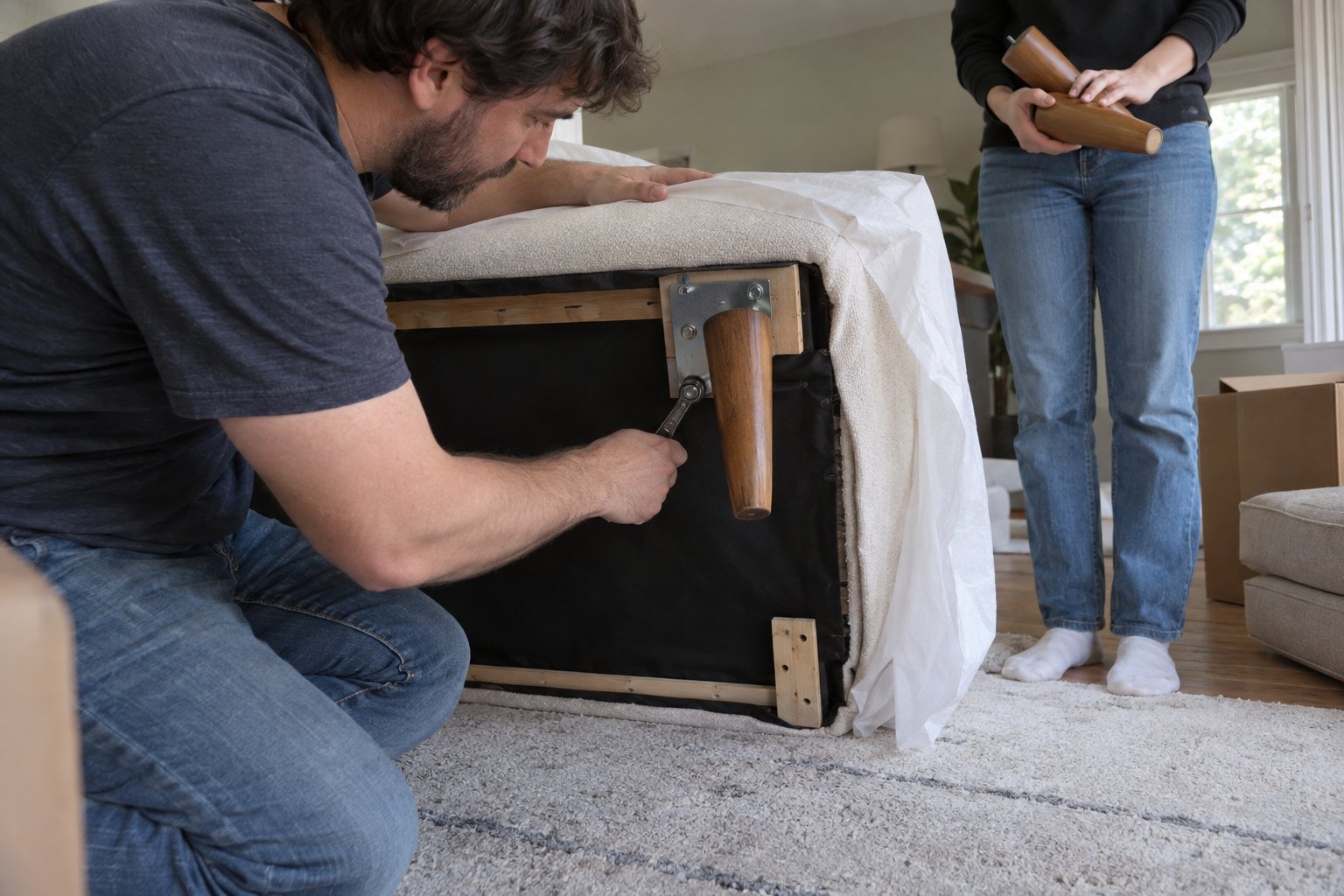
Taking apart a sofa for moving usually means removing the legs, detaching any modular sections, and sliding off loose backrest cushions, not tearing into the frame itself. Most sofas are built to travel as one padded unit once the small hardware is off. The goal is to make the piece narrower and lighter without loosening a single joint that holds the frame square.
This is different from moving a sectional, where entire seating modules separate from each other, or a sofa bed, where a metal frame folds out and needs its own prep. A standard two- or three-seat sofa has far fewer moving parts, but people still get stuck because they assume disassembly means unbolting the frame. It rarely does. Here is what actually comes apart, what tools you need, and how to get it back together correctly on the other end.
Does Your Sofa Actually Come Apart?
Most upholstered sofas only disassemble at the legs and, occasionally, at the arms on modular or track-arm designs. Flip the sofa over or tilt it back to check the base rail for exposed bolts, hanger brackets, or threaded leg inserts. If you see none, the legs are likely just screwed into wood blocks and will unscrew by hand or with a screwdriver.
Sofas with a fully upholstered skirt or bun feet glued into place generally do not come apart at all beyond cushion removal. Trying to force a joint that was never designed to separate risks cracking the corner blocks that keep the frame square. If your sofa has no visible hardware and the legs do not turn, stop and treat it as a one-piece move instead of forcing disassembly.
Signs a Sofa Is Designed to Disassemble
- Threaded metal inserts visible in the base rail where legs screw in
- A seam or zipper where the back cushions attach to the frame
- Bolted brackets connecting two or more sections (common on sectionals)
- An owner's manual or assembly sheet that shows exploded parts
Tools You Need Before You Start
A basic disassembly kit covers almost every sofa: a screwdriver set with both Phillips and flathead bits, an adjustable wrench or socket set for bolted legs, a furniture dolly, and moving blankets. Keep a small parts bag and a marker on hand too, since losing track of hardware is the single most common reason reassembly goes wrong.
If your sofa has hex-head bolts on the legs, a small Allen key set will save you from stripping them with the wrong tool. For fabric protection, stretch or shrink wrap works better than tape, which can pull threads or leave residue on delicate upholstery.
Removing Sofa Legs for Moving
Removing sofa legs is the single step that makes the biggest difference in a doorway or stairwell. Tip the sofa onto its back or side on a blanket, locate the leg mounting point, and turn each leg counterclockwise by hand or with a wrench until it releases. Bag the hardware and tape the bag to the underside of the frame so it travels with the piece.
Some legs attach with a bolt through a metal plate rather than a threaded post. In that case, use a socket wrench to back out the bolt instead of twisting the leg itself, which can shear a plastic threaded insert. Once all legs are off, the sofa sits lower and is far less likely to snag on stair railings or door frames during the carry.
Detaching Sections on a Modular or Sectional Base
If your piece is a sectional rather than a fixed sofa, the sections typically connect with a bracket, cam lock, or a simple hook-and-loop strip underneath the cushions. Locate the connector between each module, undo it, and move the sections separately rather than trying to walk a full L-shaped unit through a hallway. For a closer look at handling connected modules, our guide on disassembling and maneuvering a sectional sofa covers the bracket types in more detail.
What to Remove Before You Lift, Even If Nothing Unbolts
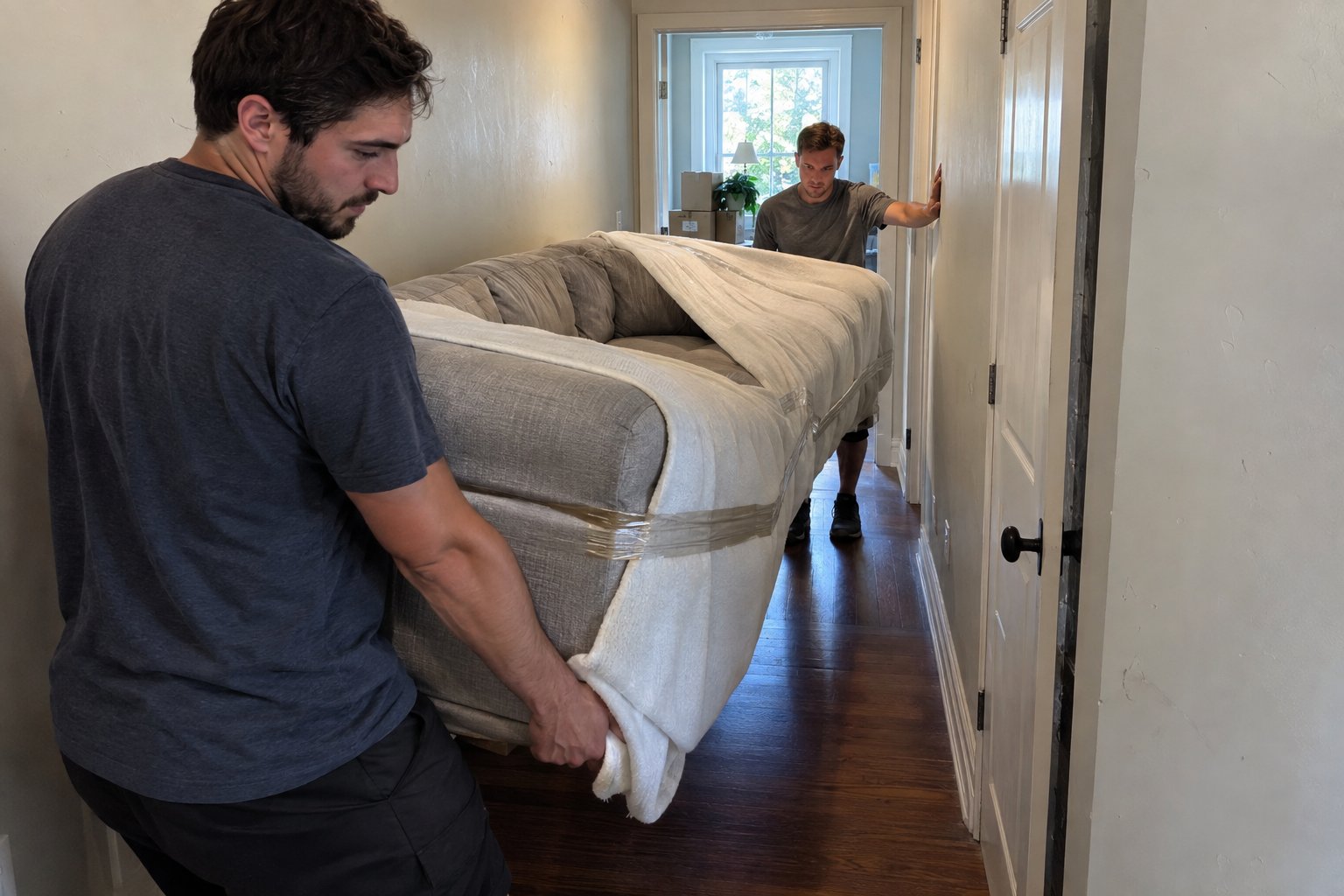
Even a sofa with no removable parts should be stripped down before the carry: pull off all loose back and seat cushions, remove any throw pillows, and check for a storage compartment or pull-out bed mechanism that needs to be secured shut. Wrap the frame in moving blankets and secure them with stretch wrap rather than tape directly on fabric.
If your sofa is a sleeper model, latch the fold-out frame in the closed position before moving it; an unsecured mechanism can swing open mid-carry and take a wall or a set of knuckles with it. Once cushions are off and the frame is wrapped, the piece is ready for the door.
Getting the Sofa Through Doorways and Stairs
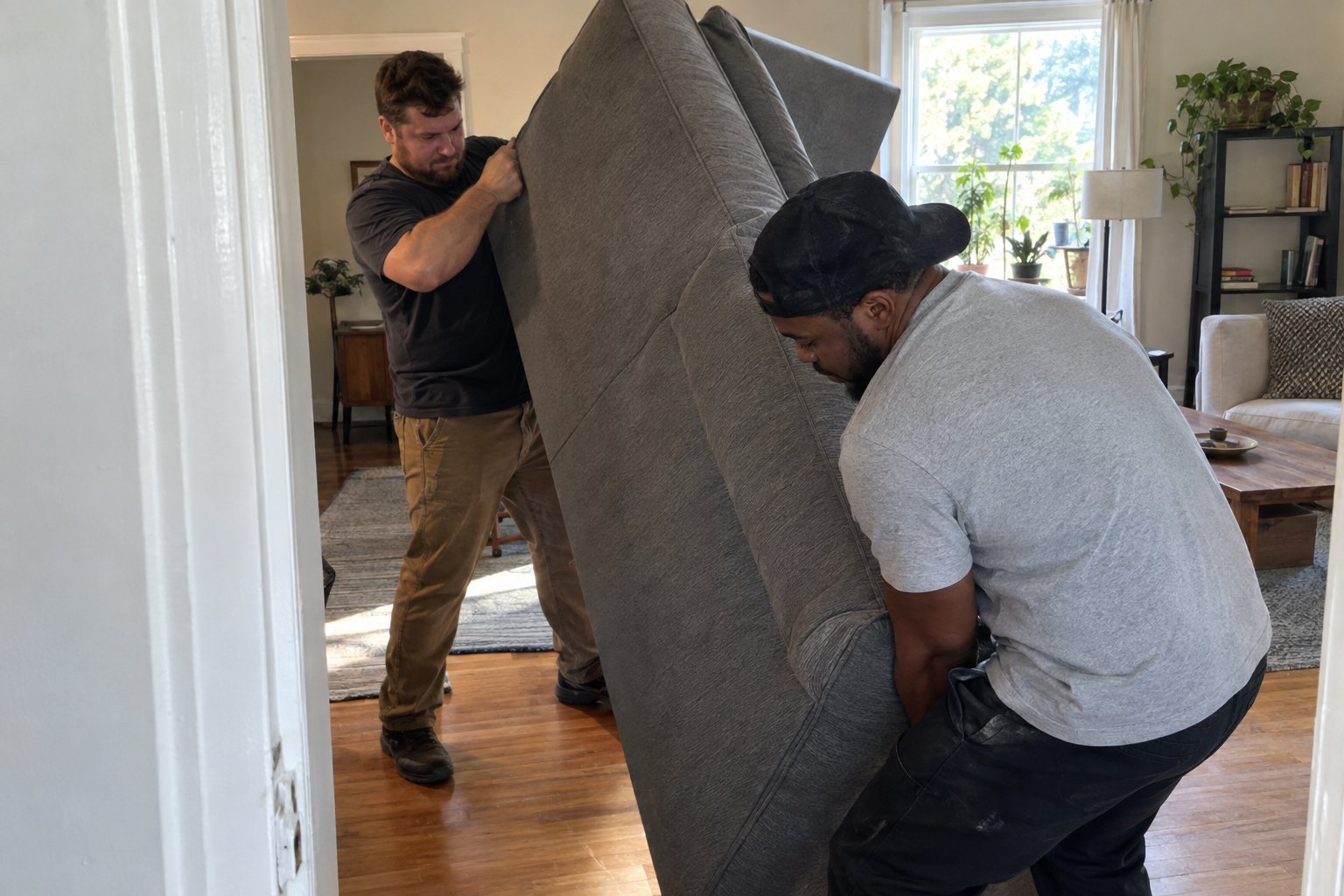
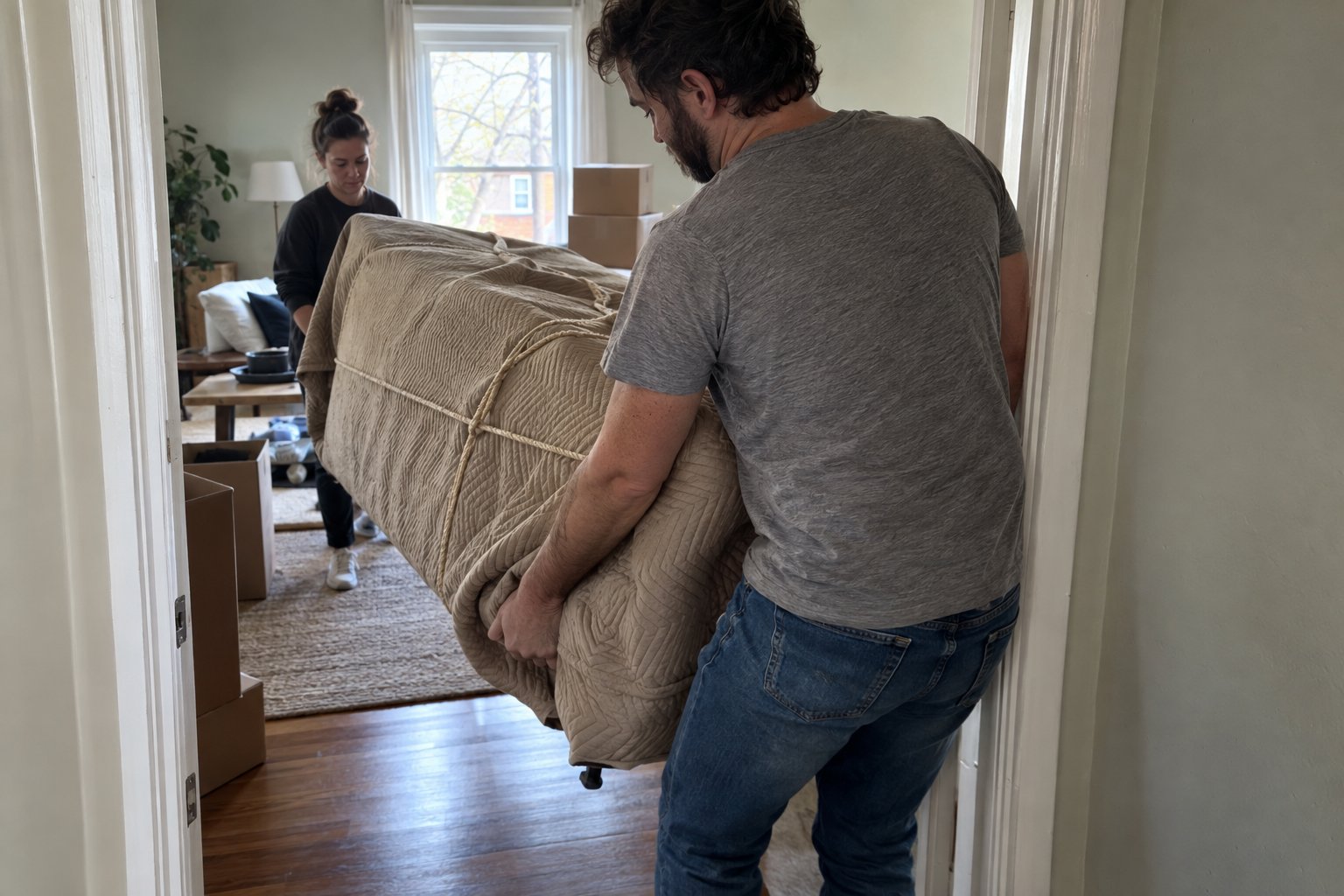
Removing the legs is often enough to clear a standard doorway, but tight stairwells sometimes require standing the sofa on end and tilting it through at an angle. Measure the doorway width and the sofa's depth before you lift so you know which angle you are working with, rather than discovering it wedged halfway through.
Carrying a frame up or down stairs is where an extra set of hands matters most, since the weight shifts as the angle changes. If your building has narrow stairs or a tight turn, a labor-only moving crew can handle the carry without you needing to own or rent any of the equipment yourself.
Reassembling the Sofa in Your New Home
Reassembly is simply disassembly in reverse: unwrap the frame, thread each leg back into its original mounting point by hand before tightening with a tool, and reattach sectional brackets in the order you removed them. Screwing legs in slightly crooked and forcing them the rest of the way is the most common reassembly mistake, so back a leg out and restart if it feels off.
Keep the hardware bag taped to the frame until this step so nothing gets left behind in a box of miscellaneous screws. Once the legs are secure and sections are reconnected, replace the cushions and check that the sofa sits level on the floor before you call it done.
When to Call in Extra Help
A sofa with no removable legs, a heavy sleeper mechanism, or a sectional with several modules is a two-person job at minimum, and often benefits from a trained crew that moves furniture for a living. If you would rather not risk a scratched wall or a thrown-out back, booking help for just the heavy lifting is usually worth it. You can get a moving quote for labor-only help with your sofa and the rest of your furniture.


FAQs
No. Many sofas have screw-in or bolt-on legs that come off easily, but sofas with a fully upholstered skirt, glued bun feet, or a solid plinth base are not designed to separate. Check the base rail for visible hardware before assuming the legs unscrew.
A Phillips and flathead screwdriver, an adjustable wrench or socket set, an Allen key set for hex-head bolts, and a marker or bags for hardware cover most sofas. A furniture dolly and moving blankets help once the piece is disassembled.
Yes, if the doorways and stairs are wide enough. Removing just the legs is optional for a straight hallway move but often becomes necessary in tighter stairwells, narrow apartment doors, or sharp turns.
It can be, as long as the frame is solid and you tilt it slowly with a second person guiding the other end. Sofas with a loose or unsecured sleeper mechanism should have that mechanism latched shut first to prevent it from swinging open.
It can be, as long as the frame is solid and you tilt it slowly with a second person guiding the other end. Sofas with a loose or unsecured sleeper mechanism should have that mechanism latched shut first to prevent it from swinging open.
Still have questions?
How to move with us?
Hit the “Get a Quote” button and tell us what you need.
Choose the service, date, and time that work best for you.
Our friendly team shows up on time and gets everything done safely.
Sit back while we take care of the rest.
.avif)