
How to Move a Couch Through a Narrow Door Without Tearing Up Either One
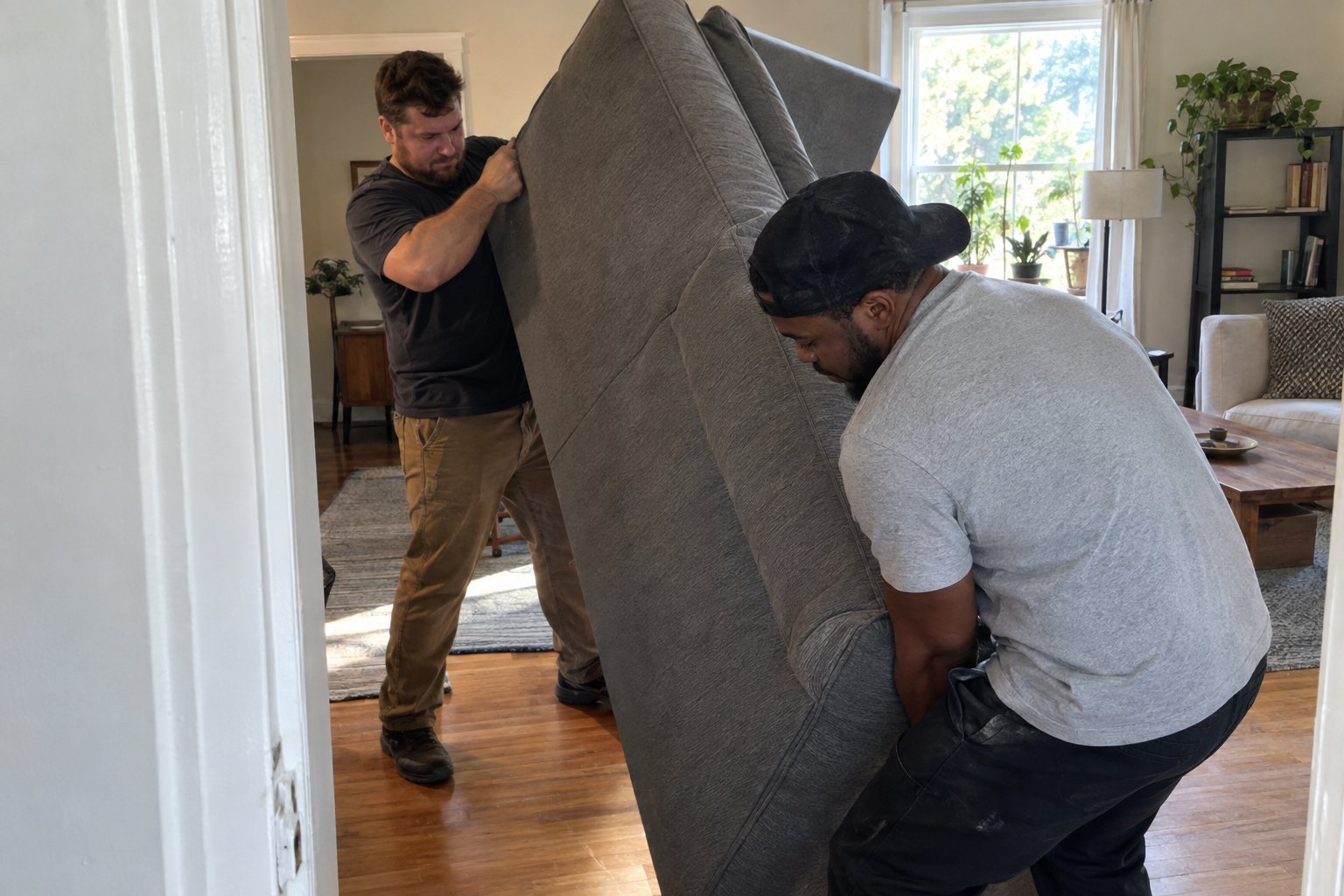
Moving a couch through a narrow door almost always comes down to the same fix: change the angle, not the couch. Most doorways that feel "too small" are actually wide enough for a standard sofa once you tilt it onto one arm and walk it through on a diagonal. The couch rarely needs to get smaller. The angle you present it at does.
This is a different problem than general couch-moving logistics or getting a sofa up a staircase. Those guides cover weight distribution and balance over distance. A narrow doorway is a single choke point, usually 28 to 32 inches wide, where the couch has to pass through a fixed frame without gouging paint, cracking drywall, or jamming halfway with someone's fingers pinned underneath. Here is how to get it through cleanly, and what to do when tilting alone is not enough.
Why Won't My Couch Fit Through the Door?
Your couch likely does not fit flat because its depth (front to back) is wider than the doorway opening, even though its height or width alone would clear it easily. Standing it on end or tilting it diagonally changes which dimension the door has to accommodate.
Before you lift anything, measure three numbers: the doorway's clear width (frame to frame, not wall to wall), the couch's height, and its depth. Compare the couch's diagonal measurement (corner to corner across the front) against the doorway width. If the diagonal is smaller than the opening, a simple tilt-and-rotate will work. If it is close or larger, you are into door removal or disassembly territory, which we cover below.
How Do You Angle a Couch to Get It Through a Tight Doorway?
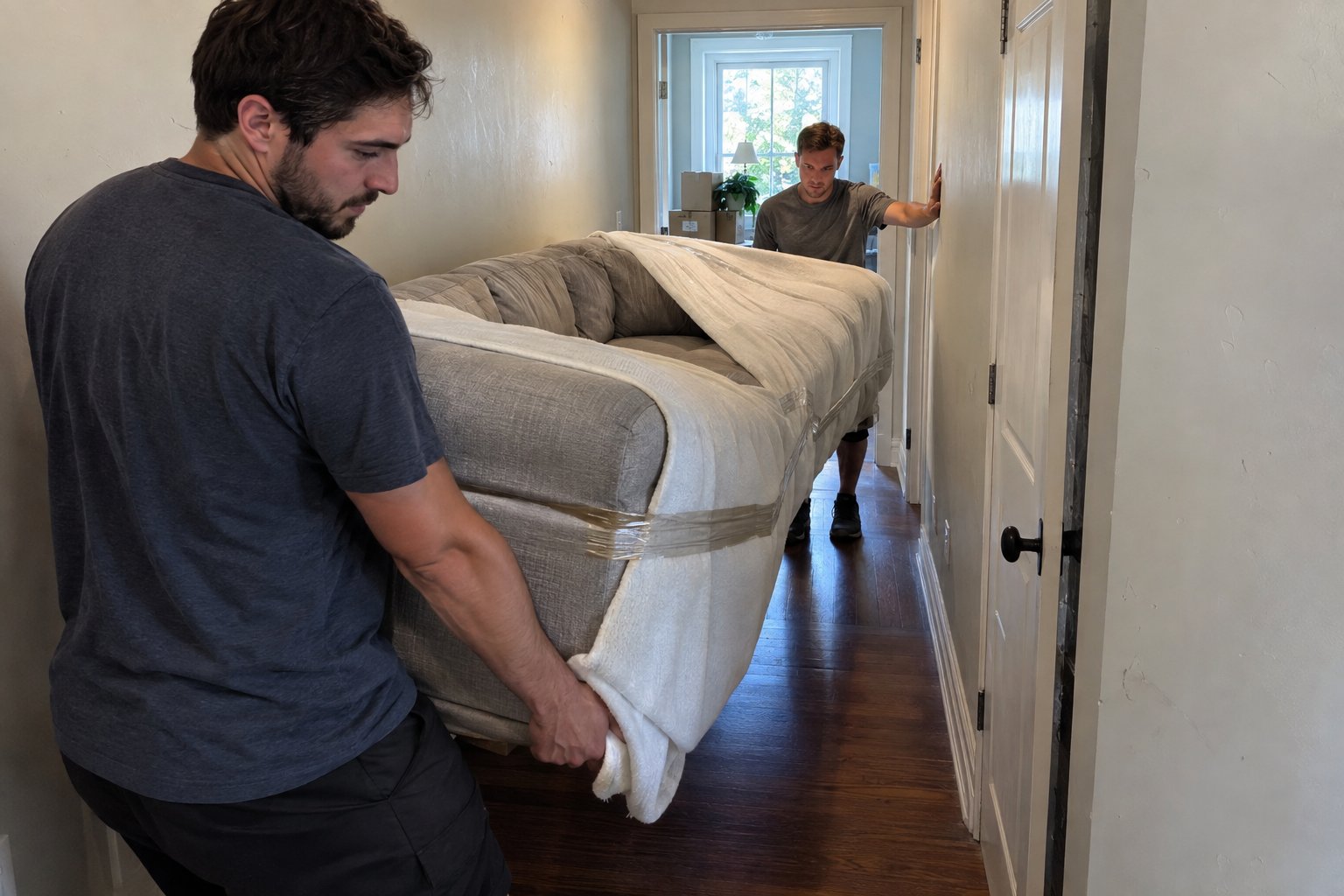
Tilt the couch so one arm points toward the ceiling and the opposite bottom corner leads through the frame first. This turns the couch's widest flat dimension into a narrower diagonal profile that threads through the opening instead of fighting it.
Work it in this order:
- Stand the couch on its end closest to the door, with the back cushions facing one side of the frame.
- Rotate it roughly 45 degrees so the leading bottom corner enters first, low and close to one side of the jamb.
- Walk it through in short increments, pausing to check clearance on both the top corner and the trailing edge before pushing further.
- Keep a second person on the far side guiding the lead corner. One person pushing blind from behind is how walls get gouged.
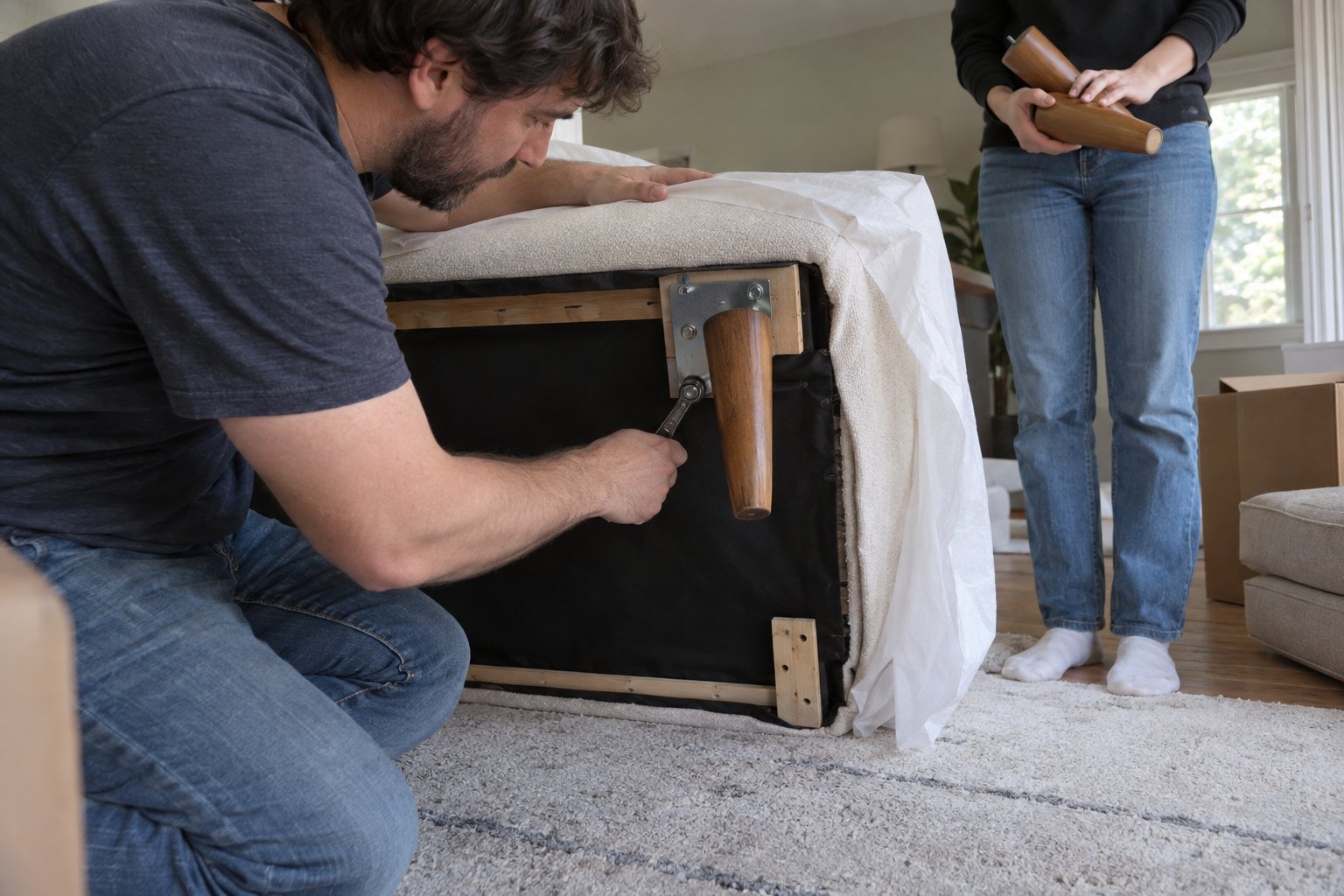
If the couch has exposed wood feet or metal legs, remove them first. Legs add inches you do not have, and they are the first thing to crack against a door frame.
What If the Couch Still Won't Clear the Frame?
When tilting does not create enough clearance, the next move is removing the door itself, not forcing the couch. Pull the hinge pins out with a hammer and flathead screwdriver, lift the door off, and set it aside. This alone typically buys you an extra 1.5 to 2 inches, which is often exactly the gap you were missing.
If that still is not enough room, check whether the couch has removable legs, a detachable back cushion track, or (on sectionals and some sofa sleepers) a frame that splits into two pieces. Many modern couches are built to break down this way specifically because manufacturers know moving day is a problem. Check the underside and the back panel for zippers, velcro straps, or hex bolts before you assume the frame is solid one piece. For couches that genuinely do not come apart, a narrower alternate entry point (a sliding glass door, a larger window on the ground floor) is sometimes faster than forcing a stuck doorway.
How Do You Avoid Damaging Walls and Fingers in the Process?
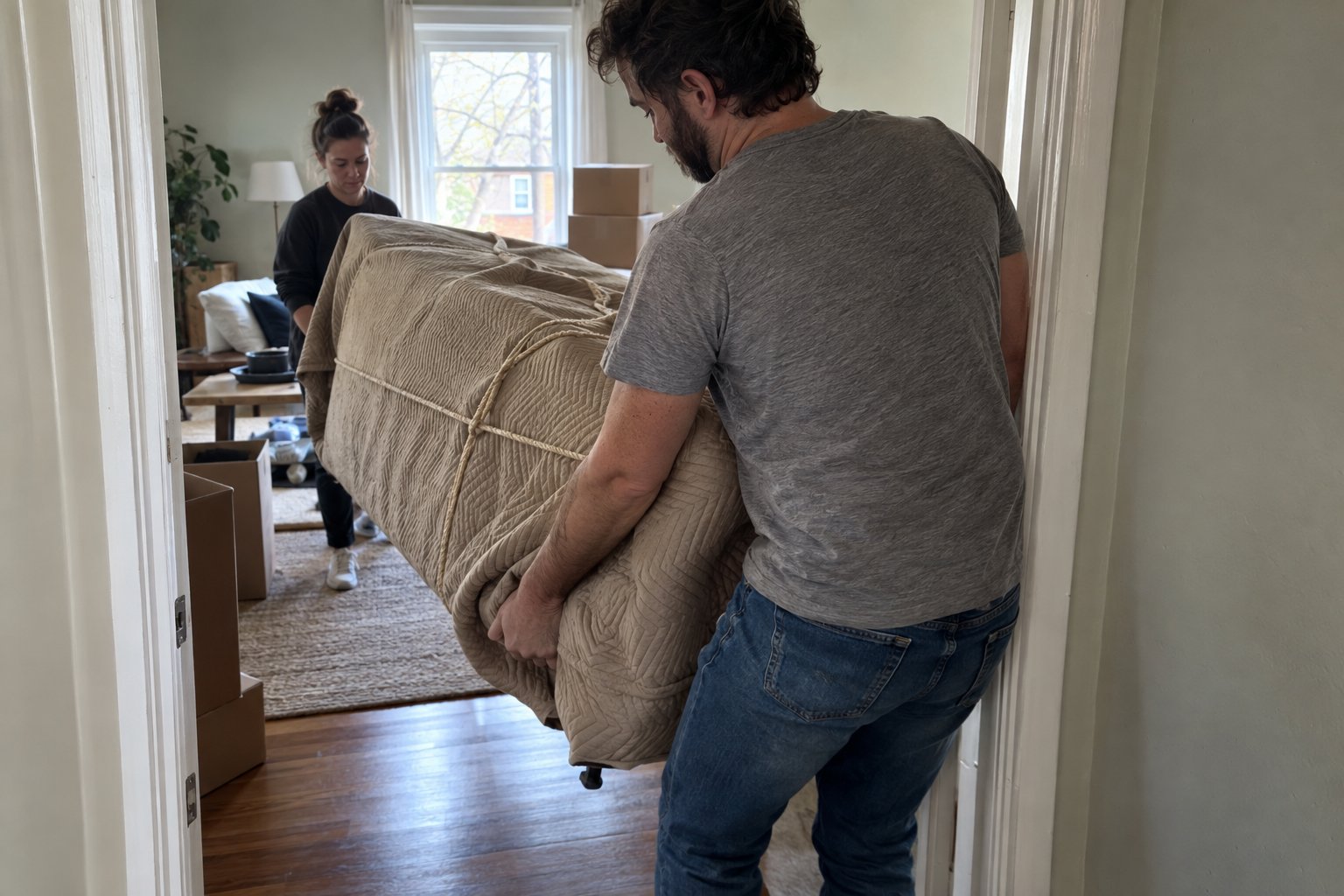
Protect the frame and your hands before you start pushing, not after the first scrape. A folded moving blanket taped loosely around both sides of the door jamb absorbs the impact if the couch swings wider than planned, and it is far cheaper than a drywall patch.
Keep hands flat against the frame rather than curled around corners where a shifting couch can pinch fingers against the jamb. Communicate a simple stop word between the two people carrying, loud enough to hear over the couch itself, since "wait" and "wait, go" sound identical through a doorway. If the couch starts to bind, back it out fully and re-angle rather than forcing it another inch. A couch that is stuck at a bad angle gets harder to move the more you push, not easier.
When Should You Call in Extra Help?
If the couch is heavier than two people can comfortably tilt and hold at an angle for several minutes, or if the doorway sits at the top of stairs with no room to maneuver, bringing in trained help is worth it before someone gets hurt or the couch gets damaged. A tight doorway combined with an awkward landing is one of the more common ways movers (professional or otherwise) throw out a back.
A labor-only moving crew is built for exactly this kind of single-obstacle problem: crews that move couches through tight frames regularly know how to read an opening in a few seconds and whether tilting, door removal, or disassembly is the faster path. If you are not confident the couch will clear on your own, it is worth getting a quote before moving day rather than discovering the problem with the couch already stuck sideways in the frame. You can get a free labor-only moving quote and have a crew ready for the doorway you are worried about.
Does This Work the Same Way for Sectionals and Sofa Beds?
Sectionals are usually easier, not harder, because they separate into individual sections that are each narrower than a full sofa. Detach each piece at its connector bracket and carry them through one at a time rather than trying to walk the whole assembled sectional through any doorway.
Sofa beds are the opposite case: the pull-out frame adds depth and weight that makes tilting harder to control safely with two people. If you are dealing with a sofa bed specifically, it is worth reviewing how to fold and disassemble a sofa bed before you attempt a narrow doorway, since the mechanism itself often needs to be secured or partially removed first. For a standard couch that just needs general handling guidance beyond this one doorway, our broader piece on common couch moving mistakes covers the rest of the move.



FAQs
Many couches allow it. Check the back panel and underside for zippers, velcro, or hex bolts before assuming the frame is solid. Removable legs and detachable cushion tracks are the easiest wins and often add just enough clearance without full disassembly.
Yes. Pulling the hinge pins and lifting the door off its frame typically recovers 1.5 to 2 inches of clearance, which is often the exact gap missing when a couch is close but not quite fitting through on an angle.
Measure the doorway's clear width frame to frame, then measure the couch's diagonal distance from one bottom corner to the opposite top corner. If that diagonal is smaller than the doorway width, a tilt-and-rotate approach should get it through without disassembly.
At that point a professional labor-only crew is worth calling before the couch or the house takes damage. Crews that handle this regularly can judge in seconds whether disassembly, an alternate entry point, or a different angle is the right call.
At that point a professional labor-only crew is worth calling before the couch or the house takes damage. Crews that handle this regularly can judge in seconds whether disassembly, an alternate entry point, or a different angle is the right call.
Still have questions?
How to move with us?
Hit the “Get a Quote” button and tell us what you need.
Choose the service, date, and time that work best for you.
Our friendly team shows up on time and gets everything done safely.
Sit back while we take care of the rest.
.avif)