
Why Learning How To Pack Dishes For Moving Matters

Figuring out how to pack dishes for moving is one of the most important parts of protecting your kitchen. Plates, bowls, mugs, and glasses are fragile and often sentimental. A careful approach helps you avoid chips, cracks, and stress when you finally open boxes in your new home, especially if you are coordinating with a professional moving team.
Gathering The Right Supplies For Dish Packing
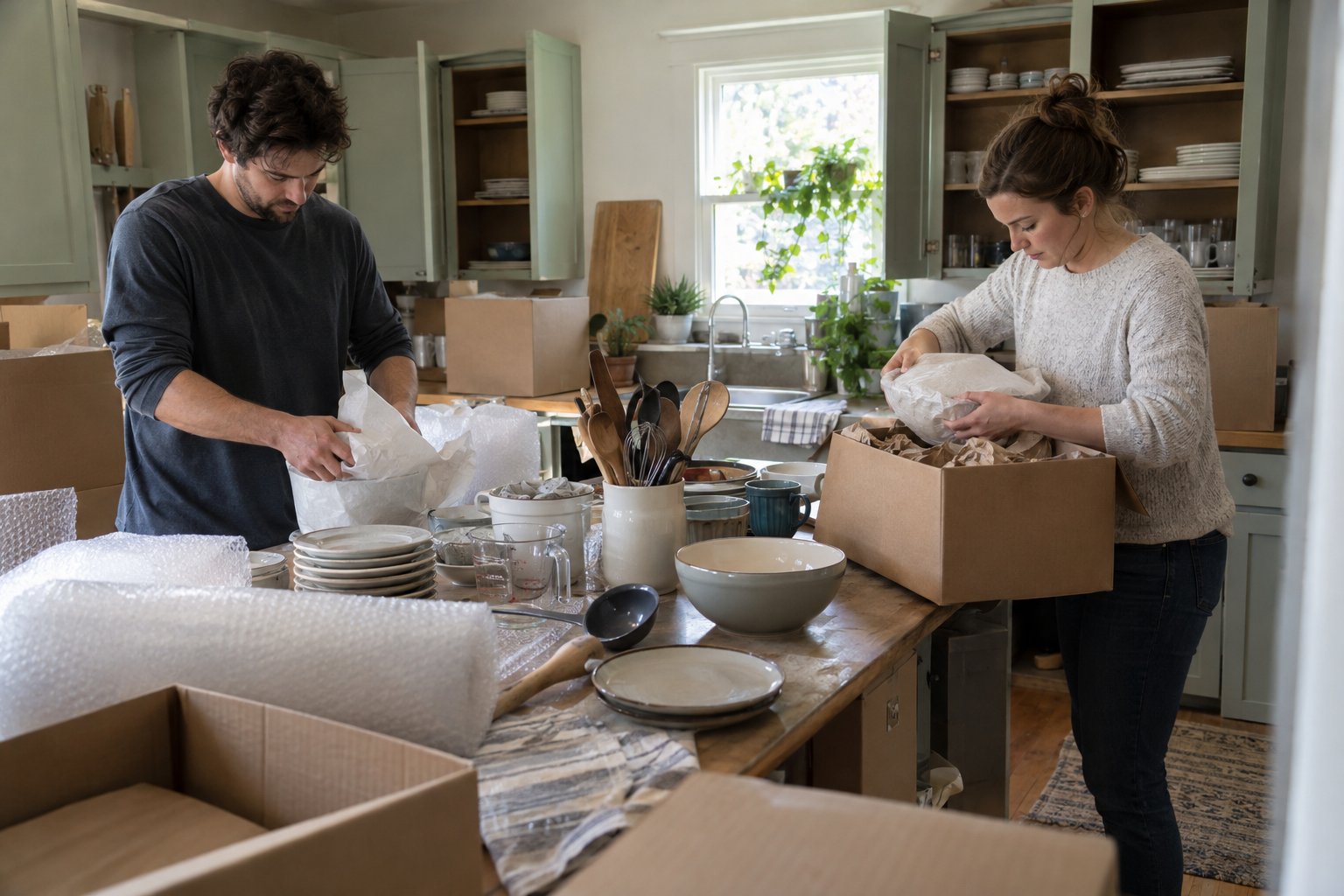
Before you start, collect sturdy small or medium boxes, plenty of packing paper, bubble wrap, tape, and markers. Thicker boxes are safer than thin or worn ones, especially when you pack heavy stacks of plates. With enough materials ready, you can focus on how to pack dishes for moving instead of pausing for last minute runs.
Choosing The Best Boxes For Heavy Dishes
Dishes are dense and quickly make boxes heavy. Smaller boxes are usually the best way to keep each load manageable and less likely to tear. Aim for a realistic weight, imagining you might carry it across a 1000 square foot apartment, and never fill a large box completely with plates or bowls alone.
Creating A Protective Cushion In Every Box
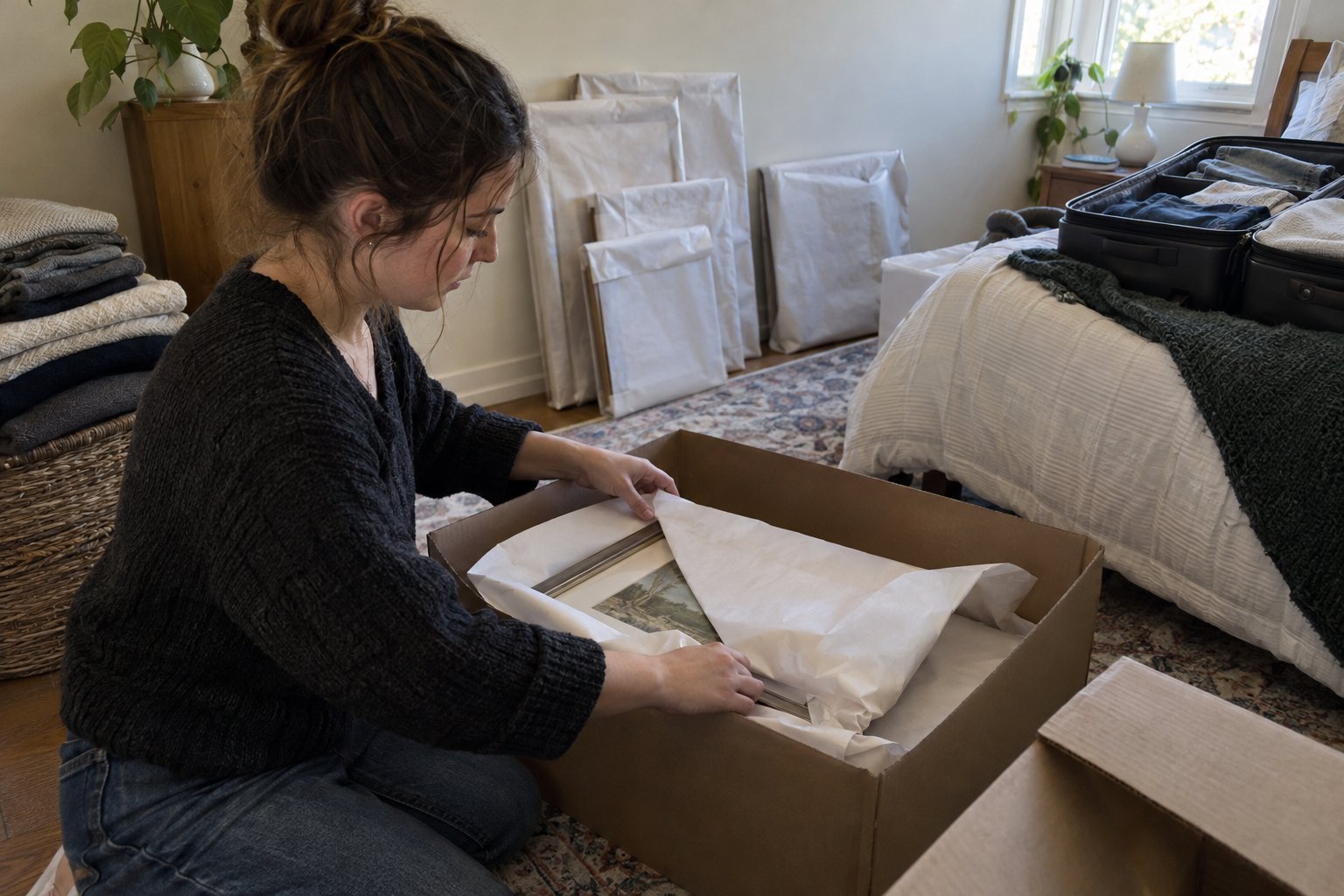
Every box should start with a padded base. Crumple packing paper or use a layer of bubble wrap to create a soft, shock absorbing bottom before any dishes go inside. This first step is essential when deciding how to pack dishes for moving because it absorbs bumps from lifting, stacking, and transport.
Wrapping Plates The Right Way
Plates are more likely to survive if they are wrapped individually and placed on their sides instead of stacked flat. Place each plate on a sheet of paper, fold it over, add more layers as needed, and tape the bundle. Standing plates vertically distributes pressure more safely and reduces the chance of cracks and breaks.
Packing Bowls So They Do Not Shift
Bowls can nest together, but each still needs its own protection. Wrap each bowl fully, then stack two or three together with paper between them before wrapping the bundle again. When you follow this method for how to pack dishes for moving, you keep delicate edges from grinding against one another inside the box.
Protecting Glasses, Mugs, And Stemware
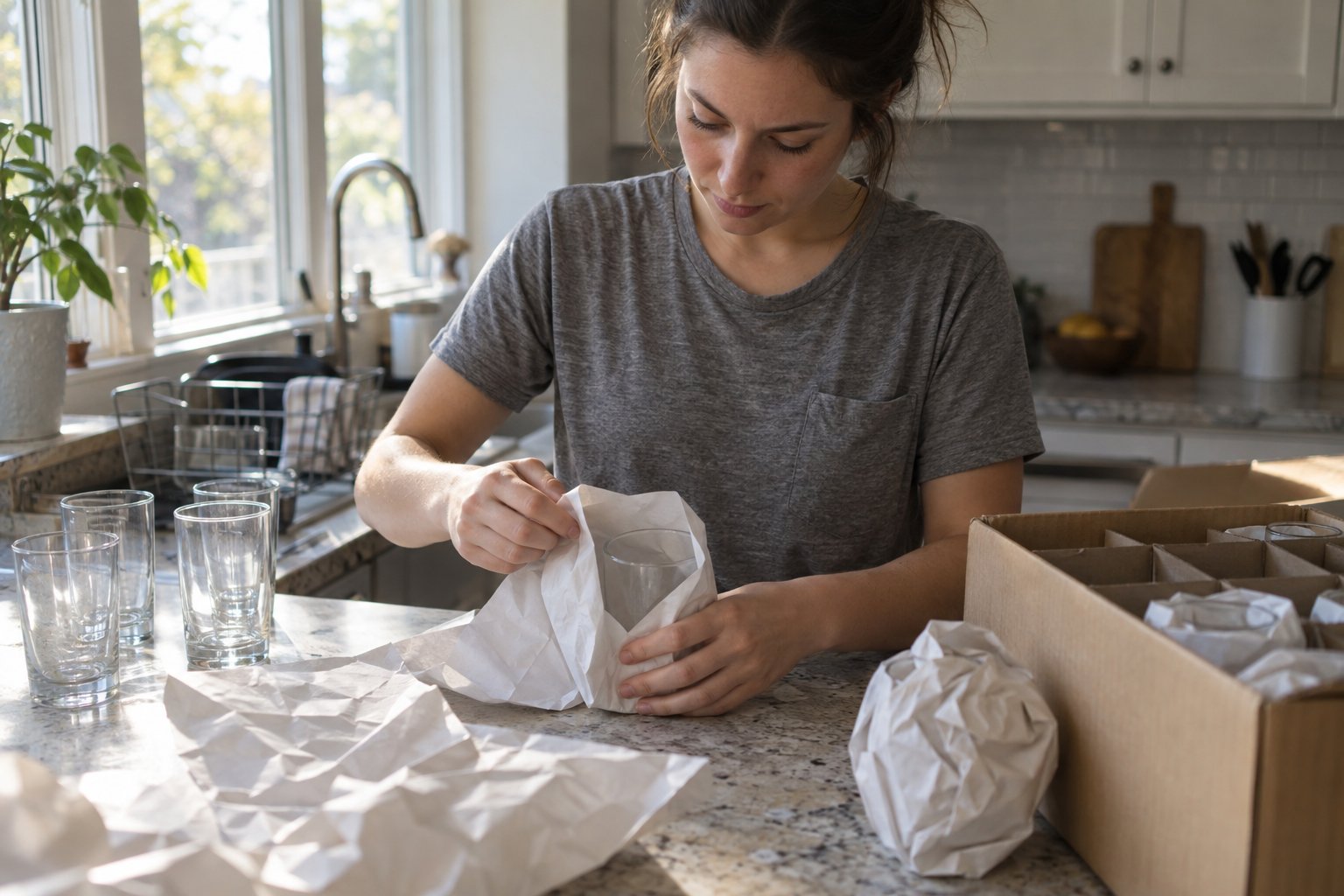
Glasses and mugs require special attention because of their thin rims and handles. Stuff each piece with crumpled paper first, then wrap around the outside, paying extra attention to handles and stems. Place them upright in the box, not sideways, with plenty of padding between items so they cannot clink or collide.
A Simple Step By Step Dish Packing Process
Use a clear process to stay organized and efficient.
Line each box with a thick layer of crumpled paper or bubble wrap before adding any dishes.
Wrap plates, bowls, and mugs individually, then load heavier pieces at the bottom and lighter, more delicate items on top.
Fill all gaps with padding and seal the box firmly, then label it with both contents and fragile warnings.
Keeping Boxes Balanced And Easy To Lift
Even when you know how to pack dishes for moving, it is tempting to keep adding items until a box is full. Instead, stop when it feels comfortably liftable, then fill remaining space with light padding. A balanced box is easier to carry, less likely to crush, and much safer for both movers and your dishes during a local residential move.
Labeling Dish Boxes For A Smooth Unpack
Clear labels save time and frustration when you reach your new kitchen. Write specific descriptions like plates and bowls or coffee mugs and glasses on multiple sides of each box. Mark boxes as fragile and add an arrow for this side up so everyone who handles them understands they need extra care.
Packing Everyday Dishes Versus Special Pieces
Everyday plates and durable stoneware can handle a bit more stacking and shared space once wrapped well. Special pieces, heirlooms, or thin china deserve extra cushioning, smaller bundles, or even their own box. Adjusting your approach is part of learning how to pack dishes for moving without losing items that matter most.
Handling Pots, Pans, And Oven Safe Dishes
While not as fragile, heavier cookware still needs thoughtful packing. Nest pots and pans together with paper between them and wrap glass lids or baking dishes individually. Keep the heaviest items at the bottom of the box and avoid combining them with delicate plates or glasses to prevent accidental damage.
Setting Aside Essential Kitchen Items For Arrival
Before you pack everything, choose a small set of dishes and utensils for your first days in the new home. A few plates, bowls, mugs, and basic tools can go into a clearly labeled essentials box. When you understand how to pack dishes for moving, you also plan how to keep daily life running during the transition.
Working With Professional Movers For Fragile Items
Experienced movers handle dish boxes carefully from truck to kitchen. They know which boxes to place on top, how to stack them tightly so they do not shift, and how to navigate stairs and tight corners. With professionals supporting your move, your careful packing has the best chance of paying off.
A Calm Approach To Packing Your Kitchen
Packing dishes can feel stressful, but it becomes easier when you move step by step. Start early, clear one cabinet at a time, and keep your supplies close so you do not break your rhythm. Once you see neatly labeled, well padded boxes stacked safely, you gain confidence in how to pack dishes for moving the right way.
Let Lift And Load Help Protect Your Kitchen
When you want your dishes to arrive safely without handling every heavy box yourself, a trusted team makes a real difference. Lift and Load can assist with careful packing, loading, and transport so your kitchen is ready to use more quickly, especially during a long-distance relocation. To talk through your move or ask about packing support, you can call 224-404-0069 or email piotr@liftandloadmoving.com for friendly, practical help.
FAQs
To pack dishes safely, you will want small or medium moving boxes, plenty of packing paper, bubble wrap for especially delicate pieces, strong packing tape, and clear markers for labeling. Using smaller boxes prevents overloading, while generous padding at the bottom, sides, and top of each box helps absorb shocks during transport.
It is generally safer to pack plates on their sides, similar to how they sit in a dishwasher rack, rather than stacking them flat. When plates are vertical, pressure is distributed more evenly and the risk of cracking is lower. Just be sure each plate is well wrapped and snugly cushioned to avoid shifting.
Start by stuffing each glass or mug with crumpled paper to support the interior, then wrap the entire piece with more paper or bubble wrap, paying special attention to rims and handles. Place them upright in the box with plenty of cushioning between items, and fill any gaps so nothing can move or bump during the move.
You can use clean towels, dishcloths, or some clothing as extra padding around dish bundles or between layers in the box. However, it is still important to wrap each dish individually with paper or similar material first. Combining both approaches gives you protection and helps conserve supplies, while keeping kitchen items clean and ready to use.
You can use clean towels, dishcloths, or some clothing as extra padding around dish bundles or between layers in the box. However, it is still important to wrap each dish individually with paper or similar material first. Combining both approaches gives you protection and helps conserve supplies, while keeping kitchen items clean and ready to use.
Still have questions?
How to move with us?
Hit the “Get a Quote” button and tell us what you need.
Choose the service, date, and time that work best for you.
Our friendly team shows up on time and gets everything done safely.
Sit back while we take care of the rest.
.avif)