
How to Move a Wall Mirror Collection Without Cracking the Glass
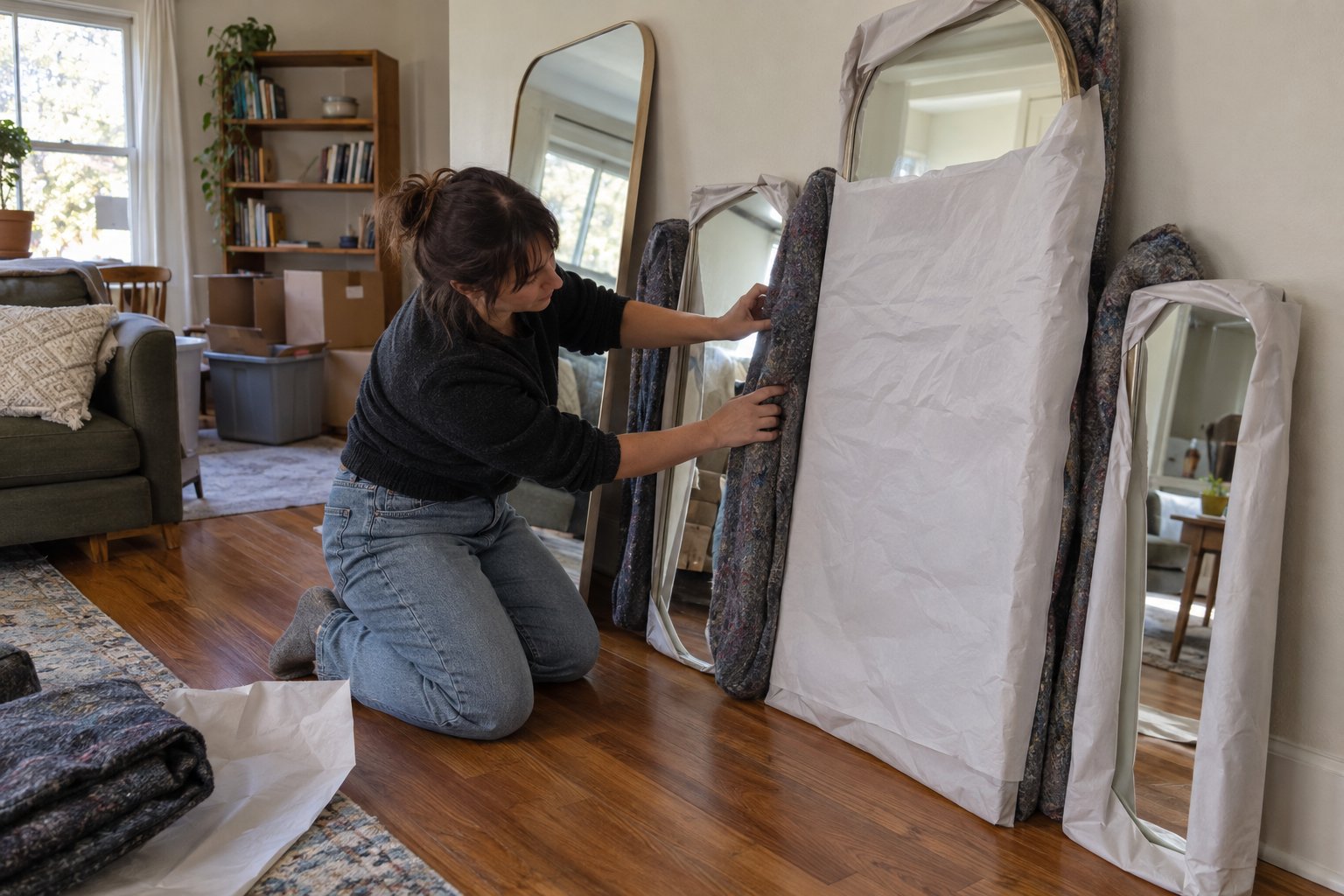
Moving multiple wall mirrors at once means treating the group as a system, not a stack of individual items. The real risk isn't any single mirror breaking on its own, it's glass-on-glass contact and frames shifting against each other in transit. Separate every pane with rigid padding, stand pieces on edge instead of flat, and secure the group so nothing can slide, and a collection of five or fifteen mirrors can travel as safely as one.
This guide covers what changes when you're moving several mirrors together instead of a single piece: how to sort them by size and fragility, how to build a stack that won't shift, and how to load them so they survive both a short local move and a longer haul.
Why Does Moving Several Mirrors at Once Increase the Risk?
Grouping mirrors multiplies the number of hard, flat surfaces that can meet each other without warning. A single mirror cracks mostly from a direct impact or flexing. A collection cracks from vibration transferring between panes that are touching, or from one piece being set down on top of another during a rushed load.
Every frame edge, corner bracket, and bit of exposed glass becomes a potential contact point once mirrors are grouped. The goal of prep isn't just protecting each mirror individually, it's eliminating every point where two mirrors (or a mirror and anything else) could touch directly.
Sorting Your Collection Before You Pack Anything
Start by separating mirrors into three rough categories: small accent mirrors, mid-size framed pieces, and anything large, heavy, or unusually shaped (arched, oversized floor mirrors, anything with an ornate frame). Each category gets handled differently, so mixing them into one pile first just creates confusion later.
Group by Fragility, Not Just Size
A thin, frameless accent mirror is often more fragile than a large mirror in a solid wood frame, even though it's smaller. Sort by how exposed the glass edge is and how much the frame actually protects it, not by square footage alone.
Photograph the Collection First
Before anything gets wrapped, take a few photos of the group laid out. If a frame has an existing chip or a hairline crack, note it. This matters more with a collection than a single piece, since it's easy to lose track of which mirror had pre-existing damage once everything is boxed.
How Do You Pack Multiple Mirrors So They Don't Scratch Each Other?
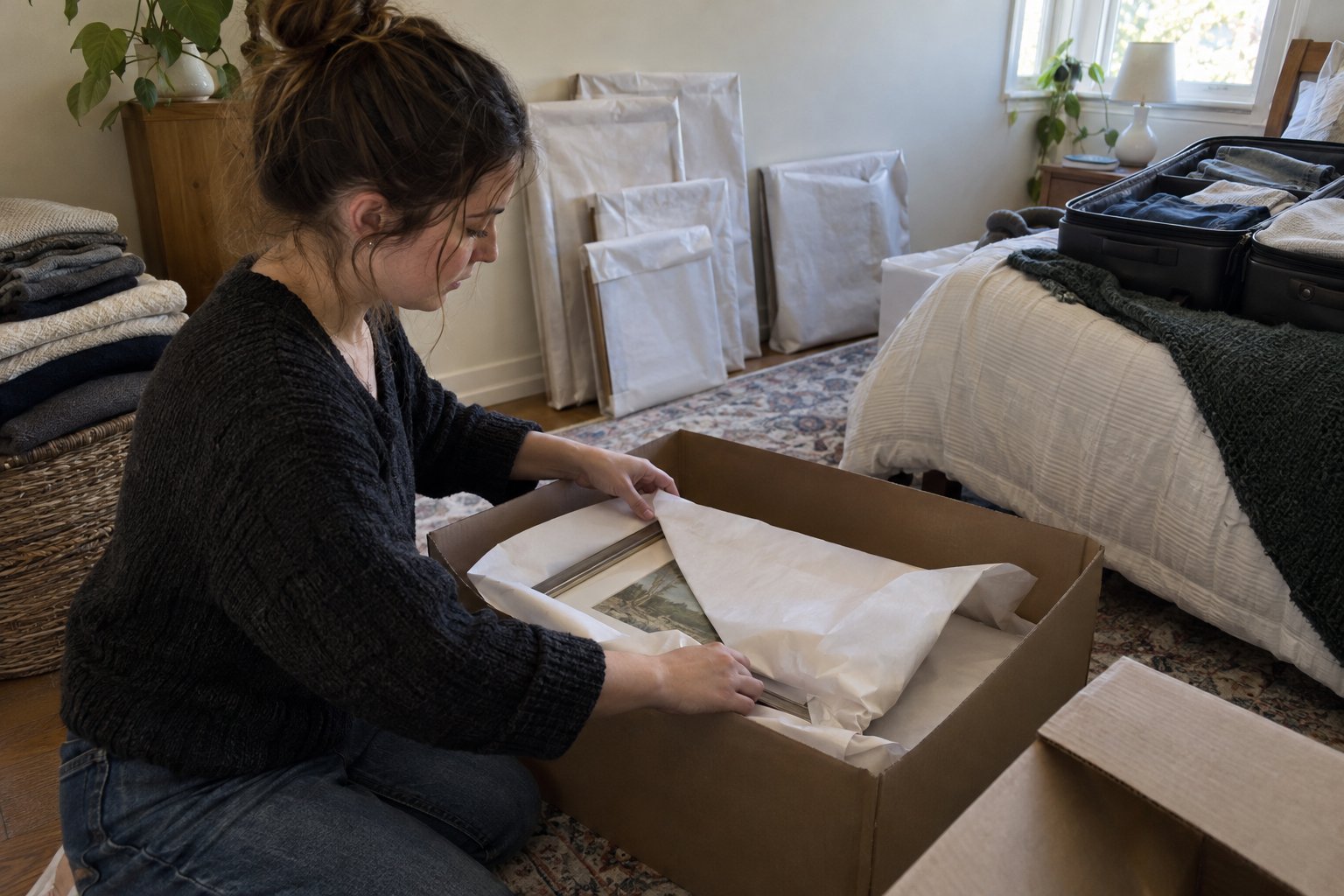
Each mirror needs its own layer of protection plus a rigid barrier between it and its neighbor. Wrap glass surfaces in packing paper or glassine first to prevent scratching, then add a cardboard or foam sheet between each wrapped mirror before anything goes into a mirror carton or crate.
For small to mid-size frames, mirror cartons (the flat, adjustable boxes sold at most moving supply stores) work well because they're designed to hold a pane upright without bowing. For a true collection, buy or request several cartons rather than trying to force two or three mirrors into one.
Use Blankets to Separate, Not Just Cushion
Moving blankets do double duty here: they cushion the frame edges and act as a buffer between mirrors stacked near each other. Fold a blanket between every pair of wrapped mirrors even if each one is already boxed, since boxes can still rub and shift against one another.
Keep Oversized Pieces Separate From the Rest
A large floor mirror or an oversized statement piece shouldn't share a stack with smaller frames. Its weight can crush anything underneath it, and its size makes it awkward to brace alongside smaller items. Give it its own spot, standing on edge and secured independently.
What's the Safest Way to Stand and Stack a Mirror Collection?
Mirrors should always travel on edge, never flat, and never stacked directly on top of each other without a rigid divider. Standing them vertically spreads pressure along the strongest axis of the glass and frame, while flat stacking concentrates weight exactly where a pane is most likely to flex and crack.
Line mirrors up on edge against a wall of the truck or a sturdy moving cart, largest and heaviest at the ends for stability, with soft padding between each one. Use straps or rope across the group (never pulled so tight they bow the frames) to keep the whole row from tipping or sliding as a unit.
Avoid "Leaning Pile" Setups
It's tempting to lean a row of wrapped mirrors against a wall at an angle, propped against each other like dominoes. This setup looks stable until the truck brakes hard, at which point the whole row can slide at once. Secure the group to something fixed, not just to each other.
Loading and Transporting the Collection
Once everything is wrapped, separated, and standing on edge, the collection needs a spot in the vehicle where it won't get weight stacked on top of it and won't absorb heavy jostling. That generally means against a side wall, loaded after bulky furniture but before loose, lightweight boxes that could otherwise bounce into the frames.
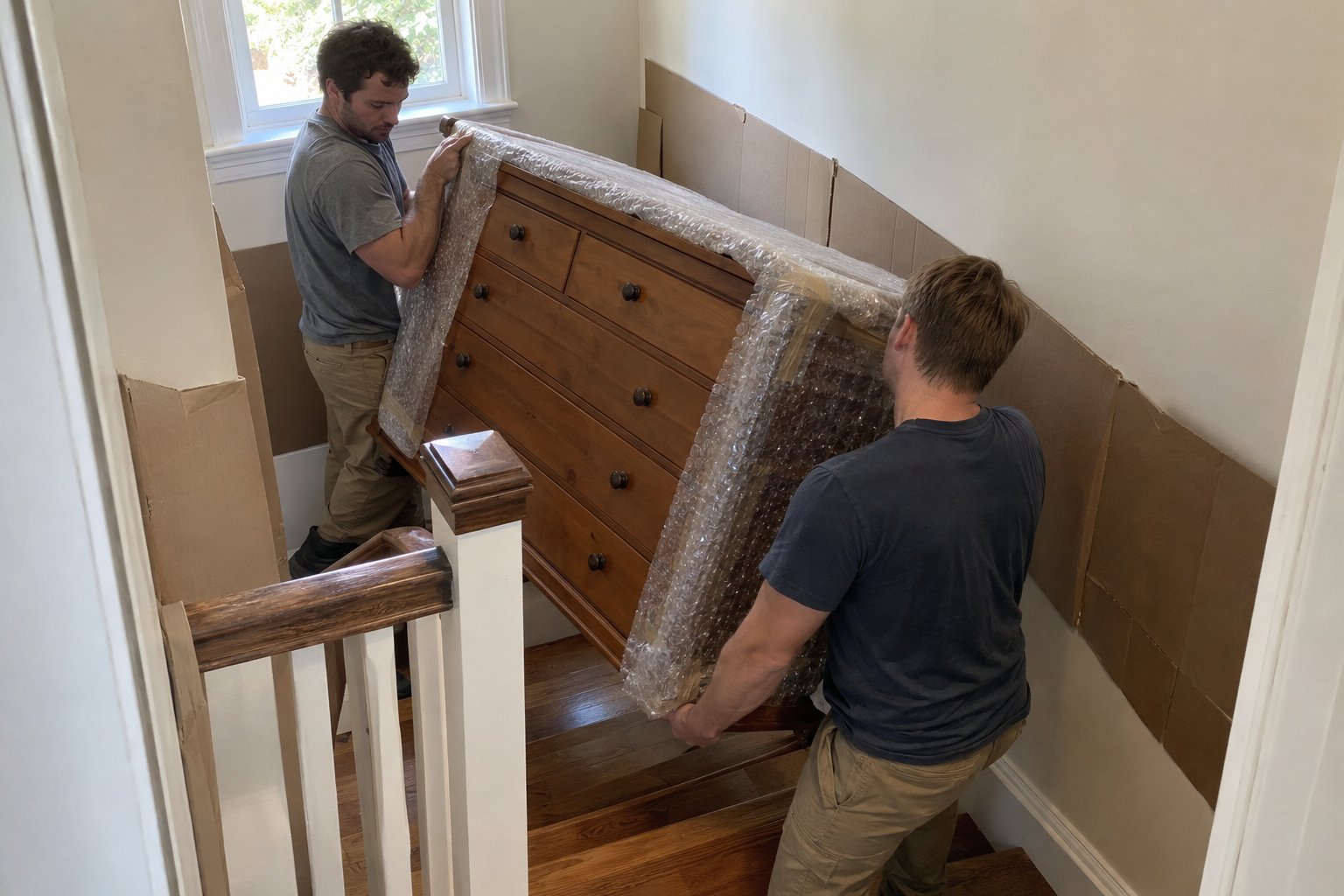
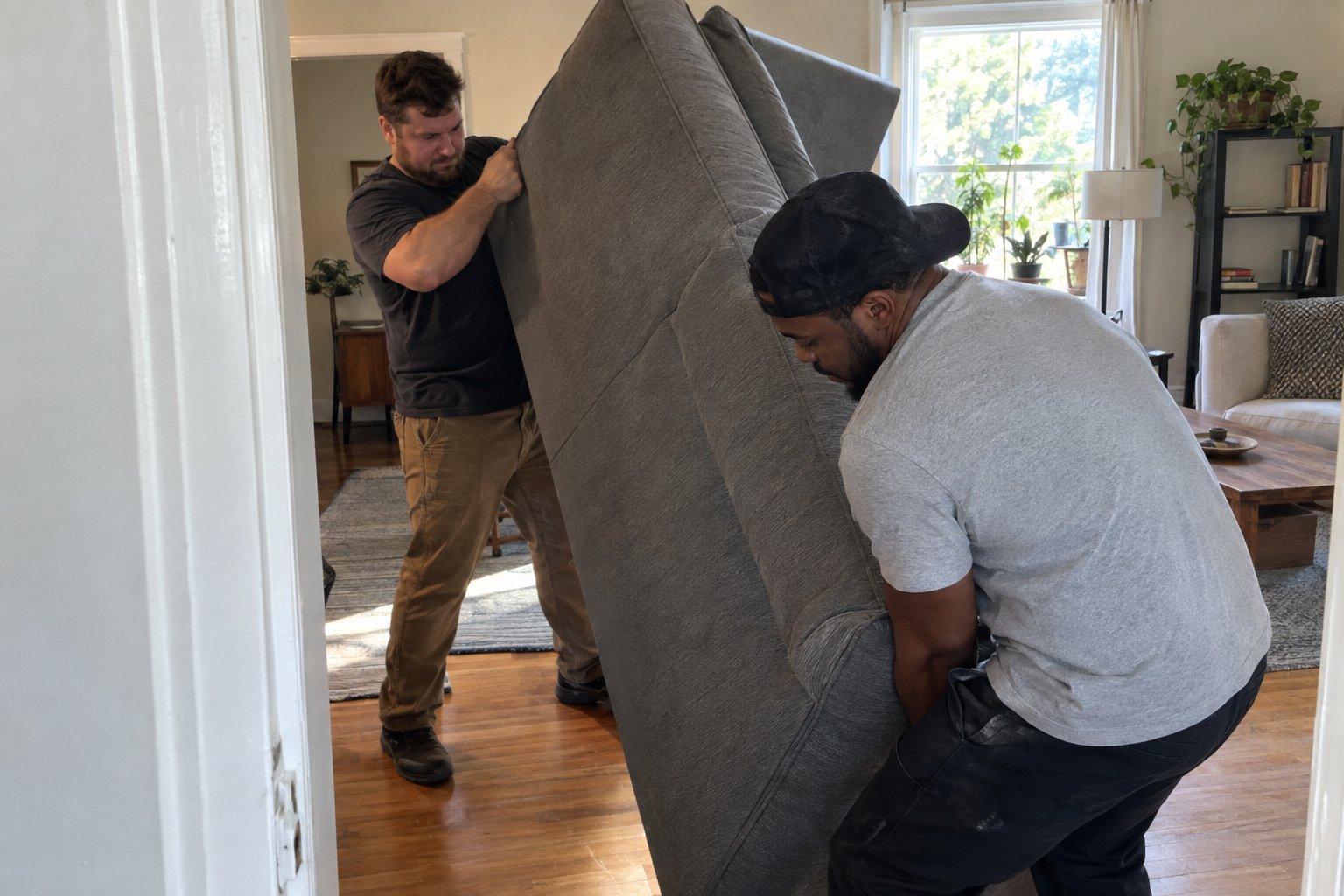
If you're hiring help to carry heavy or awkward pieces, a labor-only moving crew can handle the lifting and placement of larger mirrors and furniture while you manage the finer packing details, which keeps more hands free for a careful load rather than a rushed one. For the broader prep and handling steps that apply to a single frame, our guide on how do you move a mirror without breaking it walks through wrapping technique and glass taping in more detail.
Don't Forget the Hanging Hardware
Collect hooks, wires, and wall anchors for each mirror into a labeled bag, and tape it to the back of the matching frame or keep a numbered list that matches hardware to mirror. Re-hanging a dozen mirrors in a new home is far easier when you're not guessing which wire goes with which frame.
Bringing the Collection Back Together in the New Home
Unwrap mirrors one at a time rather than all at once, checking each against your earlier photos before setting it aside. Lean unwrapped mirrors on edge, cushioned, and away from foot traffic until you're ready to hang them, rather than leaving a cleared stack of bare glass leaning against a wall.
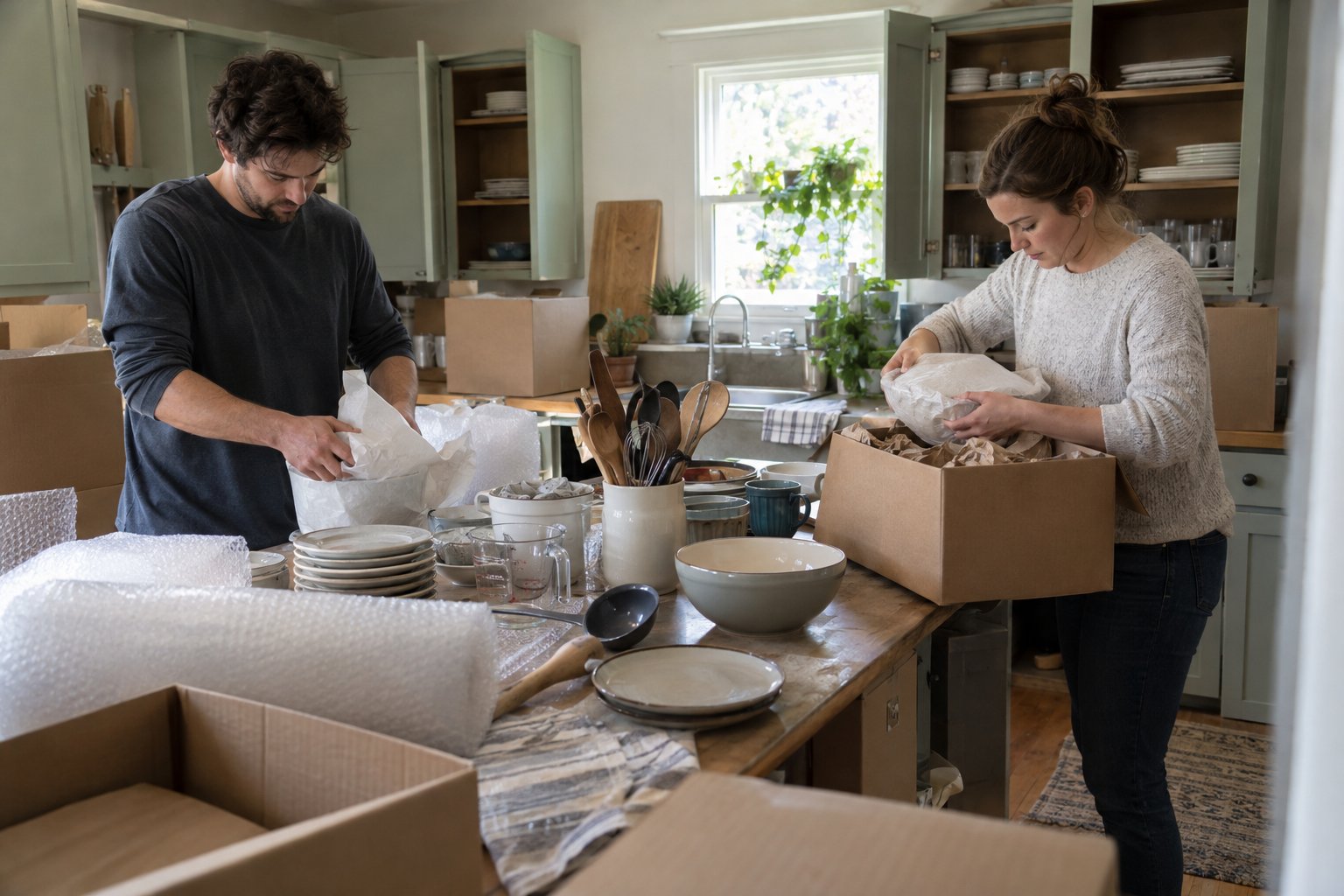
If you're also moving other fragile pieces alongside the mirrors, such as framed art or glass shelving, request professional packing help for the full fragile-items load so everything gets consistent treatment rather than mixing DIY wrapping with rushed last-minute padding.
A mirror collection takes longer to prep than a single piece, but the method is the same multiplied across more items: separate every glass surface, stand everything on edge, and secure the group so it moves as one stable unit instead of a pile of loose panes. Get that right and the only thing waiting at the other end is a wall full of mirrors ready to hang.


FAQs
Most mirror cartons are built for a single pane, so pack one mirror per carton when possible. If you must combine smaller mirrors in one larger crate, separate each with a rigid divider and never let more than one piece touch the carton's inner wall directly.
No. Flat stacking puts the full weight of mirrors above directly onto the glass below, which is the most common way panes crack in transit. Always stand mirrors on edge, even when space feels tighter that way.
Moving blankets and sheets of corrugated cardboard work better than bubble wrap alone for separating multiple mirrors, since they add rigidity between pieces rather than just cushioning one surface. Use packing paper directly on the glass first, then blankets or cardboard between separate mirrors.
Bag the hooks, wire, and anchors for each mirror separately and tape the bag to the back of its matching frame, or keep a simple numbered list pairing hardware to mirrors. This avoids a frustrating sorting process once everything arrives.
Bag the hooks, wire, and anchors for each mirror separately and tape the bag to the back of its matching frame, or keep a simple numbered list pairing hardware to mirrors. This avoids a frustrating sorting process once everything arrives.
Still have questions?
How to move with us?
Hit the “Get a Quote” button and tell us what you need.
Choose the service, date, and time that work best for you.
Our friendly team shows up on time and gets everything done safely.
Sit back while we take care of the rest.
