
How Do You Move a Mirror Without Breaking It?
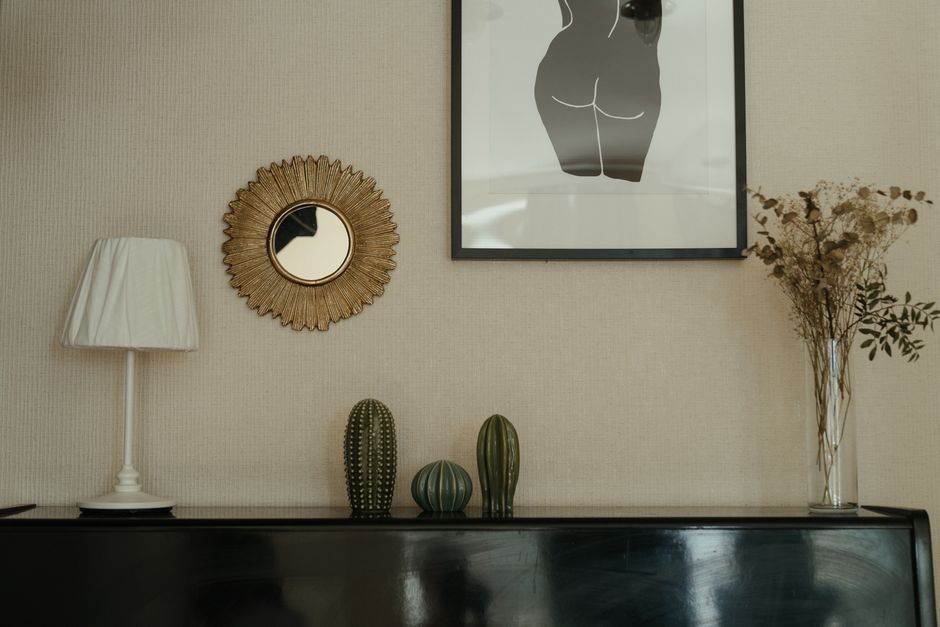
Knowing how to move a mirror correctly is something most people don't think through until they're standing in the hallway holding a 60-pound floor mirror by its frame, trying to angle it around a corner, while the glass flexes visibly with every step and one edge hovers a few inches from the door trim. A mirror looks straightforward. It's flat, it doesn't have drawers or mechanisms, and it's usually just one piece. How hard could it be? The answer is: harder than almost any other item in the house, and the mistakes people make — carrying mirrors flat, skipping the corner protection, wrapping with the wrong materials — routinely result in cracked glass, shattered frames, and dangerous broken shards before the mirror ever reaches the truck.
Need a professional crew to handle the heavy lifting so your mirrors and furniture arrive without damage? Call 224-404-0069 or get a free labor-only moving quote from Lift & Load today.
Why Moving a Mirror Is Harder Than It Looks
The first problem is that glass is unforgiving in ways that aren't obvious until it breaks. A mirror isn't just a sheet of glass — it's a sheet of glass with a reflective silver or aluminum backing, typically bonded to a frame or hanging hardware that puts stress on the edges. The edges are the weakest point. Edge contact with a door frame, baseboard, or another piece of furniture during a carry doesn't need to be hard to cause a crack that runs straight across the face. One tap at the wrong angle at the wrong moment is enough.
The second problem is size and weight distribution. A standard bathroom mirror might weigh 10 to 20 pounds and be manageable for one person. A leaning floor mirror can weigh 40 to 70 pounds and stand six feet tall. An ornate framed wall mirror with a deep molded frame can weigh over 80 pounds, with most of that weight concentrated in the frame rather than distributed across the glass. That makes every mirror its own specific carry problem — and treating a large ornate mirror the same way you'd treat a lightweight bathroom mirror is how glass gets broken.
The third problem is that people carry mirrors flat. A mirror carried horizontally, like a tray, forces the glass to bear its own weight across its full span. Glass is rigid but not infinitely so — unsupported glass spanning more than a few feet will flex under its own weight, and that flex can be enough to initiate a crack from the center outward. Mirrors should almost always be carried vertically, on their edge, which is how glass is engineered to bear load.
How to Wrap a Mirror Correctly Before Moving It
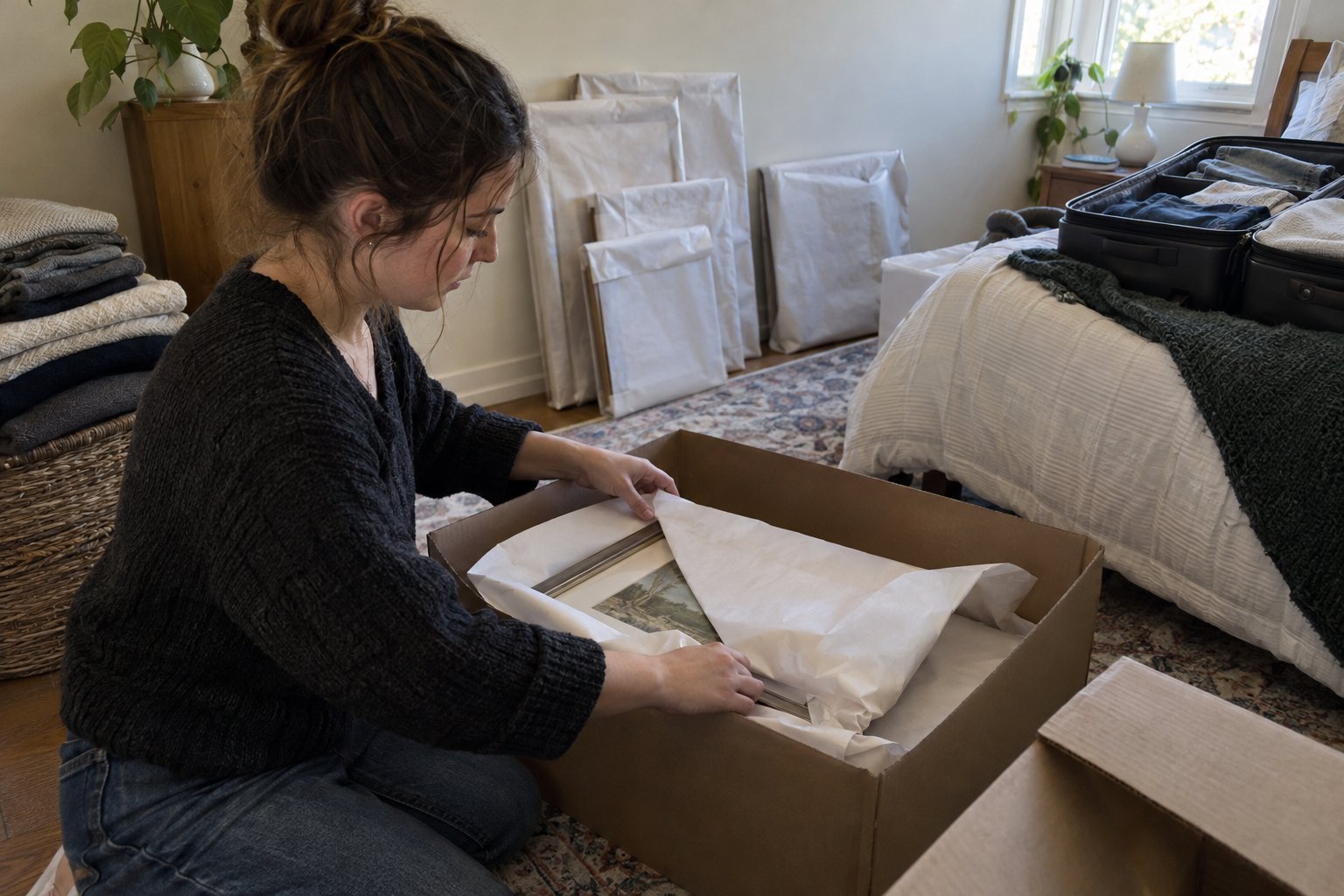
Proper wrapping is the single most important step in moving a mirror safely. Done right, it protects the glass from impact, holds the frame together during the carry, and prevents edge chips that start as minor damage and expand into full cracks over time.
Step 1: Tape an X across the glass face
Before any wrapping, apply painter's tape or masking tape in an X pattern across the face of the mirror. This won't prevent the glass from breaking, but it will hold the pieces together if the mirror does break — keeping dangerous shards contained inside the wrapping rather than scattering across the floor. Use painter's tape rather than packing tape directly on the mirror face; packing tape can leave adhesive residue or, on antique mirrors with a thin backing, can damage the reflective surface when removed.
Step 2: Protect the corners first
Mirror corners are the most likely point of initial impact during a move, and a corner chip almost always propagates into a longer crack. Wrap each corner individually with a layer of foam corner protectors, folded cardboard, or a thick pad of bubble wrap secured with tape. The corners should have at least a half-inch of cushion on all three exposed sides. If you don't have foam corner protectors, fold a piece of cardboard into a pocket shape and tape it snugly over each corner.
Step 3: Wrap the full surface in bubble wrap or moving blankets
Lay the mirror face-down on a moving blanket or a flat layer of bubble wrap. Fold the wrapping up over the back, then add a second layer across the face. Secure the wrap with tape — but tape only to the wrapping material, never directly to an unprotected glass edge or to a finished wood frame. For large mirrors, use a full moving blanket on each side and secure it with stretch wrap around the outside. The goal is a uniform layer of cushioning with no hard pressure points and no exposed glass or frame edges.
Step 4: Use a mirror box for anything fragile or valuable
A mirror box — a telescoping cardboard box specifically designed for mirrors and framed artwork — is the most secure option for any mirror that has significant monetary or sentimental value. Mirror boxes come in standard sizes and can be adjusted to fit snugly around the wrapped mirror. Once inside the box, fill any remaining space with crumpled paper or foam to prevent the mirror from shifting. Label the box clearly on both sides: "FRAGILE — GLASS — THIS SIDE UP."
How to Carry a Mirror Through Your Home
Wrapping protects the mirror from surface damage. Carrying technique protects it from the impacts and stresses that cause structural failure in transit.
Always carry a mirror vertically
As noted above, a mirror should be carried on its edge — never flat. Orient the long edge downward. Two people carrying a large mirror should each hold a short edge (top and bottom) and walk with the mirror between them, keeping it plumb. If you're carrying it alone, hold one long edge against your body and grip the top edge with your free hand. Never cradle a large mirror across your forearms like you're carrying a box.
Plan your path before you lift
Walk the path from the mirror's current location to the truck before you pick up the mirror. Identify every door frame, corner, stair turn, and low ceiling. A mirror that's 48 inches wide needs more than 48 inches of clearance at every point — the carry position adds width from your body on both sides. Remove doors from hinges if needed. Identify the exact angle you'll need to rotate the mirror to clear each corner before you're mid-carry with no free hands to open doors.
Keep the mirror away from walls and door frames
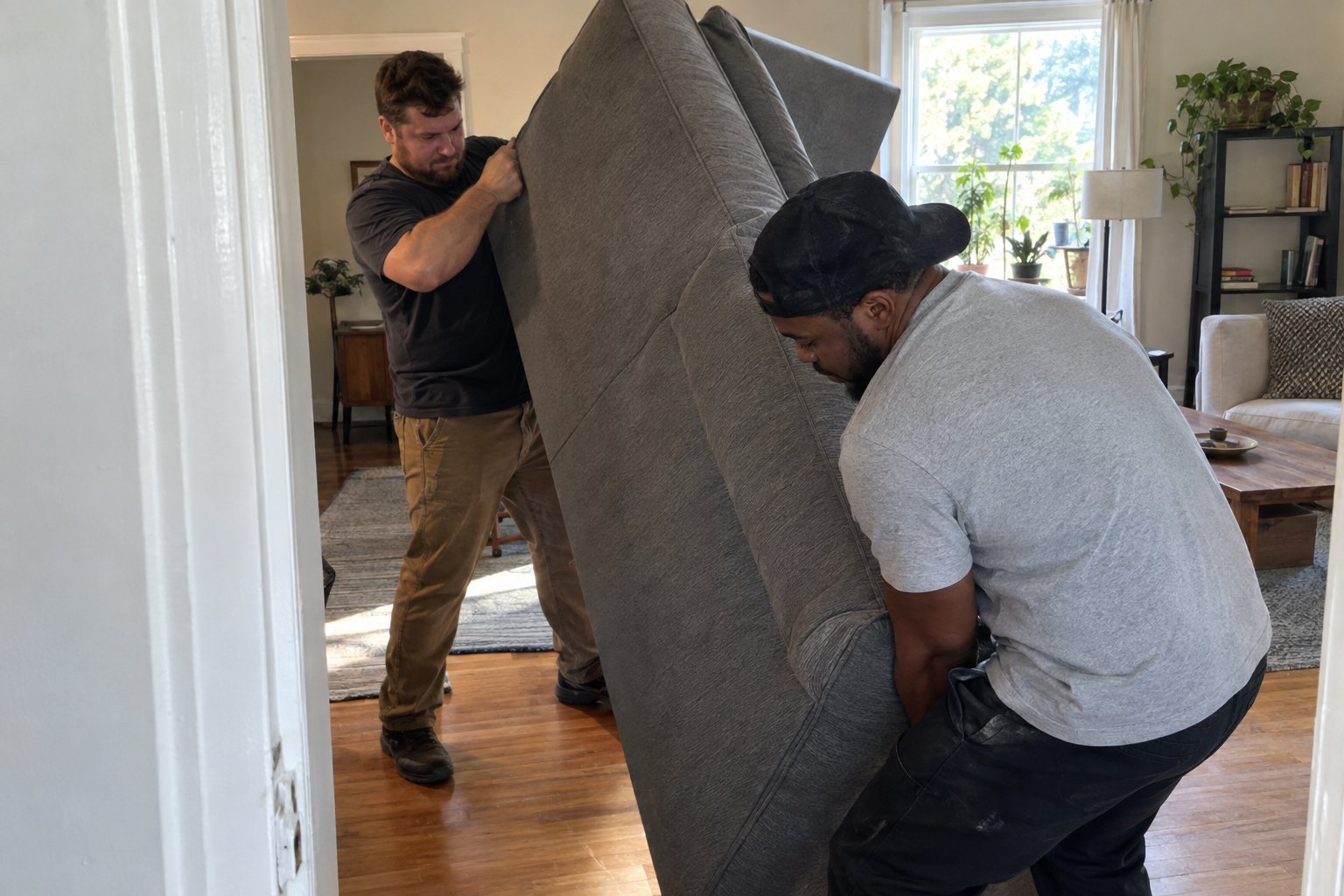
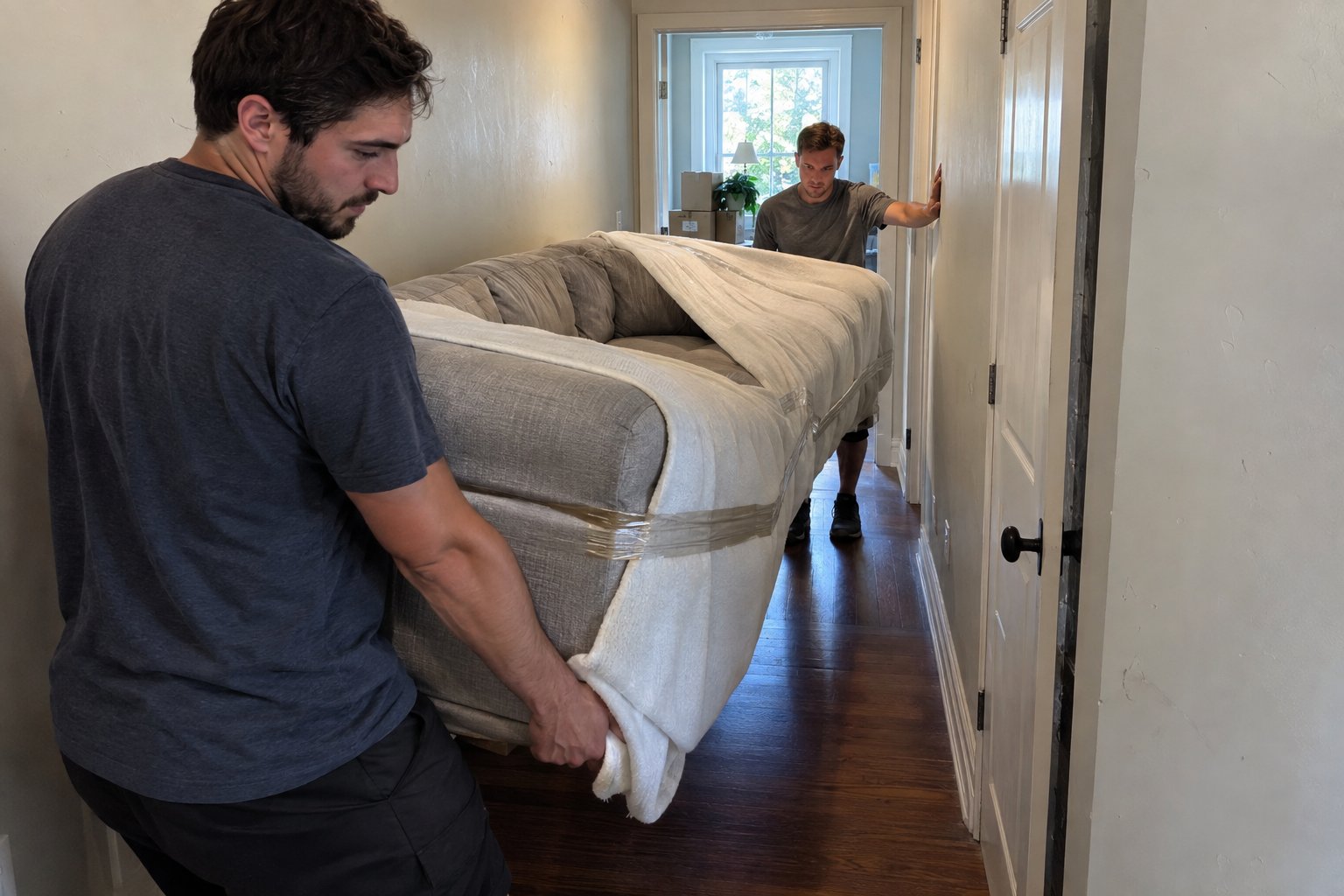
The most common mirror breakage happens when an edge catches a door frame during a carry. Move slowly through every doorway. The person in back is responsible for watching the trailing edge; the person in front is responsible for watching the leading edge. Communicate constantly — "clear left," "watch the frame on your right" — and stop moving rather than forcing an angle that doesn't feel safe.
Don't set a mirror down flat on a hard surface
If you need to rest a large mirror during the carry, lean it upright against a wall rather than setting it flat on the floor. When leaning it, angle it slightly — no more than 15 to 20 degrees from vertical — so it rests stably against the wall rather than balancing at a precarious angle. Pad the floor contact point with a folded blanket to prevent edge chips from the hard surface.
Loading a Mirror Into the Moving Truck
A mirror that survives the carry from the house to the truck can still be destroyed during the truck ride if it's loaded incorrectly.
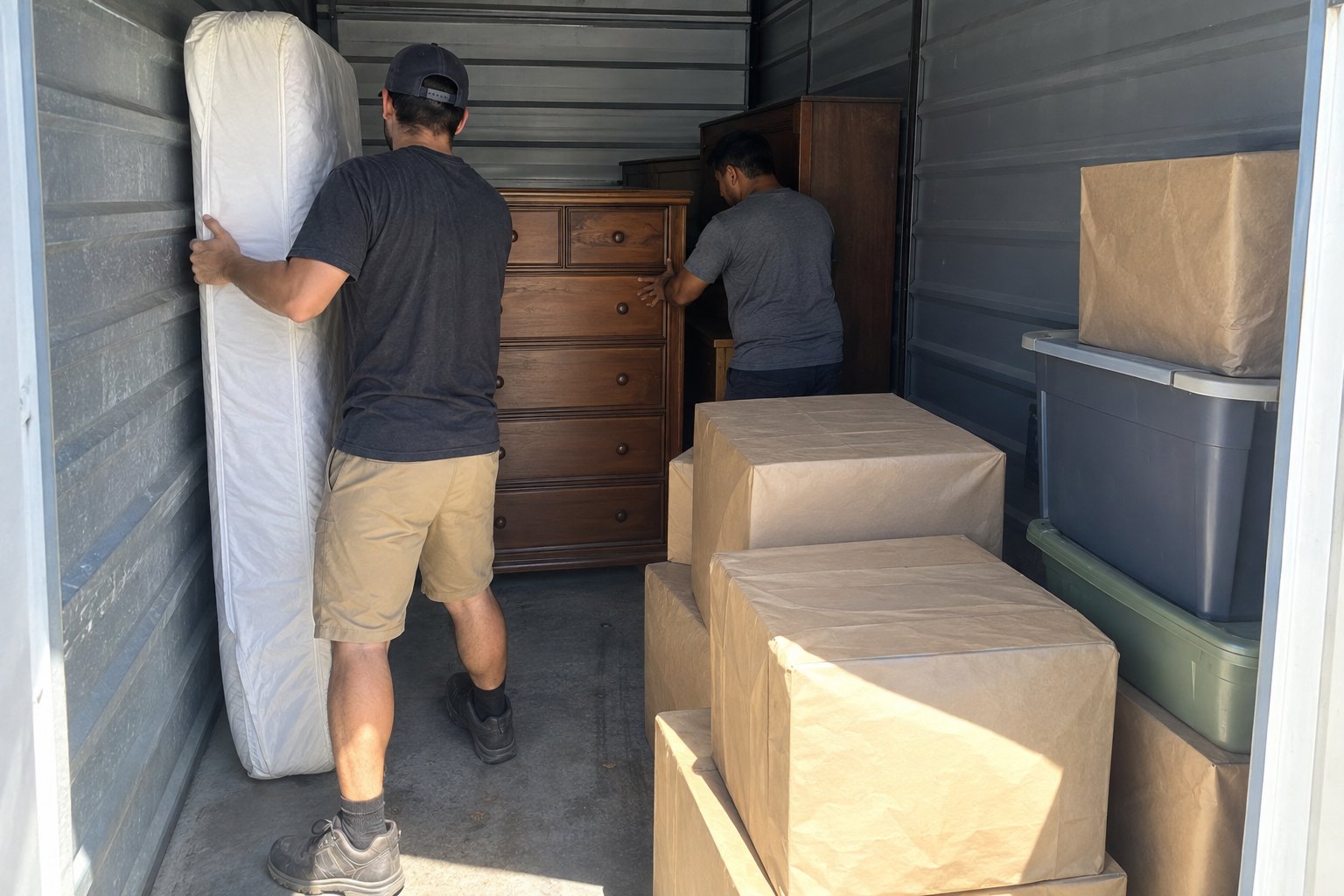
Mirrors should be loaded vertically whenever possible — standing on edge between mattresses, upholstered furniture, or purpose-built mirror slots. Never lay a mirror flat on the truck floor and stack boxes on top of it. Never lean a mirror against a hard surface without padding between them.
If you're loading against a wall of the truck, pad the wall first with a moving blanket. Lean the wrapped mirror against the padded wall and secure it with a moving strap across the middle — not the corners, and not so tight that it bows the frame. Mirrors should be among the last items loaded so they ride against a padded wall and aren't shifted by heavier items loaded afterward.
For especially large or valuable mirrors — antique frames, full-length ornate pieces, or anything you genuinely cannot afford to replace — consider whether a dedicated professional crew with the right equipment is worth the investment. Get a free labor-only moving quote from Lift & Load and let an experienced crew handle the pieces that matter most.
Special Considerations for Different Mirror Types
Leaning floor mirrors
Floor mirrors are tall and top-heavy when carried. The leaning design means they have no wall-mount hardware to use as a grip point — you're carrying an unsupported slab of glass and frame. Two people are required for any floor mirror over 36 inches tall. Wrap thoroughly, carry vertically with one person at each short end, and use slow deliberate steps through every doorway.
Framed wall mirrors with deep molded frames
Heavy ornate frames add significant weight and create uneven stress distribution across the glass. The joint between the frame and the glass backing is a common failure point when the mirror flexes during a carry. Wrap the frame separately from the glass — foam padding under the frame lip, bubble wrap across the face — so the frame is supported independently rather than transferring load back onto the glass edge.
Antique and mercury glass mirrors
Antique mirrors with mercury or silver backing are more fragile than modern mirrors because the reflective backing can separate, flake, or discolor from moisture, heat, or even the pressure of tight wrapping. Wrap these mirrors loosely in acid-free tissue paper first, then add a light layer of bubble wrap. Never use stretch wrap directly against an antique mirror's surface or backing.
Bathroom mirrors glued to the wall
Many bathroom mirrors are not framed — they're plate glass panels glued directly to the wall with mirror adhesive. These are among the most dangerous mirrors to remove because there's no frame to grip and no hardware to support the weight during removal. Use suction cup handles (available at hardware stores) to grip the face safely, cut the adhesive bond with a thin wire or utility blade, and have a second person support the weight the moment the panel breaks free from the wall. These mirrors have no safe edge grip — if you don't have suction handles, get them before you start.


FAQs
Always carry a mirror upright, on its edge — never flat. Carrying a mirror horizontally forces the glass to support its own weight across its full span, which can cause it to flex and crack from the center outward. Mirrors are engineered to bear load on their edges, so keep them vertical throughout the entire carry and load them vertically in the truck as well.
Start by taping an X across the glass face with painter's tape to contain shards if the glass breaks. Pad each corner individually with foam corner protectors or folded cardboard. Then wrap the full mirror in bubble wrap or a moving blanket, securing the wrap with tape applied only to the wrapping material — never directly to the glass or a finished wood frame. For valuable mirrors, place the wrapped mirror inside a telescoping mirror box.
A small bathroom mirror or lightweight wall mirror can be managed by one careful person. Any floor mirror, large wall mirror, or ornate framed mirror over roughly 36 inches tall or 30 pounds should be moved with two people — one at each short end. The risk of dropping a large mirror while managing doors, corners, and stairways alone is significant enough that solo carries aren't worth attempting on anything valuable or large.
Mirrors should ride vertically in the truck, leaning against a padded wall or sandwiched between soft items like mattresses and upholstered furniture. Pad the wall with a moving blanket before leaning the mirror against it, and secure the mirror with a moving strap across the middle — not the corners. Never lay a mirror flat on the truck floor with boxes stacked on top. Load mirrors last so they aren't shifted by heavier items loaded afterward.
Mirrors should ride vertically in the truck, leaning against a padded wall or sandwiched between soft items like mattresses and upholstered furniture. Pad the wall with a moving blanket before leaning the mirror against it, and secure the mirror with a moving strap across the middle — not the corners. Never lay a mirror flat on the truck floor with boxes stacked on top. Load mirrors last so they aren't shifted by heavier items loaded afterward.
Still have questions?
How to move with us?
Hit the “Get a Quote” button and tell us what you need.
Choose the service, date, and time that work best for you.
Our friendly team shows up on time and gets everything done safely.
Sit back while we take care of the rest.
.avif)