
How to Transport Clothes When Moving Without Wrinkling or Losing Them
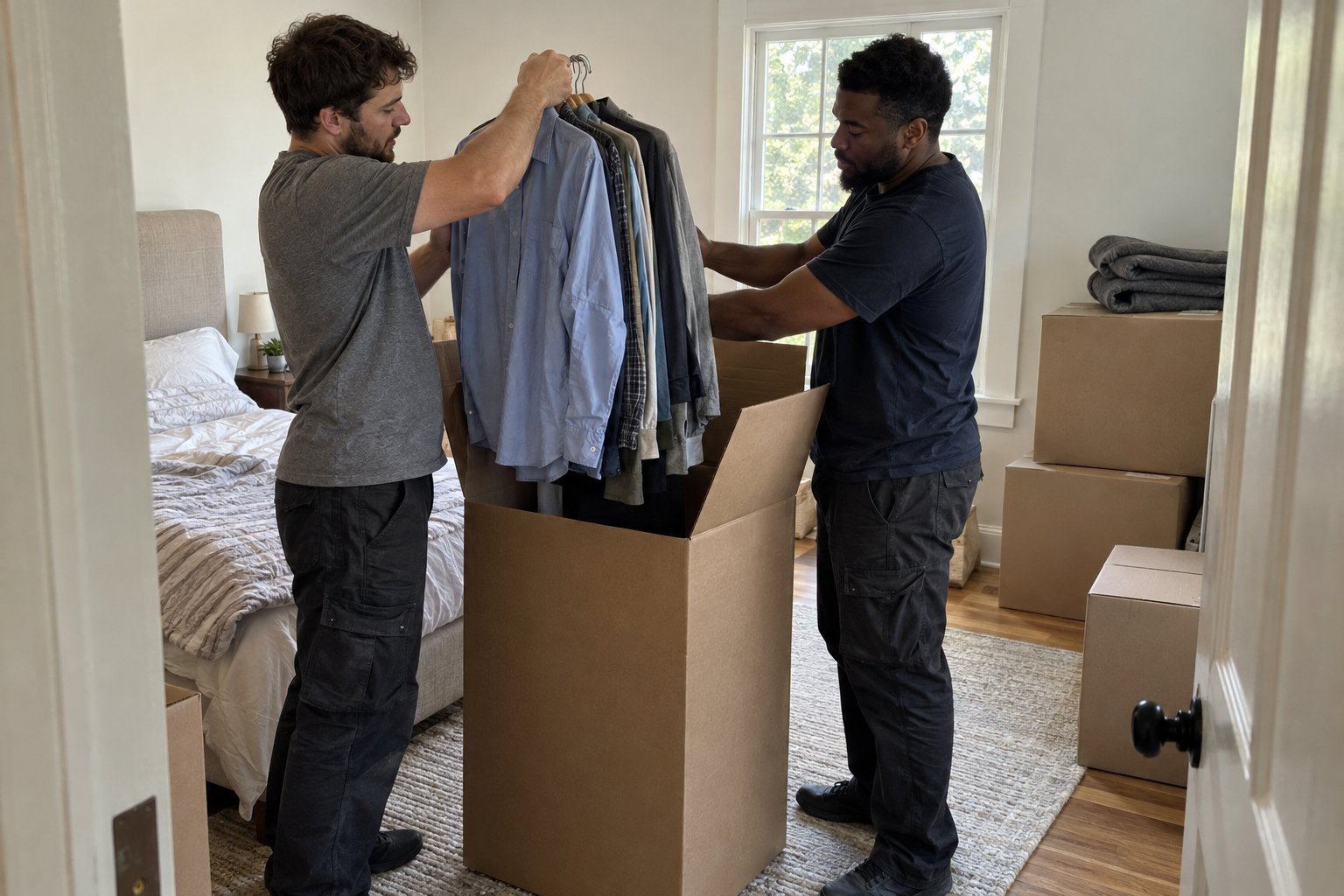
The best way to transport clothes when moving depends on the garment, not a single universal method. Hanging items travel best upright in a wardrobe box or garment bag, folded basics do fine in suitcases or trash bags, and shoes and accessories need their own containment so they don't crush anything else in transit. Mixing these methods, instead of dumping everything into generic boxes, is what keeps clothes wrinkle-free and easy to find on the other end.
This guide breaks down transport methods by clothing type and answers the practical questions people run into once the truck is loaded and the drive (or carry) actually starts.
What's the Best Way to Transport Clothes When Moving Long Distances vs. Across Town?
For a short local move, almost any method holds up because clothes spend less time compressed or jostled. For a longer haul, hanging items need rigid support and folded items need firmer containers, since hours of vibration and shifting cause far more wrinkling and tangling than a quick trip across town.
If your move involves a long drive or a multi-day transit, prioritize wardrobe boxes over bags for anything structured (suits, blazers, dresses) and avoid stacking heavy boxes on top of soft-sided luggage. A short local move gives you more flexibility to use what you already own, like duffel bags and rolling suitcases, instead of buying extra supplies.
How Do You Transport Hanging Clothes Without Wrinkling Them?
Hanging clothes transport best when they stay on their hangers the entire time, inside a wardrobe box or a large garment bag that keeps them upright. Laying suits or dresses flat in a regular box almost always creates creases that need a full re-iron, and sometimes a re-steam, once you unpack.
Wardrobe boxes have a built-in metal bar near the top, so you simply transfer hangers straight from your closet rod into the box. If you don't want to rent or buy wardrobe boxes, large contractor-style garment bags work as a budget alternative, though they offer less structure and should go upright in the vehicle, never flattened under other items. Either way, keep the heaviest coats separate from delicate blouses or silk items; hanging them together lets zippers and buttons snag thinner fabric during the ride.
Garment Bags vs. Wardrobe Boxes
Garment bags are lighter, cheaper, and easier to carry up stairs, which matters for a labor-only move where you or your crew are hand-carrying items rather than rolling a box dolly. Wardrobe boxes protect better over longer distances and stack more predictably in a truck, but they take up more floor space and cost more to acquire.
How Should You Pack Folded Clothes for Transport?
Folded clothes transport well in soft-sided luggage, rolling suitcases, or heavy-duty trash bags, all of which flex into gaps in the truck without adding bulky, hard-to-stack boxes. The key is grouping by type (everyday basics, workout gear, pajamas) so you aren't digging through five containers to find socks.
Suitcases and duffel bags are genuinely useful here since you likely already own them and they're built to protect clothing during transport by design. Roll clothes rather than fold them flat when space is tight; rolling reduces deep creases and lets you see more of what's packed at a glance. Trash bags work in a pinch for bulky items like bedding-adjacent clothing (robes, heavy sweaters) but tape them shut and label clearly, since an unlabeled bag of clothes looks identical to a bag of actual trash on a hectic moving day.
How Do You Keep Shoes and Accessories From Damaging Clothes in Transit?
Shoes and accessories need their own compartment, never mixed loose with folded clothing, because buckles, heels, and jewelry edges can snag fabric or leave marks during the bumps of transport. Stuff shoes with socks or paper to hold their shape, then pack them sole-to-sole in a dedicated box or a shoe bag inside a suitcase.
Belts, ties, and jewelry travel best rolled or coiled in a small pouch or a divided container, kept separate from anything with buttons or rough texture. If you're short on accessory storage, a repurposed toiletry bag works fine for small items like watches and cufflinks as long as it's clearly labeled and kept upright.
Should You Use Boxes, Bags, or Suitcases to Transport Clothes?
There's no single right container: suitcases and duffels are best for folded everyday clothes you'll need first, wardrobe boxes are best for anything on a hanger, and heavy-duty bags are a flexible filler for bulky soft items. Choosing based on garment type, rather than grabbing whatever container is nearest, is what actually prevents wrinkling and lost items.
A simple system that works for most households: hanging and formal wear goes in wardrobe boxes or garment bags, daily-wear folded clothes go in suitcases, and bulky items like robes or out-of-season sweaters go in sealed, labeled bags. This also makes unpacking faster since you already know which container holds what, instead of opening ten identical boxes to find one sweater.
If you're coordinating a larger move and want help carrying wardrobe boxes, suitcases, and furniture safely between your old and new place, a labor-only moving crew can handle the heavy lifting and careful carrying while you focus on sorting and organizing. For long-distance relocations, pairing that labor with professional packing help ensures delicate or formal clothing items are boxed correctly before the drive even starts.
What Should You Do With Clothes You're Not Packing Yet?
Clothes you won't need until moving week should stay exactly where they are until the last reasonable moment, ideally sorted by season or frequency of use rather than packed "just in case." Packing too early just means living out of a suitcase in your own home for weeks, which adds stress without saving real time.
A good rule: pack out-of-season and rarely worn items first, since you won't miss them before the move, and leave daily-wear clothing for the final day or two. This mirrors the same logic behind deciding when to start packing for a move, where non-essentials come first and daily essentials come last.


FAQs
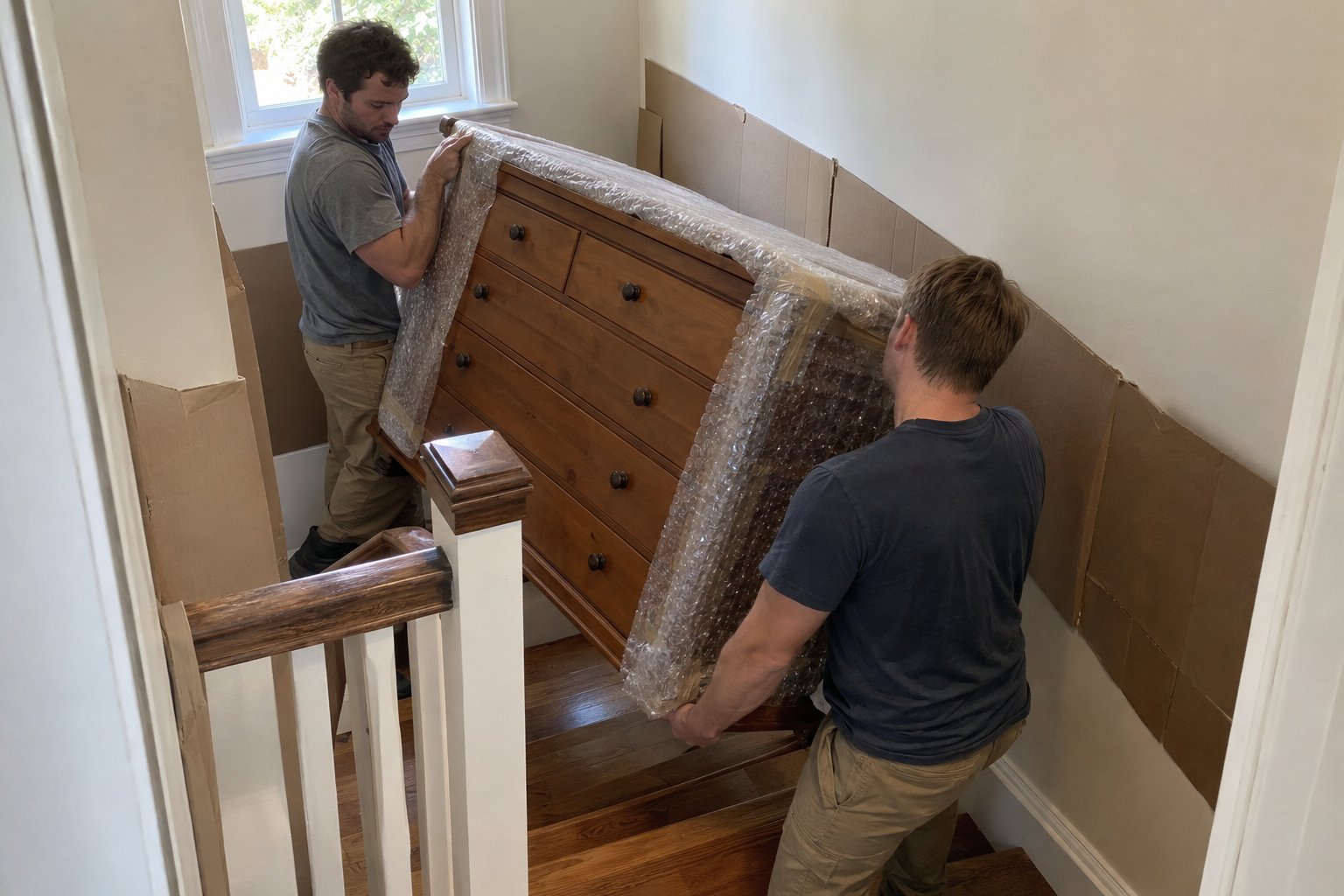
Light, soft clothing can often stay in drawers for a short local move if the dresser itself is empty enough to lift safely, but heavier drawers add strain and risk tipping. For longer moves, it's safer to remove clothes and pack them separately, then move the dresser empty.
Use garment bags for anything on a hanger, keeping them upright in the vehicle, and fold everything else into suitcases, duffel bags, or sealed heavy-duty bags. Group similar items together so formal wear doesn't end up crushed under folded sweaters.
Rolling generally reduces deep creases and makes better use of space in suitcases or bags, while folding works fine for structured items like dress shirts that hold their shape better flat. Most people do a mix depending on the garment.
Daily-wear clothing should be packed last since you need it until moving day, but out-of-season or rarely worn items can be packed weeks in advance to reduce last-minute pressure.
Daily-wear clothing should be packed last since you need it until moving day, but out-of-season or rarely worn items can be packed weeks in advance to reduce last-minute pressure.
Still have questions?
How to move with us?
Hit the “Get a Quote” button and tell us what you need.
Choose the service, date, and time that work best for you.
Our friendly team shows up on time and gets everything done safely.
Sit back while we take care of the rest.
