
Chest of Drawers: The Safe Way to Move One
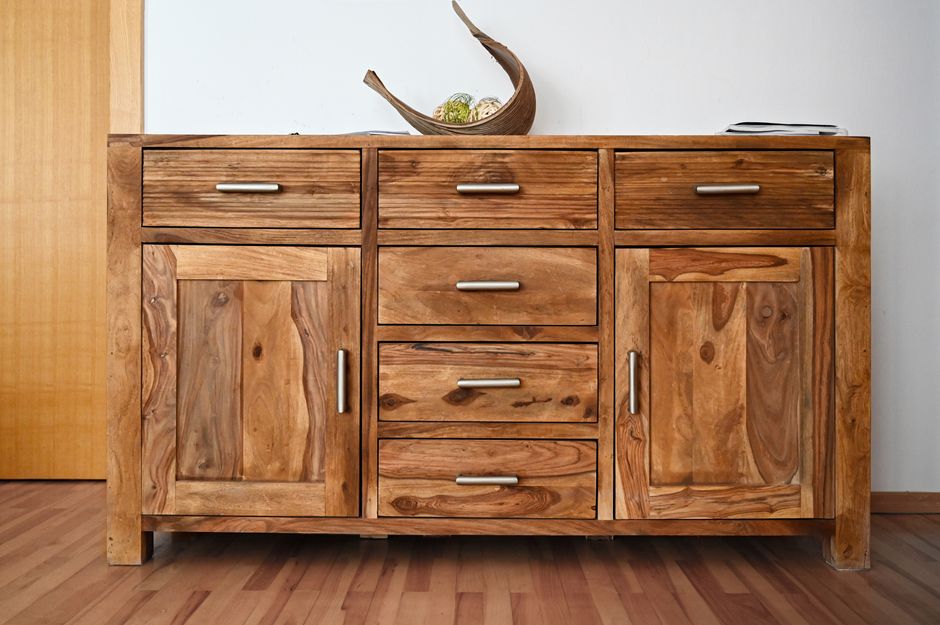
Knowing how to move a chest of drawers correctly is something most people figure out too late — usually when they're already gripping the sides of a six-drawer piece, leaning back at a bad angle on a staircase, and realizing that every drawer is still full of folded clothes adding an extra 40 pounds they didn't account for. A chest of drawers looks manageable. It's upright, rectangular, and fits through most standard doorways. How hard could it be? The answer is: much harder than it appears, and the mistakes people make — leaving drawers loaded, skipping protective wrap, carrying without clear communication — routinely result in gouged hardwood floors, cracked drawer fronts, and pulled muscles before the piece ever leaves the bedroom.
Need a professional crew to handle the heavy lifting so your chest of drawers and furniture arrive without damage? Call 224-404-0069 or get a free labor-only moving quote from Lift & Load today.
Why Moving a Chest of Drawers Is Harder Than It Looks
The first problem is combined weight. An empty solid-wood six-drawer chest can weigh anywhere from 80 to 150 pounds depending on species and construction. Add the contents — folded jeans, sweaters, belts, socks — and that number climbs fast. Clothing is deceptively heavy in bulk. A single drawer packed with denim and knitwear can weigh 15 to 20 pounds on its own. Six drawers at that load adds 90 to 120 pounds on top of the case weight. People almost never do this math before they try to lift the piece, and that's when backs give out.
The second problem is the drawers themselves. Drawers are not fixed. Even when pushed fully closed, they can slide open mid-carry if the piece tilts forward even slightly. A drawer that launches out during a stair carry doesn't just spill its contents — it shifts the center of gravity of the entire piece without warning, and the person at the bottom takes the brunt of it instantly. This is one of the most common causes of dropped furniture and dropped people during residential moves.
The third problem is the finish. Chest of drawers surfaces — whether solid wood, veneer, painted MDF, or lacquered particleboard — are vulnerable to corner strikes, dragging contact, and moisture from bare hands. A single hard knock against a doorframe can split veneer or chip a painted corner in a way that's extremely difficult to repair invisibly. Carrying without padding, or setting the piece down on a bare floor while repositioning your grip, leaves scratches that weren't there when the move started.
Step 1: Empty Every Drawer Before You Do Anything Else
The single most important thing you can do before moving a chest of drawers is remove everything from every drawer. This is non-negotiable. It's not optional if you're in a hurry. A loaded chest is heavier, more unstable, and more likely to shift unpredictably mid-carry. There's no safe technique for carrying a fully loaded chest — only less bad ones.
Remove drawer contents and move them separately. Soft items like clothing can go directly into garbage bags, wardrobe boxes, or laundry hampers — they don't need fragile packing, just containment. Keep items from each drawer together so reassembly is straightforward at the destination.
Step 2: Remove the Drawers Themselves
Once the contents are out, pull each drawer completely free of the case. Most standard drawer slides allow full removal by pulling the drawer out to the stop point and either pressing a release tab on each slide rail or lifting the front of the drawer slightly while pulling. Some older furniture uses simple wooden runners with no release mechanism — those drawers lift straight out once fully extended.
- Label each drawer with a piece of tape indicating its position (e.g., "Top Left," "Middle Right") so reinstallation is fast at the destination.
- Stack drawers face-down on a moving blanket or flat surface to protect the fronts, which are the most visible and most fragile part of the assembly.
- Do not stack more than two or three drawers high without interlocking support — stacks can shift and fall.
- Tape the drawer fronts if they're attached separately via screws rather than glued, since movement and vibration can loosen them.
Removing the drawers reduces the chest's weight by a significant margin and eliminates the slide-open hazard entirely. It also makes the case easier to grip because the interior drawer openings give you natural handholds on many styles.
Step 3: Protect the Case
Before the chest moves an inch, it needs to be wrapped. Use moving blankets secured with rubber bands or stretch wrap — not tape directly on the surface, which can pull finish when removed. Pay particular attention to the corners, the top surface, and any protruding hardware like drawer pulls or decorative knobs.
What to Protect and How
- Top surface: Wrap with a full moving blanket folded in half — the top is the most visible surface and the most likely to make contact with a doorframe during a tight carry.
- Corners: Double-layer wrap at all four vertical corners. Corners hit doorframes, hallway walls, and truck walls first.
- Hardware: Remove or tape over any knobs or pulls that protrude significantly. A drawer pull snagged on a doorframe will strip its screw holes instantly.
- Feet: If the chest has decorative feet or short legs rather than a flat base, protect them with foam wrap and carry the piece slightly elevated rather than dragging it across the floor.
If the chest is a flat-pack piece — assembled from particleboard with cam locks and dowels — treat it with extra care. The joints in flat-pack furniture were not designed to bear the full weight of the case when it's tilted or cantilevered. Carry it as upright as possible and never support it from a single corner or edge.
Step 4: Plan the Path and Carry Correctly
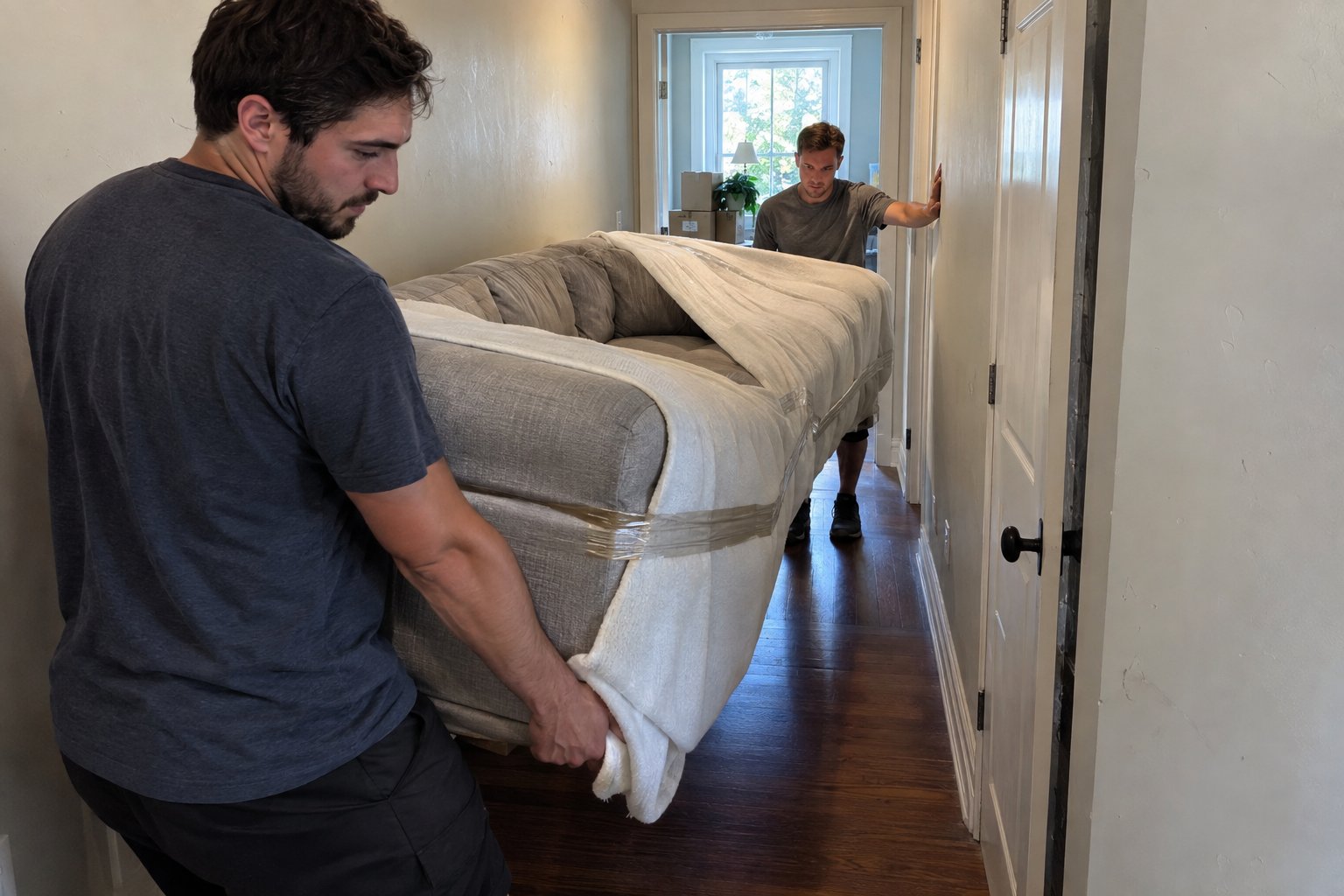
Walk the route before the piece moves. Measure any doorways that look narrow. A standard chest of drawers is typically 30 to 36 inches wide, which will clear most 32-to-36-inch interior doorways — but only barely, and only if the chest is carried perfectly straight without any wrapping adding to its width. If you've padded the piece with blankets, remeasure with the blankets on before committing to the route.
Two-Person Carry Technique
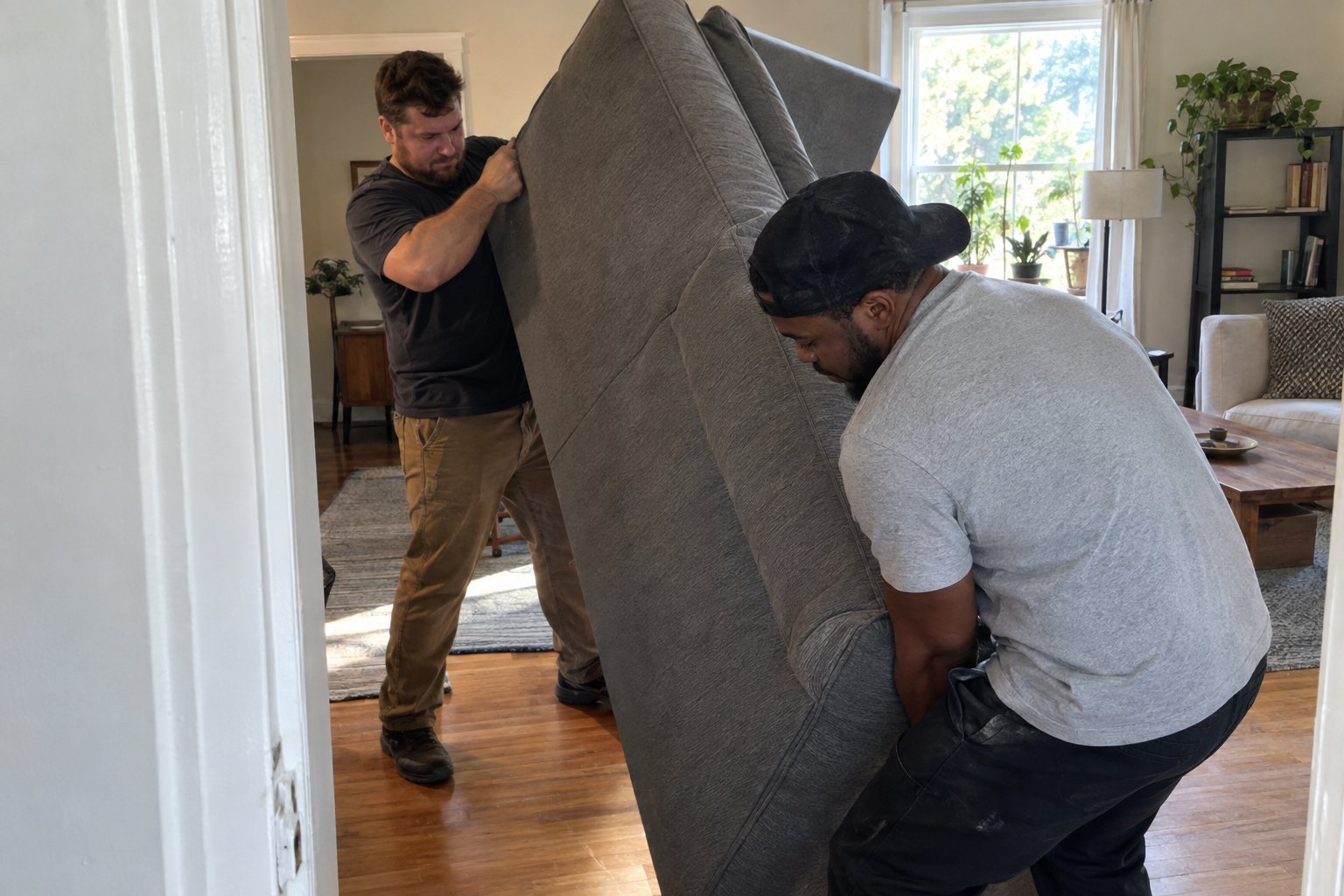
A chest of drawers should always be carried by at least two people. One person takes the top or back, one takes the bottom front. The person at the lower position controls the carry and sets the pace — they call out steps, obstacles, and direction changes. The person at the upper position follows and keeps the piece level.
- Grip the case, not the drawer openings — gripping through the drawer openings works on some pieces but can stress the case frame if the chest is heavy.
- Keep the piece upright as long as the path allows. Tilting a chest of drawers backward (so it's nearly horizontal) concentrates all the weight on the back panel, which is typically the thinnest and weakest structural element.
- Tilt forward slightly — leading with the top — if you need to pivot through a tight doorway. This is more stable than tilting backward and gives the bottom carrier better control.
- On stairs, always move the piece with the heavier end uphill. The person at the bottom of the stairs has the most physically demanding position and takes the majority of the weight if something goes wrong.
Using a Furniture Dolly
For flat, level surfaces — like loading from a ground-floor room straight out to a truck — a four-wheel furniture dolly is the right tool. Set the wrapped chest on the dolly, strap it in place, and roll. Do not attempt to navigate a dolly on stairs or over a threshold without a ramp. An unstrapped chest on a moving dolly is a falling-object hazard with no warning before it tips.
Step 5: Load It Into the Truck Correctly
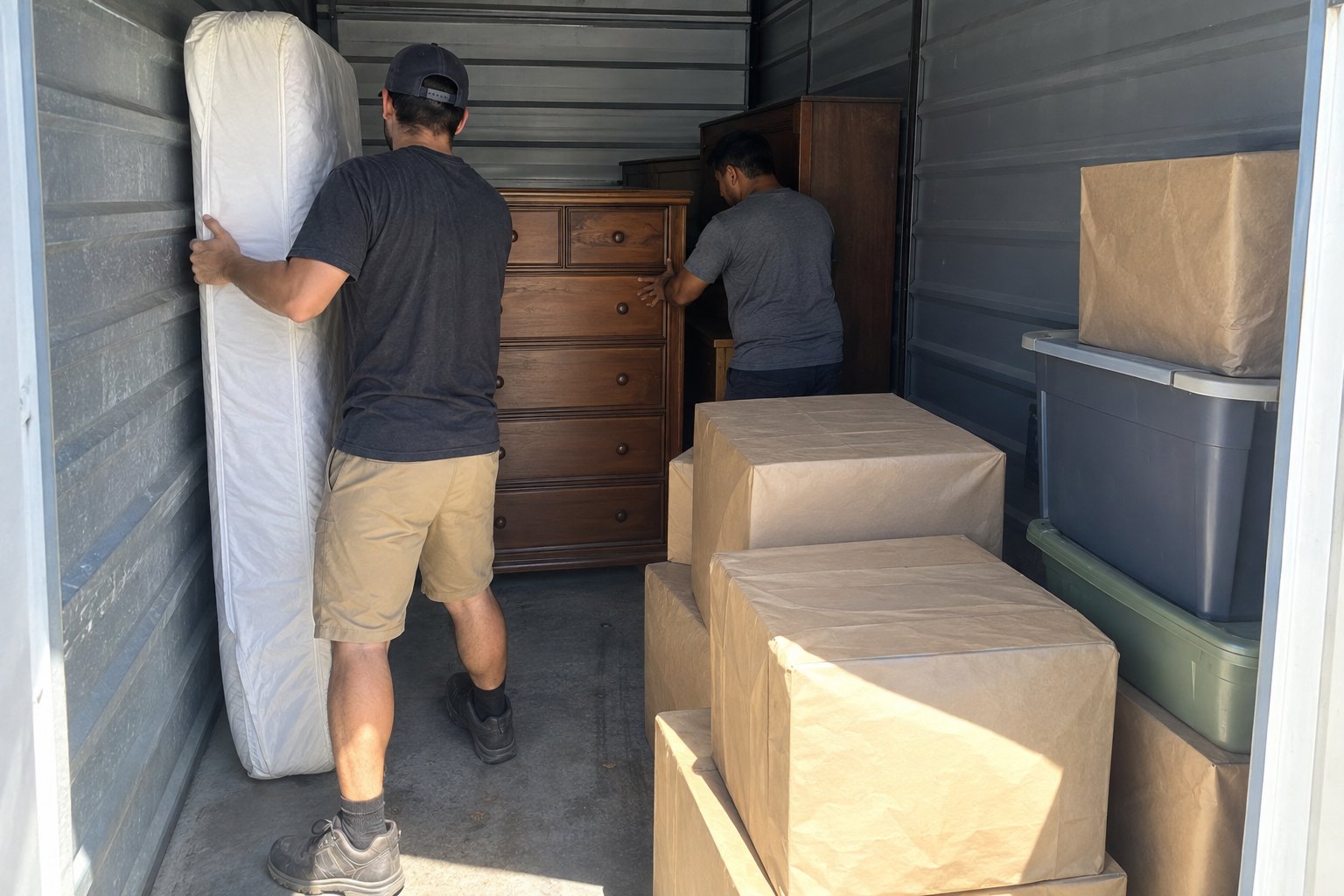
A chest of drawers loads upright against the truck wall, not flat on its back. Lying it on its back concentrates weight on the back panel — which is almost always 1/4-inch plywood or hardboard and not rated for that load — and creates a flat surface that other items will inevitably be stacked on top of, compounding the stress.
Position the chest with its back against the truck wall. Strap it in place using tie-down straps over the top or through the drawer openings if the frame is solid enough to accept them. Stack the individual drawers face-down on a padded surface nearby — never between the chest and the truck wall where they'll shift and rattle against both.
Want a trained crew to handle every step — from wrapping and carrying to loading and unloading — so nothing gets scratched, cracked, or dropped? Get a free labor-only moving quote from Lift & Load and let us do the heavy work.
Common Mistakes That Damage Chests of Drawers During a Move
- Leaving drawers loaded: The single most common error. Adds dangerous weight and creates a slide-out hazard on any incline.
- Dragging instead of lifting: Even a short drag across a hardwood floor leaves scratches on both the floor and the chest's feet or base. Always lift fully before moving forward.
- Gripping by the drawer fronts: Drawer fronts on many pieces are attached with just two or four screws. They're not designed to bear the full weight of the case.
- Skipping the wrap on "quick" carries: The move that feels fast is the one where the chest clips a doorframe corner and splits the veneer. Wrapping takes five minutes. Refinishing a veneer surface takes considerably longer and often isn't fully successful.
- Carrying solo: A 100-plus-pound case carried by one person almost always ends in an awkward repositioning mid-carry, which is when drops and injuries happen. Two people is the minimum; three is right for a heavy piece on stairs.



FAQs
No. You should empty every drawer before moving the chest. Leaving clothes in the drawers adds significant weight — often 15 to 20 pounds per drawer — and creates an unstable load that shifts unpredictably if the piece tilts. Move clothing separately in bags, hampers, or boxes.
Yes, whenever possible. Removing the drawers reduces the overall weight of the case, eliminates the risk of drawers sliding open mid-carry, and makes the case easier to grip. Label each drawer by position before removal so reinstallation at the destination is fast.
For very small, lightweight chests — a two-drawer nightstand-style piece under 50 pounds — a solo carry on a level surface may be manageable. For any standard six-drawer chest or anything over roughly 60 to 70 pounds, you need at least two people. Solo carries on stairs are not safe regardless of the piece's size.
Wrap the entire case in moving blankets secured with rubber bands or stretch wrap — avoid applying tape directly to the wood surface, as it can pull or damage the finish when removed. Pay extra attention to corners, the top surface, and any protruding hardware. Remove or tape over knobs and pulls that could snag on a doorframe.
Wrap the entire case in moving blankets secured with rubber bands or stretch wrap — avoid applying tape directly to the wood surface, as it can pull or damage the finish when removed. Pay extra attention to corners, the top surface, and any protruding hardware. Remove or tape over knobs and pulls that could snag on a doorframe.
Still have questions?
How to move with us?
Hit the “Get a Quote” button and tell us what you need.
Choose the service, date, and time that work best for you.
Our friendly team shows up on time and gets everything done safely.
Sit back while we take care of the rest.
.avif)