
Bookshelf Moving Checklist: Empty, Disassemble, and Stack It

Knowing how to move a bookshelf correctly is something most people don't think through until they're standing in a living room staring at a six-foot-tall unit loaded with hardcovers, decorative objects, framed photos, and a small plant that somehow ended up on the top shelf. A bookshelf looks manageable. It's just shelves and a frame — how hard could it be? The answer is: considerably harder than it appears, and the mistakes people make — leaving shelves loaded, skipping disassembly on flat-pack units, carrying without padding — routinely result in cracked shelves, stripped cam locks, gouged floors, and a unit that wobbles permanently at the destination because it racked during the carry.
Need a professional crew to handle the heavy lifting so your bookshelf and furniture arrive without damage? Call 224-404-0069 or get a free labor-only moving quote from Lift & Load today.
Why Moving a Bookshelf Is Harder Than It Looks
The first problem is weight combined with poor grip points. A solid wood or MDF bookshelf that stands six feet tall and 36 inches wide can weigh anywhere from 60 to 120 pounds empty, depending on construction and material. That's already substantial. But the bigger issue is that bookshelves are designed to hold weight on horizontal surfaces, not to be carried vertically from the outside. The case sides are the only real grip points, and on a tall unit, one person at each end is holding an awkward slab with no handles, no cutouts, and no natural place to get fingers under it safely.
The second problem is the shelves themselves. Fixed shelves — the kind that are glued, dadoed, or screwed into the case — hold the unit square and rigid. Adjustable shelves, which rest on pins or brackets, do not. They can shift, drop, or fall out entirely if the unit is tilted even slightly during the carry. An adjustable shelf that slides out mid-stair carry doesn't just clatter to the ground — it can hit the person below, shift the balance of the case, or crack when it lands. People almost never check whether their shelves are fixed or adjustable before attempting to move the unit upright.
The third problem is construction type. Solid wood or plywood bookshelves are heavy but structurally resilient — they can handle being carried at moderate angles without failing. Flat-pack particleboard or MDF units assembled with cam locks, dowels, and confirmat screws are a different story entirely. Those joints were designed for static load in a fixed position. Carry the unit assembled, let it flex or rack slightly in a doorway, and the cam locks shear, the dowels crack the surrounding particle board, and the unit comes apart at the joints — sometimes catastrophically, mid-carry.
Step 1: Empty Every Shelf Before You Move Anything
This is the step most people skip because it feels like extra work. It is not optional. Bookshelves loaded with books are among the heaviest items in any home, pound for pound. A standard hardcover book weighs roughly two to three pounds. A single shelf holding 30 books is carrying 60 to 90 pounds of load before you factor in the weight of the case itself. A full six-shelf unit can hold 300 to 500 pounds of books alone. No one should be carrying that.
Remove everything from every shelf before the unit moves. Books should be packed in small, manageable boxes — never large boxes, because a large box of books can exceed 60 to 70 pounds, which is a back injury waiting to happen. Use boxes no larger than 1.5 cubic feet for books and pack them spine-down or flat to reduce spine stress. Decorative objects, frames, and fragile items need individual wrapping before they go into any box.
- Pack books in small boxes. A banker's box or small moving box is the right size. Fill to the top but keep it liftable with one hand.
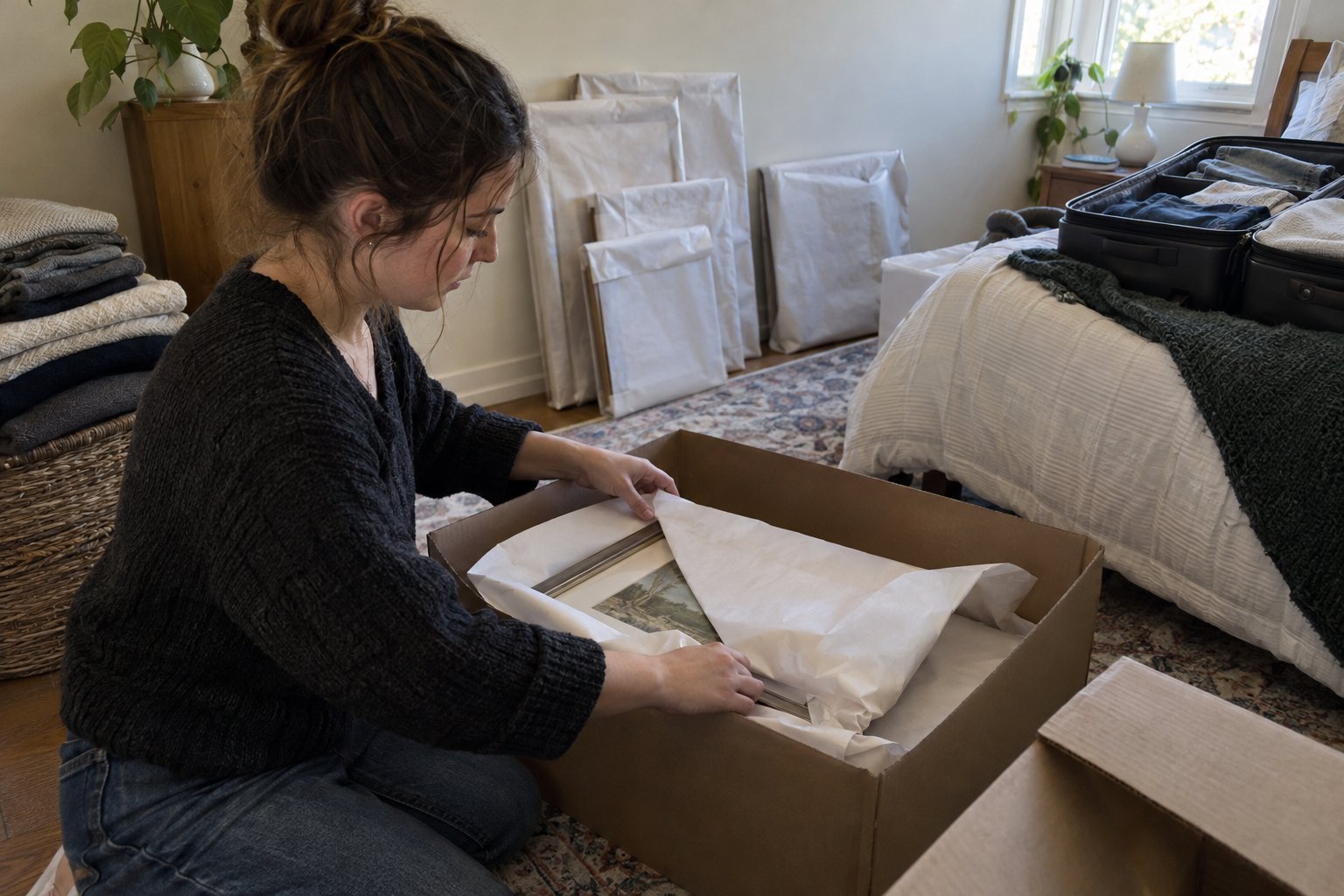
- Wrap fragile items individually. Decorative objects, ceramic bookends, and framed photos need packing paper or bubble wrap before boxing.
- Move plants separately. A top-shelf plant should go in your personal vehicle, not in a box or on a truck. Soil shifts, pots crack, and plants don't travel well in the back of a moving truck.
- Label boxes by shelf position if you want to reassemble the bookshelf exactly as it was.
Step 2: Decide Whether to Disassemble the Unit
Once the shelves are empty, you need to make a deliberate decision: carry it assembled, or take it apart. This is not a question of preference — it's determined by the construction of the unit and the path it needs to travel.
When to carry it assembled
Solid wood or plywood bookshelves with fixed shelves (dadoed or screwed in) can generally be moved assembled if they fit through the doorways and stairwells on the path. Measure the unit's height and width against every doorway it will pass through. Standard interior doors are 80 inches tall and 30 to 36 inches wide. A bookshelf that is 72 inches tall and 30 inches wide might pass through a 32-inch door if turned on its side — but only if the depth of the unit (typically 10 to 12 inches) clears the door height when tipped horizontal. Do the math before you tip anything.
If the unit fits through without tipping: carry it upright, two people minimum, one hand on each side near the bottom, the other hand steadying the top or upper case side. Move slowly and communicate every step.
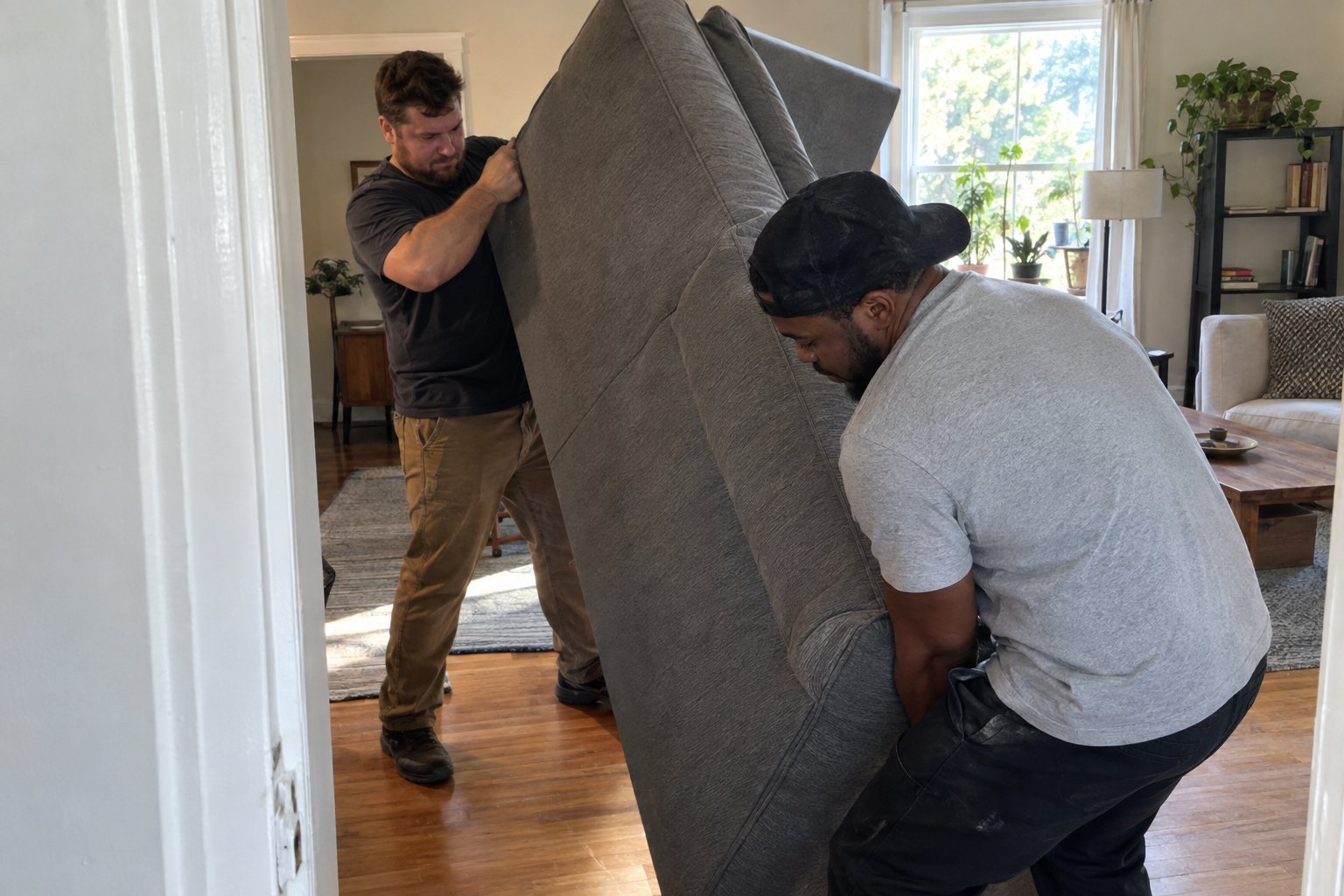
If the unit requires tipping to horizontal to pass through a doorway: this is a two- to three-person job. One person manages each end, and a third guides the unit through the opening and prevents it from contacting the doorframe. Blanket-pad the corners and edges before attempting this.
When to disassemble
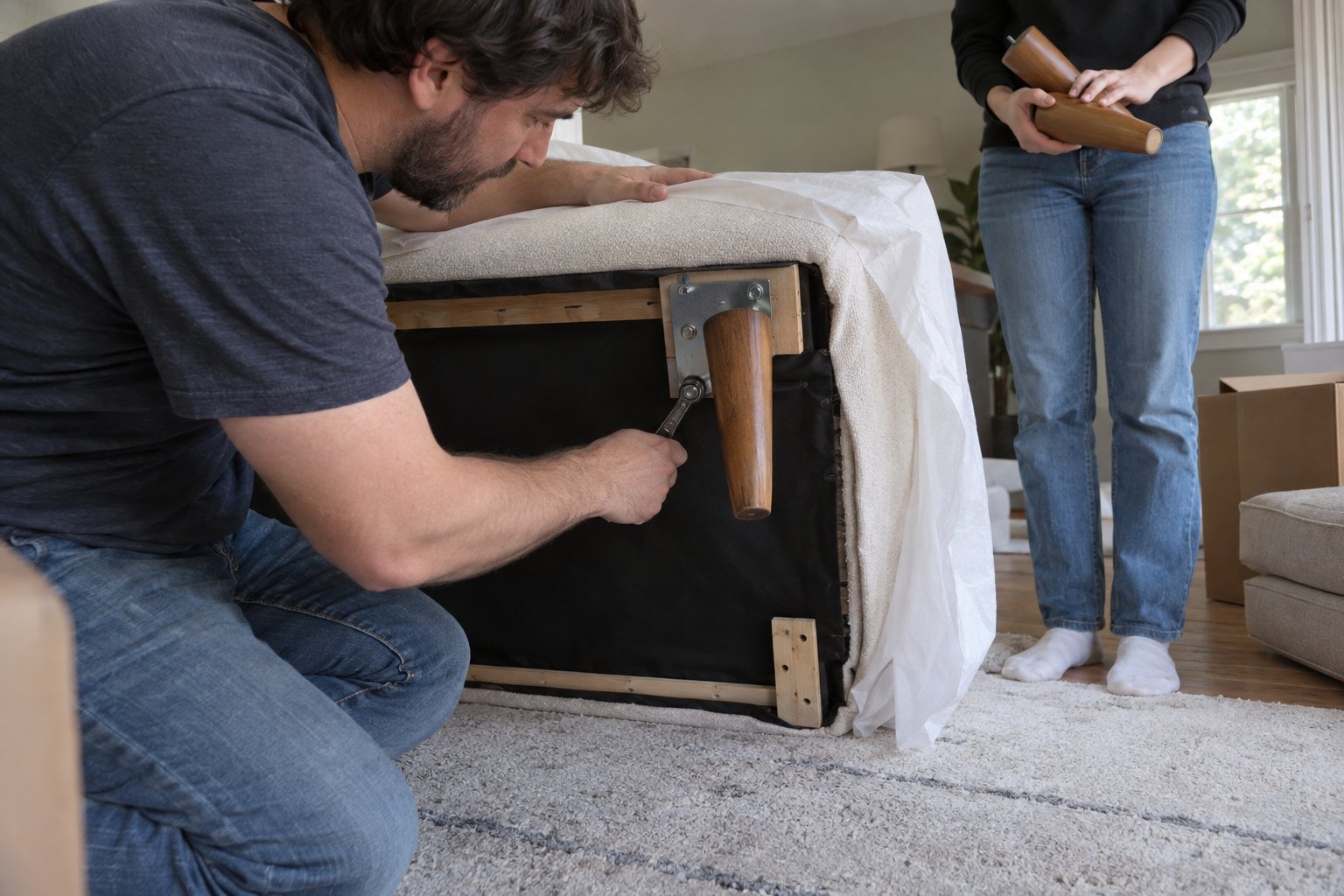
Flat-pack units — anything assembled with cam locks, confirmat screws, or dowels — should almost always be disassembled before moving. The joints are not designed for carry loads. Take the unit apart in reverse assembly order: remove adjustable shelves first, then disconnect back panels (if any), then separate the top, sides, and bottom. Keep all hardware in a labeled zip-lock bag taped to the largest panel so nothing gets lost.
- Photograph the unit before disassembly. A quick photo of the assembled bookshelf from the front gives you a reference for reassembly at the destination.
- Remove shelf pins carefully. Shelf pins are small and easy to lose. Put them in the hardware bag immediately.
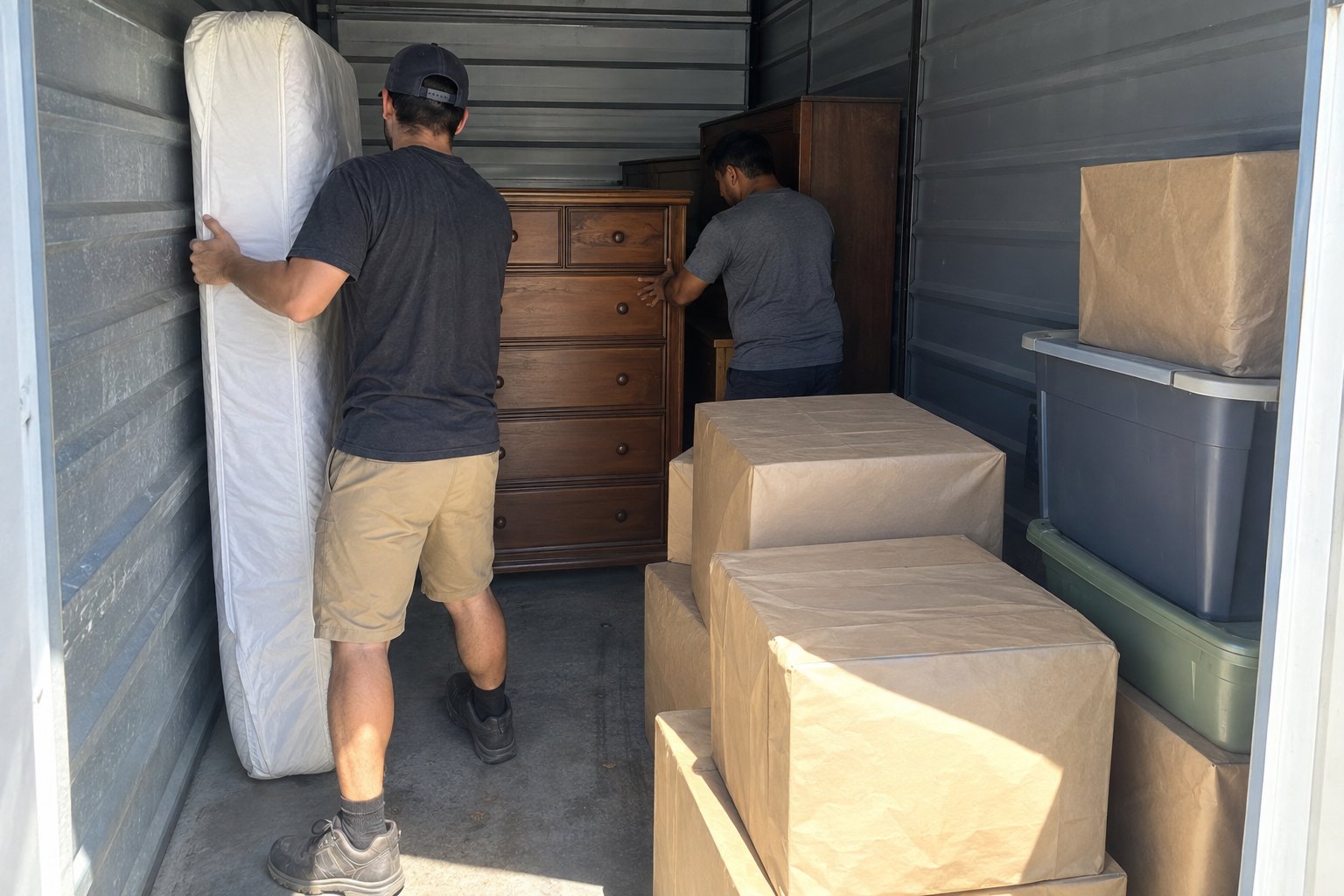
- Stack panels flat for transport. Particleboard and MDF panels can crack if stood on edge without support. Lay them flat in the truck and load other items on top with care.
Step 3: Protect the Unit Before It Moves
Whether you're moving the bookshelf assembled or as disassembled panels, every exposed surface needs protection before it leaves the room. Corners are the highest-risk points — a single hard contact with a doorframe can split veneer, chip paint, or crack a particle board edge in a way that's nearly impossible to repair invisibly.
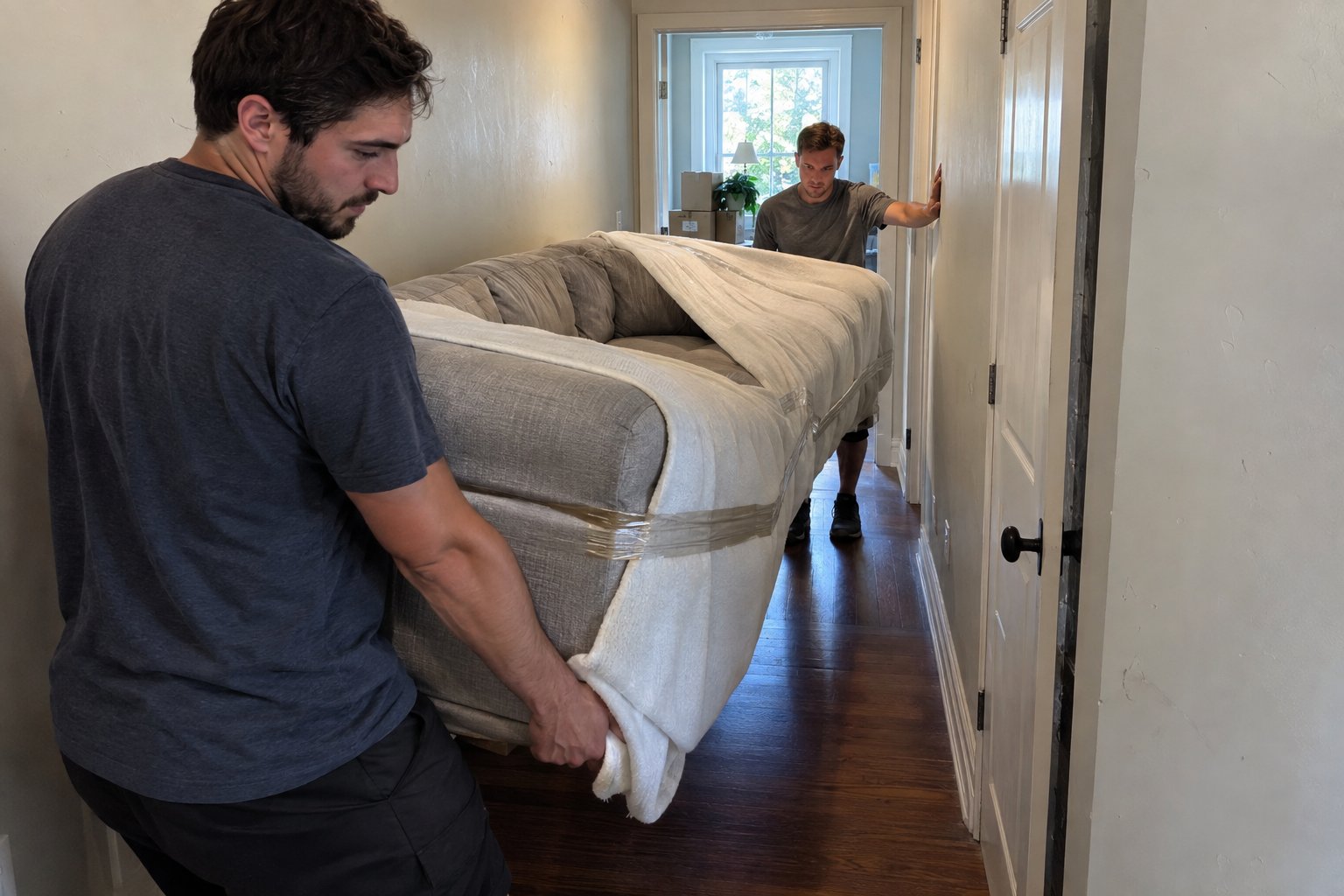
Use moving blankets (furniture pads) to wrap assembled units. Fold a blanket around the entire case, securing it with stretch wrap or rubber bands — not tape directly on the finish, which will pull the surface when removed. For disassembled panels, wrap each panel individually or stack them face-to-face with a moving blanket between each pair. Edges and corners on MDF panels chip easily; protect them with cardboard edge guards or folded blanket sections before strapping for transport.
Protect the floor throughout the process. Set the unit down on a moving blanket rather than directly on hardwood or tile whenever you need to reposition your grip. Sliding a bookshelf across an unprotected floor — even a short distance — is one of the fastest ways to generate deep scratches that weren't there when the move started.
Step 4: Navigate Doorways, Hallways, and Stairs
Most damage to bookshelves happens in transit between rooms, not during the initial lift. Doorframes, hallway corners, and stair railings are the main collision points. Move slowly, communicate constantly, and never assume a space is wide enough without measuring first.
Through doorways
Carry the unit with the narrowest dimension leading through the door opening. For most bookshelves, that means carrying it with the depth (10 to 12 inches) moving through the door rather than the width (30 to 36 inches). Tipping the unit horizontal is sometimes necessary — in that case, the person on the leading end calls every movement, and the person on the trailing end follows. Do not rush, do not twist the unit, and do not muscle it through a space it clearly doesn't fit without repositioning.
On stairs
Stair carries are the highest-risk segment of any bookshelf move. The person at the bottom always bears the most load, especially going down. Keep the unit tilted so the heavier end (usually the bottom of the case) is toward the uphill person. Move one step at a time. The person at the bottom should never step down until the person at the top has a fully secure grip. If a third person is available, they should stand to the side and guide the unit away from the wall and railing.
Never attempt a stair carry with a fully loaded bookshelf. This is not a technique problem — there is no safe way to carry a loaded bookshelf on stairs. Empty the shelves first, every time, without exception.
Step 5: Reassemble and Inspect at the Destination
Once the bookshelf is in its new position, reassemble in the reverse of disassembly. For flat-pack units, hand-tighten cam locks and confirmat screws before applying final torque — rushing final tightening while pieces are misaligned is how you strip a cam lock socket or split a particle board insert. Check that the unit sits level and square before loading it with books. A unit that rocks on uneven flooring can be shimmed at the base, but a unit that racks because a joint wasn't seated correctly needs to be taken apart and reassembled properly before it takes any load.
Inspect the finish on every surface before you load the shelves again. Look for corner chips, veneer lifts, or scratches that happened in transit. Minor finish damage is easier to address immediately — wood filler, touch-up markers, or a furniture repair kit — than weeks later when the damage has been compressed and set by the weight of books sitting on top of it.
If you'd rather skip the risk entirely and have a professional crew handle the carry, the wrapping, the stair navigation, and the placement, get a free labor-only moving quote from Lift & Load. We bring the equipment and the technique — you focus on everything else.


FAQs
Yes — always. Books are among the heaviest everyday items by volume, and a fully loaded bookshelf can easily exceed 300 to 500 pounds of combined weight. No carry technique makes that safe. Empty every shelf before the unit moves, pack books in small boxes no larger than 1.5 cubic feet, and move the case and the contents separately.
In almost every case, yes. Flat-pack bookshelves assembled with cam locks, confirmat screws, and dowels are designed for static load in a fixed position, not for the flex and racking stress of being carried through doorways and on stairs. Carry them assembled and those joints can shear or split the surrounding particle board. Take the unit apart, move the panels flat, and reassemble at the destination.
Measure the unit and the doorway before you attempt anything. Standard interior doors are 80 inches tall and 30 to 36 inches wide. If the bookshelf is taller than the door width, you'll need to tip it horizontal to pass through — lead with the narrowest dimension (typically the depth), move slowly, and have at least two people managing the carry. Pad all corners and edges with moving blankets before attempting the maneuver.
Wrap the assembled unit fully in moving blankets secured with stretch wrap (not tape directly on the finish). Protect corners and edges specifically — they are the highest-collision points against doorframes and stair railings. Set the unit down on a blanket rather than bare flooring whenever you reposition your grip, and lay disassembled panels face-to-face with a blanket between each pair to prevent surface contact during transport.
Wrap the assembled unit fully in moving blankets secured with stretch wrap (not tape directly on the finish). Protect corners and edges specifically — they are the highest-collision points against doorframes and stair railings. Set the unit down on a blanket rather than bare flooring whenever you reposition your grip, and lay disassembled panels face-to-face with a blanket between each pair to prevent surface contact during transport.
Still have questions?
How to move with us?
Hit the “Get a Quote” button and tell us what you need.
Choose the service, date, and time that work best for you.
Our friendly team shows up on time and gets everything done safely.
Sit back while we take care of the rest.
.avif)