
Moving Day Timeline: What Happens Hour by Hour With a Labor-Only Crew

A moving day timeline with a labor-only crew usually breaks into four blocks: arrival and walkthrough, loading, transit (if you're driving a rented truck or using a container), and unloading. Most local moves fit into a single day, but how long each block takes depends on your home's size, how much is already boxed up, and how far the truck has to park from your door.
Knowing the rough shape of the day ahead of time helps you plan around it instead of being surprised by it. Here's what a typical schedule looks like, block by block, and what you can do to keep each part moving.
What Time Do Movers Arrive on Moving Day?
Most labor-only crews arrive within a scheduled window, often a two-hour block agreed on when you booked, rather than an exact minute. Morning arrivals are the norm for full-day moves because they leave the most daylight and flexibility if something runs long.
If your booking confirmation gives a window like 8 to 10 AM, plan for the crew to call or text as they're on their way. Have your home accessible (parking spot held, door unlocked, pets secured) before that window opens so the first few minutes aren't spent solving logistics instead of moving boxes.
The Arrival and Walkthrough: The First 15 to 30 Minutes
Every move should start with a short walkthrough, not a crew member immediately grabbing the nearest box. This is where you point out fragile items, furniture that needs disassembly, and anything that isn't moving (so it doesn't end up on the truck by mistake).
During this window, the crew typically:
- Confirms the inventory and any special items discussed when you booked
- Walks the path from each room to the truck or elevator to spot tight turns or doorways
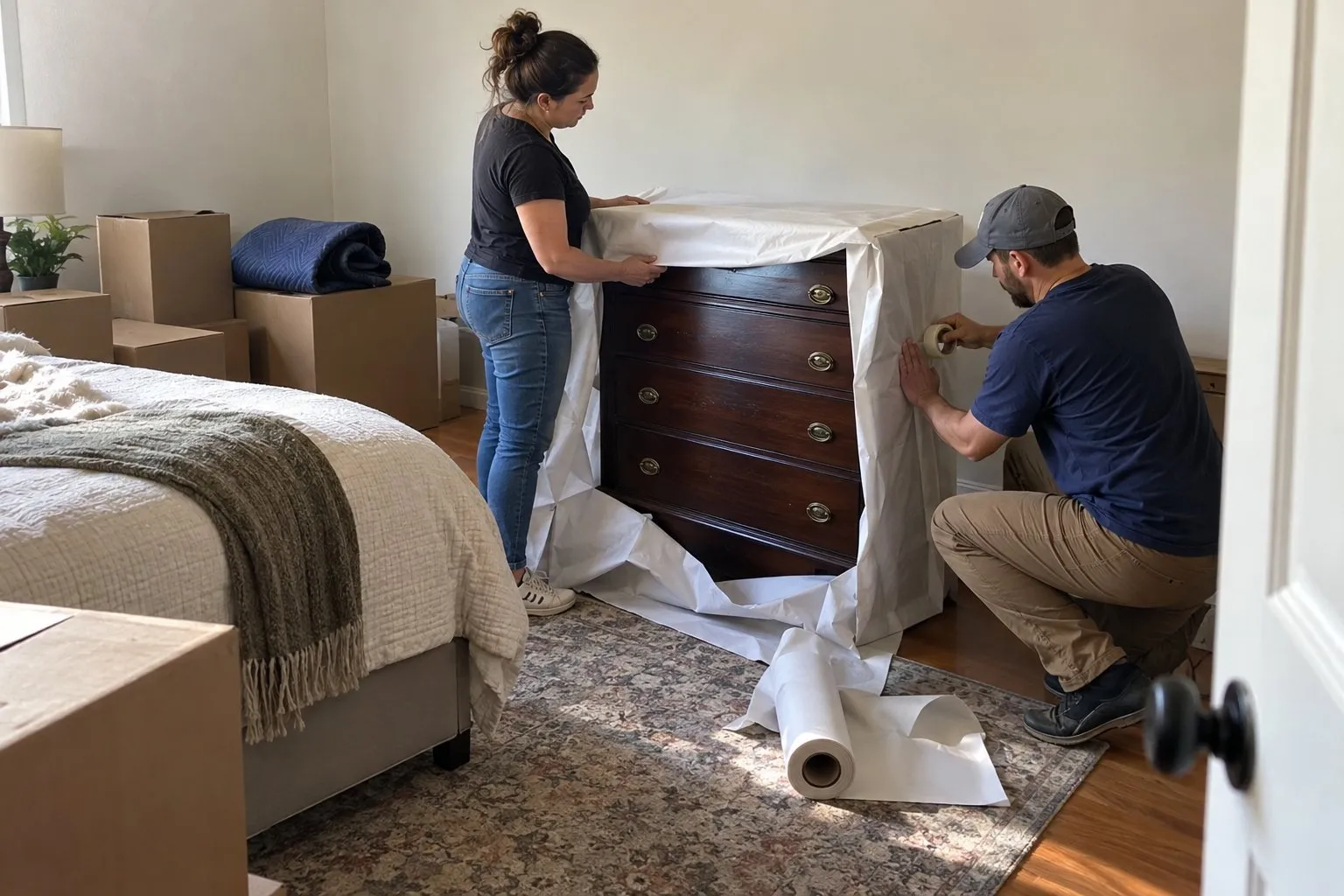
- Lays down floor protection in high-traffic areas
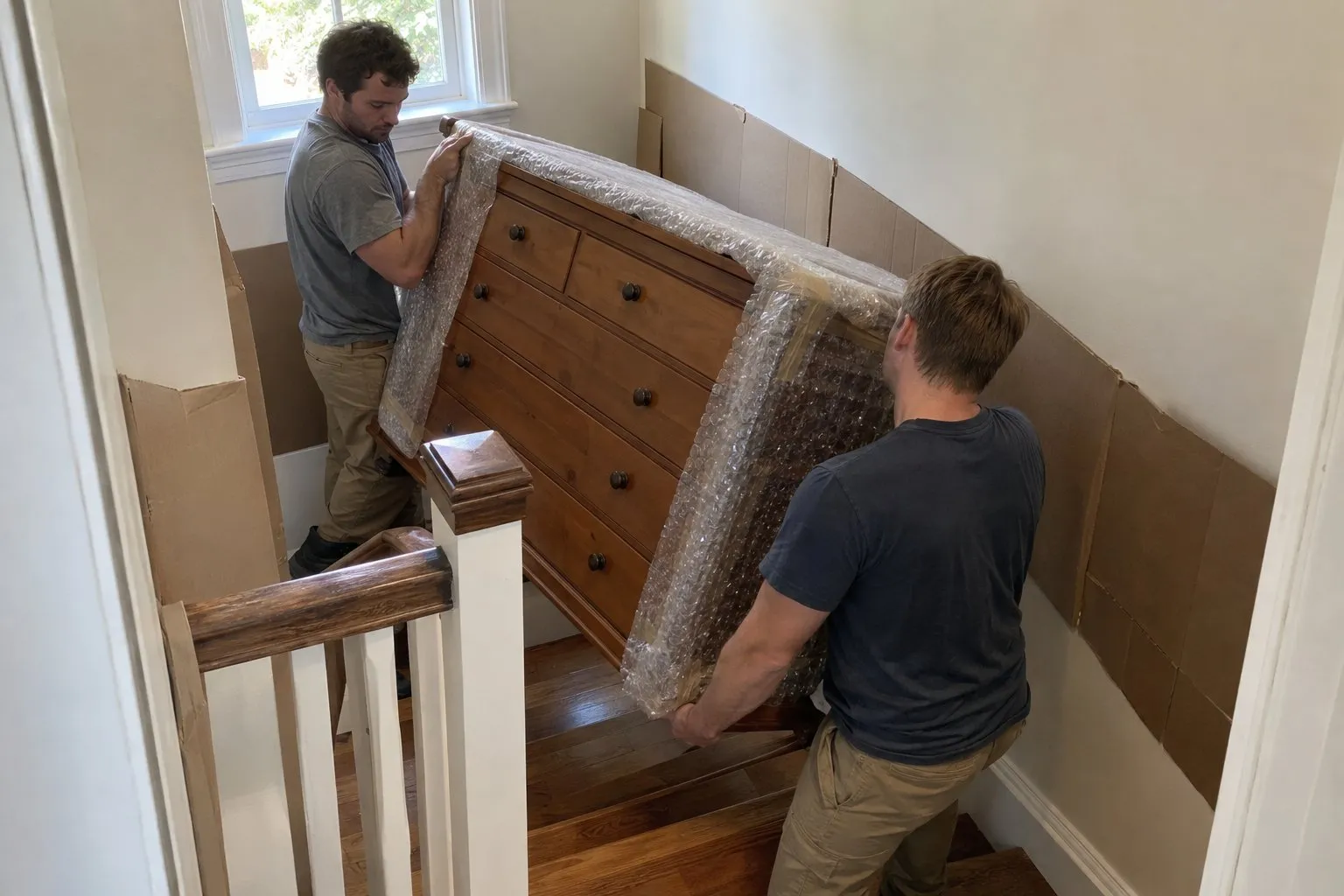
- Reviews the floor and wall protection plan for stairwells and corners
This stage rarely takes more than half an hour, but skipping it is how items get left behind or walls get scuffed. A few extra minutes here saves time later.
Loading: Roughly a Third to Half the Day
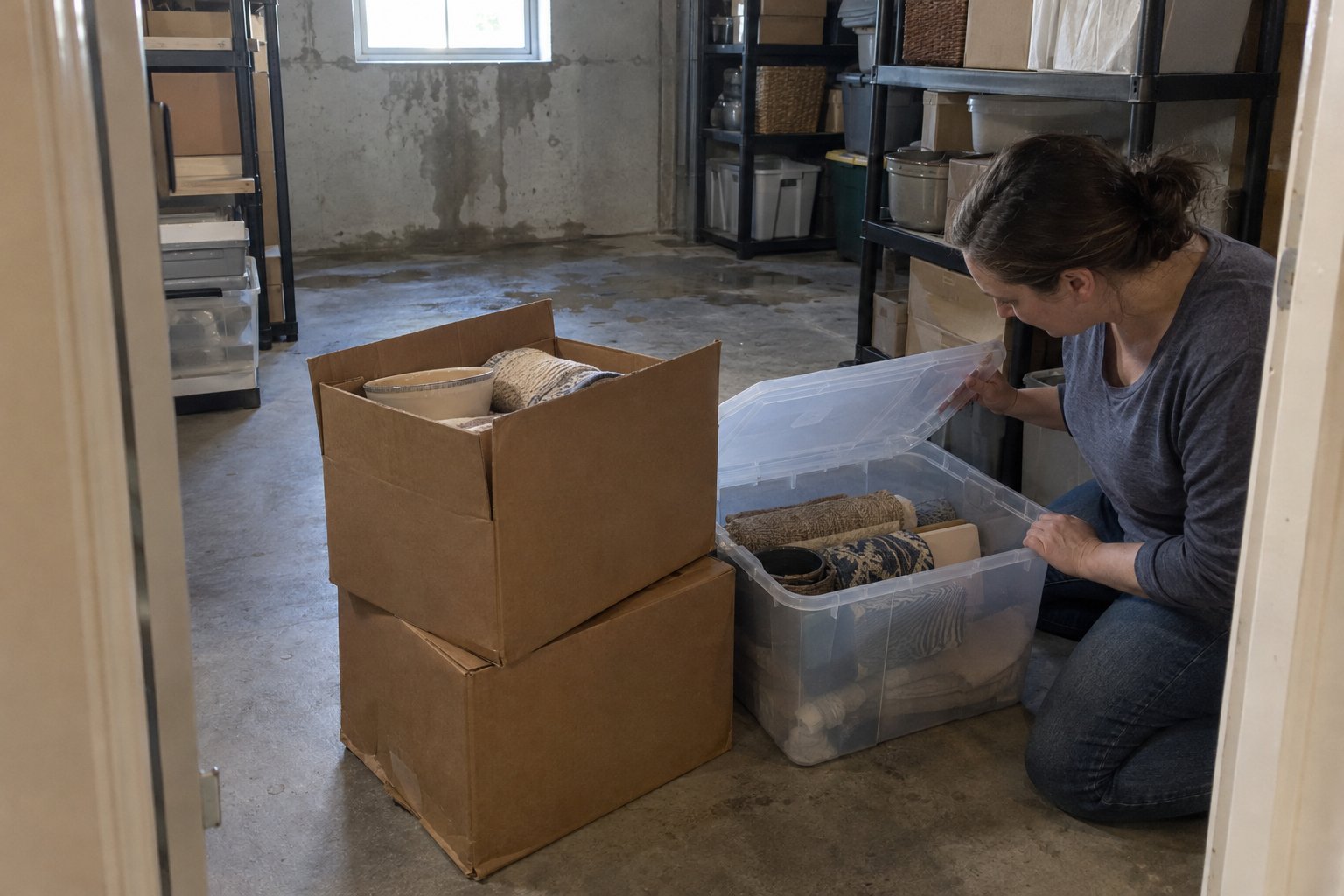
Loading is usually the longest single block of the day, and as a rough rule of thumb, allow about an hour per room of furniture and boxes for a crew to load efficiently, more if items need disassembly first. A one-bedroom apartment might load in under two hours, while a full house with a garage and basement can take most of the morning.
Large furniture goes in a specific order to keep the truck balanced and avoid having to unload everything to reach something stuck in the back. If you haven't already, review what to expect if furniture isn't disassembled yet before the crew arrives, since taking apart beds and tables on-site adds time that's easy to avoid with a little prep.
What Slows Loading Down
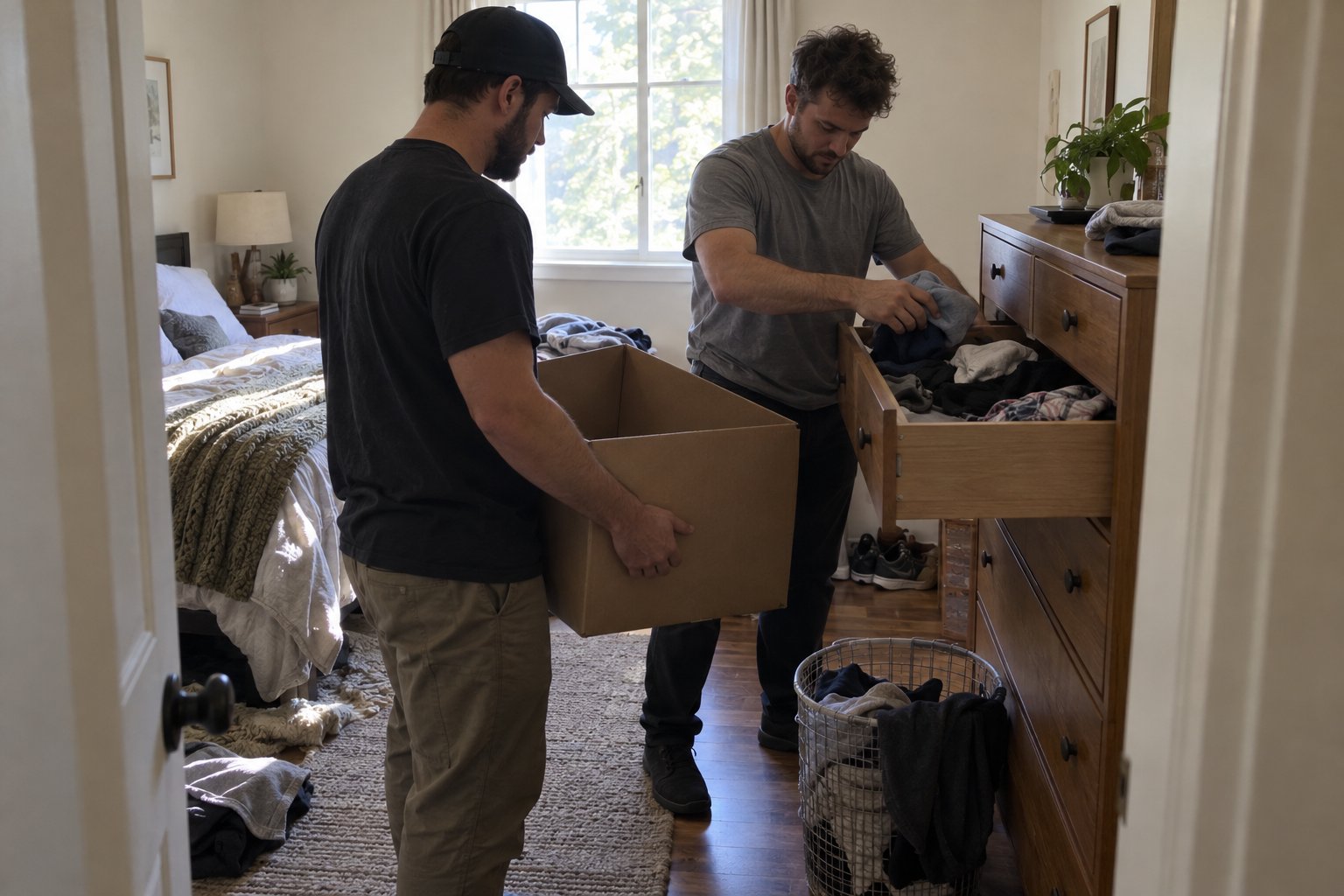
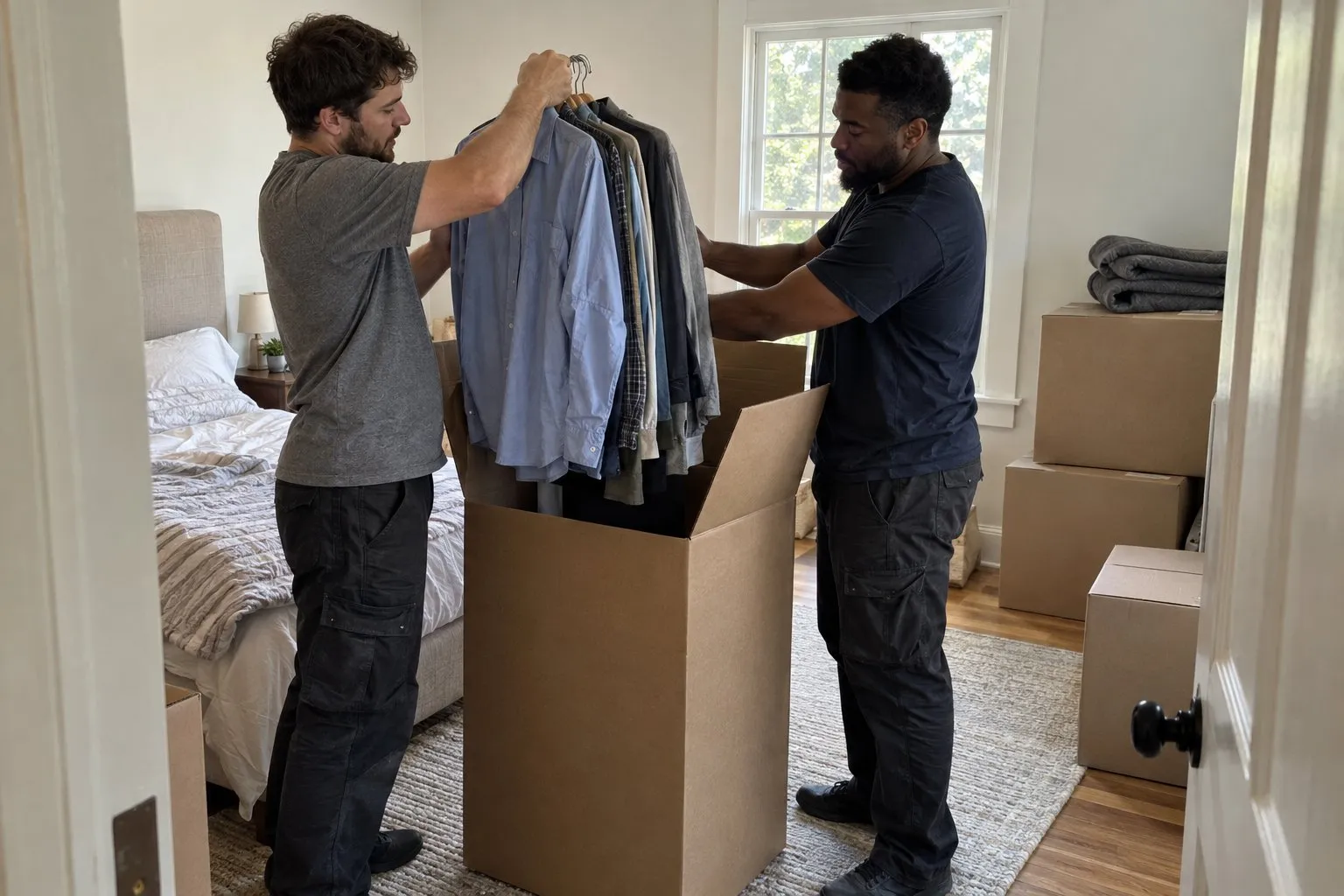
The most common delays are items that aren't ready: clothes still in the closet, drawers left full, or furniture that needs last-minute disassembly. Boxes that aren't sealed or labeled also slow the crew down because they have to guess how carefully to handle them.
Transit Time: The Part You Control Less
If you're using a rental truck or a portable container rather than a full-service move, transit time depends on distance and traffic, not the crew's pace. Build in extra time for this block rather than assuming the loading pace will carry through to unloading.
For moves within the area, this block can be short, sometimes under an hour between stops. For anything crossing into a different part of the region, give yourself a wider buffer, especially if the move happens on a weekday during commute hours.
Unloading: What Happens After the Truck Arrives
Unloading generally moves faster than loading because the crew already knows the inventory and the new home's layout from the walkthrough. Furniture gets carried in and placed according to your instructions, with reassembly handled for anything that was taken apart.
A second, shorter walkthrough at this stage is worth doing: confirm large furniture is in the right rooms before the crew leaves, since rearranging later without help is a lot more work. This is also the point to check that nothing was left on the truck.
Building a Realistic Timeline for Your Own Move
A simple way to estimate your day is to add up each block separately rather than guessing at a single total. Here's a sample timeline for a mid-size move:
- 8:00 to 8:30 AM: Crew arrival and walkthrough
- 8:30 to 11:30 AM: Loading (three-bedroom home, mostly boxed already)
- 11:30 AM to 12:15 PM: Transit to the new home
- 12:15 to 2:30 PM: Unloading and placement
- 2:30 to 3:00 PM: Final walkthrough and reassembly check
Your own numbers will shift based on how much you've packed ahead of time and whether stairs or long carry distances are involved. If you haven't nailed down how many hands you'll need for the day, figuring out your crew size before booking makes the rest of this timeline much more predictable.
Keeping the Day on Schedule
The single biggest thing you control is how ready your home is before the crew's arrival window opens. Boxes packed, furniture emptied, and a clear path to the door all shave real time off the loading block.
It also helps to have your new address's access figured out ahead of time: elevator reservations, parking permits for the truck, or building move-in hours if you're going into an apartment. If your move is a long-distance one with more variables in transit, the planning in long distance moving is worth a look before you lock in a same-day schedule.
Once your move is behind you, updating your mailing address with USPS sooner rather than later keeps bills and mail from chasing you to the old place.
Planning your move? Request a quote from Lift and Load Moving.



FAQs
Have everything packed, pathways cleared, and parking arranged at least 15 minutes before the start of your scheduled window. Crews often call ahead, and being ready when they arrive keeps the loading block from starting late.
No, the crew's time is typically scheduled around loading and unloading, not the drive itself. Confirm with your crew ahead of time how transit gaps are handled so there's no confusion about when they'll be back to unload.
Mention any stairs, narrow hallways, elevators that need reservations, or furniture that still needs to be taken apart. This lets the crew plan the loading order and bring the right equipment instead of figuring it out on the spot.
Most crews will keep working through the remaining inventory rather than stopping partway. If you know a room is going to run behind, flag it during the walkthrough so the crew can plan the day around it.
Most crews will keep working through the remaining inventory rather than stopping partway. If you know a room is going to run behind, flag it during the walkthrough so the crew can plan the day around it.
Still have questions?

How to move with us?
Hit the “Get a Quote” button and tell us what you need.
Choose the service, date, and time that work best for you.
Our friendly team shows up on time and gets everything done safely.
Sit back while we take care of the rest.
