
Do Movers Move Furniture You Haven't Disassembled? What to Know Before They Arrive

Most moving crews will disassemble and reassemble common furniture like bed frames, dressers, and standard desks, but it usually depends on how the job was booked and whether the piece has simple, visible hardware. Complex or custom furniture, and jobs booked without disassembly mentioned upfront, are where confusion (and surprise charges) tend to happen.
Do Movers Disassemble Furniture as Part of a Standard Move?
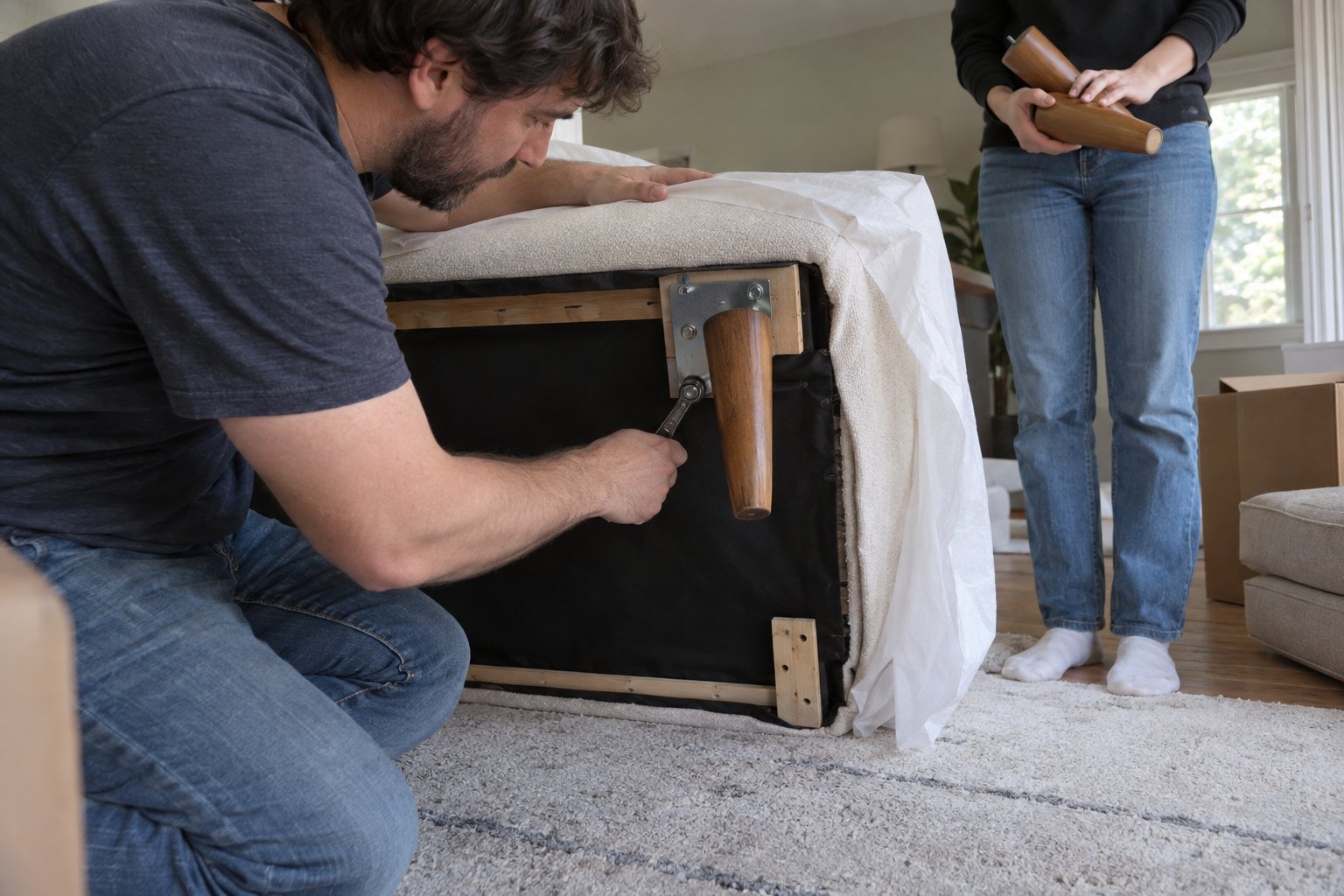
Yes, for most standard pieces, but it is rarely automatic. Labor-only crews typically include basic disassembly and reassembly of items like bed frames, dressers with attached mirrors, and simple desks as part of the job, since these tasks are necessary to move the piece safely and are quick for an experienced team. What is not automatic is disassembly of anything unusual: modular wall units, wardrobe systems with adjustable shelving, or furniture that was professionally assembled with specialty tools.
The safest approach is to tell your crew, or note in your booking, exactly which pieces need to come apart. A quick list beats a vague assumption every time. If you are still deciding how much help to book in the first place, our guide on hiring a labor-only moving crew covers what to specify when you request a quote.
Which Furniture Do Crews Usually Take Apart, and Which Do They Leave Assembled?
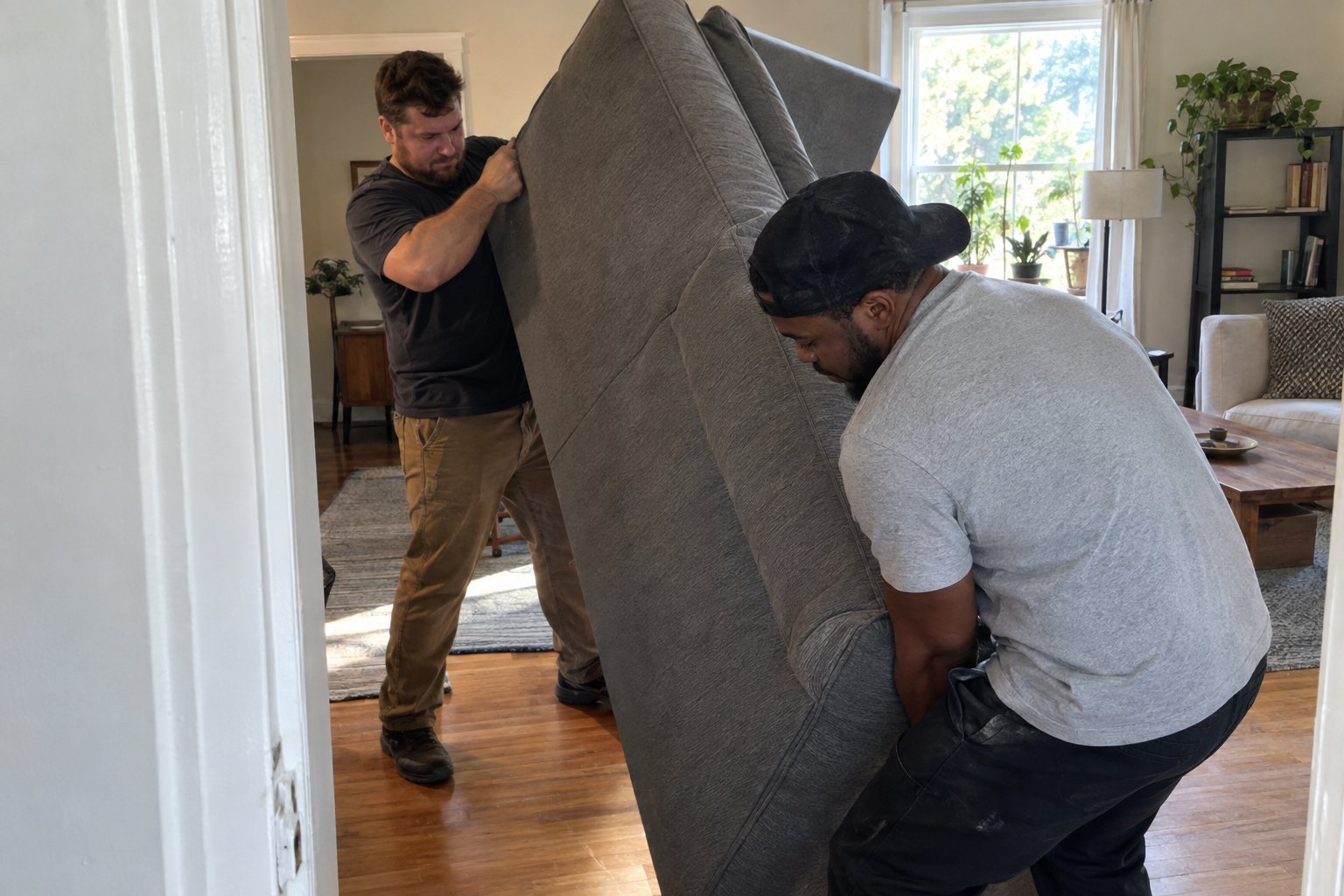
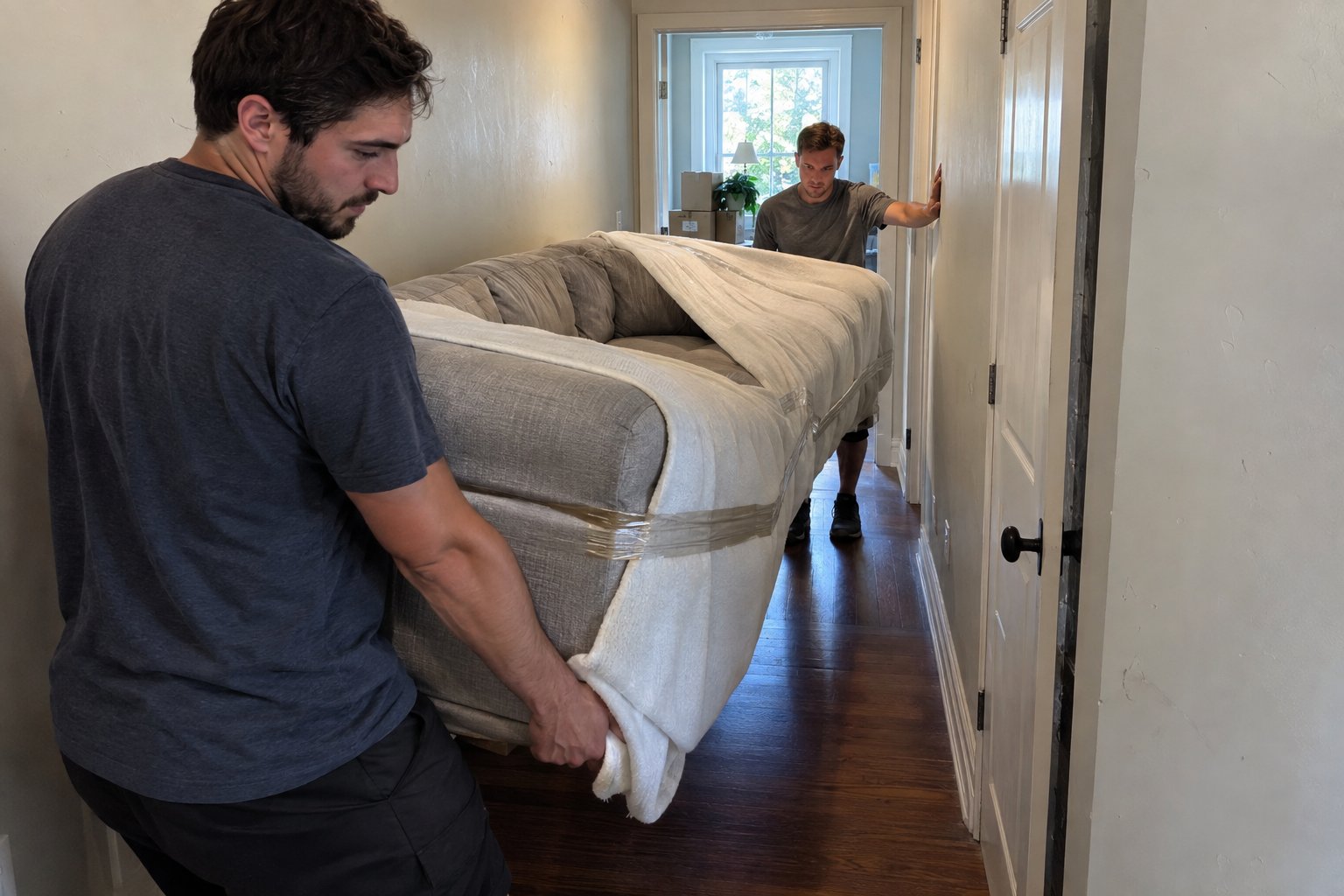
Crews generally disassemble anything that will not fit through a doorway, hallway, or staircase fully assembled, or anything at real risk of damage if moved intact. Everything else usually stays together to save time.
- Almost always disassembled: bed frames and headboards, large dressers, dining tables with removable leaves, sectional sofas, bunk beds.
- Sometimes disassembled, depending on size and stairs: desks, bookshelves, filing cabinets, entertainment centers.
- Rarely touched by a general crew: built-in furniture, pieces with glued or welded joints, and anything requiring specialty tools like Allen wrenches for proprietary hardware.
If your move includes several bulky items that fall into that middle category, it is worth reading our breakdowns on specific pieces, like how to move a desk or how to move a bookcase, so you know what to expect from your particular items before the crew shows up.
What Should You Disassemble Yourself Before Movers Arrive?
You should handle anything electronic, anything with a manual you still have, and anything you are not comfortable letting a stranger take apart. This protects both your warranty and your timeline.
Practical examples: unmounting a TV from a wall bracket, disconnecting a washer and dryer, removing a mattress from an adjustable base, and taking any hanging shelving off wall anchors. These tasks are either outside what a general labor crew handles or simply faster and safer when done by the owner ahead of time. For appliance-specific steps, our guide on moving a washer and dryer walks through disconnecting water and power lines correctly.
Doing this prep work also shortens the hours you are billed for, since a crew that arrives to a home with major disconnects already done can move straight into loading.
Will Movers Charge Extra for Disassembly and Reassembly?
Sometimes, and it depends entirely on how the company structures its pricing. Many labor-only services build basic disassembly into the hourly rate, since it is simply part of getting furniture out the door. Others charge a flat fee per item for anything beyond simple frames, particularly for reassembly on the other end, which takes longer and requires more care to get right.
Ask about this specifically when you book, not on move day. If your crew is priced by the hour, extra disassembly time comes straight out of your total, so it pays to understand roughly how the cost adds up. Our moving labor cost per hour breakdown explains how hourly pricing typically works and where these add-ons tend to show up.
How Do You Make Sure Reassembly Goes Smoothly at the New Home?
The single best thing you can do is keep hardware organized and labeled by piece as it comes apart. Loose screws tossed into a single box at the bottom of a moving truck are the number one reason reassembly takes twice as long as it should.
A few habits that make a real difference:
- Bag hardware separately for each piece and tape the bag directly to the furniture, or to a labeled box that travels with that item.
- Take a quick photo of any complex joint or bracket before disassembly, so reassembly does not rely on memory.
- Keep any included assembly manuals with the hardware bags rather than packed elsewhere.
- Tell your crew at drop-off which room each disassembled piece belongs in, so reassembly happens in the right space the first time.
If you are unsure whether your crew's reassembly service covers everything you need, or you want a specific list of what is included, our free labor-only quote is a fast way to confirm scope before booking.
What If a Piece Cannot Be Reassembled the Same Day?
This happens occasionally with large or unusual furniture, and the honest answer is that it is fine to leave it disassembled temporarily rather than force a rushed job. A wardrobe or bed frame propped against a wall for a night is far less costly than stripped screw holes or a warped panel from being forced together incorrectly.
If your move involves a piece you already suspect will be tricky (a china cabinet with glass panels, a wardrobe with mirrored doors, or anything oversized for the stairwell), it is worth reading up on that item specifically beforehand. Guides like how to move a wardrobe cover the disassembly points unique to that kind of furniture, so you can flag them to your crew in advance instead of discovering the problem mid-move.



FAQs
Most professional labor crews carry basic tools like screwdrivers, Allen wrenches, and adjustable wrenches for common furniture hardware. If your piece uses proprietary or unusual fasteners, it helps to have the original tool or manual on hand just in case.
In most cases, yes, reassembly happens right after unloading as part of the same job. Very large jobs or crews on a tight schedule may ask to reassemble the next day, which is worth confirming when you book.
Yes, you can specify exactly which items need disassembly when you book or when the crew arrives. Being specific helps the crew plan their time and avoids paying for work you did not need.
Yes, drawers should be emptied before disassembly starts. Full drawers add significant weight and can shift or jam during the process, making it harder and slower to take the piece apart safely.
Yes, drawers should be emptied before disassembly starts. Full drawers add significant weight and can shift or jam during the process, making it harder and slower to take the piece apart safely.
Still have questions?
How to move with us?
Hit the “Get a Quote” button and tell us what you need.
Choose the service, date, and time that work best for you.
Our friendly team shows up on time and gets everything done safely.
Sit back while we take care of the rest.
.avif)