
Do You Need a Dolly to Move Heavy Furniture, or Can You Carry It?

Yes, in most cases you need a dolly to move heavy furniture safely, but not for every piece. A dolly earns its keep on anything bulky, awkward, or over about 100 pounds, like a dresser, refrigerator, or bookcase, while smaller or oddly shaped items are often easier to carry by hand with a second person. The right call depends on the item's weight, shape, and the path it has to travel.
If you're staring at a couch and a hallway and wondering whether to go find a dolly or just grab a friend, this is the question to answer first. Get it wrong and you either waste time tracking down equipment for something you could have carried, or you throw your back out trying to carry something you should have rolled.
Do You Need a Dolly to Move Heavy Furniture?
A dolly is the right call whenever an item is too heavy to lift comfortably, too wide to get a grip on both ends, or has to travel a long distance, like from a garage to a truck parked at the curb. Carrying by hand still works for lighter, more compact pieces, or when a dolly physically cannot fit through the space you're working in, such as a tight stairwell turn.
Think of it less as "dolly or no dolly" and more as a decision per item. A single move usually uses both approaches depending on what's being moved and where it's going.
Furniture Dolly vs Carrying: How to Decide
Weigh four things for each piece: its weight, whether it can tip or shift, how far it has to travel, and whether the path has stairs, turns, or doorways. Items that score high on weight and distance belong on a dolly. Items that are light but awkward, like a floor lamp or a mirror, are usually safer carried and braced by hand.
When a Dolly Wins
- Heavy, boxy items: Dressers, refrigerators, and washing machines are dense and hard to grip. Rolling them is far less taxing than lifting.
- Long, flat paths: Driveways, hallways, and loading ramps are ideal for a dolly since there's nothing to navigate around.
- Repetitive moves: If you're moving several boxes or bins in a row, a hand truck saves your back over dozens of trips.
When Carrying Wins
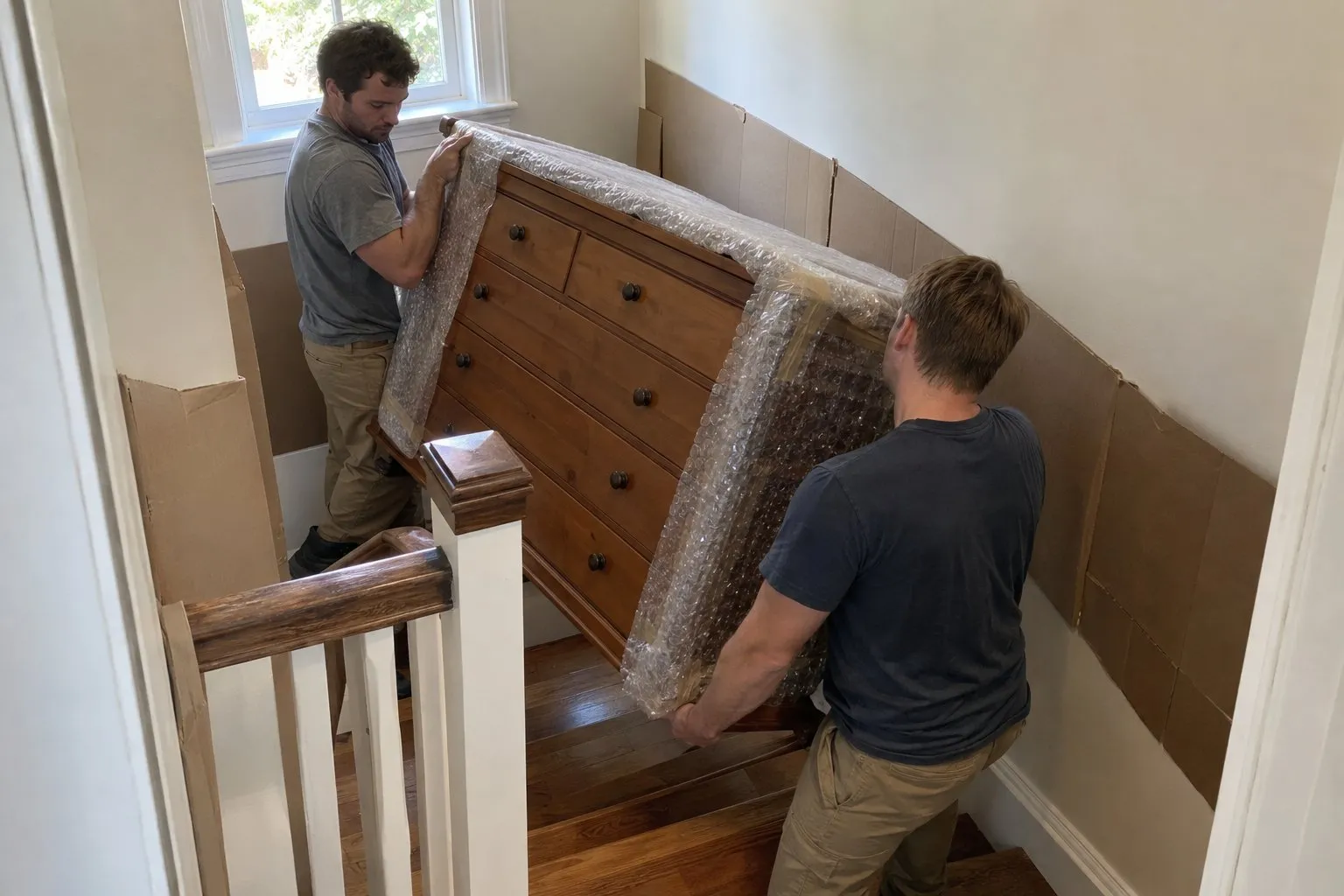
- Tight turns and stairs: A dolly needs room to pivot. On a narrow staircase, two people carrying and angling the item by hand often have more control.
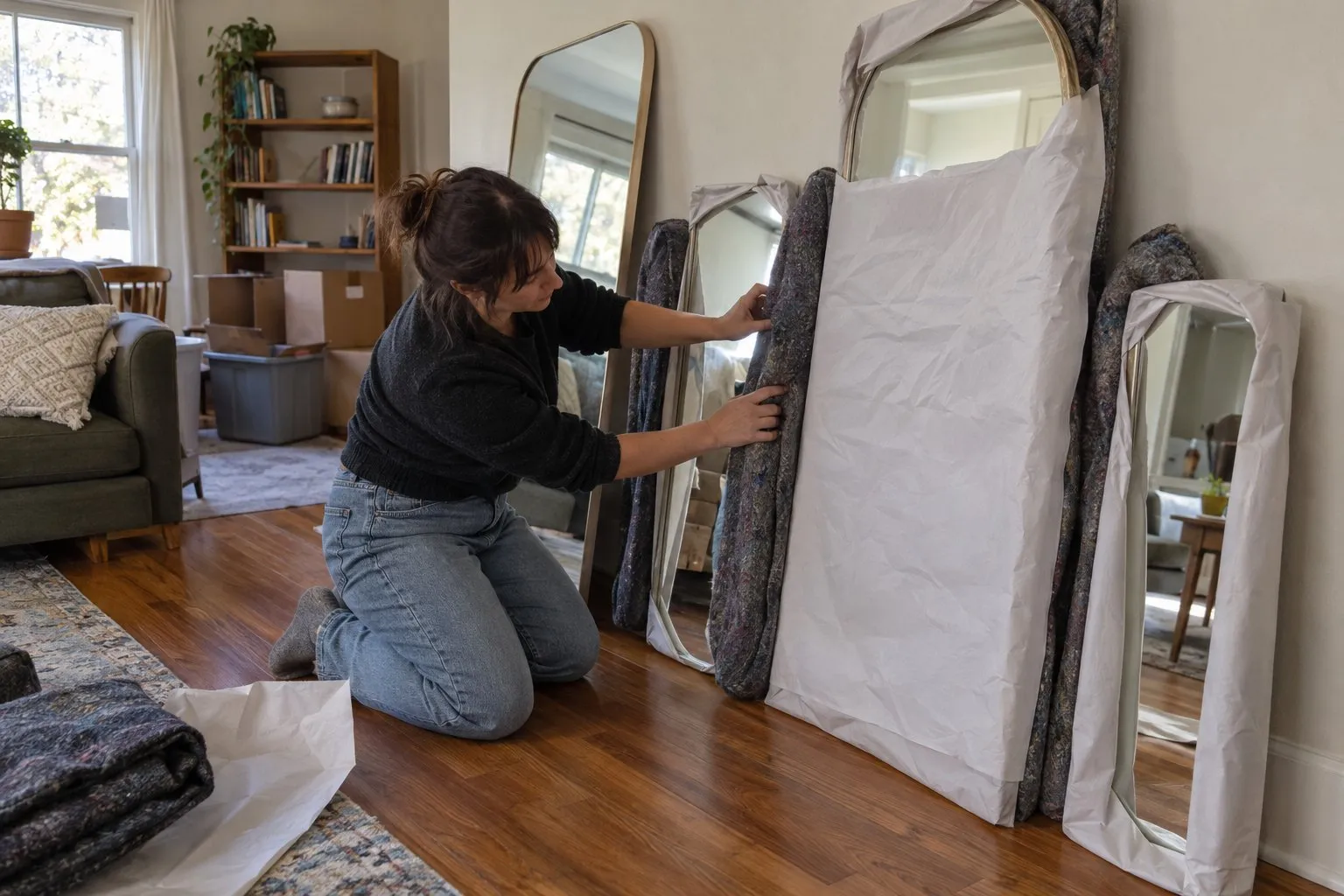
- Fragile or unstable shapes: Mirrors, lamps, and glass tabletops can shift or tip on a flat dolly bed unless they're strapped down well, so a secure carry is often simpler.
- Short distances: Moving something a few feet within a room usually isn't worth strapping it down and rolling it.
What Types of Dollies Actually Help With Furniture?
Not all dollies do the same job, and picking the wrong one is a common mistake. A flat four-wheel furniture dolly is built for heavy, stable items like sofas and dressers, while an appliance hand truck with a strap and stair-climbing wheels is built for tall, top-heavy items like refrigerators and washers.
Flat Furniture Dolly
This is a low platform on four casters that lets you set a couch, dresser, or table on top and roll it in any direction. It's the right tool for wide, stable pieces moving across flat ground.
Appliance Hand Truck
Taller and narrower, with a strap to secure the item and sometimes a stair-climbing mechanism, this is built for appliances and tall cabinets that need to go up or down a few steps without tipping.
Furniture Sliders
These aren't a dolly at all, but they solve a similar problem: slipping under the legs of a couch or table so you can slide it across a floor without lifting it. They're worth keeping alongside a dolly for short, flat moves indoors.
One Common Misconception About Dollies
A lot of people assume a dolly means less physical effort across the board, so they skip planning the path and just roll the item toward the door. In reality, a dolly changes where the effort goes, not whether there's effort at all. You still need to steer, balance, and stop the load, and an unplanned route with a step down or a loose rug can tip a loaded dolly faster than a careful two-person carry would.
The fix is simple: walk the path first, empty-handed, and clear anything that could catch a wheel or force a sudden turn.
A Rule of Thumb for Choosing
As a general guideline, if an item needs two people to lift comfortably or weighs somewhere around 100 pounds or more, put it on a dolly rather than carrying it the full distance. Below that, and if the path is short and clear, two people carrying it is often faster than loading and strapping it down.
This is a starting point, not a hard rule. A tight stairwell can override the weight guideline entirely, since a dolly that can't pivot on a landing isn't helping anyone.
Getting Heavy Pieces Through Doors, Halls, and Stairs
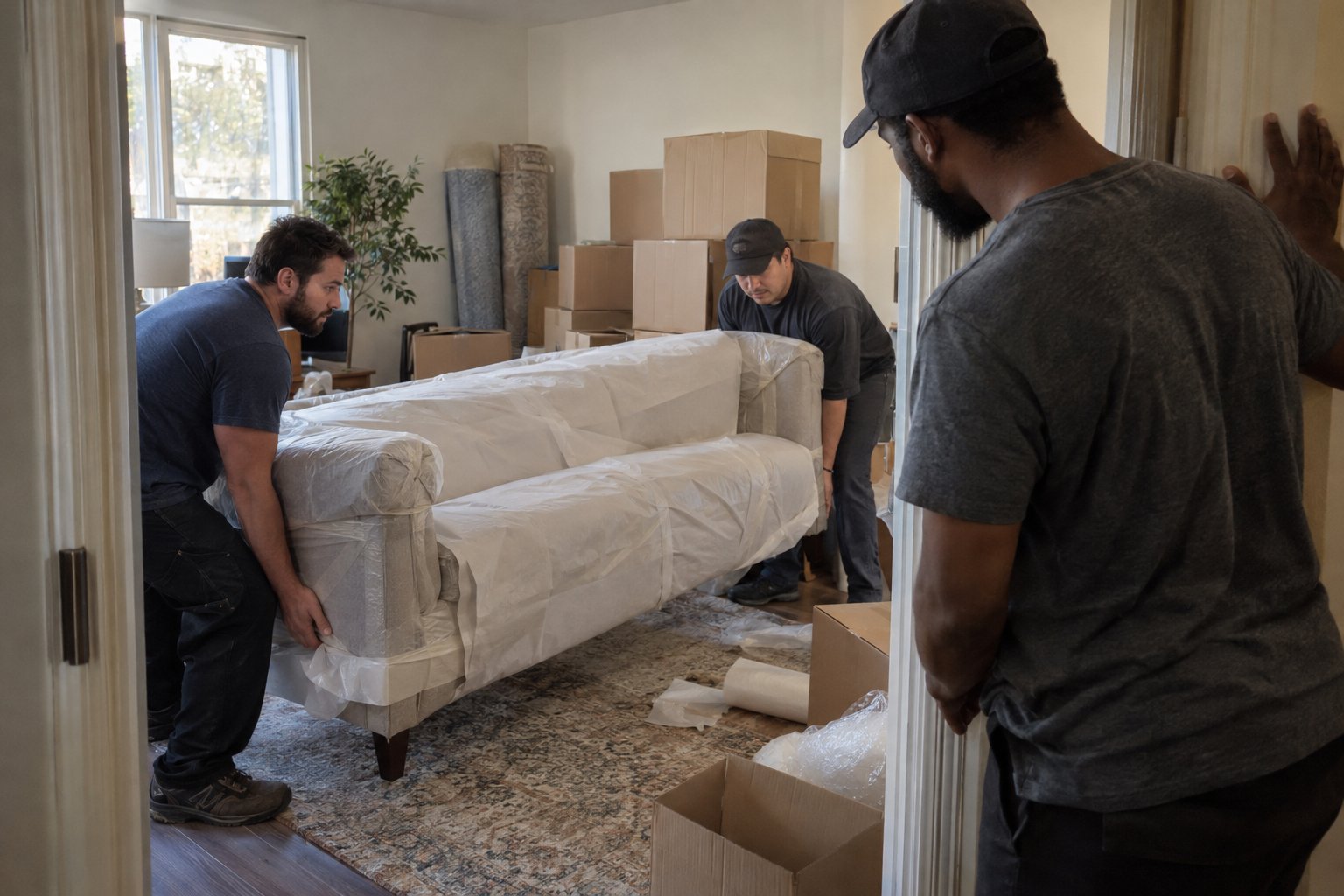
If your move involves a mix of long hallways and tight turns, which most do, plan which items will roll and which will be carried before moving day instead of deciding item by item in the moment. Measure your doorways and stairwell landings ahead of time so you're not discovering mid-move that a piece won't pivot through a turn.
If your Evanston, IL home has a narrow stairwell or your Schaumburg, IL apartment has a tight entry hallway, decide in advance which large pieces will need to be carried and angled by hand rather than rolled. For most other items, moving them on wheels will save effort and speed up the day. Our labor-only moving crew can carry and maneuver heavy furniture through tight spots and knows how to read a path before committing to a method, which is often the difference between a smooth move and a damaged wall or a strained back.
Getting Your Address Updated Once the Big Items Are Moved
Once the furniture is where it belongs, don't forget the administrative side of the move. Filing a change of address with USPS keeps your mail following you to the new place while you update your records elsewhere. It's a five-minute task that's easy to let slip once you're surrounded by boxes.
When to Call In Extra Help
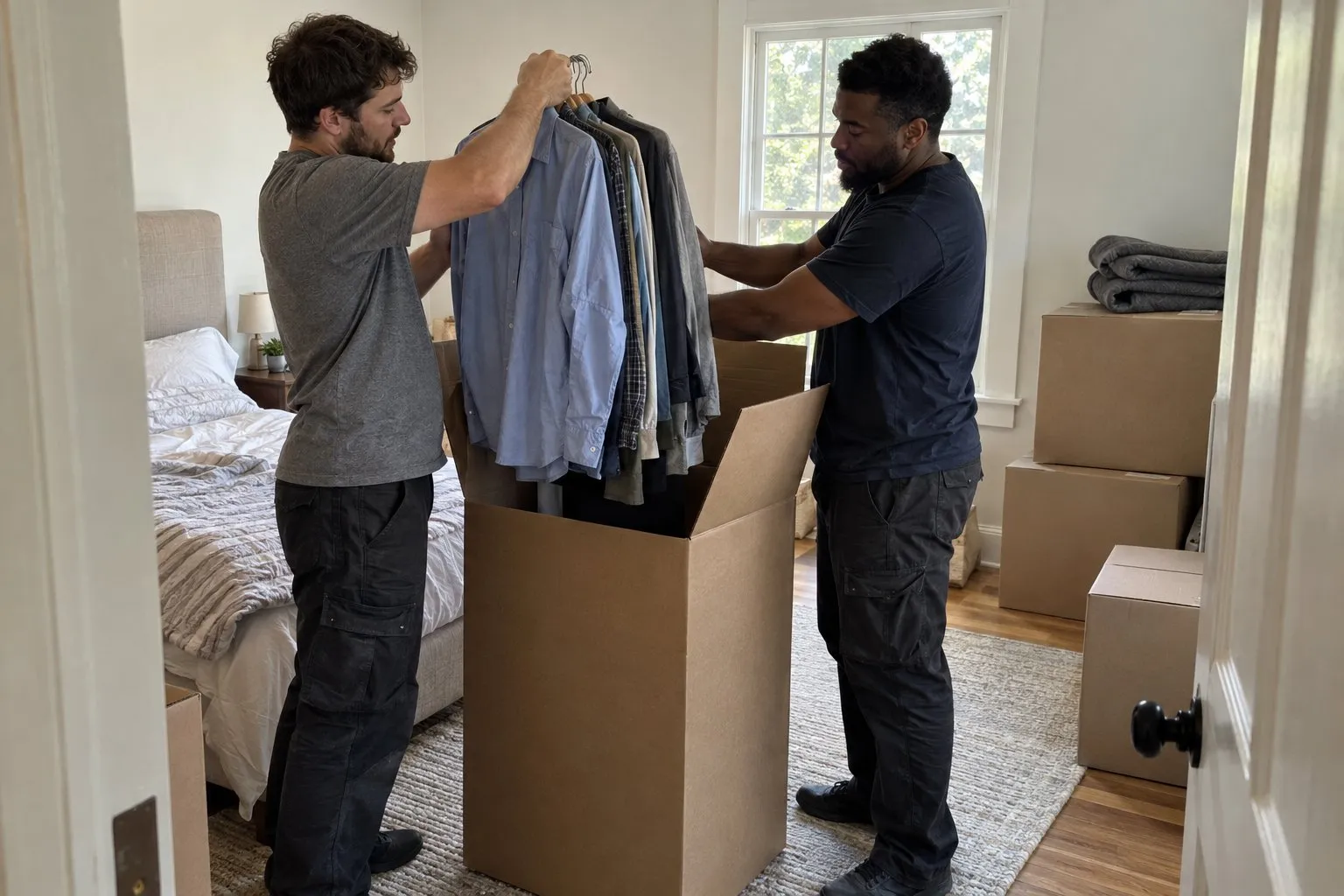
If you're working through a long list of heavy items, bringing in a crew that already knows how to move them can be the simpler route rather than figuring out every stairwell angle yourself. If you're trying to figure out how much help you actually need for your list of furniture, our guide on how many movers you actually need walks through that decision in more detail, and our guide to moving heavy furniture without a full-service mover covers the broader approach beyond just equipment choice.
Planning your move? Request a quote from Lift and Load Moving.


FAQs
A dolly makes it possible for one person to move a heavy item across flat ground, but loading it on and off is still safer with two people. Tipping risk goes up when one person tries to lift a heavy piece onto the dolly alone.
Yes. A flat furniture dolly with four caster wheels is built for level floors and ramps, while an appliance hand truck with a stair-climbing mechanism and a securing strap is built for navigating steps without the item sliding off.
Measure the width of your stairwell and the landing where it turns before moving day. If the landing is too tight for the dolly to pivot with the item loaded, plan to carry that piece by hand instead.
Sliders work well for short, flat distances within a room, like repositioning a couch, but they aren't a substitute for a dolly when an item has to travel a long distance or go up and down stairs.
Sliders work well for short, flat distances within a room, like repositioning a couch, but they aren't a substitute for a dolly when an item has to travel a long distance or go up and down stairs.
Still have questions?

How to move with us?
Hit the “Get a Quote” button and tell us what you need.
Choose the service, date, and time that work best for you.
Our friendly team shows up on time and gets everything done safely.
Sit back while we take care of the rest.
