Cardboard Boxes vs Plastic Bins for Storage: Which Holds Up Better?
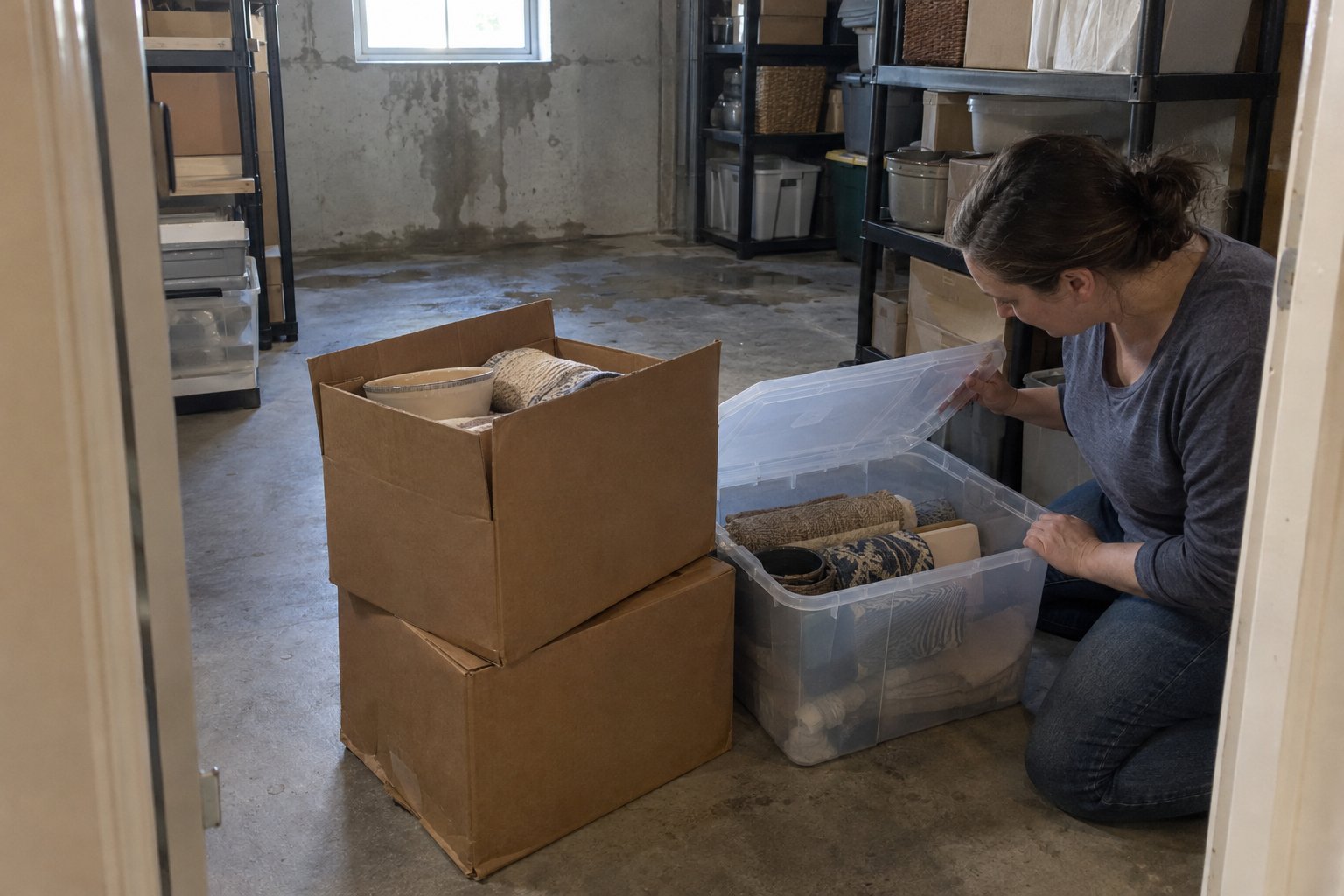
For storage that lasts longer than a few months, plastic bins generally hold up better than cardboard boxes, especially in a basement, garage, or attic where humidity and pests are a real concern. Cardboard still has its place: it is lighter, easier to recycle, and perfectly fine for short-term storage of items that are not sensitive to moisture. The right choice depends on how long the items will sit, where they will sit, and what is inside the container.
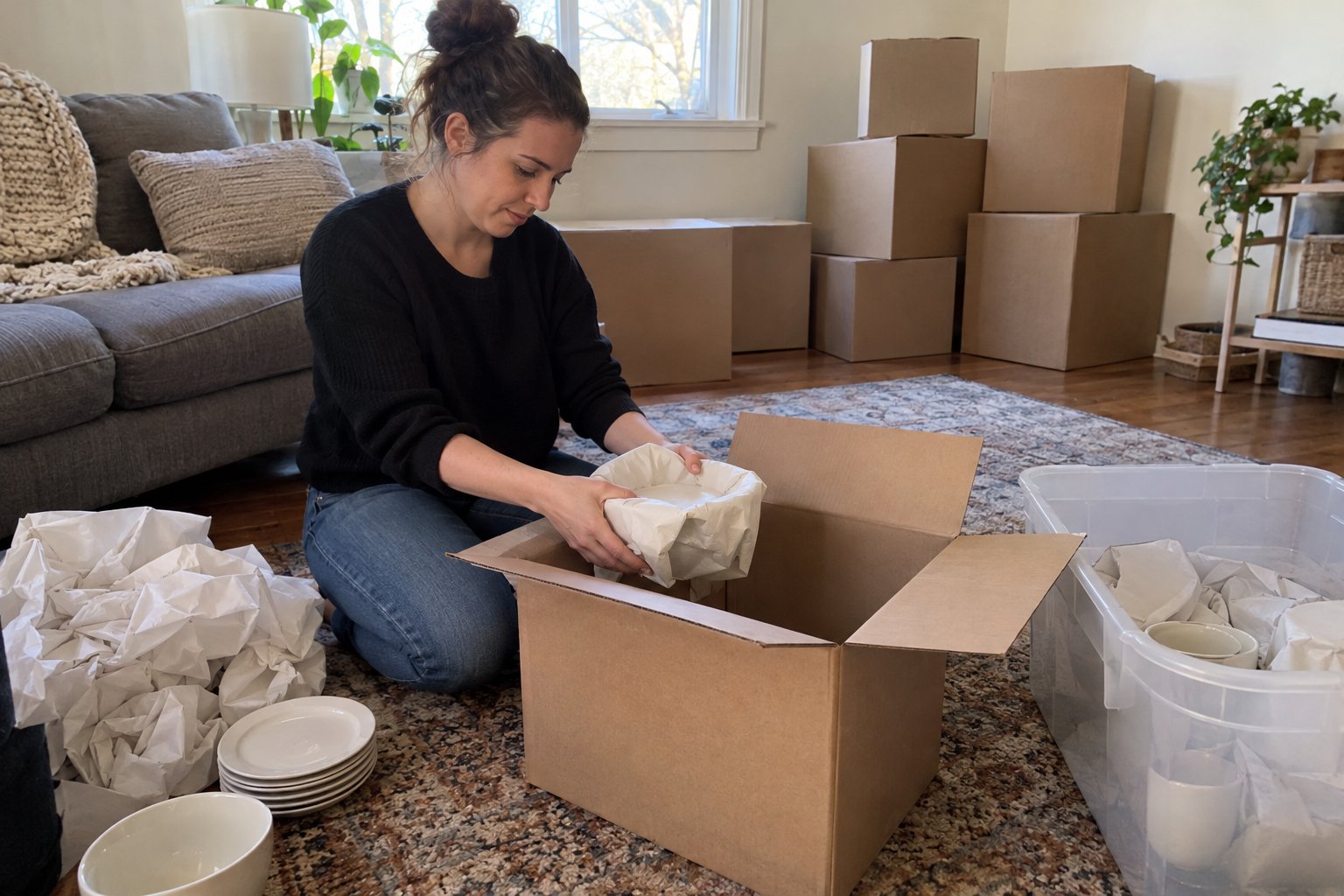
This is a different question than which one to pack a moving truck with. Boxes on a truck are handled for a day or two and then unpacked. Boxes in storage might sit untouched for a year or more, through temperature swings, humidity, and whatever crawls through the space looking for a dry place to nest. That difference changes which container actually makes sense.
Cardboard Boxes vs Plastic Bins for Storage: The Core Tradeoffs
Cardboard boxes are lighter, stack flat when empty, and are easy to source, but they absorb moisture, lose structural strength over time, and offer no real barrier against insects or rodents. Plastic bins resist moisture and pests far better, hold their shape under weight, and can be reused indefinitely, but they take up storage space even when empty and add bulk to a move if you are not keeping them long-term.
Weigh the two against the same four factors every time: how long the items will be stored, how much effort you want to put into protecting them, the risk of water or pest damage in that specific space, and whether the container needs to also survive a move at some point.
Time: Short-Term vs Long-Term Storage
If the items are coming back out within a few months, cardboard is usually fine. The box does not need to survive a full change of seasons, and the lighter weight makes it easier to carry. For anything going into storage for six months or longer, a sealed plastic bin is the safer bet. Cardboard that sits for a year in an attic or garage often softens at the corners, sags under stacked weight, or picks up a musty smell even without an obvious leak.
Effort: What Each Container Asks of You
Cardboard asks for almost nothing up front but needs more attention over time. Stack it correctly, keep it off bare concrete, and check on it periodically. Plastic bins ask for a little more effort and expense at the start (buying matching bins, finding space to store them empty between uses) but need very little attention once they are packed and sealed. If you would rather set it and forget it, bins win.
Risk: Moisture, Pests, and Crushing
This is where plastic bins separate themselves. A sealed bin with a snap-on lid keeps out most moisture and makes it much harder for insects or rodents to get inside, which matters a lot in a garage, basement, or storage unit. Cardboard offers no real pest barrier and wicks up moisture from damp floors or humid air, which can ruin the contents before you ever notice a problem. Bins also resist crushing under stacked weight far better, which matters if you are storing anything fragile toward the bottom of a stack.
Fit: Does It Also Need to Survive a Move?
If the container is going into storage and then straight onto a truck, plastic bins are the more forgiving option: they do not weaken in transit the way cardboard sometimes does after sitting packed for months. If you are only storing for a short window and do not plan to move the items again soon, cardboard's lower bulk and easier disposal make it the simpler pick.
Which Items Should Go in Plastic Bins?
Items that are sensitive to moisture, valuable, or going into long-term storage belong in plastic bins. That includes photographs, important documents, seasonal clothing, holiday decorations, and anything with metal or electronic components that can corrode or short out if exposed to damp air.
Books are a good example of an item where the container choice actually matters for the object's condition, not just convenience. If you are figuring out how to store books long term, sealed plastic bins with some airflow management (silica packets, not a fully airtight seal) protect against the humidity swings that warp pages and encourage mold far better than a cardboard box left in a garage corner.
Which Items Are Fine in Cardboard Boxes?
Items that are not moisture-sensitive, going into short-term storage, or heading to donation or disposal soon are fine in cardboard. Off-season bedding you will rotate back in within a few months, overflow kitchen items waiting for a kitchen remodel to finish, or boxes you are storing for a move that is only weeks away do not need the extra protection a bin provides.
Cardboard is also the better call when you want the container to disappear afterward. It breaks down flat, recycles easily, and does not leave you with a stack of empty bins taking up closet space once the items come back out.
Are Plastic Boxes Better for Every Storage Situation?
No. Plastic bins are better for long-term, moisture-prone, or pest-prone storage, but they are not automatically the right answer for every box. If you are storing something for a month before a move, buying and storing empty bins afterward is more hassle than it is worth. Think of plastic as the choice for protection and cardboard as the choice for convenience, then match that to what you are actually storing and for how long.
A reasonable rule of thumb: anything you expect to store for longer than about six months, or anything that would be expensive or sentimental to lose to water or pests, goes in a sealed plastic bin. Everything else can go in a sturdy cardboard box.
Setting Up a Storage Space the Right Way
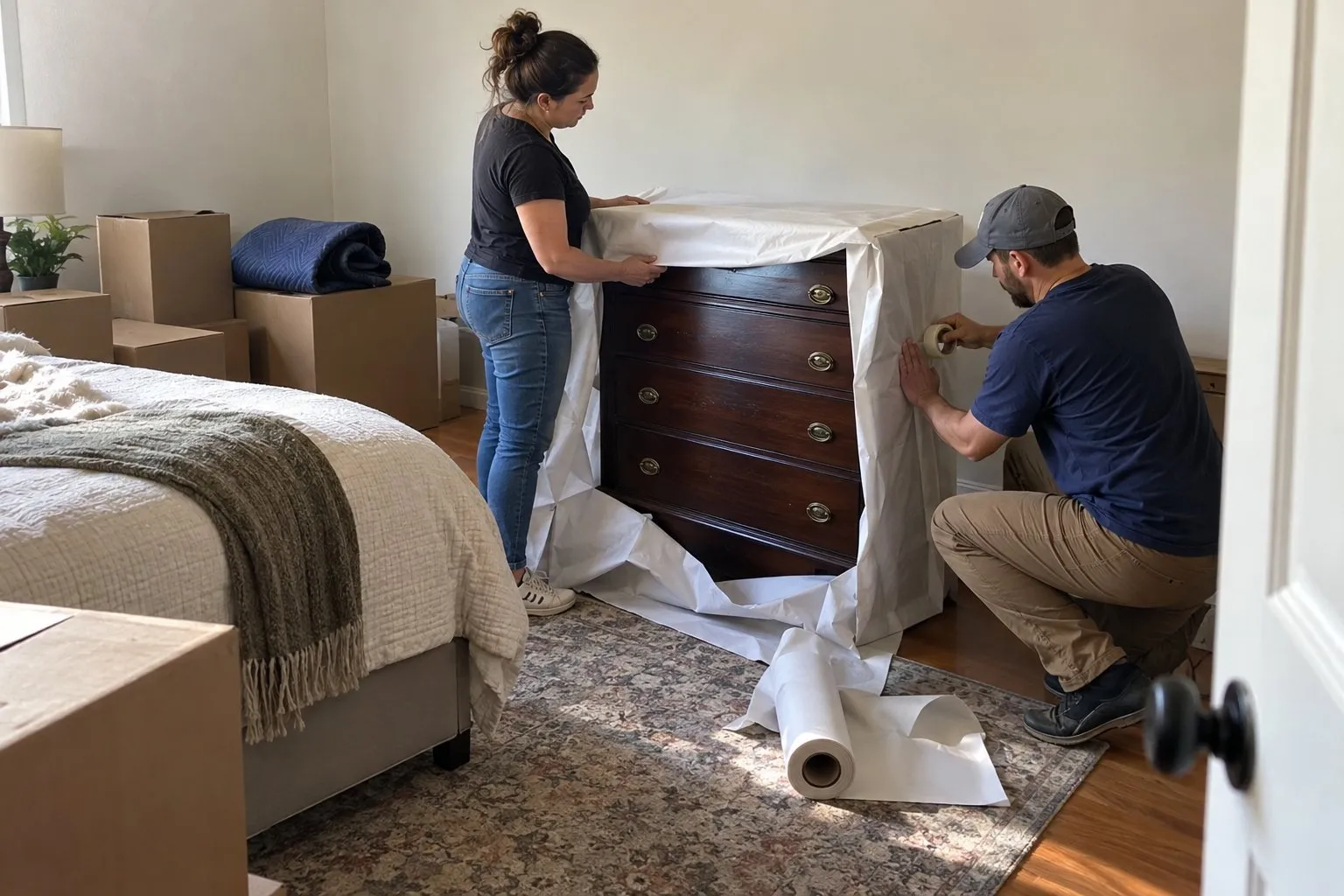
Whichever container you choose, keep boxes and bins off bare concrete floors using a pallet or shelving, leave a little air space around stacks instead of pushing everything against a wall, and label every container on more than one side so you are not unstacking a whole corner to find one item. If you are moving items into a storage unit or a storage solutions space rather than just a basement, ask about climate control for anything you have packed in cardboard, since temperature swings are harder on paper fiber than on plastic.
If you are trying to figure out how many containers you will need before you start packing for a move into storage, a room-by-room estimate can save you a second trip for supplies. The same logic used in estimating how many boxes you need to move applies to storage, just with a longer time horizon to plan around.
Local Considerations for the Chicago Area
If you are storing items in a garage or basement in Skokie, IL or Evanston, IL, humidity and temperature swings across the seasons are worth planning for regardless of which container you choose. A sealed plastic bin handles those swings with less risk to the contents than cardboard left in an uninsulated space. If the containers also need to travel, ask your crew in advance which local moving arrangements make sense for getting boxes and bins out of storage and into the new space without restacking everything twice.
For records you are storing because you no longer need quick access to them, it is also worth updating your mailing address with USPS so nothing important gets delayed while the rest of your things are in storage.
Planning your move? Request a quote from Lift and Load Moving.




FAQs
They can, but they are more vulnerable to humidity, pests, and crushing under stacked weight than plastic bins. If the unit is not climate controlled, a sealed plastic bin is the more reliable choice for anything stored longer than a few months.
A snap-lid bin that seals snugly is usually enough for general household items. Fully airtight seals can trap humidity inside with the contents, so for paper items like books or documents, a snug lid with a moisture absorber such as silica packets works better than a hermetic seal.
Mid-size bins in the 18 to 27 gallon range are usually the easiest to stack evenly and still carry without straining, especially when filled with heavier items like books or tools.
A musty smell, visible softening at box corners, or condensation on nearby surfaces are signs the space is too humid for long-term cardboard storage. Switching those contents to sealed plastic bins protects them going forward.
A musty smell, visible softening at box corners, or condensation on nearby surfaces are signs the space is too humid for long-term cardboard storage. Switching those contents to sealed plastic bins protects them going forward.
Still have questions?

How to move with us?
Hit the “Get a Quote” button and tell us what you need.
Choose the service, date, and time that work best for you.
Our friendly team shows up on time and gets everything done safely.
Sit back while we take care of the rest.
