
China Cabinet Mistakes to Avoid When Moving It

Knowing how to move a china cabinet correctly is something most people don't think through until they're standing in the dining room staring at a seven-foot hutch loaded with heirloom dishware, crystal wine glasses, and serving pieces that haven't left that spot in fifteen years — and realizing that the upper and lower sections may or may not separate, the glass doors are held on by hinges with stripped screws, the whole thing is taller than the moving truck's interior, and none of the contents can stay inside during transport. A china cabinet looks like furniture. It has legs. It has doors. It has a flat back that leans against a wall. How hard could it be? The answer is: harder than almost anything else in the dining room, and the mistakes people make — carrying both sections as one unit, skipping the door removal, gripping the glass panels instead of the frame — routinely result in shattered leaded glass, collapsed shelving, blown-out corner joints, and at least one piece of grandmother's wedding china turned to powder before the cabinet ever reaches the truck.
Need a professional crew to handle the heavy lifting so your china cabinet and furniture arrive without damage? Call 224-404-0069 or get a free labor-only moving quote from Lift & Load today.
Why Moving a China Cabinet Is Harder Than It Looks
The first problem is size and structure. A china cabinet is not one piece of furniture — it is typically two: a lower base cabinet with drawers or solid doors, and an upper hutch with glass-paneled display doors. Together, they can stand anywhere from 72 to 84 inches tall, which means the assembled unit will not clear a standard doorway without tilting, and tilting a top-heavy, glass-laden hutch is where most of the damage happens. The upper section, in particular, is almost entirely glass and thin wood framing — it is not engineered to flex, bounce, or absorb any lateral force whatsoever.
The second problem is weight distribution. The base cabinet is the heaviest component — drawers, solid doors, and a thick countertop-style surface add up fast — but the upper hutch is the most fragile. When people try to carry both sections together without separating them, the weight of the base torques the upper section at the seam, stressing every joint that holds the hutch frame together. One uneven step on a staircase is enough to crack a corner joint that looked perfectly solid five seconds earlier.
The third problem is glass. China cabinet doors are typically fitted with single-pane glass that is neither tempered nor laminated. It is standard annealed glass — the kind that cracks in straight diagonal lines from corner to corner when subjected to flex or impact. The glass panels sit in thin wooden muntins and are often held in place by fragile glazing points and thin wood molding rather than robust channel frames. Any contact with a wall, door frame, or another piece of furniture during the carry can shatter a panel before you have any warning that something went wrong.
What You Need Before You Start
Moving a china cabinet safely requires the right materials and the right number of people before anything is lifted. Cutting corners on preparation is how things break. Before you move anything, make sure you have:
- At least two people — and three for any staircase or tight hallway. One person cannot safely control a china hutch on stairs. The second person manages balance; the third manages direction and obstacle clearance.
- Moving blankets or furniture pads — wrapped around every glass panel before the piece moves. Don't use towels or bedsheets; they compress under pressure and don't absorb impact the way purpose-made pads do.
- Painter's tape or stretch wrap — to hold moving blankets in place without leaving adhesive residue on the finish.
- A Phillips and flathead screwdriver — for removing hinge screws on the glass doors and any fasteners holding the upper hutch to the base.
- Small zip-lock bags and masking tape — for labeling and storing every screw, hinge pin, and shelf clip you remove so nothing is lost during transit.
- A furniture dolly — for moving the base cabinet across hard floors without dragging and gouging.
- Cardboard sheets or corner protectors — to shield glass door corners and the hutch's upper crown molding during the carry.
Step-by-Step: How to Move a China Cabinet the Right Way
Step 1: Empty Every Shelf Completely
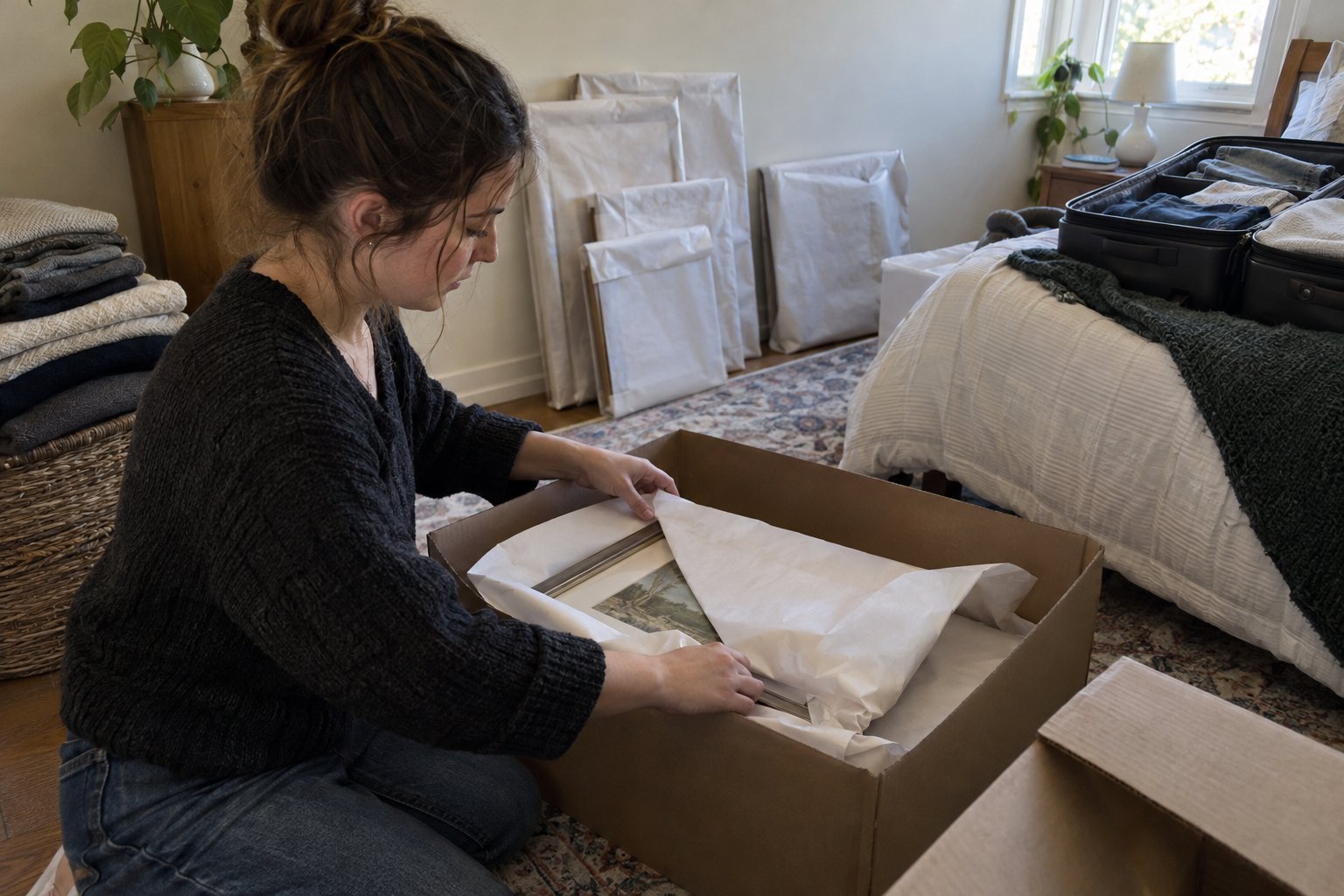
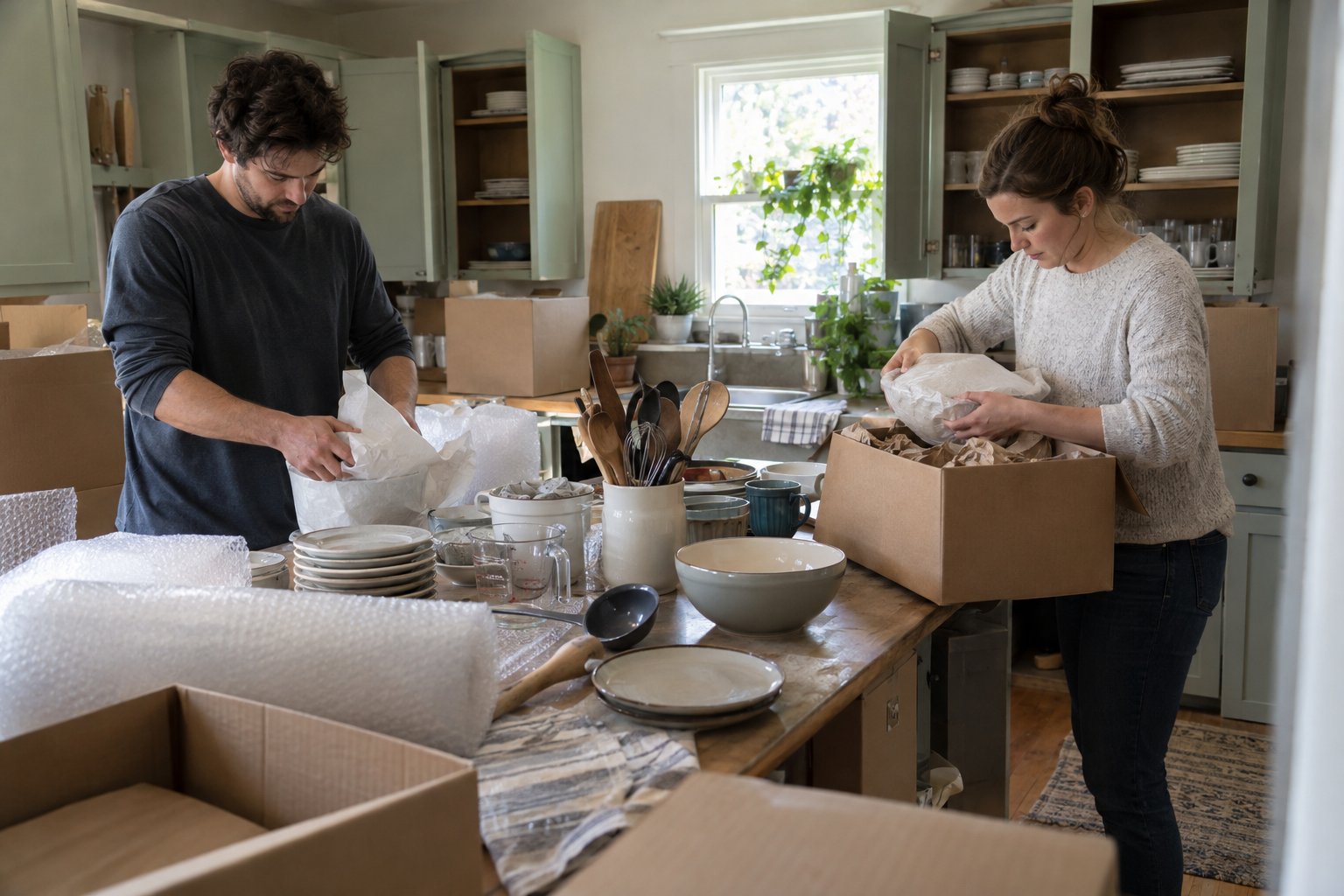
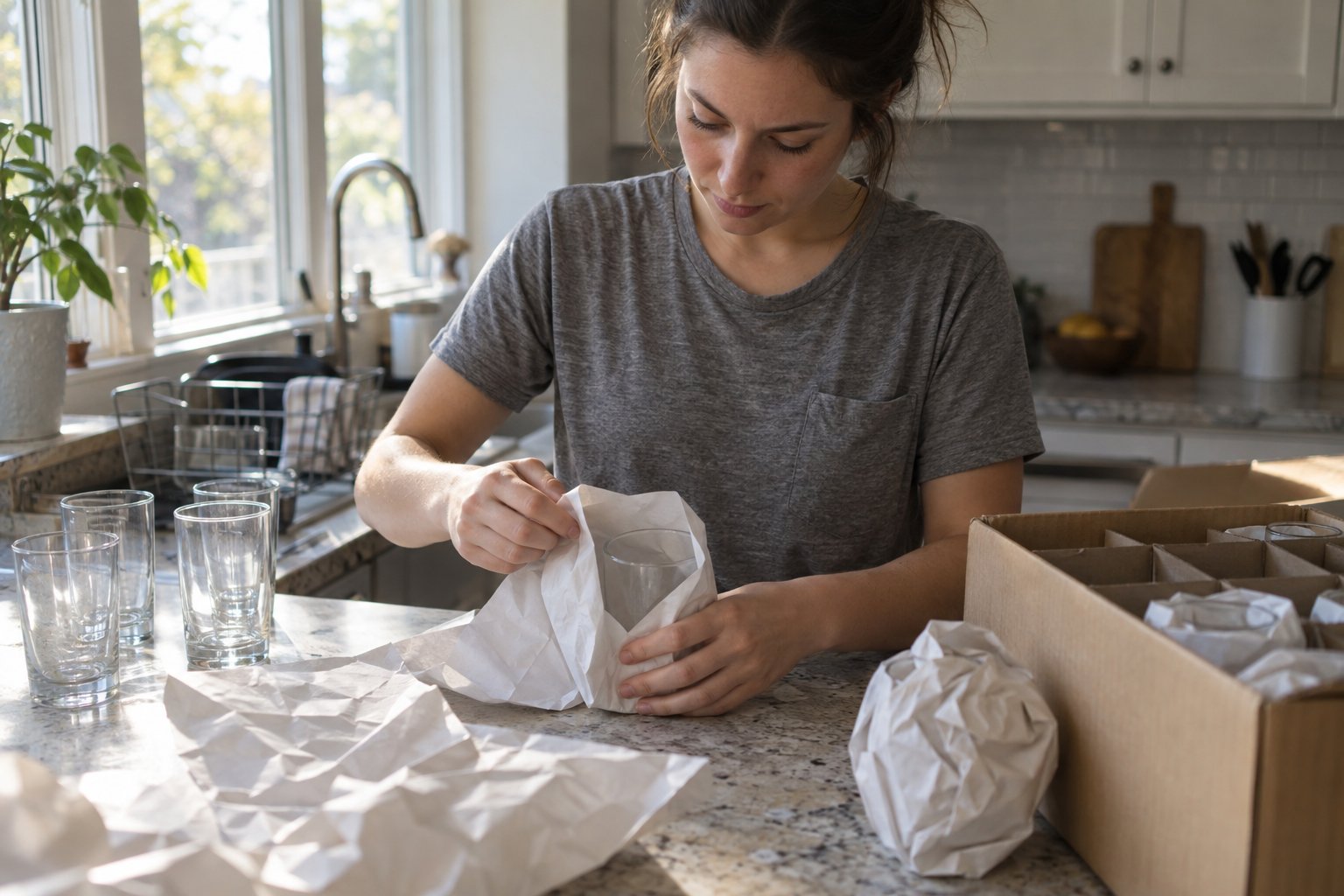
Nothing — not one plate, not one wine glass, not one serving spoon — stays inside the cabinet during the move. This is non-negotiable. Even items that seem secure on a padded shelf will shift the moment the cabinet tilts, and a single shifting platter can crack a glass panel from the inside. Remove everything, wrap breakables individually in packing paper or bubble wrap, and box them separately. Remove the glass shelves last, wrap each one individually in moving blankets, and transport them flat — never upright and never stacked unwrapped.
Step 2: Remove the Glass Doors
Do not skip this step. Glass doors on a china cabinet are the single most vulnerable component, and they will absorb every vibration, bump, and angle change during the carry if they are left attached. Unscrew the hinges from the cabinet frame — not from the door — so you retain the hinge plate on the door itself, making reassembly straightforward. Lay the doors flat on a padded surface, wrap them fully in moving blankets, and tape the blankets closed. Store the hinge screws in a labeled zip-lock bag taped to the back of the door.
Step 3: Separate the Hutch from the Base
Most china cabinets separate into upper and lower sections. Look along the back seam and inside the upper cabinet near the top of the base for screws, lag bolts, or metal clips holding the two sections together. Remove them, label them, and then lift the upper hutch straight up and off the base. This typically takes two people and requires a clear path to set the hutch down safely. The upper hutch should be wrapped in moving blankets immediately after separation and moved separately from the base.
Step 4: Wrap and Protect Both Sections
Wrap the upper hutch in at least two layers of moving blankets, paying particular attention to the crown molding at the top and the glass panel openings where the doors were. Use stretch wrap or painter's tape to hold everything in place — not packing tape directly on the wood finish. Wrap the base cabinet the same way, giving extra attention to any protruding drawer pulls, corner molding, and the countertop surface where the hutch rested. Both sections should be padded so thoroughly that no wood surface is exposed.
Step 5: Move the Base First, Then the Hutch
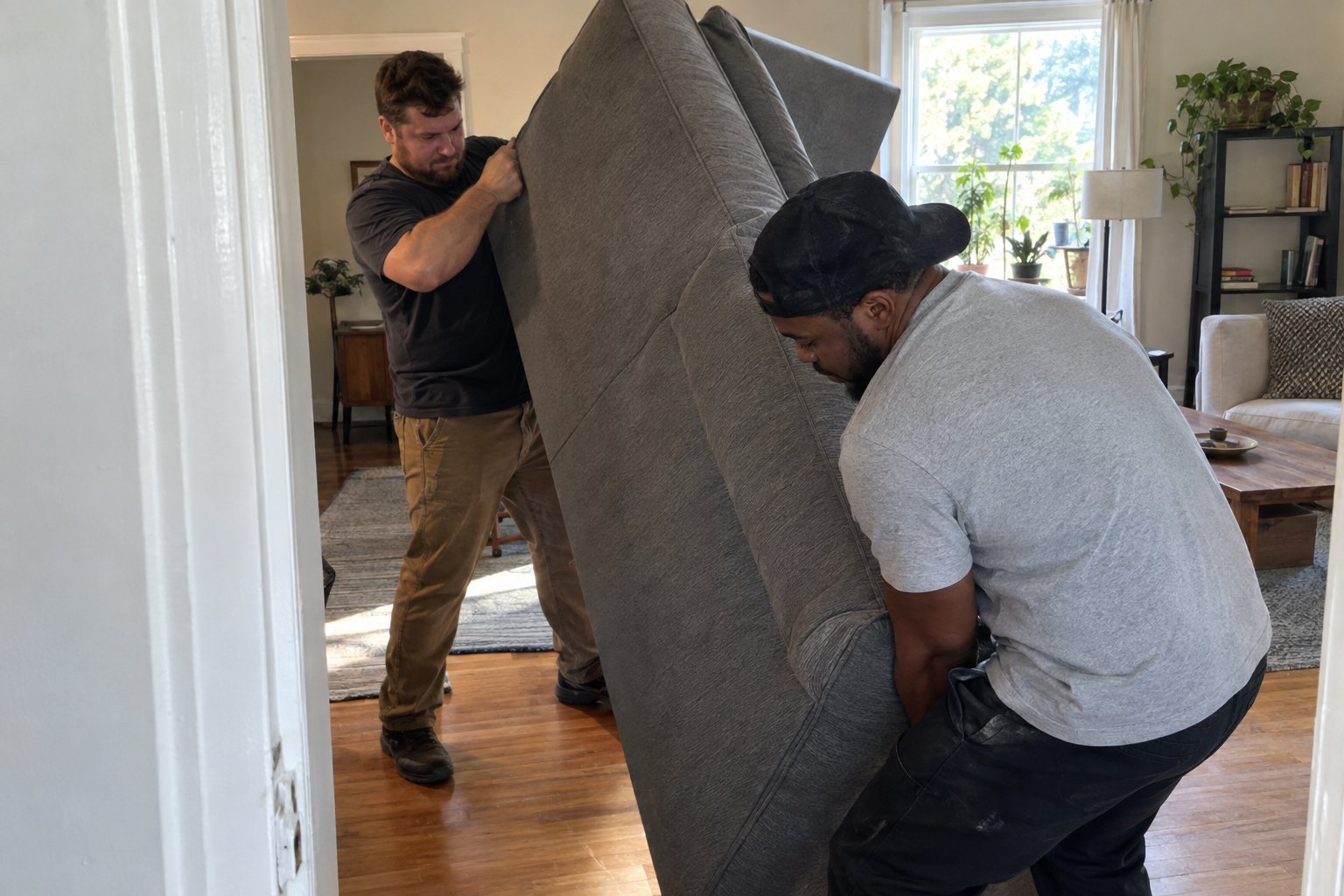
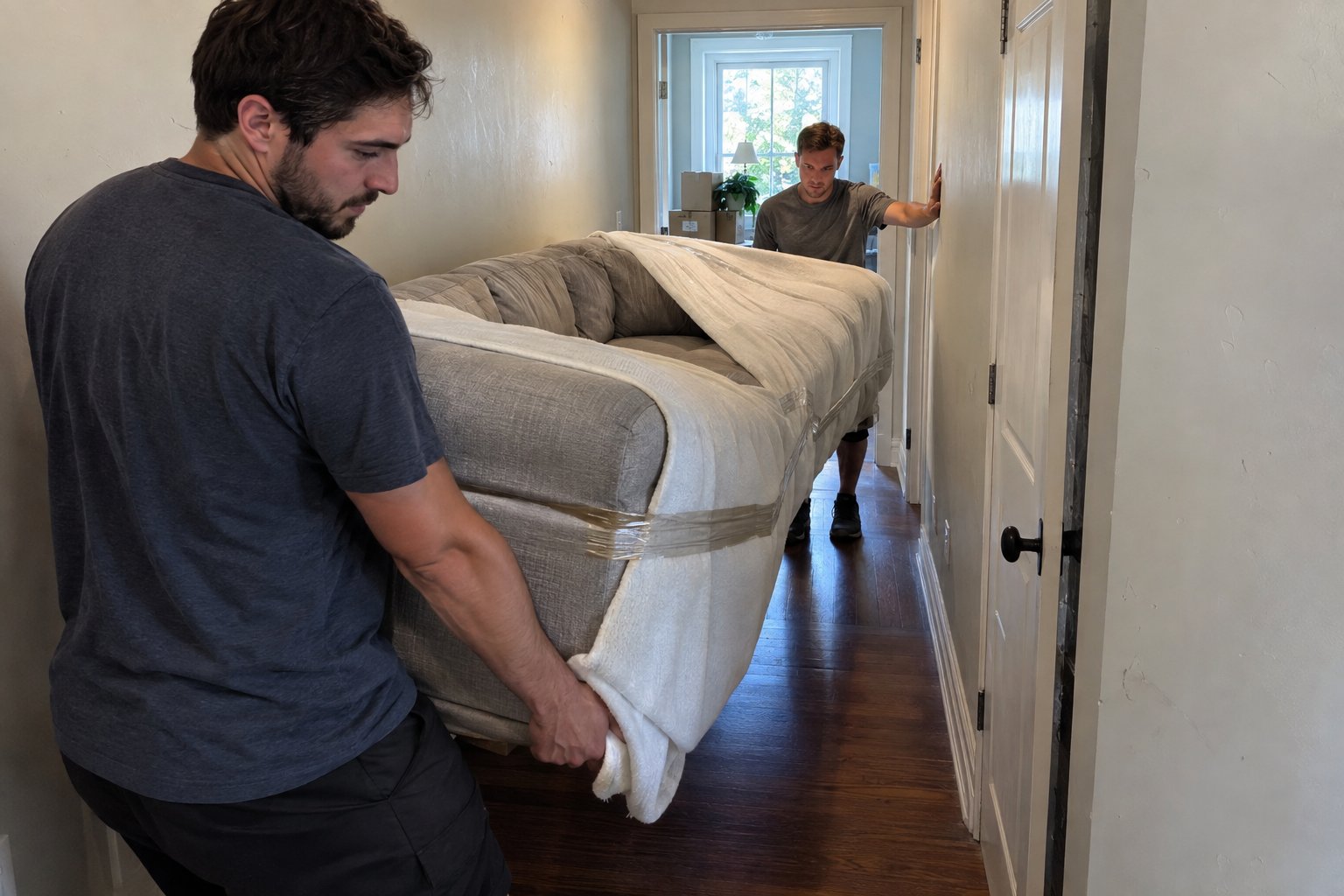
Place the base cabinet on a furniture dolly and roll it to the truck. Do not drag it — the legs are doweled into the base frame and are not designed to handle lateral pulling force. Load the base into the truck, set it against the wall, and secure it with straps before going back for the hutch. The upper hutch should be carried upright whenever possible. If you must tilt it to clear a doorway, tilt it slowly and only as much as absolutely necessary, with one person supporting the bottom and one controlling the top. Never tilt a hutch toward its glass panel face.
Step 6: Load, Secure, and Unload With Care
In the truck, both sections should be loaded against a wall or padded surface so they cannot shift. Use moving straps to secure them — not bungee cords, which can snap under load and cause exactly the kind of sudden impact you are trying to prevent. On unloading, reverse the process: hutch comes off first, base comes off second, and reassembly happens in the room where the cabinet will live, not in the hallway or on the truck ramp.
The Mistakes That Break China Cabinets
Most china cabinet damage during a move comes from the same handful of errors. Moving both sections without separating them is the most common. The second most common is leaving the glass doors attached and watching one swing open into a door frame mid-carry. Third is failing to remove the glass shelves, which shift, tip, and crack against the cabinet walls the moment anything tilts more than a few degrees. Fourth is gripping the upper hutch by its crown molding, which is decorative trim, not structural — it will pull away from the frame under load. Grip the body of the cabinet, low and centered, never by any protruding molding or decorative element.
If any of this sounds like more complexity than your move allows for, that's exactly the situation labor-only moving help from Lift & Load is designed for. You rent the truck, we handle the heavy lifting — including the pieces that require experience, preparation, and more than two hands to move without damage.
When to Call in a Professional Labor Crew
A china cabinet is the kind of piece that separates a careful DIY move from one that ends with an expensive trip to a furniture repair shop. If your cabinet is an antique, has leaded or beveled glass, has already-loose joints, or is going up or down a staircase, the risk of damage from an inexperienced carry is genuinely high. A labor-only crew has the equipment, the padding, and the technique to move pieces like this correctly — and they do it fast enough that the rest of your move doesn't stall while everyone figures out how to get the hutch around the landing.
You don't need a full-service mover to get this right. You need people who know what they're doing with heavy, fragile, awkward furniture — and that's exactly what a labor-only crew is built for.
FAQs
Yes, in almost every case. Carrying a china cabinet as a single assembled unit puts enormous stress on the seam between the upper and lower sections, which is typically held together with only a few screws or clips. The combined height also makes it nearly impossible to tilt the piece through a standard doorway without cracking the glass or blowing out a corner joint. Separating the sections makes both pieces lighter, more manageable, and far less likely to sustain structural damage during the carry.
No. Every shelf — including glass shelves — must be emptied completely before the cabinet moves. Even items that seem secure will shift the moment the piece tilts, and a single shifting object inside can crack a glass panel from the inside out. Glass shelves must be removed, wrapped individually in moving blankets, and transported flat and separately. Nothing should remain inside the cabinet during transit.
Yes, always. Glass doors are the most vulnerable part of a china cabinet and they will absorb every vibration and bump during the carry if left attached. They can also swing open unexpectedly and strike a door frame or wall. Remove the doors by unscrewing the hinges from the cabinet frame, wrap each door fully in moving blankets, store the screws in a labeled bag, and transport the doors flat and separately from the cabinet body.
Grip the body of the hutch at its lowest structural points — the sides of the frame below the glass panels — not the crown molding, not the glass panels themselves, and not any decorative trim elements. Crown molding is attached to the frame with finish nails and glue, not structural fasteners, and it will pull away from the cabinet under load. Keep the hutch upright whenever possible, tilt it only as much as a doorway absolutely requires, and always tilt away from the glass panel face, not toward it.
Grip the body of the hutch at its lowest structural points — the sides of the frame below the glass panels — not the crown molding, not the glass panels themselves, and not any decorative trim elements. Crown molding is attached to the frame with finish nails and glue, not structural fasteners, and it will pull away from the cabinet under load. Keep the hutch upright whenever possible, tilt it only as much as a doorway absolutely requires, and always tilt away from the glass panel face, not toward it.
Still have questions?
How to move with us?
Hit the “Get a Quote” button and tell us what you need.
Choose the service, date, and time that work best for you.
Our friendly team shows up on time and gets everything done safely.
Sit back while we take care of the rest.
.avif)