
Garage Moves: A Room by Room Sorting and Packing Guide
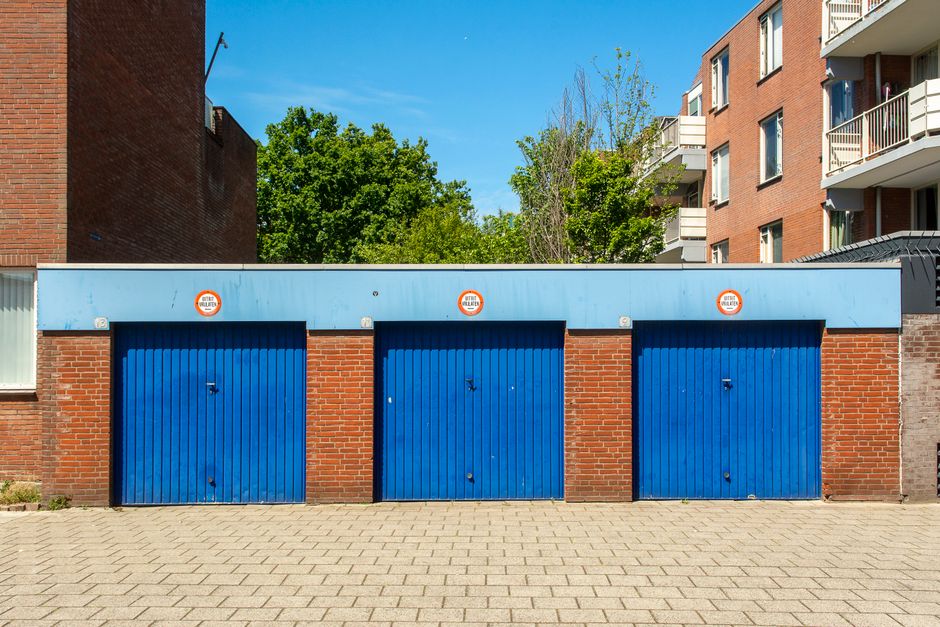
Knowing how to move a garage correctly is something most people don't think through until they're standing in front of a two-car garage packed with power tools, garden equipment, paint cans, propane tanks, holiday decorations stacked to the ceiling, and at least three things they forgot they owned — and realizing that basically none of it is packed, most of it is awkward to carry, some of it is legally restricted from going on a moving truck, and all of it needs to move before closing day. A garage looks like extra space. It has a floor, walls, and a big door. How hard could it be? The answer is: harder than almost any other part of the house, and the mistakes people make — leaving hazardous materials for the movers to sort out, skipping the declutter step, loading heavy tools in the wrong boxes — routinely result in refused loads, damaged equipment, injured backs, and a moving day that runs four hours over schedule because nobody planned for what was actually in that garage.
Need a professional crew to handle the heavy lifting so your garage contents and furniture arrive without damage? Call 224-404-0069 or get a free labor-only moving quote from Lift & Load today.
Why Moving a Garage Is Harder Than It Looks
The first problem is category chaos. A garage is not one type of space — it is five or six types of space crammed together. It is a workshop, a storage unit, a utility room, a seasonal closet, and sometimes an overflow area for everything that didn't have anywhere else to go. Each of those categories has its own packing rules, its own handling requirements, and its own set of things that absolutely cannot go in the same box as everything else. Mixing them together — and most people do — creates a moving day pile that no crew can work through efficiently.
The second problem is weight and bulk. Garages accumulate the heaviest things in the house: floor jacks, air compressors, table saws, toolboxes loaded with hand tools, chest freezers, shelving units bolted to the walls, and riding mowers. None of these items have obvious grip points. Many of them are awkward, top-heavy, or attached to the structure. Moving them safely requires planning the sequence, clearing a path, and often using equipment — furniture dollies, appliance carts, straps — that most people don't have staged and ready to go.
The third problem is hazardous materials. Garages are where households store paint, solvents, pesticides, propane, pool chemicals, and automotive fluids. Most professional moving crews — and certainly any truck rental agreement — explicitly prohibit loading flammable, corrosive, or pressurized materials. If those items aren't dealt with before moving day, the whole load can be delayed or refused. This is one of the most common and most preventable reasons a garage move goes sideways.
Step One: Sort Before You Pack Anything
The single most important thing you can do before moving a garage is sort its contents into categories before a single box is taped shut. Sorting after packing — or worse, sorting at the new house — is how you end up unpacking a box labeled "garage misc" that contains a hammer, a bag of fertilizer, a string of Christmas lights, and a half-empty can of motor oil.
Create four piles immediately
- Keep and move — items you use regularly and will need at the new house
- Sell or donate — functional items you haven't used in over a year
- Hazardous disposal — paint, chemicals, fuels, batteries, and pressurized containers that can't go on a truck
- Trash — broken equipment, dried-out paint, expired chemicals, and anything that isn't safe or useful
This sort should happen at least two weeks before moving day — not the night before. Hazardous material disposal, donation drop-offs, and selling large equipment all take time. If you compress this into 24 hours, you will either skip it entirely or create a pile of items that become your problem at the new house.
What counts as hazardous in a garage context
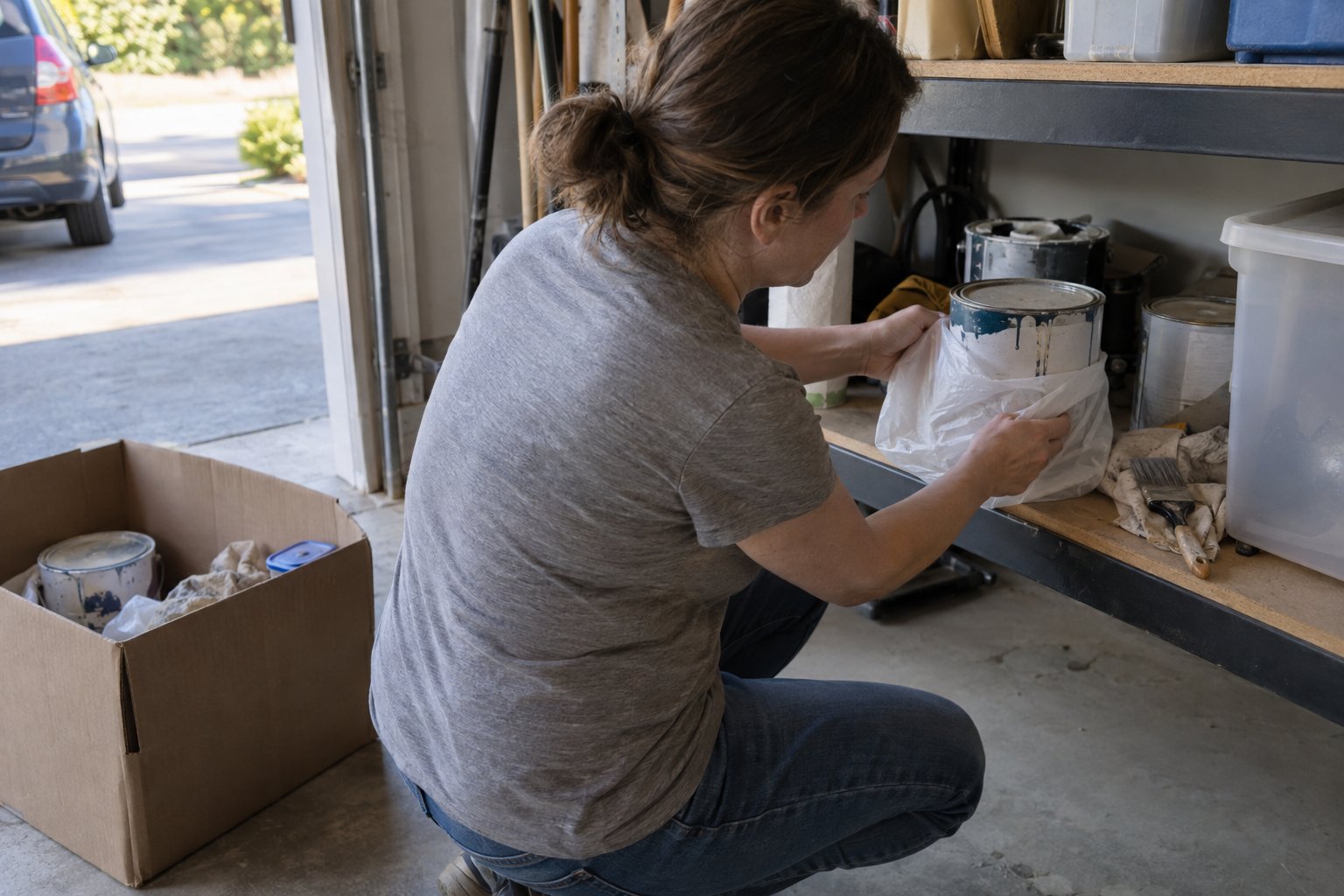
Most people know that propane tanks and gasoline cans can't go on a truck. Fewer people realize the full list includes: oil-based paints, spray paint cans (even empty ones with residue), pool chemicals, pesticides and herbicides, fertilizers, automotive fluids including antifreeze and brake fluid, rechargeable lithium batteries, and any aerosol product. Check with your local municipality for hazardous waste drop-off schedules — most areas offer free collection events, and many home improvement stores accept paint for recycling at no charge.
Step Two: Drain, Disconnect, and Prepare Equipment
Power equipment and large tools require preparation before they go anywhere near a truck. Skipping this step doesn't just risk a refused load — it risks a fire, a fuel spill, or damage to the equipment itself during transport.
Gas-powered equipment
Lawn mowers, generators, pressure washers, chainsaws, and similar equipment must have fuel and oil drained before loading. Run the engine until it stalls from an empty tank, or use a hand pump to remove fuel. Tip the equipment to drain residual fuel from the carburetor if the manual allows it. Oil does not need to be drained in most cases for short moves, but check your owner's manual. Once drained, store the equipment upright and use moving blankets to protect blades and mechanical components during transit.
Power tools and compressors
Air compressors should be drained of any built-up moisture before moving — most have a drain valve at the bottom of the tank. Depressurize the tank completely before loading. Disconnect all hoses and coil them separately. Power tools — circular saws, drills, impact drivers — should be packed in their original cases if you still have them, or wrapped in moving blankets and packed in medium boxes with tools arranged so blades and bits are not exposed. Never mix loose blades or drill bits with other items in an unsealed box.
Toolboxes and rolling chests
A loaded mechanic's chest can weigh several hundred pounds. Drawers that appear latched will open during a carry if they aren't secured with stretch wrap or ratchet straps. Before moving a rolling tool chest, remove heavy items from the top drawers to lower the center of gravity, wrap the entire unit in stretch wrap to keep every drawer closed, and load it last so it comes off the truck first. Use an appliance dolly, not a furniture dolly — an appliance dolly's straps hold vertical loads more securely.
Step Three: Pack Garage Items by Weight and Type
Garage packing has different rules than household packing. The items are heavier, the shapes are more irregular, and the consequences of a bad pack — a box collapse, a sharp object punching through cardboard — are more serious. Follow these guidelines by category:
Hand tools
Pack hand tools in small or medium boxes only. A large box of hand tools becomes too heavy to lift safely and too likely to collapse. Wrap sharp edges — chisels, saw blades, utility knife blades — in newspaper or bubble wrap before placing them in the box. Pack heavier tools at the bottom, lighter items on top. Label every box with its contents and the side it should face up.
Hardware and small parts
Nuts, bolts, screws, drill bits, and other small hardware should be grouped by type in zip-lock bags before going into boxes. Loose hardware in a box becomes an unsortable pile of identical-looking parts at the new house. If you have labeled bins or drawers, photograph them before emptying so you can recreate the organization system after the move.
Garden tools and long-handled equipment
Rakes, shovels, hoes, and brooms don't go in boxes — they are bundled together with stretch wrap or bungee cords, with blade covers or cardboard wrapped around any sharp ends. Stand them vertically against the wall of the truck rather than laying them flat on the floor where they become a trip hazard and a way to scratch other furniture.
Shelving units
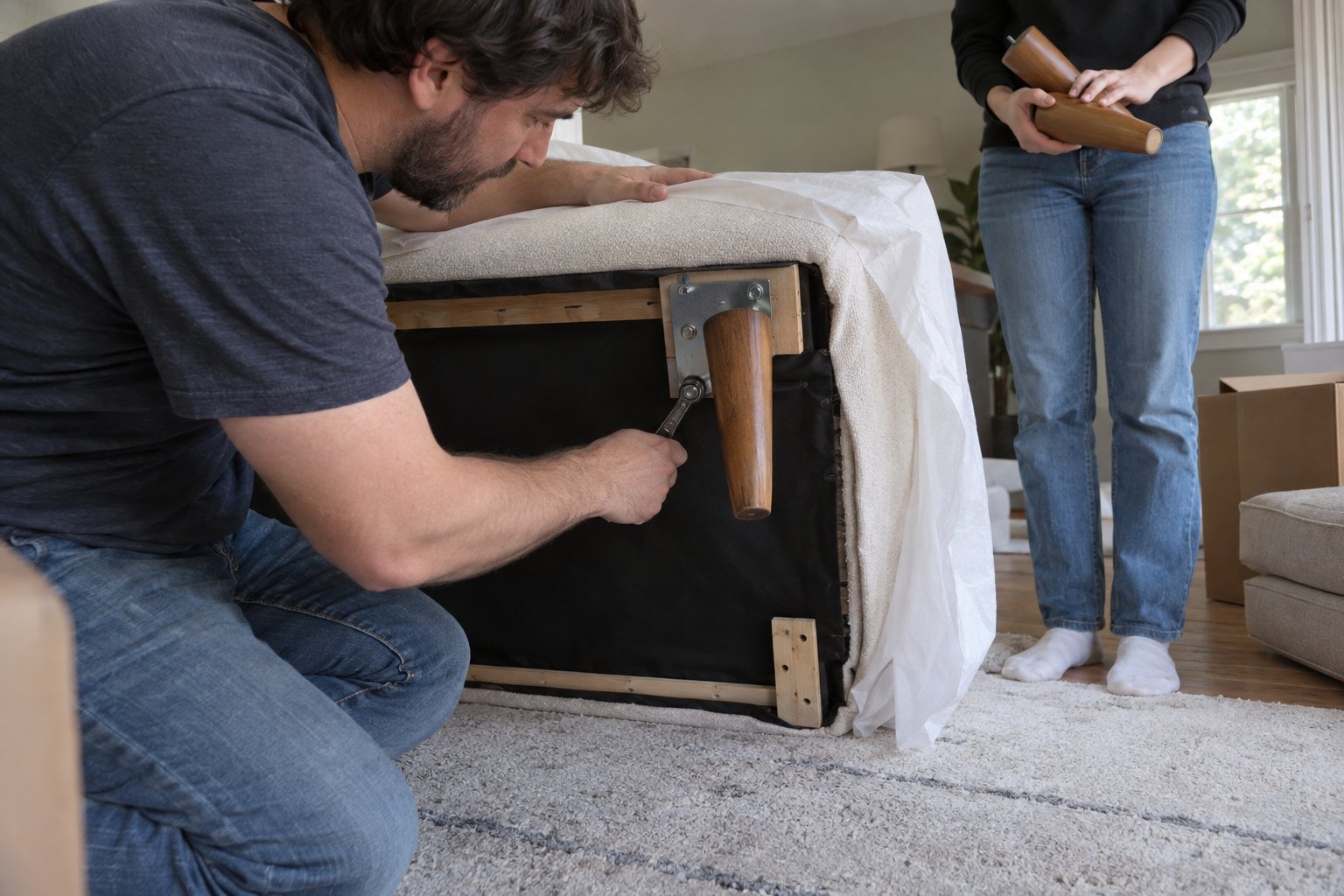
Freestanding metal or wire shelving should be disassembled before loading. Most bolt-together garage shelving comes apart in 15 minutes with a socket wrench. Keep the hardware in a labeled bag taped to the frame. Shelving that remains assembled takes up disproportionate truck space and can collapse under load if it shifts during transit.
Step Four: Load the Garage Items in the Right Order
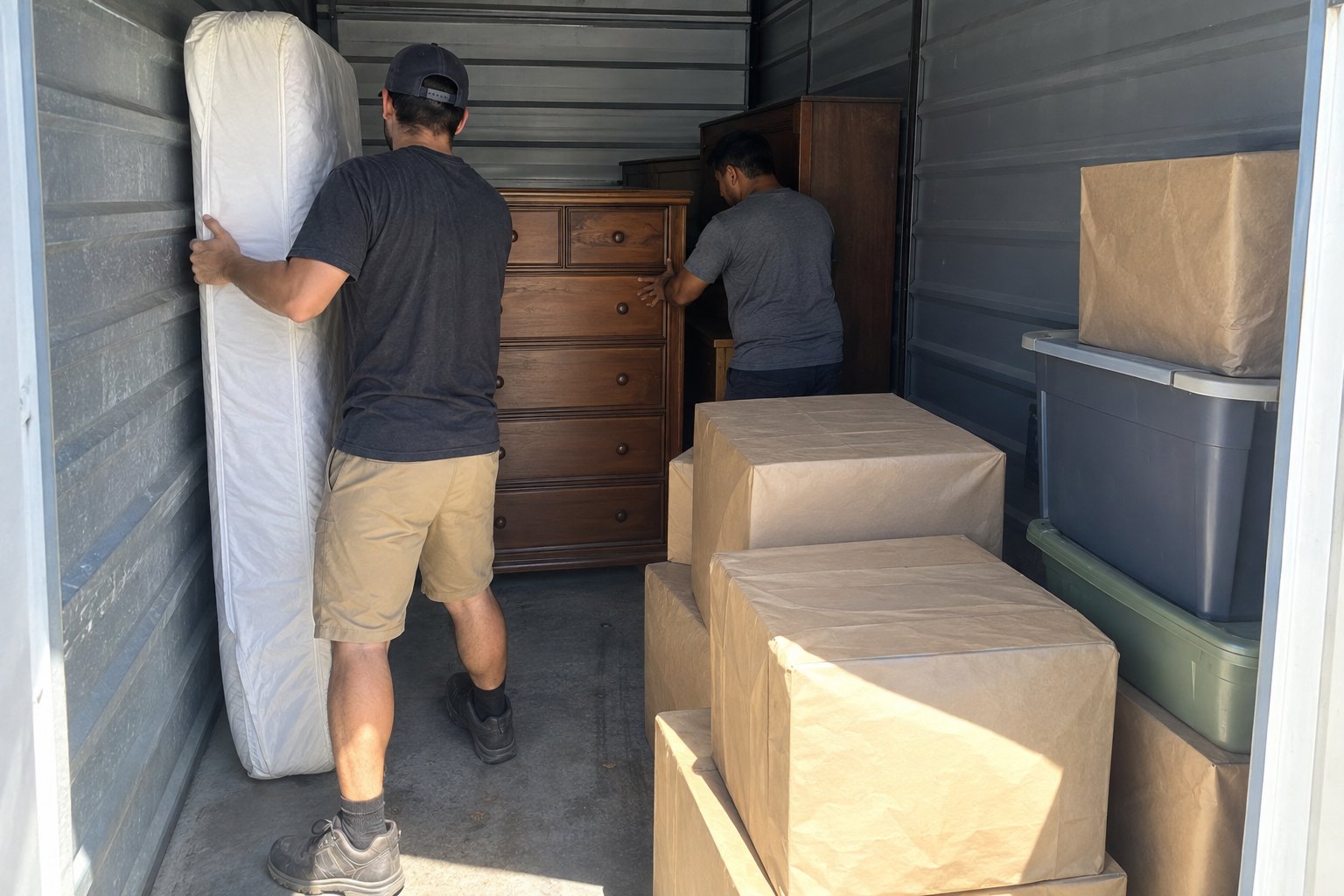
Even if your garage contents are perfectly sorted and packed, loading them in the wrong sequence creates problems at delivery. Heavy, dense items — filled toolboxes, compressors, equipment — go against the front wall of the truck, floor level. Medium-weight packed boxes go next, stacked tightly to prevent shifting. Lightweight items and irregularly shaped equipment go last, closest to the truck door where they're easiest to remove without disturbing the rest of the load.
Protect furniture and household items that share the truck with garage contents. Moving blankets between a metal toolbox and a wooden dresser are not optional — metal corners and edges will damage any wood surface they contact during even a short drive. If the move involves a cargo van or rented truck rather than a dedicated moving container, keep garage items physically separated from household furniture with a blanket barrier and load the garage items in their own zone.
When to Call in a Labor Crew for the Garage
Some garages are a half-day project for two organized people. Others are legitimately the hardest part of an entire household move — more physically demanding than any room in the house, with more potential for injury, equipment damage, and moving-day delays than any other single space. If your garage contains a riding mower, a chest freezer, a large compressor, a table saw, or wall-mounted cabinetry that needs to come down, calling in a professional labor crew for that portion of the move isn't a luxury — it's the difference between a clean move and a move that derails before the truck is half full.
A labor-only crew brings the equipment, the lifting technique, and the experience to handle heavy awkward items safely. They don't solve the sorting or hazardous material problem for you — that part is always on you to do in advance — but once the garage is sorted and prepped, a good labor crew can clear it faster and more safely than any combination of friends, neighbors, and borrowed dollies.
Ready to stop dreading the garage? Call 224-404-0069 or get a free labor-only moving quote from Lift & Load and let us handle the heavy part.





FAQs
Yes. Professional movers and truck rental agreements typically prohibit loading flammable, corrosive, or pressurized materials — including gasoline, propane tanks, paint, solvents, pesticides, and automotive fluids. If these items are not removed or disposed of before the crew arrives, they can legally refuse to load them and may delay the entire move. Sorting and disposing of hazardous garage contents at least a week before moving day prevents this from happening.
A riding mower must have its fuel tank emptied and the battery disconnected before it goes on a truck. Run the engine until it stalls from an empty tank, or use a hand pump to drain the fuel. Check the oil level and manufacturer recommendations for transport positioning. On moving day, the mower is typically driven or rolled up a loading ramp directly onto the truck and secured with ratchet straps to anchor points in the truck floor. This requires a truck with a usable ramp and anchor points — not all rental trucks accommodate this safely.
Remove heavy items from upper drawers to lower the center of gravity before moving. Wrap the entire chest in stretch wrap to keep every drawer from opening during the carry. Use an appliance dolly with straps rather than a flat furniture dolly — the vertical strapping is more secure for tall, heavy chests. Two people are the minimum for a loaded mechanic's chest; three is safer for any chest over 200 pounds or for any move involving stairs or an uneven surface.
Yes, in most cases. Freestanding metal or wire shelving should be disassembled before the labor crew arrives. Assembled shelving takes up excessive truck space, risks collapsing under load during transit, and takes longer for a crew to work around safely. Most bolt-together garage shelving disassembles in 15 to 30 minutes with basic tools. Keep all hardware in a labeled bag taped to the shelving components so nothing is lost during the move.
Yes, in most cases. Freestanding metal or wire shelving should be disassembled before the labor crew arrives. Assembled shelving takes up excessive truck space, risks collapsing under load during transit, and takes longer for a crew to work around safely. Most bolt-together garage shelving disassembles in 15 to 30 minutes with basic tools. Keep all hardware in a labeled bag taped to the shelving components so nothing is lost during the move.
Still have questions?
How to move with us?
Hit the “Get a Quote” button and tell us what you need.
Choose the service, date, and time that work best for you.
Our friendly team shows up on time and gets everything done safely.
Sit back while we take care of the rest.
.avif)