
How to Move a Mattress: The Right Way to Carry, Protect, and Transport It

Knowing how to move a mattress correctly is something most people don't think about until they're standing in a hallway with a king-size pillow-top, a doorframe that's two inches too narrow, and a staircase with a tight turn at the landing. A mattress seems straightforward — it's soft, it has no sharp edges, and it doesn't weigh what a dresser does. But mattresses are awkward, floppy, and surprisingly easy to damage in transit. Fold one incorrectly, drag it across pavement unprotected, or stand a memory foam mattress on its side for too long, and you may end up with a bent or delaminated mattress that never sleeps the same way again.
Need a professional crew to handle the heavy lifting so your mattress arrives in one piece? Call 224-404-0069 or get a free labor-only moving quote from Lift & Load today.
Why Moving a Mattress Is Harder Than It Looks
A mattress is one of the most unwieldy items in any home. Unlike furniture with rigid edges and handles you can grip, a mattress shifts and bends as you carry it. The larger the mattress, the more it wants to bow in the middle — which is a problem both for the people carrying it and for the mattress itself, particularly if it's memory foam or a hybrid with internal coil springs.
The other challenge is size relative to the spaces you have to move through. A king mattress is 76 inches wide and 80 inches long. A standard interior doorway is 80 inches tall and roughly 32–36 inches wide. That means a king mattress carried flat cannot pass through most doorways — it has to be tilted on its side, which introduces its own risks depending on the mattress type. Understanding what your mattress can and can't tolerate before you start carrying it is the difference between a smooth move and a ruined mattress.
Step 1: Know Your Mattress Type Before You Move It
Not all mattresses can be handled the same way. The rules change significantly depending on construction.
Innerspring and Hybrid Mattresses
Traditional innerspring and hybrid mattresses (those with coil systems) are relatively forgiving. They can be stood on their side for the duration of a local move without permanent damage, and they handle the flex of being carried through doorways reasonably well. That said, standing an innerspring mattress on its side for extended periods — days, not hours — can cause the coils to shift or settle unevenly. Keep the transport time reasonable.
Memory Foam and All-Foam Mattresses
This is where most people make costly mistakes. Memory foam and all-foam mattresses should never be folded or bent. The foam layers can crack or delaminate along the fold line, creating permanent structural damage that you'll feel every time you sleep on it afterward. These mattresses can be stood on their side briefly for doorway navigation, but they should be transported flat whenever possible. If your rental truck has the vertical space, lay it flat on top of other furniture — it's worth the extra loading puzzle to protect it.
Latex Mattresses
Latex mattresses are dense and heavy — often significantly heavier than a comparably sized foam mattress. They can typically tolerate being stood on their side, but their weight means that two people carrying a king latex mattress may find the job genuinely taxing. Don't underestimate the weight before you start.
Step 2: Get the Right Supplies Before Moving Day
Moving a mattress without protection is how mattresses arrive at new homes with stains, tears, and debris embedded in the fabric. The supplies you need are inexpensive and widely available.
- Mattress bag or mattress cover — a thick plastic sleeve designed specifically for mattresses. These run a few dollars at any moving supply or home goods store and are worth every cent. They protect against moisture, dirt, and abrasion during loading and transit.
- Moving straps or ratchet straps — to secure the mattress against the wall of the truck so it doesn't shift or topple during transport.
- Moving blankets — if a mattress bag isn't available, wrap the mattress in moving blankets and secure them with stretch wrap.
- A second person — a mattress is technically a one-person carry on flat ground for short distances, but through doorways, around corners, and on stairs, you need a partner. This is not optional.
Step 3: Measure Doorways and Stairwells First
Before you attempt to move the mattress out of the bedroom, walk the entire path from the mattress to the truck and measure every chokepoint. This takes five minutes and can prevent significant frustration.
- Bedroom doorway width and height — note whether the door swings in or out, and remove it from its hinges if needed. Removing a door adds roughly 1.5–2 inches of usable clearance.
- Hallway width — critical if you need to make a turn after exiting the bedroom.
- Stairwell width and ceiling height — if the mattress must go on its side to fit through a door, it will be at full height, which may be taller than the stairwell ceiling allows at certain angles.
- Landing dimensions — do you have enough floor space to pivot a mattress that's 80 inches long?
Write the numbers down and compare them to your mattress dimensions before you lift anything.
Step 4: Carry the Mattress Correctly
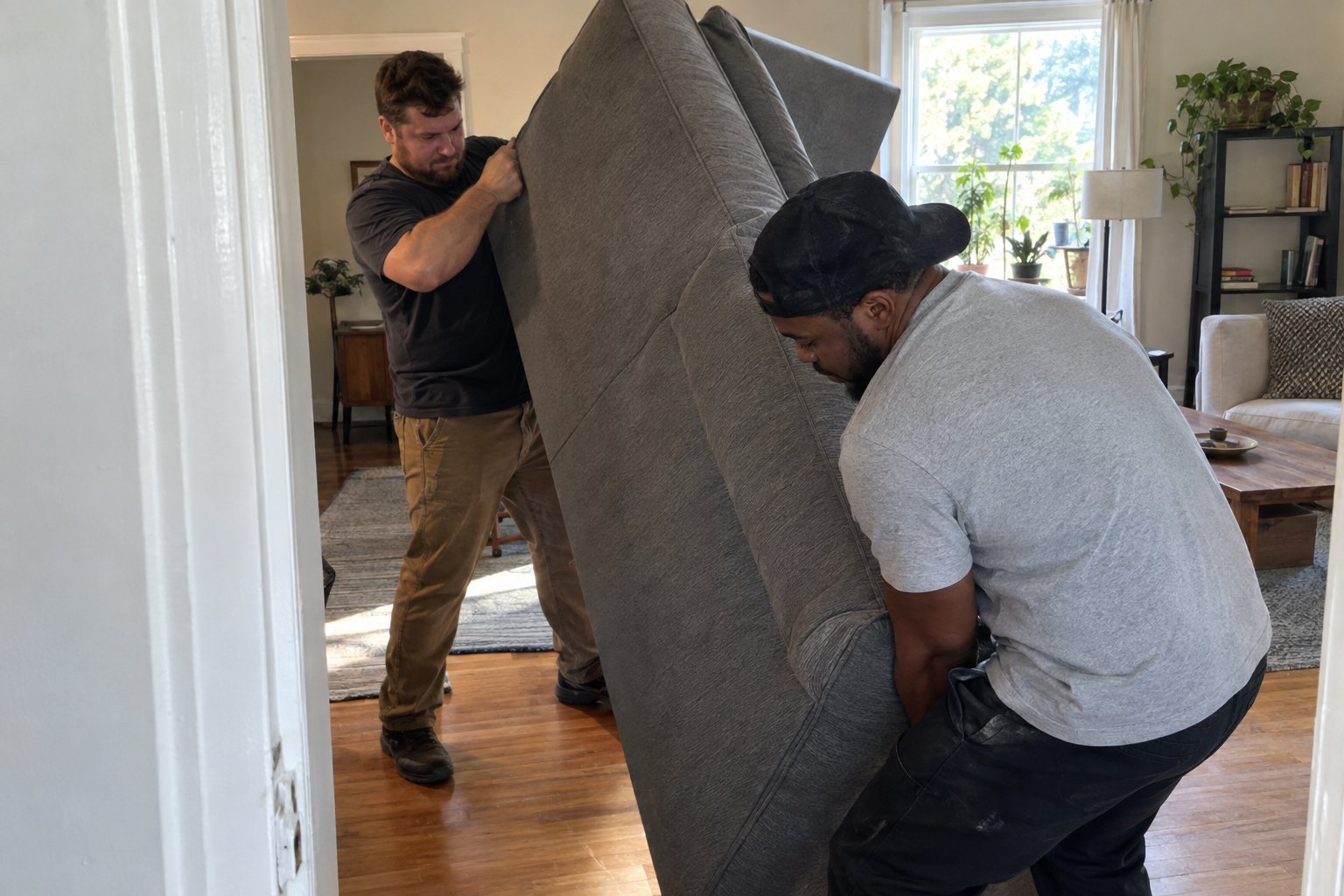
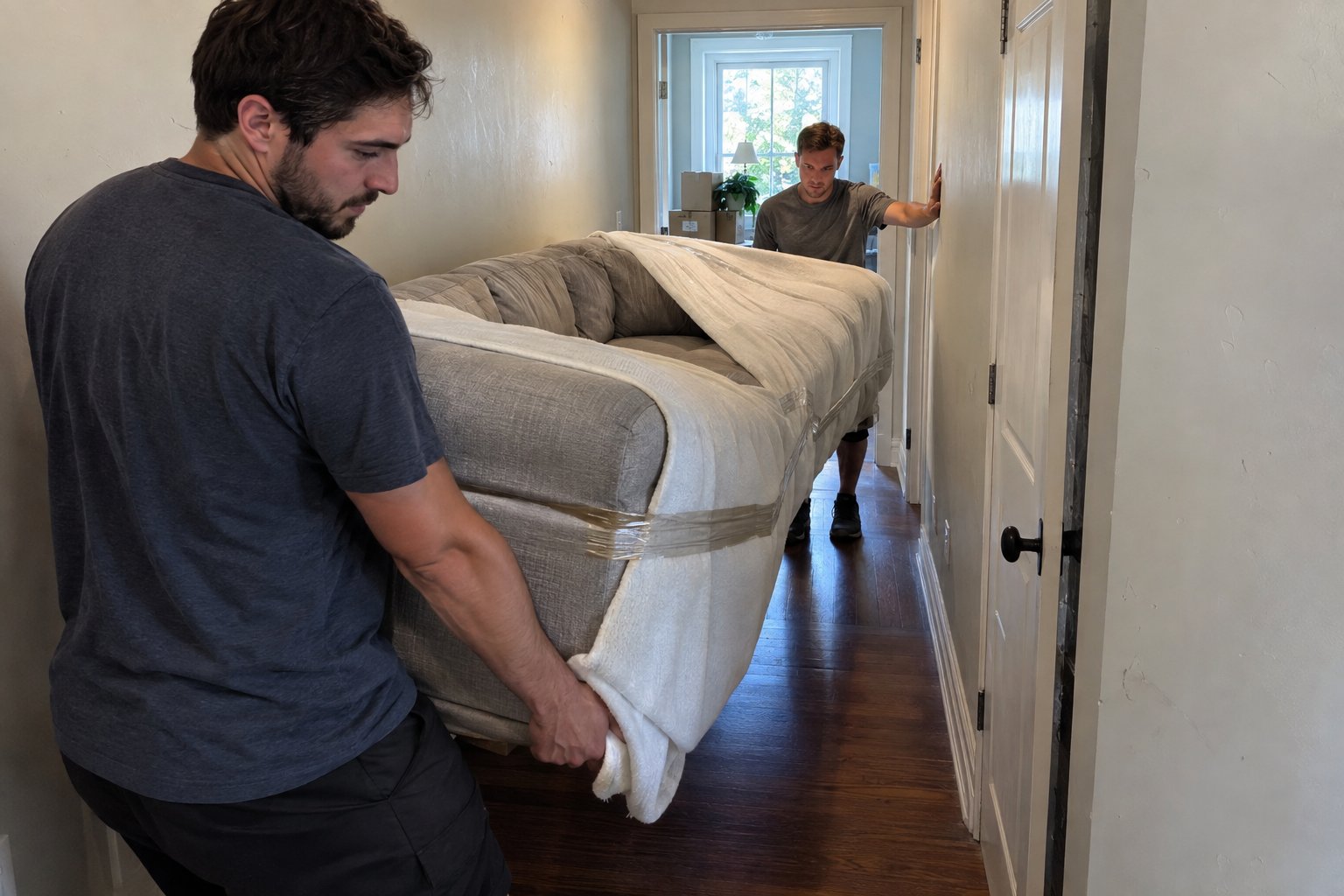
On flat ground, two people can carry a mattress on its side — one at each end — walking it through hallways and doorways without excessive strain. The person in front calls out obstacles and directs the pivots. The person in back follows and mirrors the movement.
Navigating Doorways
Stand the mattress on its long edge (unless it's a memory foam mattress that you're concerned about bending — in that case, try to keep it as flat as possible and angle the entry instead). Feed one end through the doorway at an angle, then walk the trailing end around the door frame. It helps to remove the door entirely so you're not also managing the door swing while carrying the mattress.
Navigating Stairs
Stairs with a mattress require clear communication between both people. The person on the lower end bears more weight and has less visibility — they should move deliberately and not rush. Keep the mattress on its side rather than flat to minimize how much of the stairwell width it occupies. At landings, communicate before pivoting and make sure both people are stable before repositioning their grip.
If a staircase has a very tight turn at the landing, you may need to angle the mattress through the turn in stages rather than as one continuous movement. Patience on stairs is faster than rushing — a dropped mattress on a staircase is a genuine injury risk.
Step 5: Load the Mattress Into the Truck Correctly
How you load the mattress into the truck matters as much as how you carry it to the truck. A few rules to follow:
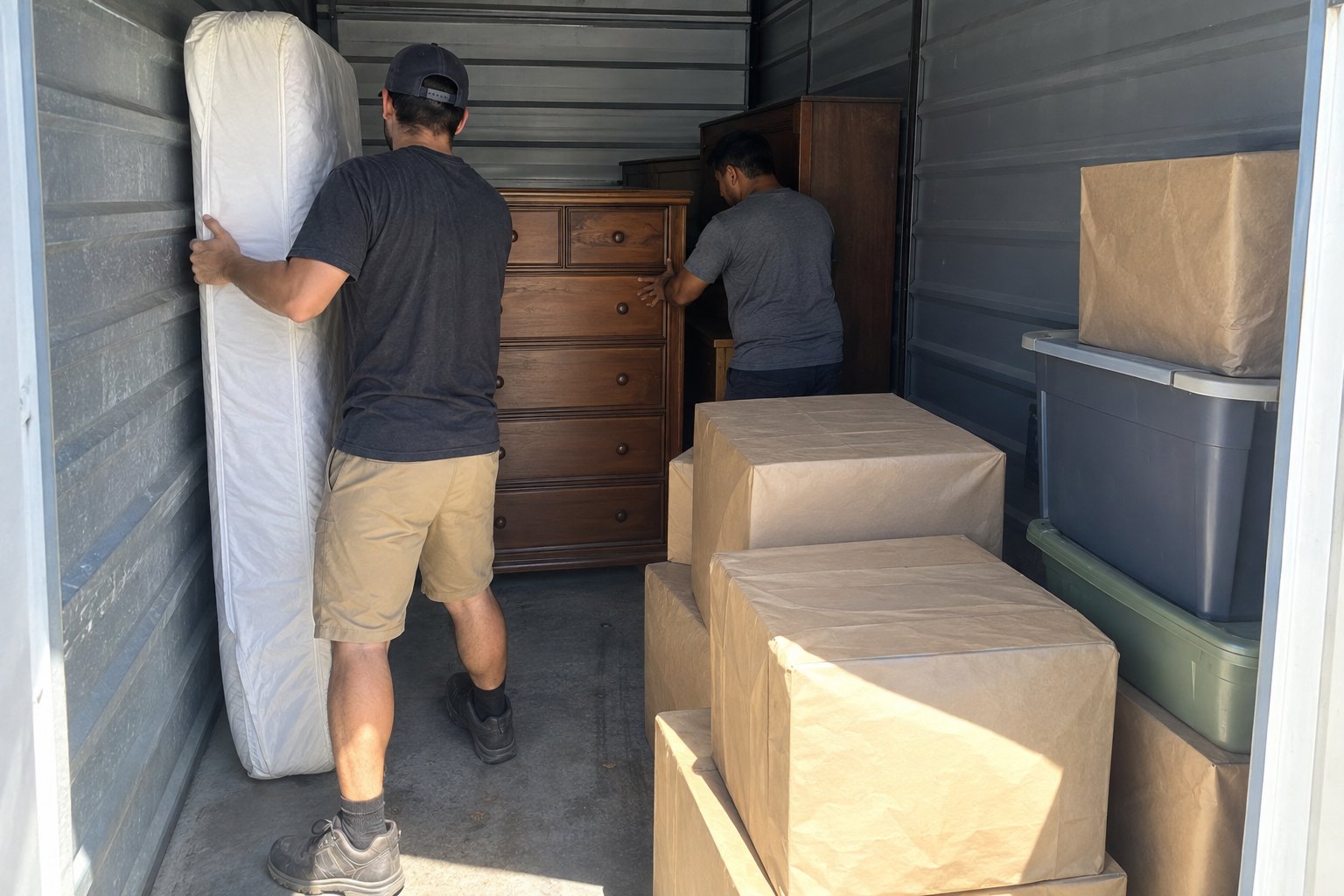
- Stand it upright along a side wall whenever possible, and secure it with a strap to prevent it from tipping during transit. Make sure it's leaning against a solid surface, not just balanced.
- Lay it flat on top of a stable base if you have room — this is the preferred option for memory foam and latex mattresses that shouldn't be stood on edge for extended periods.
- Never lay other heavy items on top of the mattress. Boxes stacked on a mattress will compress and potentially deform it. If items must go on the mattress, keep them very light.
- Keep the mattress bag on for the entire drive. Even inside a truck, road vibration and shifting loads can cause abrasion.
When to Call a Labor-Only Crew Instead
There are situations where the smartest move is simply to have a professional crew handle the mattress — especially if you're dealing with stairs, a tight floor plan, a heavy latex or oversized king mattress, or if you're already managing the rest of a full household move on your own. A labor-only moving crew doesn't require you to pay for a full-service truck — they bring the muscle and the technique, while you maintain control over the logistics. For a bulky, damage-sensitive item like a mattress, having experienced hands on it often costs less than replacing a mattress that got bent, torn, or soaked during a DIY move.
Professional movers carry mattresses through tight spaces every day. They know which angles work, how to communicate on stairs, and how to load a truck so that the mattress arrives in the same condition it left. If your move involves any combination of stairs, narrow hallways, and a large mattress, the math on hiring help tends to work in your favor.


FAQs
It depends on the mattress type. Innerspring and hybrid mattresses can tolerate a slight bend for brief moments, but should never be sharply folded. Memory foam and all-foam mattresses should never be folded under any circumstances — folding can crack or delaminate the foam layers, causing permanent structural damage. If your mattress cannot pass through a doorway without folding, tilt and angle it rather than bending it.
Yes, for most mattress types, standing it on its side along the wall of the truck is acceptable for a local move. Secure it with a strap so it doesn't tip or shift during transport. For memory foam mattresses, flat transport is preferable when possible, but standing on edge for the duration of a short move is generally fine as long as it's properly supported.
A mattress bag is strongly recommended. It protects the mattress from moisture, dirt, stains, and abrasion during loading and transit. Mattress bags are inexpensive — typically just a few dollars — and are available at most moving supply stores or home goods retailers. Moving a mattress without one risks permanent staining or fabric damage that can't be undone.
If you absolutely must move a mattress without help, limit the distance to flat ground with no stairs. Use a mattress bag to reduce friction, and slide rather than lift where possible. Furniture dollies or mattress carts can help on flat surfaces. However, for any move involving stairs or significant distance, attempting a mattress move solo is a genuine injury risk — calling a labor-only crew for even a two-hour job is a much safer option.
If you absolutely must move a mattress without help, limit the distance to flat ground with no stairs. Use a mattress bag to reduce friction, and slide rather than lift where possible. Furniture dollies or mattress carts can help on flat surfaces. However, for any move involving stairs or significant distance, attempting a mattress move solo is a genuine injury risk — calling a labor-only crew for even a two-hour job is a much safer option.
Still have questions?
How to move with us?
Hit the “Get a Quote” button and tell us what you need.
Choose the service, date, and time that work best for you.
Our friendly team shows up on time and gets everything done safely.
Sit back while we take care of the rest.
.avif)