
How to Move a Refrigerator Safely and Correctly

Learning how to move a refrigerator the right way is essential if you want to avoid injuries, damaged floors, or costly appliance repairs. Refrigerators are heavy, bulky, and sensitive to improper handling. Whether you are moving to a new home or repositioning your fridge within the same space, careful planning and correct technique make all the difference. This guide walks you through every step, from preparation to transport, while explaining when working with a professional moving company may be the smarter option.
Why Moving a Refrigerator Requires Special Care
A refrigerator is not just heavy, it also contains mechanical components that can be damaged if tipped or handled incorrectly. Compressors, coils, and internal fluids must remain protected during transport. Even short moves can lead to dents, scratched flooring, or internal damage if the appliance is rushed or improperly secured.
Many injuries during moves happen while handling large appliances. Slipping, pinched fingers, strained backs, and damaged doorways are common risks. Understanding proper moving techniques significantly reduces these dangers.
Tools and Supplies You Will Need
Before attempting to move a refrigerator, gather the correct tools. Appliance dollies are designed to support heavy loads and keep the refrigerator stable during movement. Moving straps help distribute weight evenly and reduce strain. Furniture sliders protect floors and make it easier to shift the refrigerator away from walls.
You will also need packing tape, stretch wrap, and moving blankets. These materials protect doors, handles, and surfaces from scratches or dents during the move. Wearing gloves with good grip is highly recommended for safety.
Step One: Preparing the Refrigerator for Moving
Preparation is one of the most important steps when learning how to move a refrigerator. Start by emptying all contents. Remove food, ice trays, and shelves. Detachable shelves and drawers should be wrapped separately to prevent cracking.
Unplug the refrigerator at least several hours before moving. This allows time for defrosting and prevents water leaks. Clean and dry the interior thoroughly to avoid odors and moisture buildup during transport.
Securing Doors and Cords Properly
Once empty and dry, secure the refrigerator doors using tape or stretch wrap. Avoid placing tape directly on finished surfaces to prevent residue. Wrap the power cord neatly and secure it to the back of the unit so it does not drag or create a tripping hazard.
Protect the exterior with moving blankets, especially if navigating tight hallways or staircases. This extra step helps prevent dents and scratches.
Step Two: Measuring Pathways and Doorways
Measure the refrigerator and compare it to doorways, hallways, elevators, and stairwells. Remove doors if necessary to create more clearance. Planning the path in advance avoids sudden obstacles that could cause damage or injury.
Clear the pathway of rugs, cords, and furniture. A clean and open route makes the move smoother and safer.
Step Three: Lifting and Loading the Refrigerator
Always lift with your legs and not your back. Tilt the refrigerator slightly and slide the dolly underneath. Secure the unit tightly to the dolly using straps. Keep the refrigerator upright as much as possible during transport.
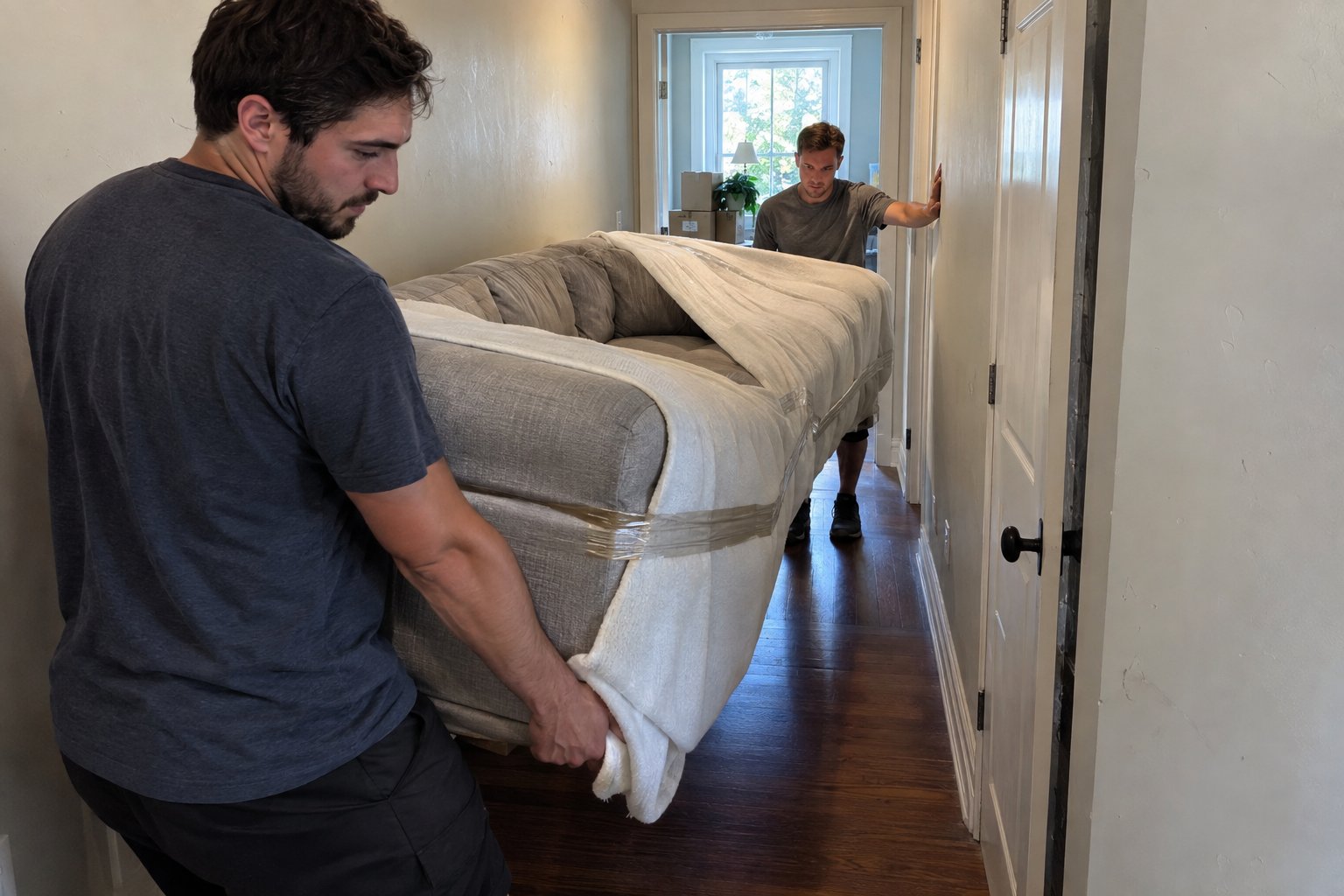
When navigating stairs, one person should guide from below while another stabilizes from above. Move slowly and communicate clearly with your helper. If this feels unsafe or difficult, this is often when local moving services become a safer and more efficient solution.
Can You Lay a Refrigerator on Its Side?
One of the most common questions about how to move a refrigerator is whether it can be laid on its side. In general, keeping it upright is best. Laying it down can cause oil from the compressor to flow into cooling lines, leading to performance issues.
If laying it down is unavoidable, transport it carefully and allow it to stand upright for several hours before plugging it in. This allows fluids to settle back into place.
Transporting a Refrigerator in a Truck
Position the refrigerator against the side wall of the truck. Use straps to secure it firmly so it does not shift during transit. Avoid placing heavy items on top of it. Sudden movement can damage internal components even if the exterior appears fine.
Temperature changes during transport are usually not an issue, but protecting the unit from moisture and impact is critical.
Step Four: Unloading and Setting Up the Refrigerator
Once at the destination, carefully unload the refrigerator using the same controlled techniques. Position it in its final spot before removing protective materials. Allow the refrigerator to stand upright for several hours before plugging it in, especially if it was tilted during the move.
Reconnect shelves and drawers only after the refrigerator has stabilized. Plug it in and check that it is cooling properly before restocking food.
Common Mistakes to Avoid When Moving a Refrigerator
Rushing the process is a major mistake. Skipping preparation steps often leads to damage or injury. Using improper equipment, such as makeshift dollies, increases risk. Attempting to move a refrigerator alone is another common error that often results in accidents.
Ignoring manufacturer recommendations can also shorten the appliance lifespan. Always prioritize safety and proper handling over speed.
When to Hire Professional Movers
Moving a refrigerator may seem manageable, but certain situations call for professional help. Tight staircases, multi level homes, long carries, or heavy commercial units significantly increase risk. Professional movers have the equipment and experience to handle these challenges safely.
Hiring professionals also reduces physical strain and protects your property. It can be especially valuable during full household moves when multiple heavy items are involved.
How Professionals Handle Refrigerator Moves
Professional movers use specialized dollies, straps, and padding designed for appliances. They plan routes carefully and work as a coordinated team. This minimizes risk and ensures the refrigerator arrives in working condition.
Experienced movers also understand how to handle refrigerators of different sizes and designs, including side by side and French door models.
Final Thoughts on How to Move a Refrigerator
Knowing how to move a refrigerator safely can prevent injuries, damage, and unnecessary stress. Preparation, proper tools, and careful technique are essential. While small moves may be handled with help, many situations benefit from professional support.
If your refrigerator move is part of a relocation or requires truck transport, Lift and Load offers reliable long-distance moving services to ensure your appliance arrives safely and securely. You can reach the team at piotr@liftandloadmoving.com or call 224-404-0069 for clear guidance and no-pressure support.



FAQs
Moving a refrigerator alone is risky due to its weight and size. Without assistance and proper equipment, you increase the chance of injury or damage. It is safer to have at least one helper and use an appliance dolly to control movement.
After moving a refrigerator, especially if it was tilted, you should wait several hours before plugging it in. This allows internal fluids to settle properly, reducing the risk of compressor damage and helping ensure normal cooling performance.
Keeping a refrigerator upright is always best. If it must be laid on its side, transport it carefully and stand it upright for several hours before use. This helps prevent oil from entering cooling lines and causing long term issues.
Yes, an appliance dolly, moving straps, and protective blankets are strongly recommended. These tools help stabilize the refrigerator, reduce strain on your body, and protect floors and walls from damage during the move.
Yes, an appliance dolly, moving straps, and protective blankets are strongly recommended. These tools help stabilize the refrigerator, reduce strain on your body, and protect floors and walls from damage during the move.
Still have questions?
How to move with us?
Hit the “Get a Quote” button and tell us what you need.
Choose the service, date, and time that work best for you.
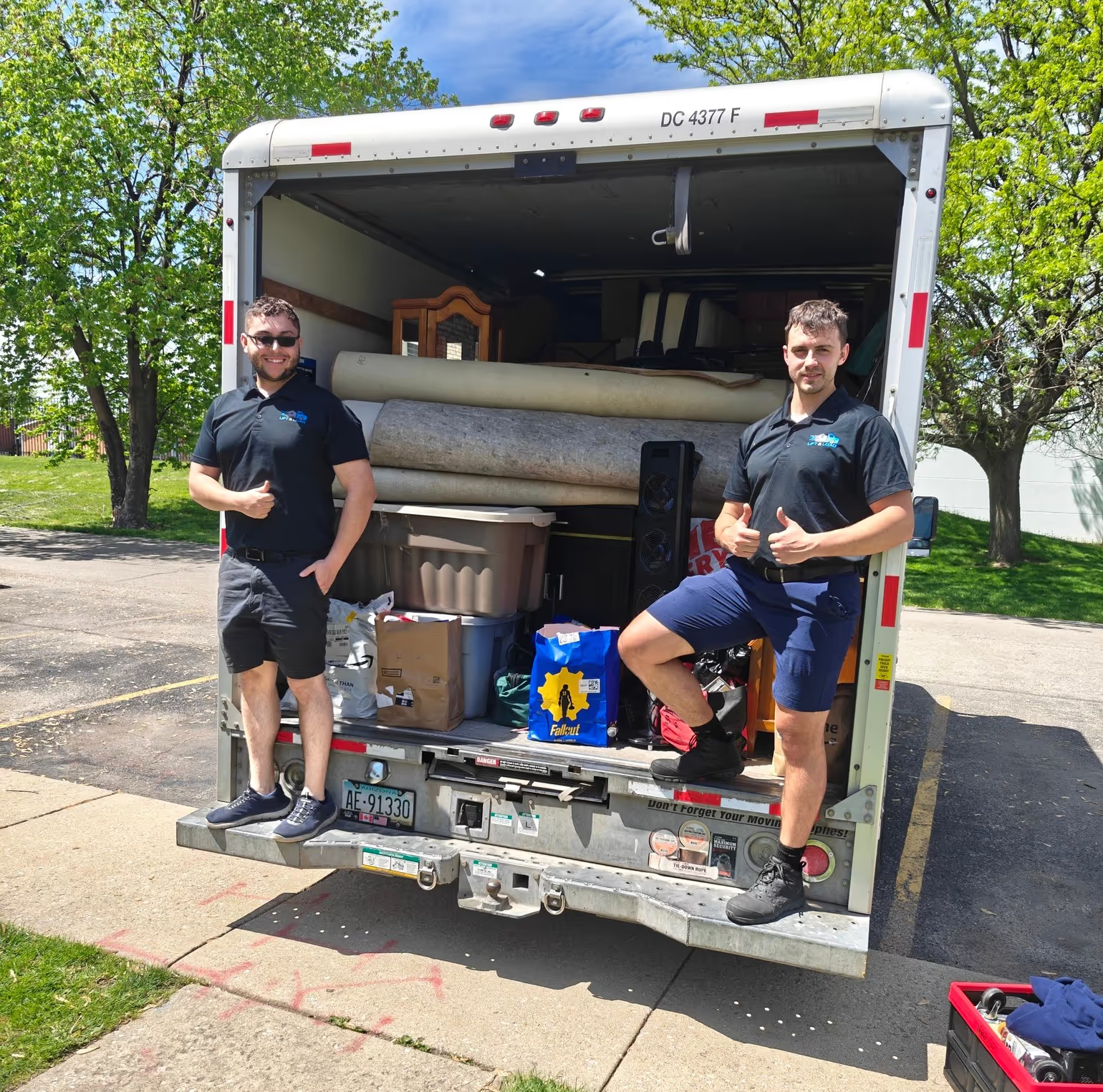
Our friendly team shows up on time and gets everything done safely.
Sit back while we take care of the rest.
.avif)