Step by Step Instructions on How to Move a Peloton Bike

Relocating high end fitness equipment requires a delicate touch and a specific technical strategy. Many fitness enthusiasts are concerned about how to move a Peloton bike because these machines are both heavy and electronically sensitive. Whether you are handling DIY transport or looking for professional assistance with local moves, a planned approach is necessary for a damage free relocation.
The process involves more than just lifting; you must protect the touchscreen, the flywheel, and the delicate sensors. Whether your bike is a standard model or a newer version with a larger footprint of 480 square inches at the base, the fundamentals of how to move a Peloton bike remain constant. Preparation and the right tools are your best friends during this transition.
Preparing the Digital Components
The most vulnerable part of any connected fitness machine is the high definition touchscreen. Before you even consider the frame, you must safely remove the monitor to prevent it from cracking or being jolted during the drive. Disconnect the power cables and the audio jack carefully to avoid damaging the internal ports or the sensitive wiring.
Once the screen is detached, wrap it in several layers of bubble wrap followed by a soft moving blanket. If you are unsure about handling these fragile electronics, utilizing professional packing services can ensure your high-value components are crated securely. Store the screen in a dedicated box where it will not be crushed by heavier items. Label this box clearly so that it is never stacked at the bottom of the truck or left in a high traffic area.
Securing the Flywheel and Moving Parts
A critical step in how to move a Peloton bike is ensuring the flywheel remains stationary. Use the resistance knob to tighten the magnets against the wheel until it no longer spins freely. This prevents the heavy wheel from rotating and causing internal mechanical strain while the bike is being tilted or carried through narrow hallways.
You should also lower the seat and the handlebars to their lowest possible positions. Tighten all adjustment levers firmly to ensure nothing slides or shifts unexpectedly. By making the bike as compact as possible, you reduce the risk of snagging the frame on doorframes or walls while you navigate the path to the moving vehicle.
Essential Tools and Equipment
- Heavy Duty Moving Blankets: These are necessary to wrap the frame and prevent scratches or dents to the powder coated finish.
- Furniture Dollies: A sturdy dolly makes it much easier to transport the heavy steel frame over flat surfaces and driveways.
- Ratchet Straps: You must secure the bike to the wall of the moving truck to prevent it from tipping over during sudden stops.
- Metric Allen Wrenches: These are required for removing the pedals or the screen arm if the bike needs to fit through very tight spaces.
Navigating Stairs and Doorways
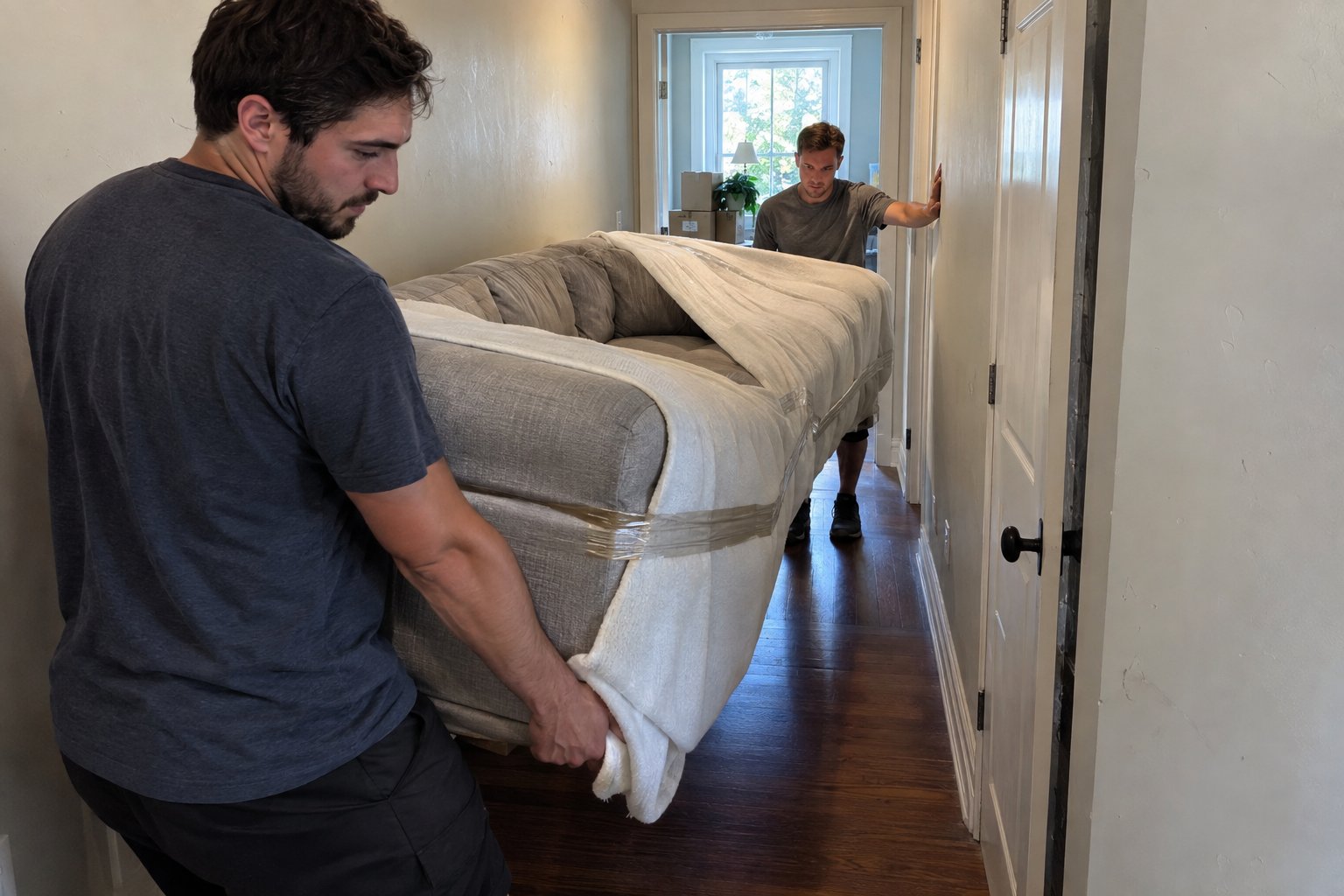
When you learn how to move a Peloton bike, you quickly realize that the weight distribution is uneven. Most of the weight is concentrated at the front where the flywheel is located. When going down stairs, always have the strongest person at the bottom to support the bulk of the weight while the person at the top guides the handlebars.
Take frequent breaks if you are moving the bike over long distances manually. Avoid gripping the bike by the plastic shrouds or the delicate crank arms, as these are not designed to support the full weight of the machine. Instead, use the solid steel stabilization bars at the front and rear to maintain a secure and safe grip.
Loading the Bike into the Moving Truck
The floor of a moving truck can be a bumpy place, so positioning is vital. Place the bike against a flat wall and use moving blankets to create a thick buffer between the metal and the truck side. Use high quality straps to lock the bike in place, ensuring it cannot slide forward or backward during transit.
Never lay the bike on its side, as this can misalign the drive belt or damage the delicate internal magnets. Keeping the bike upright ensures that the mechanical components stay in their factory calibrated positions. If space is tight, make sure no heavy furniture is placed near the bike that could fall and strike the frame.
Reassembling and Calibrating Your Bike
Once you arrive at your new residence, the process of how to move a Peloton bike concludes with careful reassembly. Reattach the touchscreen first, making sure all cables are firmly seated and organized. Plug the bike into a surge protector to protect the expensive electronics from any potential power spikes in your new home’s electrical system.
You may need to recalibrate the resistance if the bike feels different after the move. Check the leveling feet on the bottom of the stabilizers to ensure the bike does not wobble during high intensity rides. A stable base is essential for both your safety and the longevity of the machine’s internal bearing systems.
Protecting Your Flooring at the New House
Before you place the bike in its final spot, lay down a thick rubber mat. This protects your new hardwood or carpet from sweat and the pressure of the heavy metal frame. It also helps dampen the vibration and noise, which is especially important if your new workout space is located on a second floor.
Take a moment to wipe down the entire frame with a microfiber cloth to remove any dust or debris from the moving blankets. Check the pedals to make sure they are still tight, as vibrations during the move can sometimes loosen threaded components. A quick inspection ensures that your first ride in the new home is a safe one.
Professional Help vs. DIY Moving
Deciding between a DIY approach and hiring experts often comes down to your comfort with heavy lifting. If you are moving solo or have a history of back issues, hiring professionals who know how to move a Peloton bike is a wise investment. They have the ramps, dollies, and experience to handle the weight without risk.
Professional movers also carry insurance that can cover the cost of the machine if an accident occurs. If you do choose the DIY route, ensure you have at least one or two capable helpers. Trying to manage the weight alone is the most common cause of both personal injury and expensive damage to the bike’s frame.
Summary of Safety Checkpoints
- Remove the monitor and wrap it separately in a protected box.
- Fully tighten the resistance knob to lock the flywheel.
- Lower all adjustable components to the lowest setting.
- Use a dolly for flat surfaces to save your back and floors.
- Keep the bike upright and strapped securely inside the truck.
Final Thoughts on Fitness Equipment Care
Moving is the perfect time to perform a little bit of maintenance on your equipment. Check for any loose bolts or worn parts as you reassemble the bike. By following these steps on how to move a Peloton bike, you ensure that your fitness routine can resume without a hitch, whether you are relocating across town or embarking on a long-distance move. Your health and your equipment deserve the extra effort.
Secure Your High End Fitness Gear Today
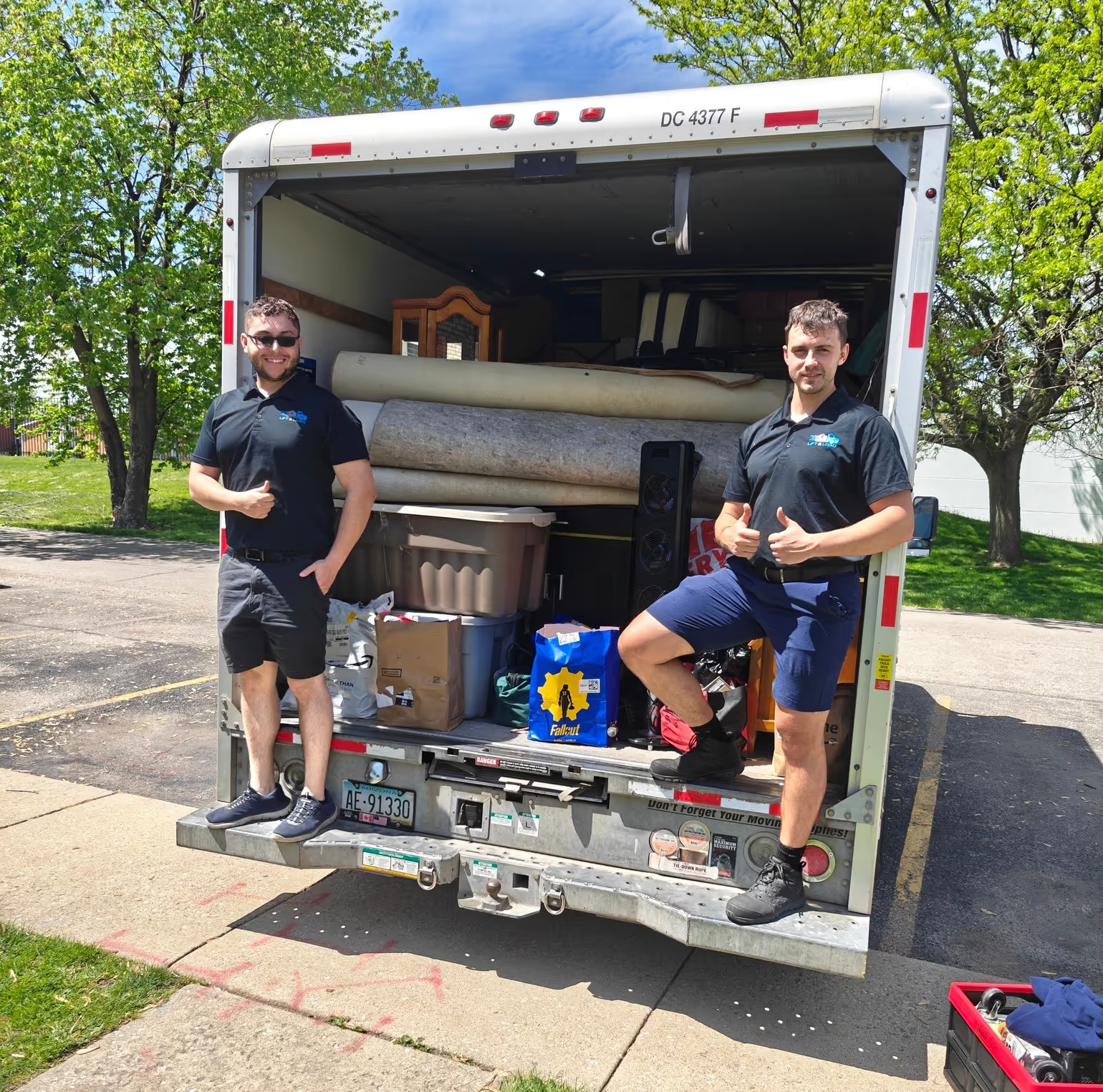
Lift and Load has established a legacy of trust by moving local families with care and precision for years. We provide comprehensive residential moving, professional packing, and heavy lifting services for every client. Our team has a specific, impressive capability for handling delicate exercise equipment safely. Pedal toward your new destination with total ease.


FAQs
The most effective way is to remove the screen entirely before moving the frame. Disconnect all cables and wrap the monitor in bubble wrap and a thick moving blanket. Store it in a sturdy box labeled fragile. This prevents the sensitive glass from cracking due to vibrations or accidental impacts during the move.
While not always mandatory removing the pedals can save space and prevent them from scratching other items or your walls. If you decide to remove them remember that the left pedal is reverse threaded. Keeping them on is okay if you wrap them in thick padding to ensure they do not catch on doorframes or hallways.
No you should always keep the bike in an upright position. Laying it on its side can put unnecessary pressure on the plastic shrouds and can potentially misalign the internal belt drive system. Keeping it vertical and secured with straps is the only way to ensure the mechanical components remain safe and functional.
Yes you must turn the resistance knob all the way to the right until the flywheel is locked in place. This prevents the heavy wheel from spinning while the bike is in motion which protects the internal magnets and bearings. It also makes the bike safer to handle because there is no moving mass to shift your balance.
Yes you must turn the resistance knob all the way to the right until the flywheel is locked in place. This prevents the heavy wheel from spinning while the bike is in motion which protects the internal magnets and bearings. It also makes the bike safer to handle because there is no moving mass to shift your balance.
Still have questions?
How to move with us?
Hit the “Get a Quote” button and tell us what you need.
Choose the service, date, and time that work best for you.
Our friendly team shows up on time and gets everything done safely.
Sit back while we take care of the rest.
.avif)
Address: Des Plaines, IL
Phone: (224) 404-0069