How to Wrap a Couch for Moving the Right Way

Knowing how to wrap a couch for moving is essential if you want to protect one of the largest and most frequently used pieces of furniture in your home. Couches are bulky, heavy, and often made of fabric or leather that can easily tear, stain, or get scratched during a move. Improper wrapping can lead to dirt buildup, ripped upholstery, or damaged frames. This guide explains how to wrap a couch properly, what materials you need, and when professional help may be the better option—especially if you are working with a trusted professional moving company.
Why Wrapping a Couch Properly Matters
A couch is exposed to many risks during a move. Door frames, stair railings, truck walls, and other furniture can all cause damage if the couch is not protected. Fabric couches can absorb dirt and moisture, while leather couches can scratch or crack. Wrapping acts as a barrier that keeps your couch clean, intact, and ready to use after the move.
Proper wrapping also makes handling safer. Movers can grip the couch better, reducing the risk of dropping it or bumping into walls. Spending time on wrapping saves money by avoiding repairs or replacement.
Materials Needed to Wrap a Couch for Moving
Before starting, gather the right supplies. Stretch wrap is one of the most effective materials for wrapping couches. It clings tightly without adhesive and keeps everything in place. Moving blankets or furniture pads provide cushioning and protect against impact. Packing tape is useful for securing blankets but should never touch upholstery directly.
You may also need plastic covers for added moisture protection, especially during rainy conditions. Scissors or a utility cutter will help trim excess wrap cleanly.
Step One: Prepare the Couch Before Wrapping
Preparation is a critical first step. Remove all cushions, pillows, and detachable covers. Pack cushions separately using plastic wrap or boxes. This reduces bulk and allows you to wrap the couch frame more securely.
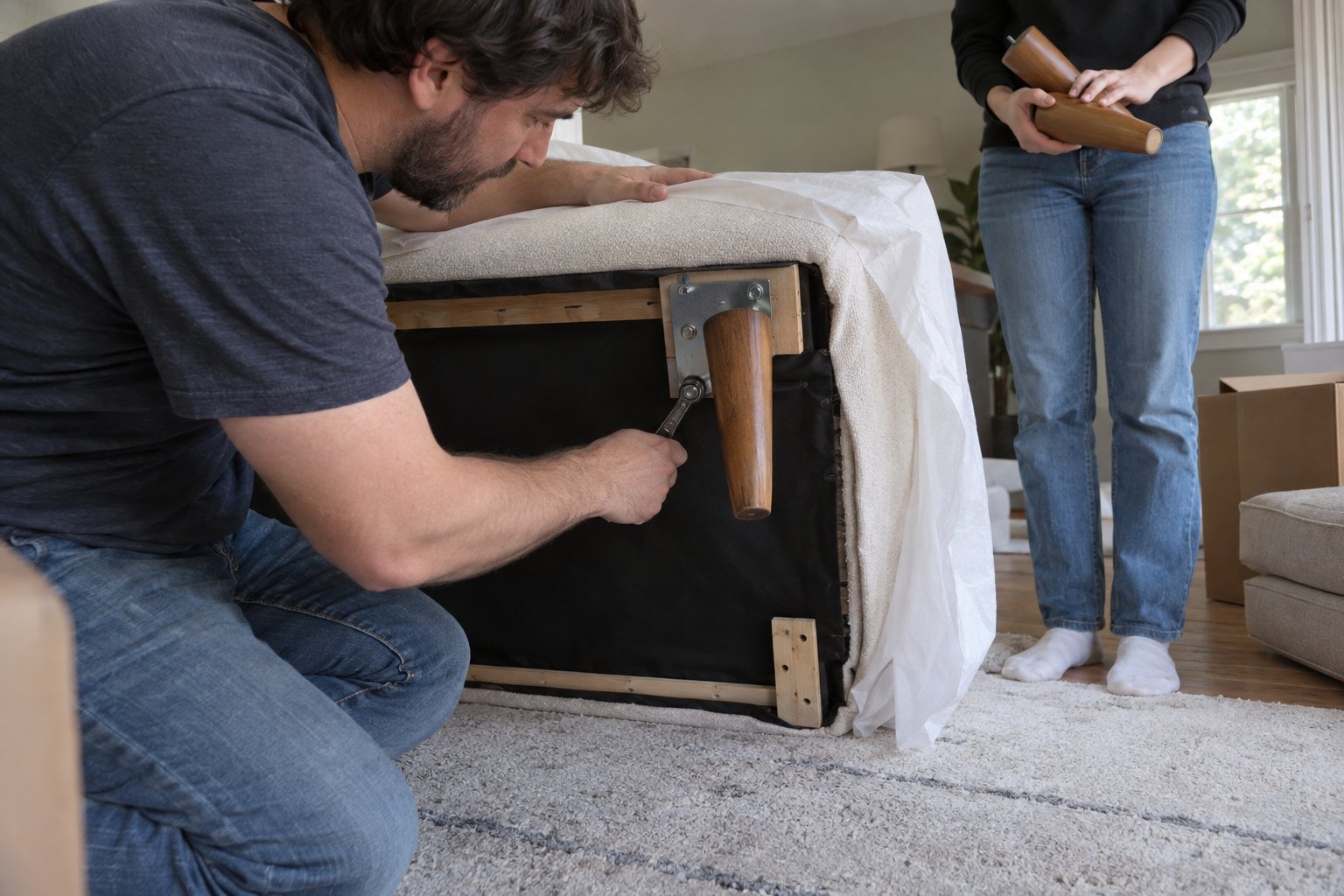
Vacuum the couch to remove dust and debris. Cleaning before wrapping prevents dirt from being trapped against the fabric during transport. If the couch has removable legs, unscrew them and pack them in a labeled bag.
Step Two: Protect the Couch With Moving Blankets
Place moving blankets over the couch to protect it from scratches and dents. Cover the arms, back, and base completely. Pay special attention to corners and edges, as these areas are most likely to get damaged.
If the couch is leather or delicate fabric, blankets are especially important. They create a soft barrier between the couch and the stretch wrap, preventing pressure marks—an approach commonly used during professional local moving services.
Step Three: Use Stretch Wrap to Secure Everything
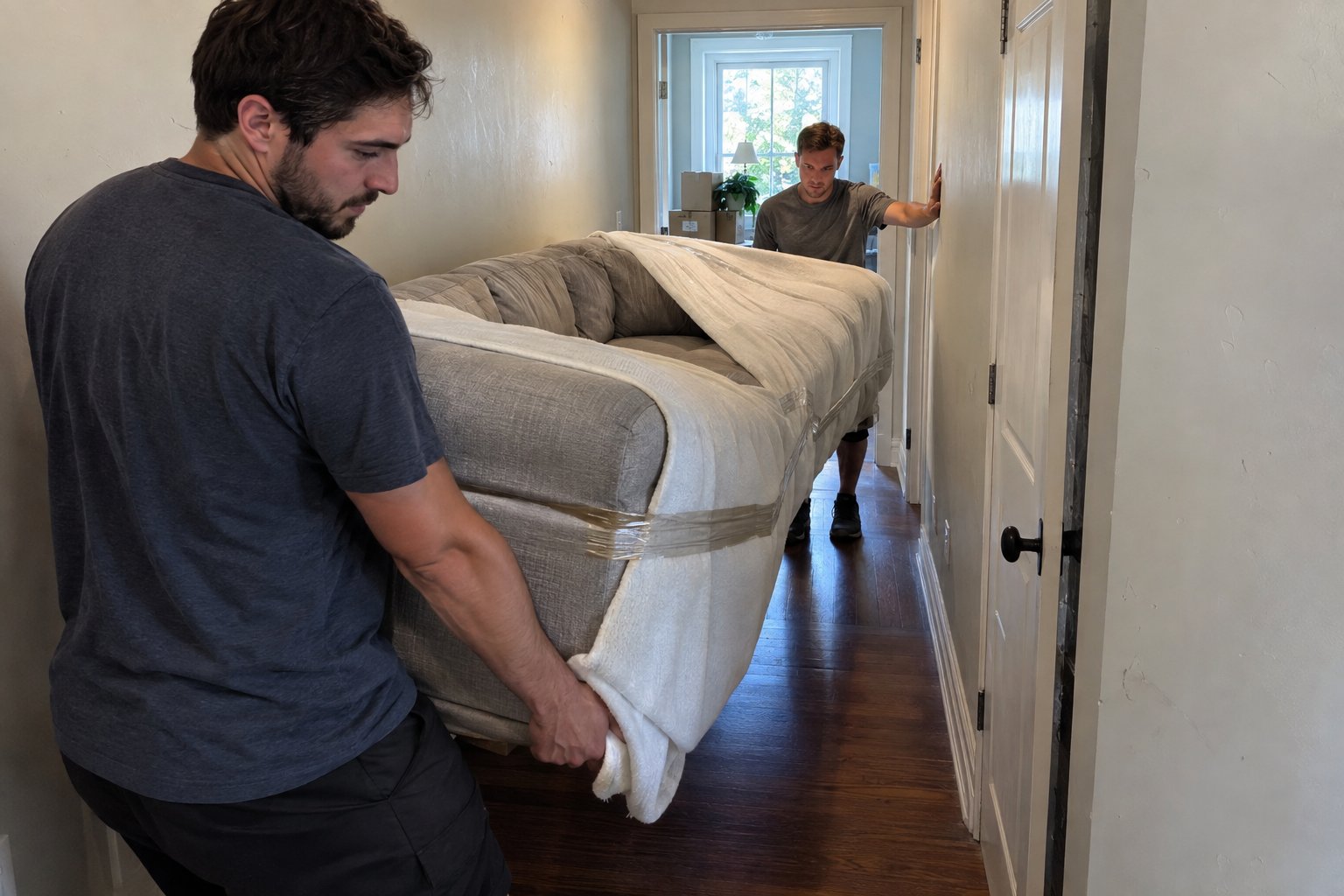
Once blankets are in place, begin wrapping the couch with stretch wrap. Start at the bottom and work your way up, pulling the wrap snugly but not too tight. The goal is to hold the blankets securely without compressing the couch cushions or frame.
Wrap around the couch multiple times, overlapping each layer. Ensure that arms, back, and base are fully covered. Stretch wrap should hold the blankets firmly in place and keep loose parts from shifting.
How to Wrap a Fabric Couch for Moving
Fabric couches are prone to absorbing dirt and moisture. After vacuuming, use a clean plastic cover or stretch wrap as the first layer if the couch will be exposed to outdoor conditions. Then add moving blankets for cushioning, followed by another layer of stretch wrap.
Avoid using tape directly on fabric, as it can leave residue or pull fibers. Stretch wrap is safer and easier to remove.
How to Wrap a Leather Couch for Moving
Leather requires extra care. Leather surfaces can scratch easily and may crack under pressure. Always use moving blankets as the primary protective layer. Wrap the couch loosely with blankets first, then secure them with stretch wrap.
Never allow plastic wrap to sit directly against leather for extended periods, especially in hot conditions. This can trap moisture and damage the leather surface.
Wrapping Sectional Couches for Moving
Sectional couches should be separated into individual pieces if possible. Wrap each section individually using the same process. Label sections to make reassembly easier at the new location.
Smaller sections are easier to handle and less likely to be damaged. Wrapping them separately also allows for better protection of corners and connectors.
How to Protect Couch Legs and Frames
Couch legs and wooden frames are vulnerable during moves. If legs are removable, take them off and wrap them separately. If not, pad them with extra packing paper or foam before applying blankets.
Frames should be fully covered with padding to prevent dents or cracks when navigating doorways or stairs.
Common Mistakes to Avoid When Wrapping a Couch
One common mistake is skipping blankets and using only plastic wrap. Plastic alone does not provide enough cushioning and can cause pressure damage. Another mistake is wrapping too tightly, which can distort cushions or frames.
Leaving cushions inside the couch during wrapping can also cause uneven pressure and shifting. Always remove loose parts first.
How to Move the Wrapped Couch Safely
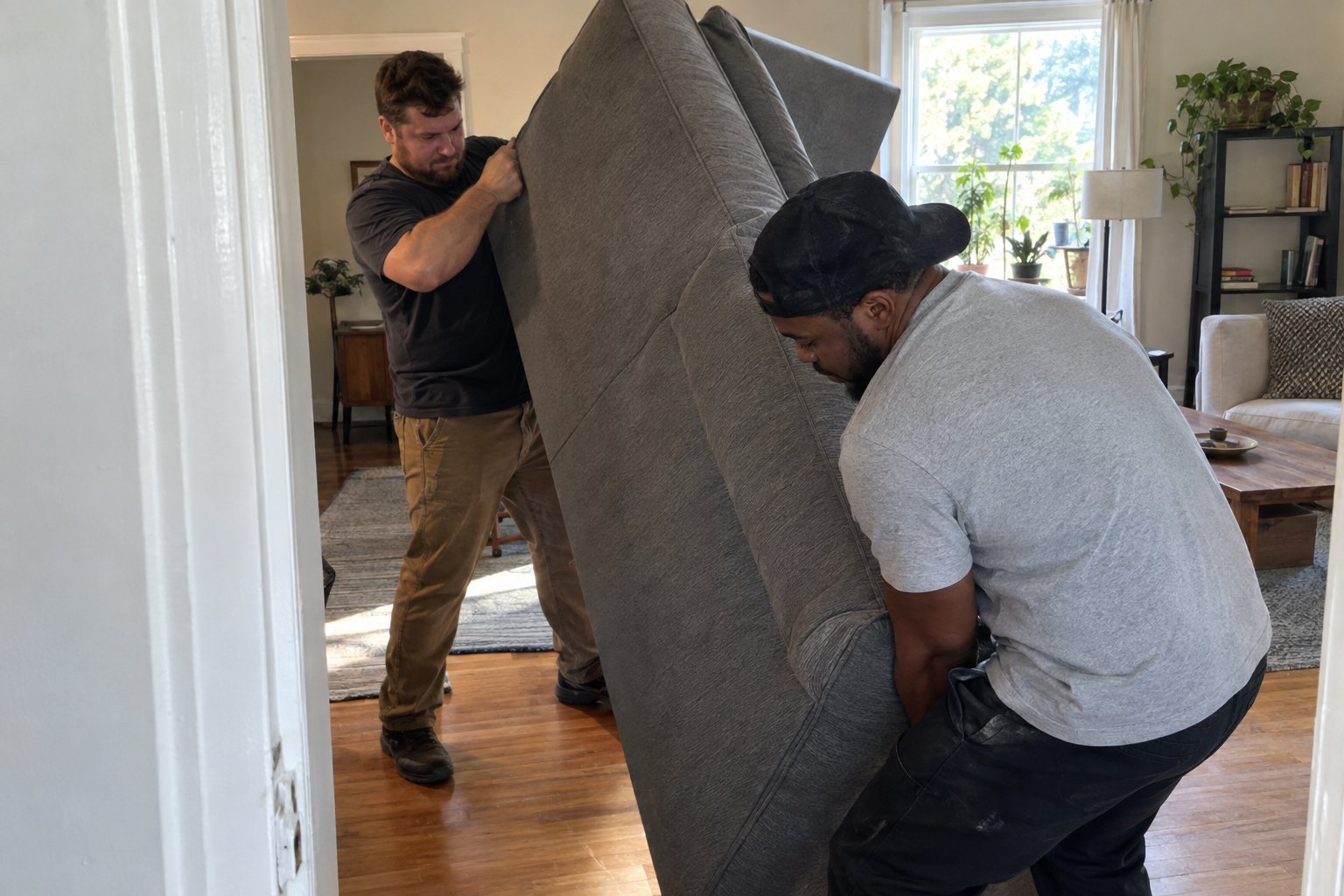
Once wrapped, the couch should be lifted and carried carefully. Always lift from the base, not the arms or back. Use proper lifting techniques and communicate clearly with helpers.
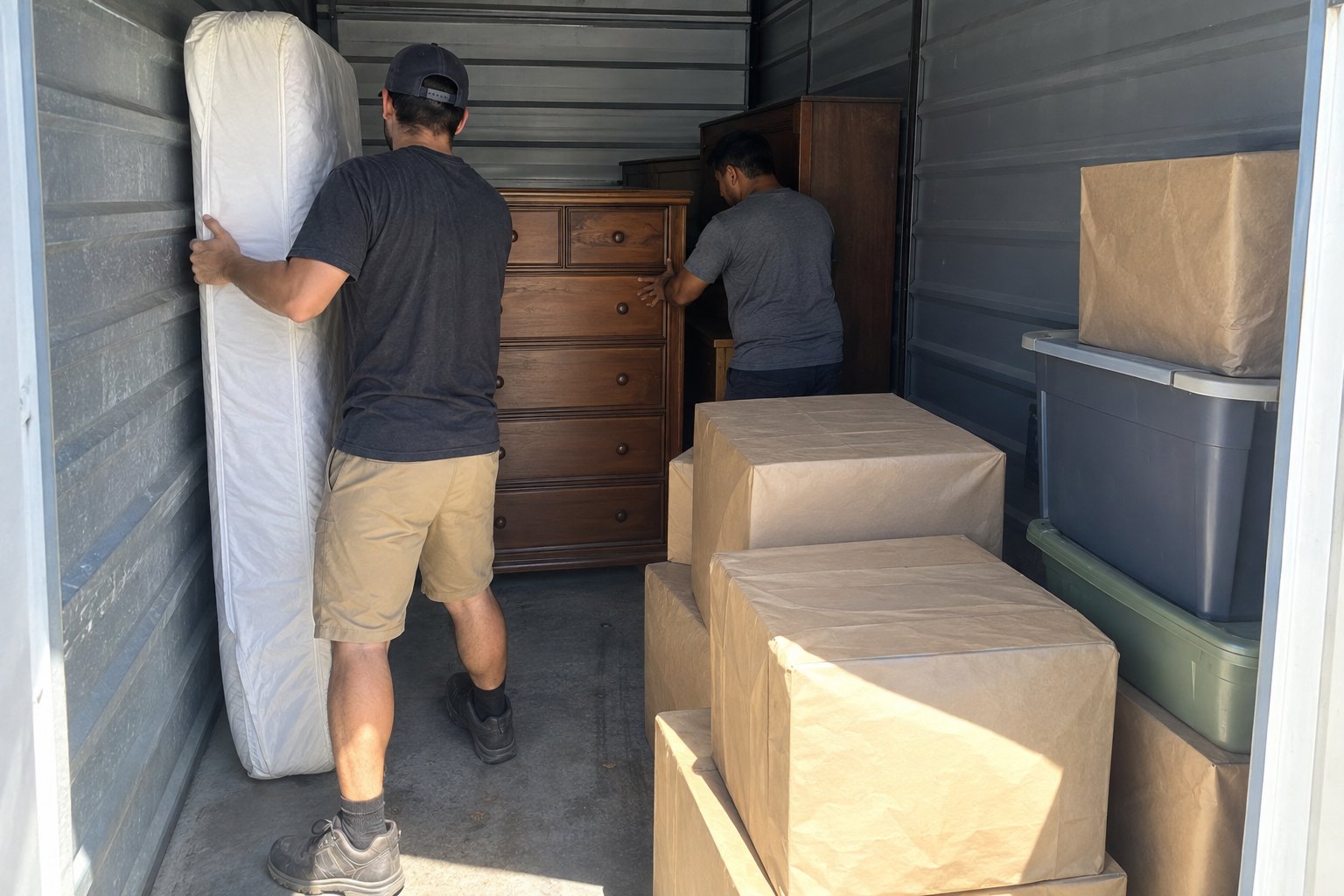
When loading into a truck, place the couch upright against a wall if space allows. Secure it with straps so it does not shift during transit.
When to Use Plastic Couch Covers Instead
Plastic couch covers can be useful for short moves or storage. They protect against dirt and moisture but offer minimal impact protection. For long distance moves or full household relocations, blankets combined with stretch wrap provide better overall protection.
Plastic covers work best as an additional layer rather than a replacement for padding.
When to Consider Professional Wrapping Services
Wrapping a couch can be time consuming, especially for large or expensive pieces. Professional movers have the materials and experience to wrap furniture quickly and correctly. This reduces risk and saves time on moving day.
Professional wrapping is particularly helpful for leather couches, antiques, or sectionals that require careful handling.
Final Thoughts on How to Wrap a Couch for Moving
Understanding how to wrap a couch for moving helps protect one of your most valuable and used pieces of furniture. Proper preparation, quality materials, and careful technique are key to preventing damage. Whether you wrap the couch yourself or choose professional help, taking the time to do it right makes a noticeable difference.
For full relocations that require expert handling, trusted long distance moving services ensure your furniture arrives safely and securely. If you want assistance with wrapping and moving furniture, Lift and Load is available to help. You can contact the team at piotr@liftandloadmoving.com or call 224-404-0069 for clear guidance and support without pressure.

FAQs
The best way is to remove cushions, cover the couch with moving blankets, and secure everything using stretch wrap. This method protects against dirt, scratches, and impact while keeping the couch stable during lifting and transport.
Using only plastic wrap is not recommended. Plastic does not provide cushioning and may cause pressure damage. It is best used to secure blankets or as a moisture barrier, not as the sole protective layer for a couch.
Yes, cushions should always be removed and wrapped separately. This reduces bulk, prevents uneven pressure on the frame, and allows better protection of both the couch structure and the cushions during the move.
You should consider professional help if the couch is large, valuable, or difficult to move. Movers have proper materials and experience, reducing the risk of damage and making the process faster and safer.
You should consider professional help if the couch is large, valuable, or difficult to move. Movers have proper materials and experience, reducing the risk of damage and making the process faster and safer.
Still have questions?
How to move with us?
Hit the “Get a Quote” button and tell us what you need.
Choose the service, date, and time that work best for you.
Our friendly team shows up on time and gets everything done safely.
Sit back while we take care of the rest.
.avif)