
Should You Tip Moving Labor? A Practical Guide to Tipping Movers

Yes, tipping movers is standard practice in the United States, even when you have booked a labor-only crew instead of a full-service move. Most customers tip somewhere between $20 and $60 per mover for a half-day job, adjusted for how heavy, long, or difficult the work turned out to be. There is no legal requirement to tip, but crews work on commission-adjacent pay structures in many companies, and a tip is the clearest way to say the work was done well.
If you have never hired moving help before, the question usually comes up the morning of the move, right when you are least prepared to think about it. Below is a straightforward breakdown of how much to tip, when to hand it over, and what to do when cash is not an option.
Do You Have to Tip a Moving Labor Crew?
No, tipping is not mandatory and a crew will never ask for it directly. It is a gesture of appreciation for hard physical work, not a fee tacked onto your invoice. That said, tipping is so widely expected in the moving industry that skipping it without a reason (like genuinely poor service) can feel out of step with local norms.
Labor-only crews are paid hourly by the staffing or moving company, not by the piece or by commission on your bill. A tip goes straight to the movers who lifted your furniture, not to the office that booked the job. That distinction matters if you are deciding whether the crew "needs" it: unlike a server's base wage, movers' hourly pay is usually a living wage on its own, so a tip is a bonus for good work rather than a wage subsidy.
How Much Should You Tip Movers?
A reasonable range is $20 to $30 per mover for a half-day (four hours or less) and $40 to $60 per mover for a full day, scaled up if the job involved stairs, a piano, or extreme heat. Some people prefer a percentage instead, typically 10 to 20 percent of the total labor bill split evenly among the crew.
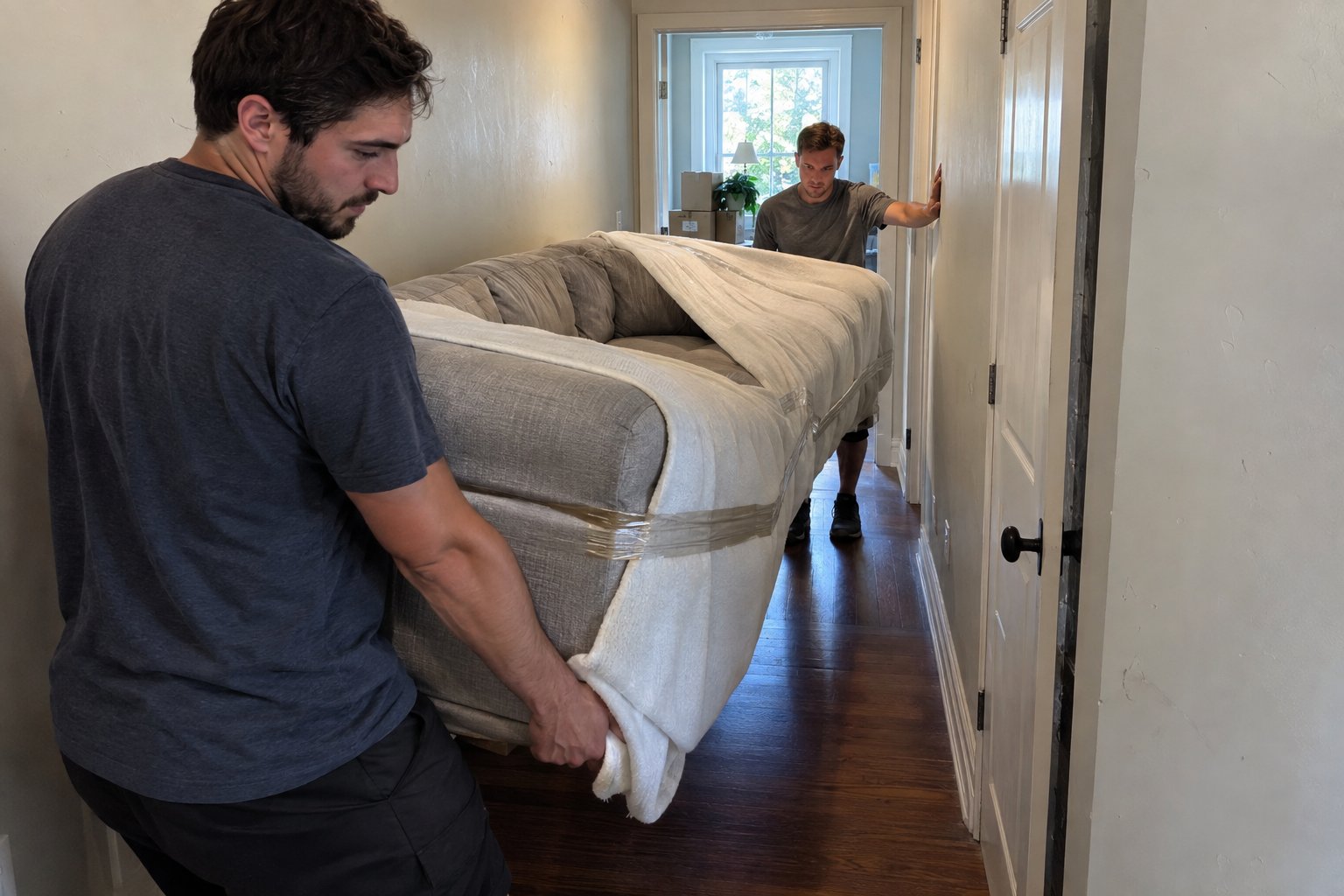
Either method works. What matters more than the exact formula is matching the tip to the actual difficulty of the job. A crew that carefully wrapped a mirror and carried a couch up three flights of stairs without a scratch on the wall earned more than a crew that moved a one-bedroom apartment's worth of boxes on flat ground. If you are unsure how much a job like yours typically runs, our guide on moving labor cost per hour breaks down what labor-only crews usually charge, which can help you calibrate a tip that is proportional to the invoice.
Adjusting for Job Difficulty
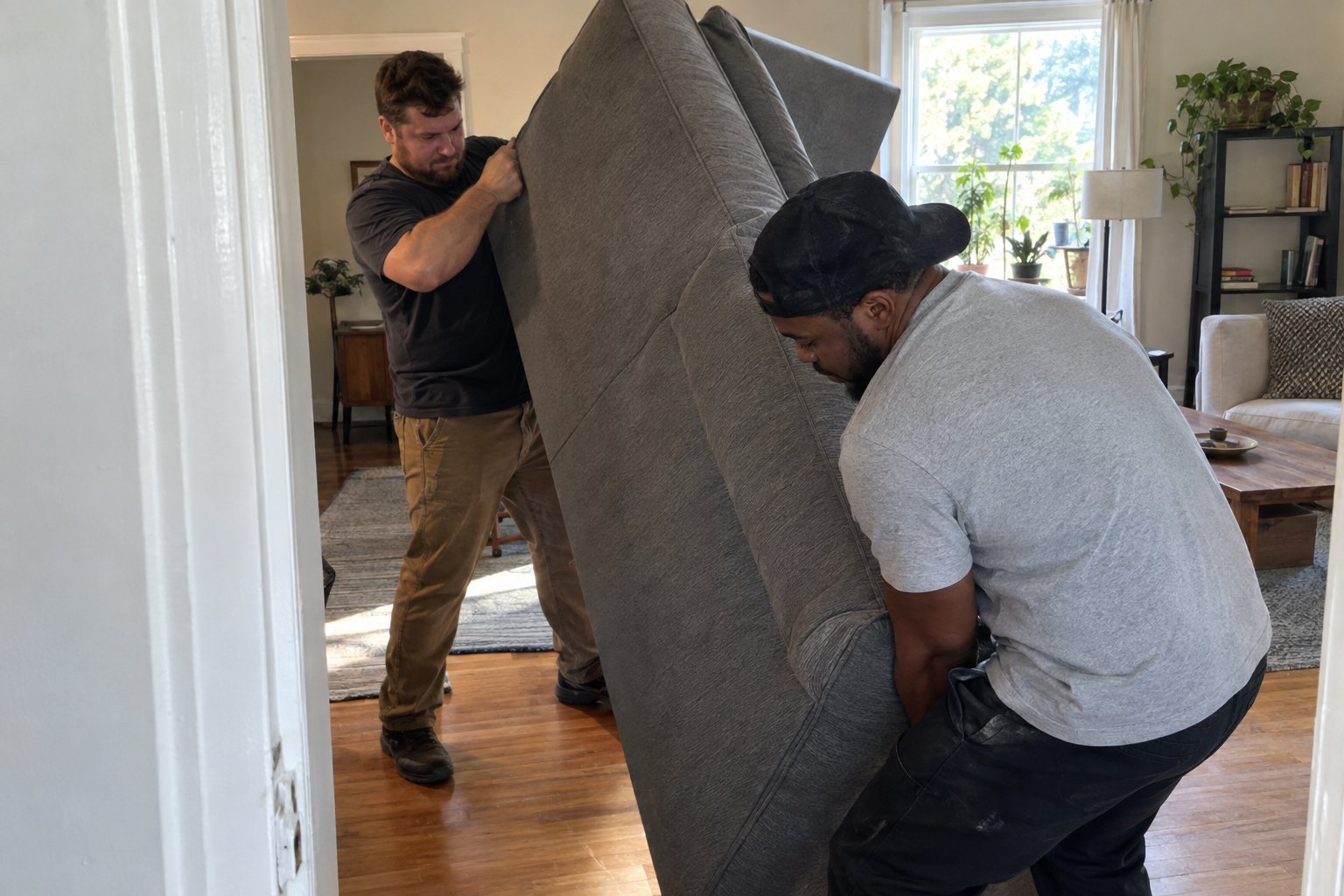
Add to the baseline tip when the crew dealt with narrow stairwells, no elevator, extreme heat or cold, unusually heavy items like a gun safe or a china cabinet, or a job that ran longer than quoted through no fault of the movers. Reduce it only for real service problems, not for things outside the crew's control like a delayed elevator reservation or a truck that was late because of traffic.
When and How Do You Hand Over a Tip?
Tip at the very end of the job, after the truck is unloaded and the crew is packing up their equipment, not at the start. Handing over cash before the work begins removes any incentive tied to performance and can feel awkward if something goes wrong later in the day.
Cash is still the most common and most appreciated method because it goes directly to the individual mover with no processing delay. If you are tipping more than one person, hand each mover their own amount rather than giving a lump sum to whoever seems to be the lead, since crew members do not always split tips evenly on their own. If you do not have cash, ask the crew lead whether the company supports tipping through the app or invoice, and confirm before the day of the move rather than scrambling at checkout.
What If You Do Not Have Cash on Move Day
Many labor-booking platforms and moving companies now let you add a tip digitally when you pay the final invoice, and some crews accept mobile payment apps directly. If neither option exists, a small gift, cold drinks, or a meal during a long job is a reasonable supplement, but it should not fully replace a monetary tip if the crew did a good job.
Is It Rude Not to Tip Movers?
Not tipping is not rude in the sense of breaking a hard rule, but it does go against a strong industry norm that most crews expect to be honored. If service was genuinely poor, for example items were handled carelessly or the crew was disrespectful, it is fair to reduce or skip the tip and mention the issue to the company directly instead.
Where people go wrong is skipping the tip simply because they were not told upfront that it was customary, then feeling awkward about it afterward. If you book through a labor-only crew, ask about tipping norms when you confirm the booking so it is not a surprise on move day. It is also worth budgeting for a tip the same way you budget for the job itself, since a $40 tip on top of an already-tight moving budget can otherwise feel like an unplanned expense.
Should You Tip Differently for a Long-Distance or Multi-Day Move?
Yes, longer jobs generally call for a tip broken into daily amounts rather than one lump sum at the very end. For a multi-day move, many people tip $20 to $40 per mover per day, paid out as each day wraps up, rather than saving the entire tip for the final day.
This keeps morale consistent across a job that might involve a different mix of crew members on different days, and it means a mover who only worked one of three days still gets recognized for their part. If your move involves loading in one city and unloading in another, tip the loading crew and unloading crew separately since they are often entirely different teams.
Getting the Rest of Moving Day Right
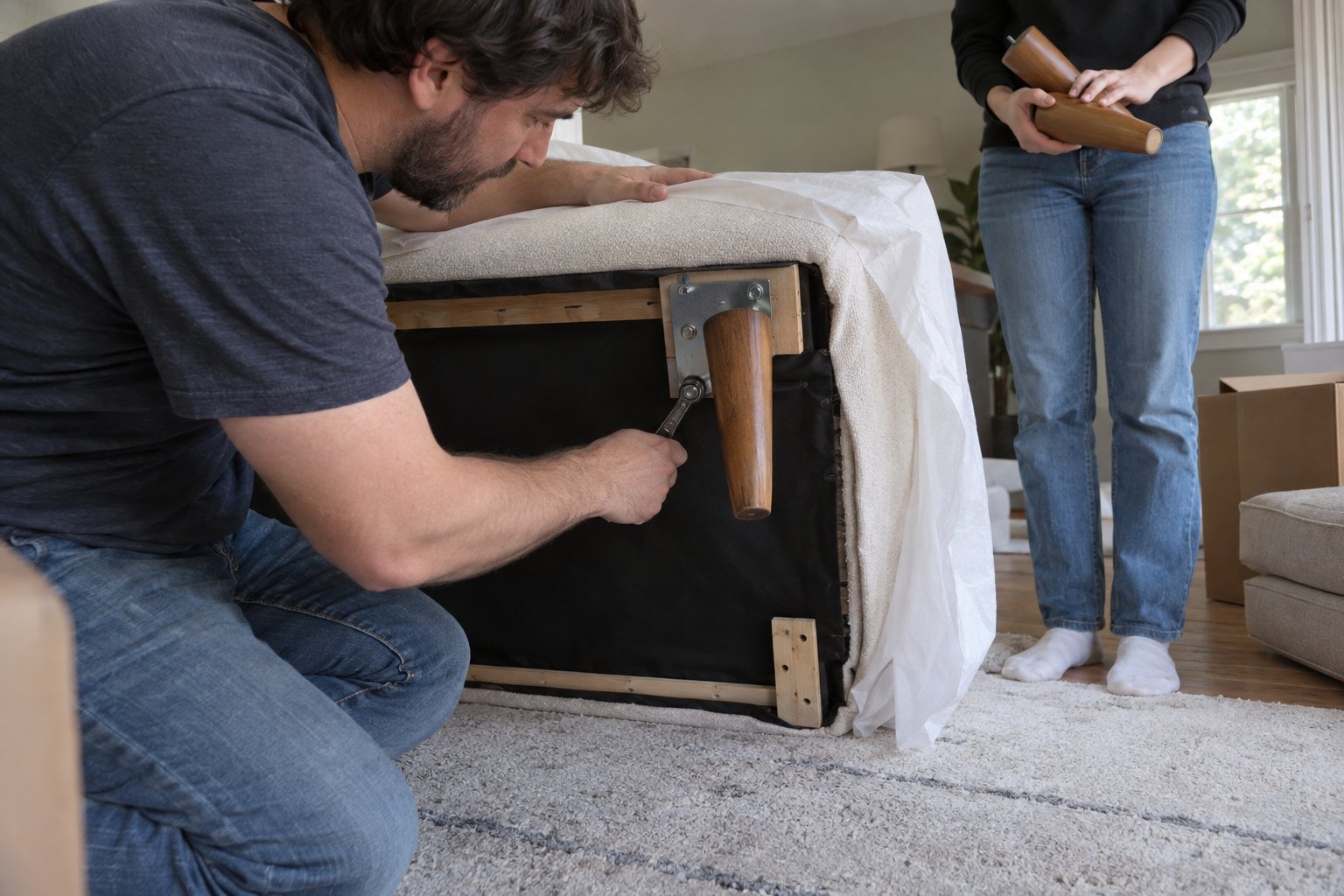
Tipping is a small part of a much bigger day. Most of what determines whether a labor crew has an easy job or a frustrating one comes down to preparation before they ever knock on your door. If you want the full rundown of what to clear, disassemble, and stage in advance, our guide on what to do before the labor crew arrives covers it room by room. When you are ready to book, you can get a free labor-only quote and get an exact price before move day instead of guessing.




FAQs
For a short, easy job with light lifting, $20 per mover is on the low end of acceptable but reasonable. For a half-day or heavier job, most people tip closer to $30 to $40 per mover, so treat $20 as a floor rather than a standard amount.
Tip after the job is complete, once everything is unloaded and placed where you wanted it. Tipping beforehand removes the connection between the tip and how the work actually went.
If the damage was minor and the crew handled it professionally by reporting it and offering to help resolve it, a reduced tip is reasonable. For significant damage or a dismissive response, it is fair to skip the tip and address the issue with the company directly instead.
For unusually heavy or high-risk items like a piano or a gun safe, add $10 to $20 per mover on top of your normal tip to reflect the added risk and physical demand. These jobs often take longer and require more careful handling than a standard move.
For unusually heavy or high-risk items like a piano or a gun safe, add $10 to $20 per mover on top of your normal tip to reflect the added risk and physical demand. These jobs often take longer and require more careful handling than a standard move.
Still have questions?
How to move with us?
Hit the “Get a Quote” button and tell us what you need.
Choose the service, date, and time that work best for you.
Our friendly team shows up on time and gets everything done safely.
Sit back while we take care of the rest.
.avif)