
How to Move a Washing Machine Without a Truck or Full-Service Movers
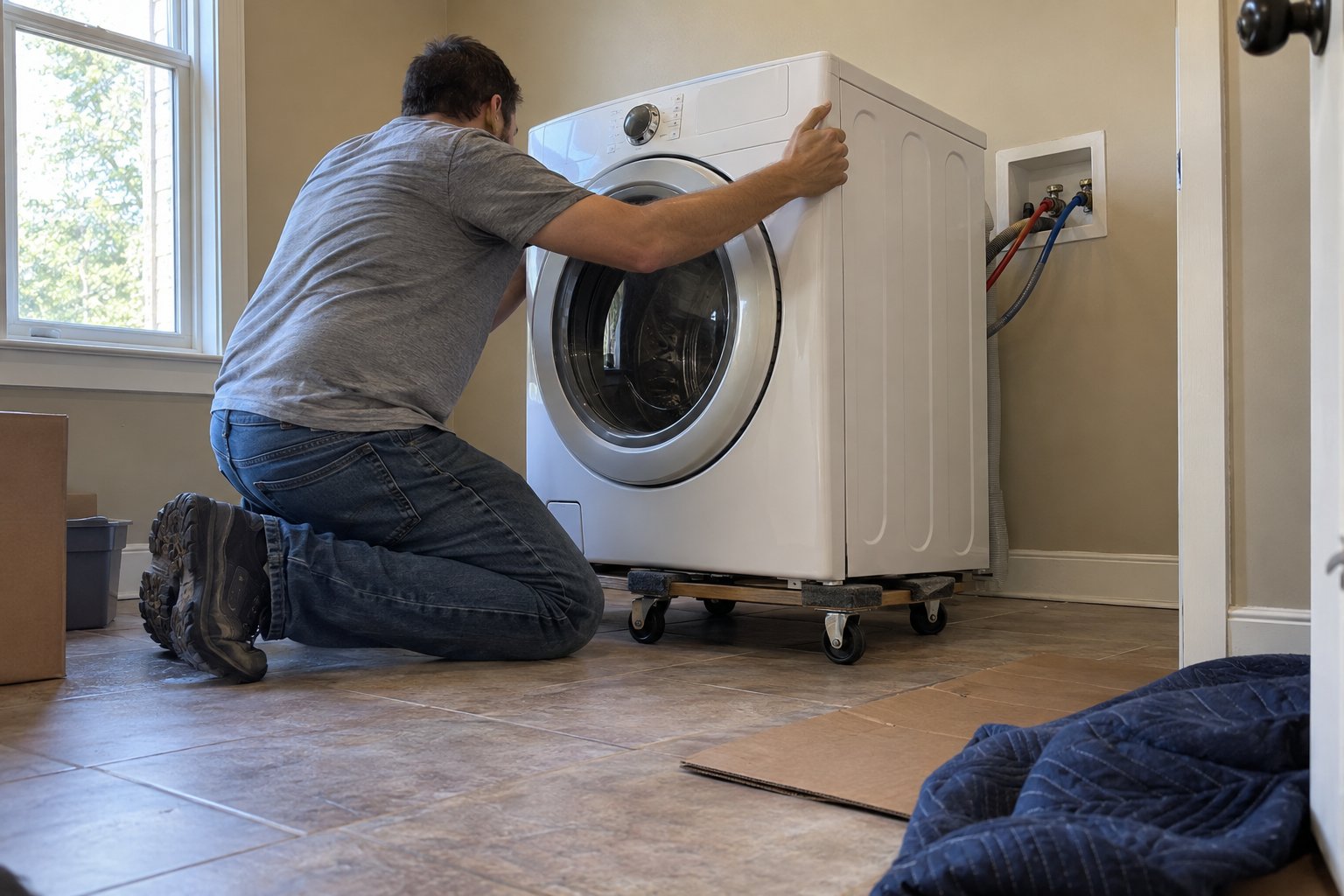
You can move a washing machine without a truck by using your own vehicle, a borrowed pickup, or a trailer, and hiring a labor-only crew to handle the disconnecting, hauling, and loading. The truck rental is often the least necessary part of a short appliance move. What actually makes the job risky is the weight, the water lines, and the stairs, not the vehicle underneath it.
A lot of people assume that moving one washing machine across town, into a new unit, or over to a storage space automatically means booking a full-size moving truck for a day. That is rarely true. A washer only needs a vehicle large enough to fit it flat or upright and secured, and a crew that knows how to disconnect it, tilt it through doorways, and load it without throwing anyone's back out. Here is how to do it without paying for equipment you do not need.
Do You Actually Need a Truck to Move a Washing Machine?
No. A washing machine fits in most pickup beds, cargo vans, SUVs with the seats folded, or a small utility trailer. The deciding factor is not the vehicle size, it is whether the machine can sit upright and be strapped down so it cannot shift or tip during transport.
Front-load washers are somewhat more flexible about brief tilting than top-load machines, but neither should ever be laid on its side or back for transport. Doing so can let residual water reach the electronics or let the drum shift off its suspension springs. If your vehicle cannot fit the washer upright with headroom to spare, that is the point where renting a small van or trailer makes more sense than forcing it into a car that is too short.
Disconnecting the Washer Safely Before It Leaves the Laundry Room
Disconnection matters more than transport for a washing machine move. Shut off both hot and cold supply valves, run a short cycle or drain function to clear the pump, then disconnect the hoses over a towel or shallow pan since they hold residual water even after draining.
Front-load machines also need their transit bolts reinstalled if you still have them, since these lock the drum in place and prevent internal damage from bouncing during the drive. If you never got the bolts or have lost them, packing towels tightly around the drum opening and taping the door shut is a reasonable substitute for a short trip, though it is not as protective as the real bolts for a long haul. Coil the power cord and hoses and tape them to the back of the unit so nothing drags or catches on a doorway.
Getting the Washer Out of the House Without Two People Getting Hurt
A washing machine weighs roughly 150 to 200 pounds, and its weight sits low and off-center once it is tilted onto a hand truck, which is exactly when injuries happen. The safest method is a furniture dolly or appliance hand truck with a strap, not a plain dolly with no strap and not carrying it by the edges.
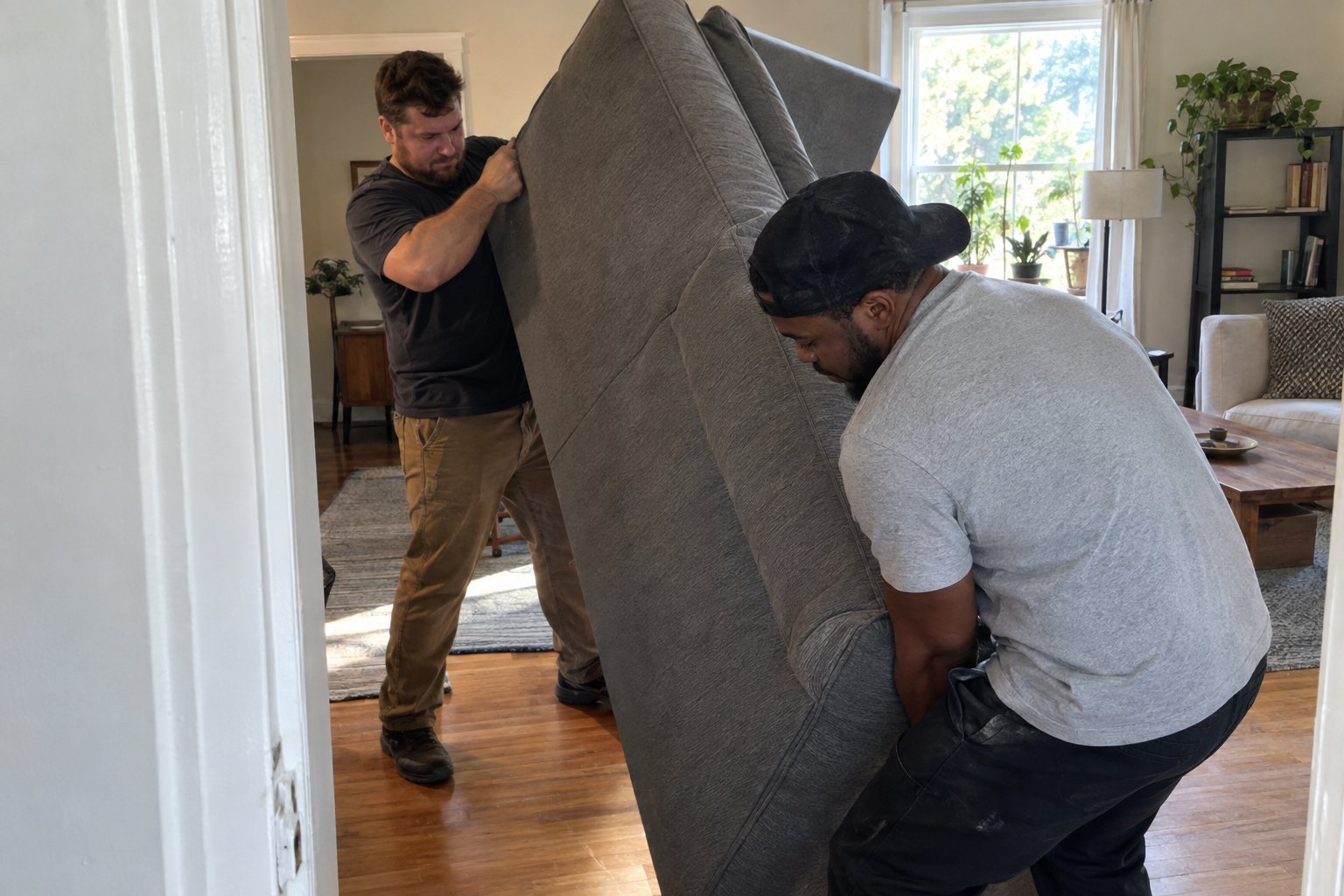
Two people should communicate out loud before every tilt, every step, and every turn, especially on stairs or through narrow hallways. One person should always be on the downhill or lower side when going down steps, taking the weight instead of the person above. This is the exact part of an appliance move where a labor-only moving crew earns its cost fastest: an experienced two-person team has done this hundreds of times and knows how to read a doorway or staircase before committing to a lift, which is very different from figuring it out on the spot with a friend from work. If you have never worked with a crew like this before, it helps to know what to expect when you book a labor-only crew so you can compare quotes and services accurately.
Loading and Securing It in a Car, SUV, or Small Trailer
Load the washer upright, centered over the axle if it's a trailer, and as close to the cab or front of the cargo area as the vehicle allows to reduce sway. Use at least two ratchet straps or moving straps crossed in an X pattern over the top, anchored to solid tie-down points, not just looped around the machine.
Pad the corners and back panel with moving blankets so the straps do not dent the housing and the machine does not rock against the vehicle walls on turns. Leave the door or lid taped shut for the drive. If you are moving the washer into a storage unit rather than straight to a new home, the same upright, strapped, padded approach applies there too, and it's worth confirming the facility offers climate-controlled storage solutions if the machine will sit for more than a few weeks, since temperature swings can affect rubber hoses and seals.
When Is It Worth Hiring Help Instead of Doing It Yourself?
It's worth hiring help when the move involves stairs, a long carry to the driveway, a narrow doorway, or when you simply do not have a second person who can commit to the lift safely. The appliance itself is not complicated to move, but the physical risk of tilting 180-plus pounds down a flight of stairs is real and does not need to be a DIY learning experience.
Labor-only help is built for exactly this kind of job: you already have the vehicle sorted out, you just need trained hands and the right equipment to get the washer from point A to point B without a wall getting scuffed or a back getting thrown out. A two-person crew with an appliance dolly can usually handle a single washing machine move in well under an hour. If cost is the main hesitation, it's worth checking a general breakdown of what moving labor costs per hour before assuming a truck rental is the cheaper option.
What About the Dryer? Should You Move Both at Once?
If the washer and dryer are both moving, do both in the same trip rather than making two separate runs, since the labor and loading logistics are nearly identical. A dryer is lighter and easier to handle than a washer, but it still benefits from a dolly and a strap rather than being carried loose, especially on stairs.
Disconnect the dryer's exhaust vent and, for gas models, confirm the gas line is fully shut off and capped before anyone touches it. Electric dryers just need the cord coiled and taped. For the full disconnect and reconnection process on both machines, our guide to moving a washer and dryer covers the steps in more detail. Loading both units together in one securely strapped trip is usually more efficient than splitting the job, and it means you only pay for one visit from your crew instead of two. If you're ready to get the appliance moved without renting equipment you don't need, you can get a free labor-only moving quote in a few minutes.


FAQs
No, a washing machine should always be transported upright. Laying it down can let trapped water reach electronic components or knock the drum off its internal suspension, which is expensive to repair and sometimes not worth fixing.
Two people is the practical minimum for carrying a washer down stairs or through tight hallways. One person alone can move it a short flat distance with an appliance dolly, but stairs or door frames really call for two sets of hands.
Yes. Run a drain or spin cycle first, then disconnect the hoses over a towel since they still hold some water even after the machine drains. Skipping this step usually means water leaking inside your vehicle during transport.
Doing it yourself saves on labor cost but adds real risk of injury or appliance damage, especially on stairs. A labor-only crew for a single appliance is usually a small, fixed cost compared to renting a truck you don't need or risking a hospital visit.
Doing it yourself saves on labor cost but adds real risk of injury or appliance damage, especially on stairs. A labor-only crew for a single appliance is usually a small, fixed cost compared to renting a truck you don't need or risking a hospital visit.
Still have questions?
How to move with us?
Hit the “Get a Quote” button and tell us what you need.
Choose the service, date, and time that work best for you.
Our friendly team shows up on time and gets everything done safely.
Sit back while we take care of the rest.
.avif)