How to Move a Elliptical Machine Without Wrecking Your Back or Your Floors
Moving an elliptical machine safely comes down to three things: knowing its actual weight, removing the parts that stick out or pivot, and using a dolly instead of your back for the carry. Most home ellipticals weigh between 150 and 250 pounds, and their odd shape, with a tall console and wide foot rails, makes them harder to handle than the number on the spec sheet suggests. Rushing this move is one of the most common ways people hurt themselves or gouge a hallway wall.
This guide walks through what to check before you touch the machine, how to break it down enough to move it through doorways, and how to get it onto a truck or into a new workout room without a repeat of the same struggle at the other end.
How Much Does an Elliptical Machine Weigh, and Does That Change Your Plan?
A compact home elliptical usually weighs 150 to 200 pounds, while commercial-grade or larger dual-flywheel models can top 250 to 300 pounds. That weight is rarely balanced evenly, since the console and drive mechanism sit higher and heavier than the foot rails, which makes the machine tip-prone when it is tilted for a dolly.
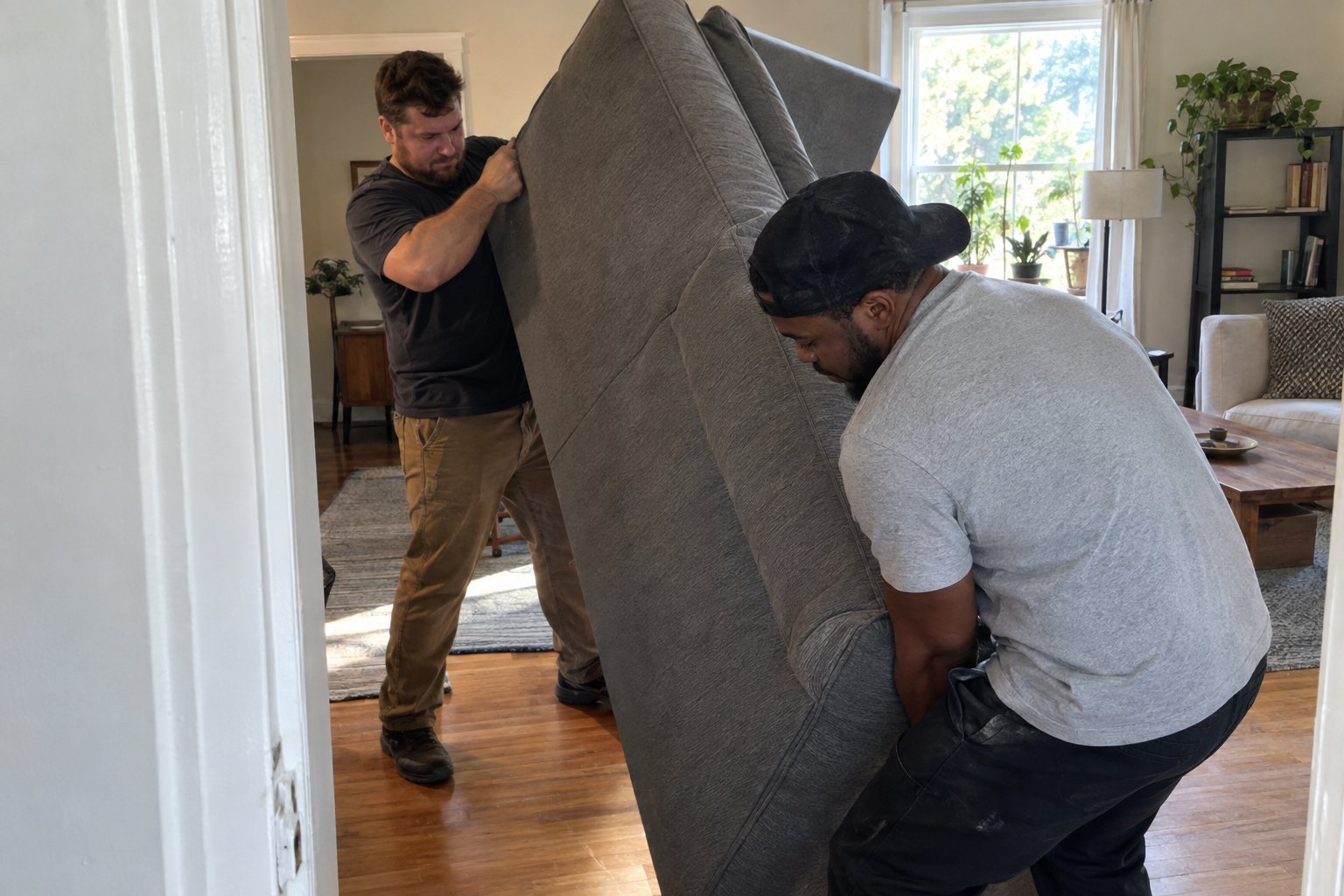
Before you commit to moving it solo, check the manufacturer's manual or a sticker near the base for the actual weight. If two people can't comfortably lift a couch of similar weight together, they shouldn't attempt an elliptical either, since its shape offers fewer good grip points than a couch does.
What to Remove Before You Move It
Most ellipticals do not need a full teardown, but a few parts should come off first: the console (usually a few screws or a quick-release bracket), the pedals or foot rail covers if they are detachable, and any water bottle holder or accessory tray that could snap off during transport.
Keep the console's wiring harness intact if possible. Many consoles connect with a ribbon cable or plug that is easy to disconnect but fiddly to rethread, so take a photo of the connection before you unplug it. Bag all screws and tape the bag to the machine's frame so nothing goes missing between homes.
Handling the Resistance Mechanism
Leave the flywheel and drive assembly alone. These are sealed or semi-sealed components on almost every consumer elliptical, and opening them risks losing tension or misaligning magnetic resistance. If your model has a manual incline or resistance lever, set it to its lowest or neutral position before moving so it isn't under load during transport.
How Do You Actually Carry an Elliptical Machine Through Doors and Stairs?
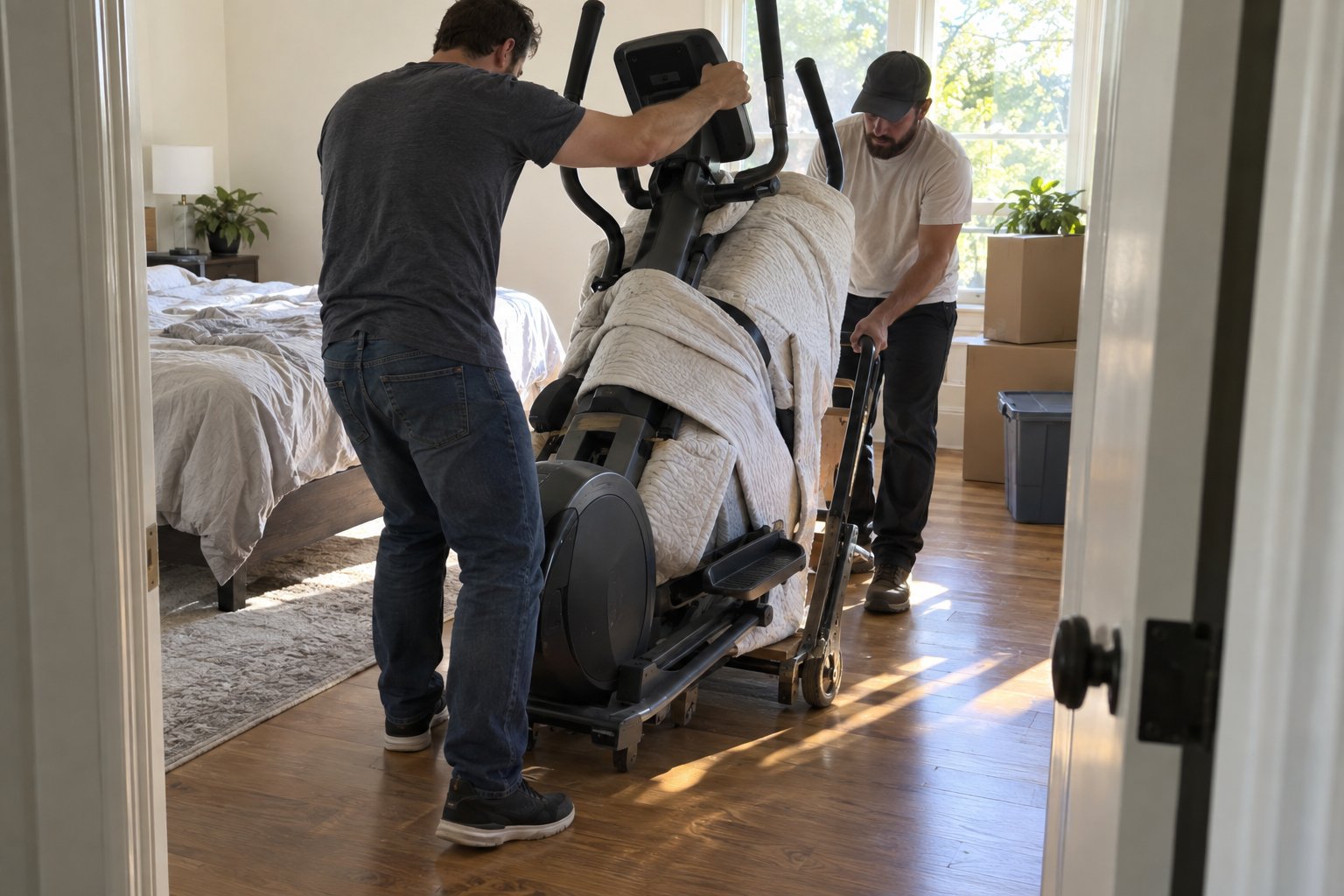
The safest way to move an elliptical through a doorway or down stairs is to tilt it onto its rear stabilizer or foot rail edge and walk it on an appliance dolly, with one person steering from the front and one bracing from behind. Never try to lift and carry the full machine freehand unless it's a lightweight compact model and you have at least two capable people.
Measure your doorways and stairwell width against the machine's widest point (usually the foot rail span) before moving day. Some ellipticals need to go through at an angle, tilted onto one side, which only works if the console has already been removed so it doesn't catch on the frame.
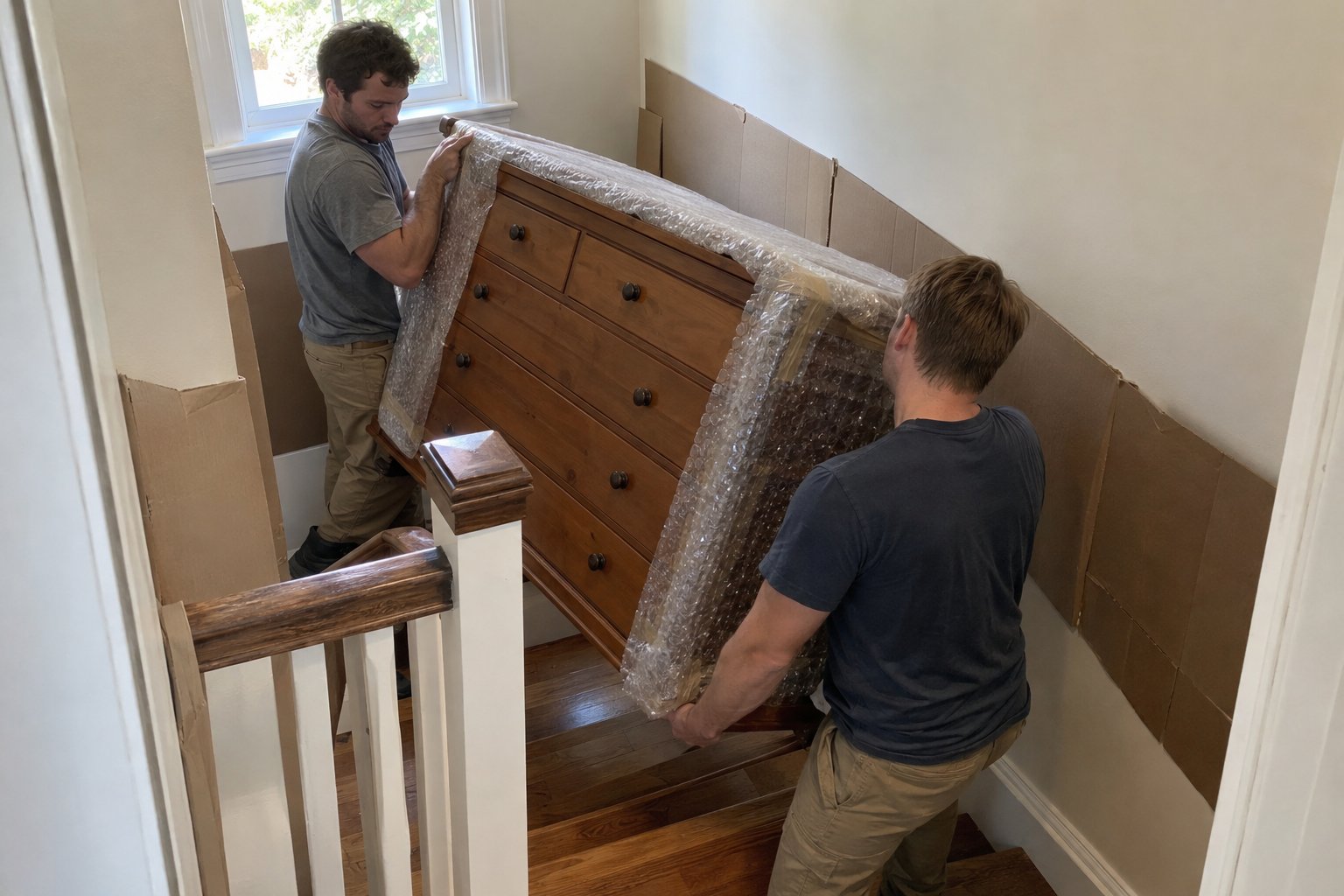
On stairs, gravity works against whoever is on the downhill side. Take slow, small steps, keep the machine's weight centered over the dolly wheels, and never let it rest on a single stair edge longer than it takes to reposition your grip.
Should You Move It Yourself or Book Moving Labor?
If your elliptical is under 180 pounds, has a clear path with no stairs, and you have a second person to help, a DIY move is usually manageable. Anything heavier, any staircase, or a narrow apartment hallway is where hired help earns its cost quickly, both in avoided injury and avoided wall damage.
A labor-only moving crew is a practical middle ground when you already have a truck rented or a vehicle that fits the machine, but you need extra hands and the right equipment for the awkward carry itself. Crews bring furniture dollies and straps built for exactly this kind of oversized, top-heavy item, and they know how to angle it through a doorway without three attempts.
Protecting the Machine and Your Home During Transport
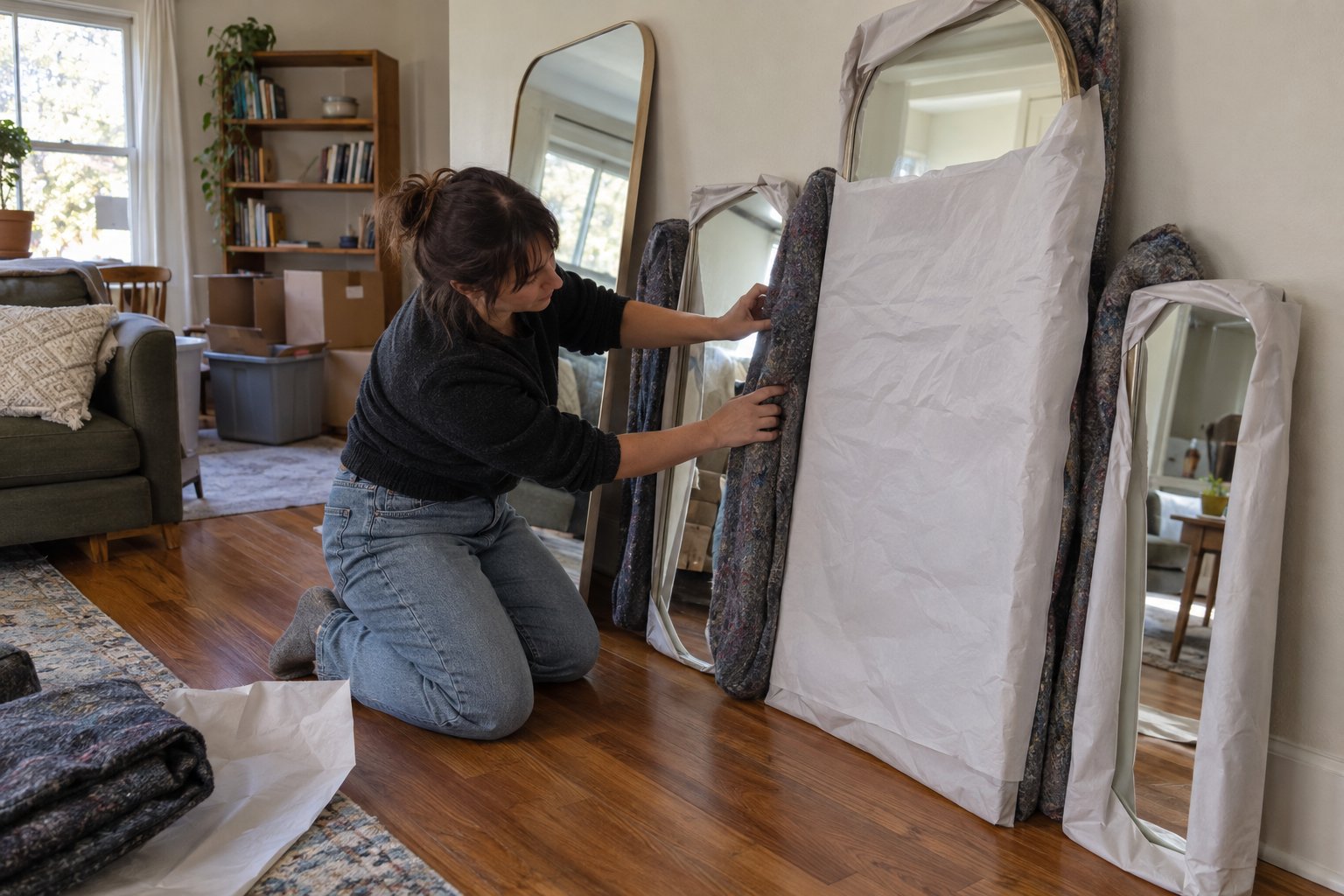
Wrap the console and any exposed screen in moving blankets or bubble wrap, since consoles are usually the most fragile and most expensive part to replace. Secure the machine upright in the truck if possible, using straps anchored to the truck wall, since laying it on its side can put uneven pressure on plastic housing panels.
At home, lay down floor runners or old blankets along your carry path. Elliptical foot rails often have metal or hard plastic edges that will scuff hardwood or dent carpet padding if dragged even a few inches. If you're staging other heavy gear for the same move, our guide on moving a treadmill safely covers similar dolly and doorway techniques worth reviewing side by side.
Setting It Back Up in Your New Space
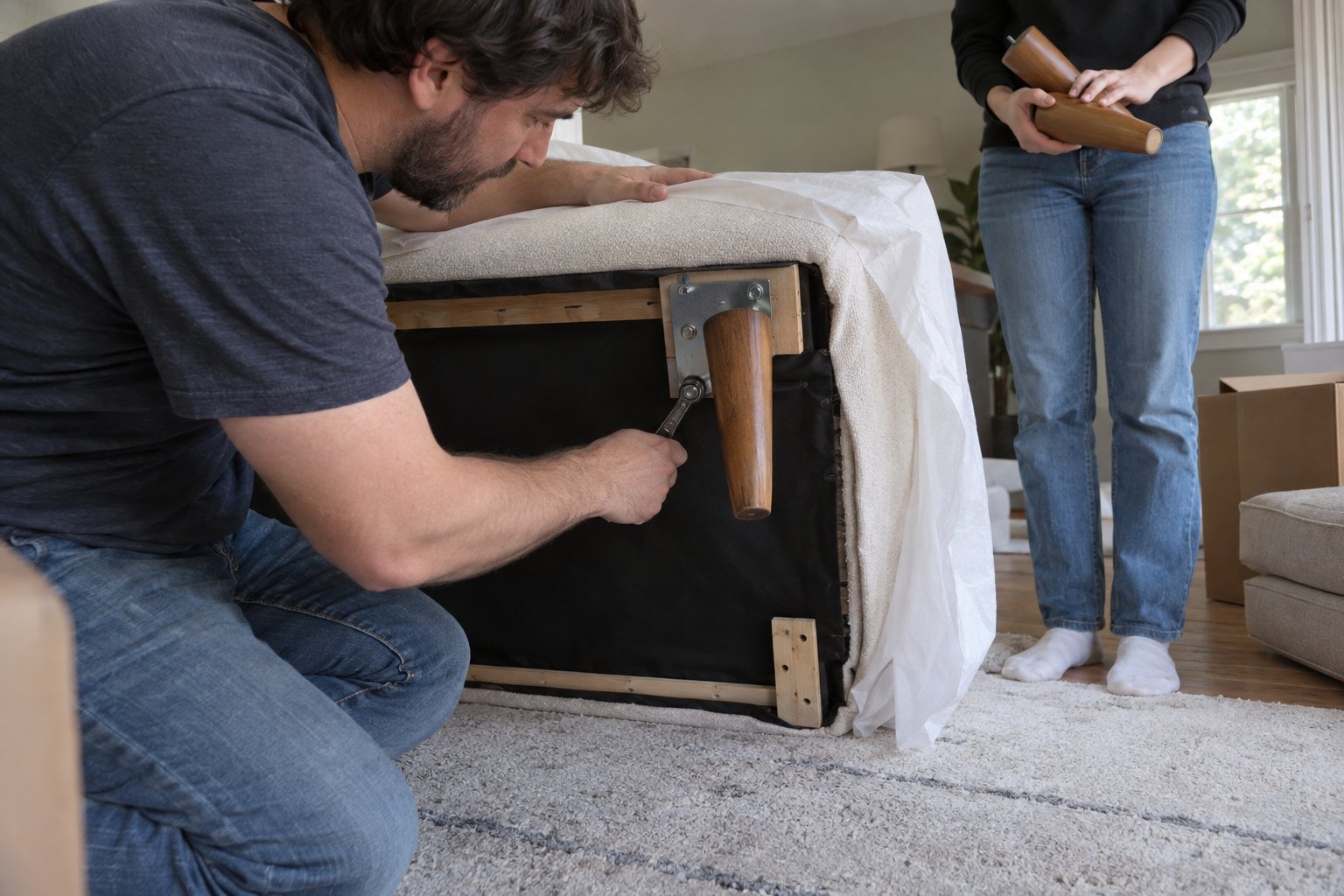
Reassembly is the disassembly steps in reverse: reattach the console using your reference photo for the wiring, screw the pedals or covers back into place, and check that the machine sits level on its new floor. An uneven floor can make the elliptical rock during use, so use rubber shims under the stabilizers if needed.
Give the machine a slow test cycle before your first real workout. Listen for any new clicking or grinding that wasn't there before the move, which usually means a bolt needs tightening rather than anything serious.
If your move involves several large fitness or furniture pieces and you'd rather not manage the lifting yourself, you can get a free labor-only moving quote and have an experienced crew handle the heavy carrying while you focus on everything else.


FAQs
It depends on the model. Compact ellipticals under 150 pounds with a low profile can sometimes be moved solo using an appliance dolly, but most home units are too heavy and top-heavy for one person to control safely on stairs or through tight doorways.
Full disassembly usually isn't necessary, but removing the console, pedals, and any accessory trays makes the machine narrower and lighter, which reduces the risk of catching door frames or losing balance mid-carry.
A standard appliance dolly rated for at least 300 pounds with a wide base works for most home ellipticals. Furniture dollies with straps are helpful for tilting and securing the machine during the carry.
Laying it flat can stress plastic housing panels and shift internal components that were designed to sit upright. Securing the machine standing up with straps inside the truck is generally safer for the frame and console.
Laying it flat can stress plastic housing panels and shift internal components that were designed to sit upright. Securing the machine standing up with straps inside the truck is generally safer for the frame and console.
Still have questions?
How to move with us?
Hit the “Get a Quote” button and tell us what you need.
Choose the service, date, and time that work best for you.
Our friendly team shows up on time and gets everything done safely.
Sit back while we take care of the rest.
.avif)